Depolarizing NMBAs
cause “excessive” depolarization of the neuromuscular junction
Nondepolarizing blockers (competitive blockers)
inhibit depolarization of the neuromuscular junction
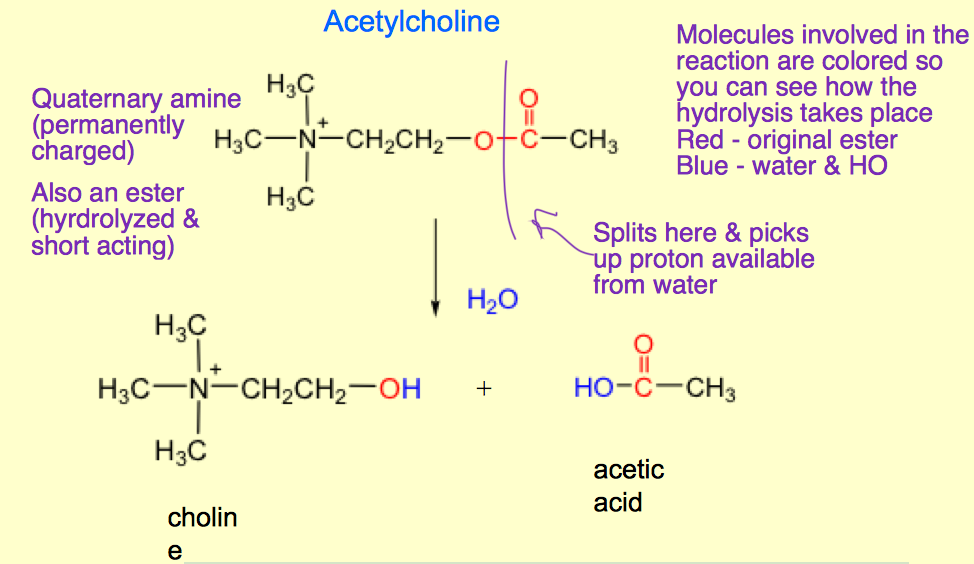
Acetylcholine
- a neurotransmitter at the neuromuscular junction.
- rapidly metabolized by AChE to terminate its effects.
- Interference of its effects at the nicotinic receptors of the neuromuscular junction causes muscle relaxation.
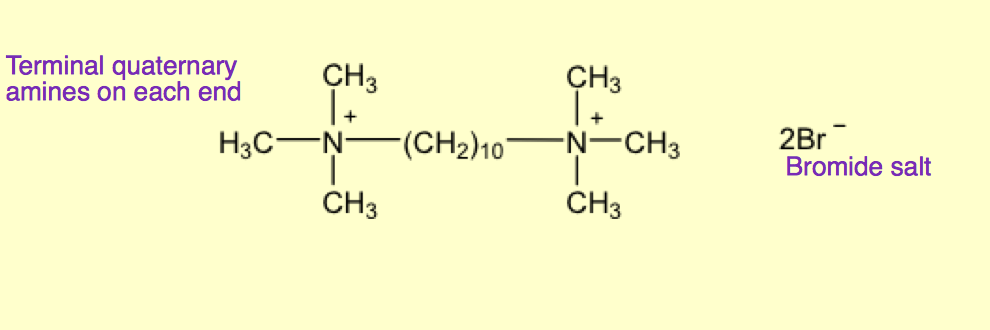
Decamethonium Bromide
Note the structural similarities and dissimilarities to succinylcholine. Depolarizing. No longer used clinically.
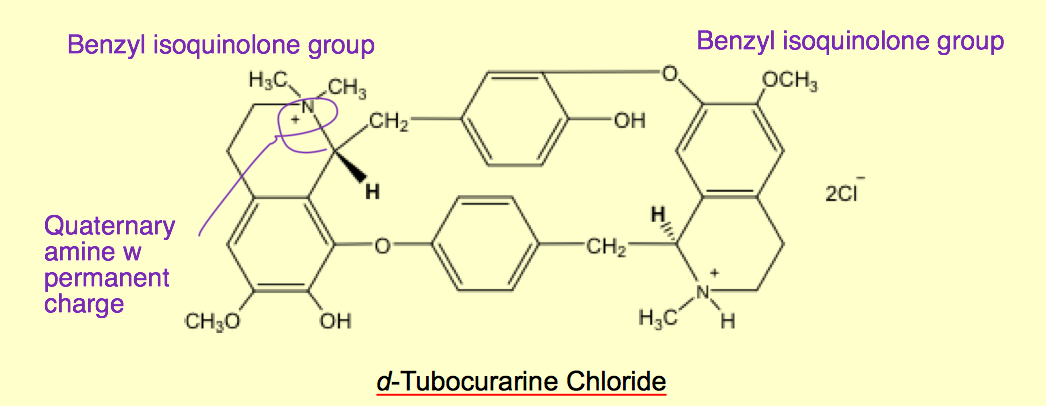
Nondepolarizing (Competitive) - Benzylisoquinolinium Compounds
- Extract of the plant family Chondodendron.
- Commercial solutions contain a preservative and are adjusted to pH 2.5 - 5.
- Low pH because we want it ionized and into a water-soluble preparation & is easy to administer
Non-depolarizing (Competitive) - Quarternary Steroidal Compound
Pancuronium
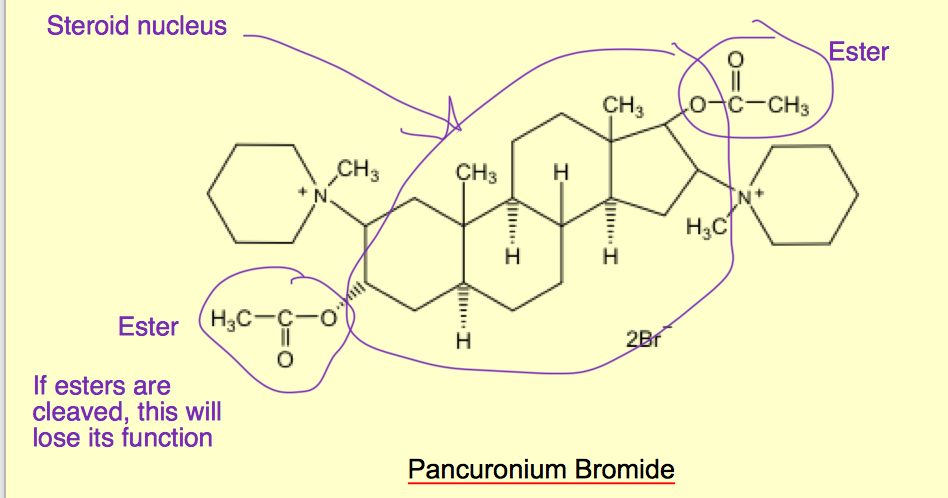
Non-depolarizing (Competitive) - Quarternary Steroidal Compounds
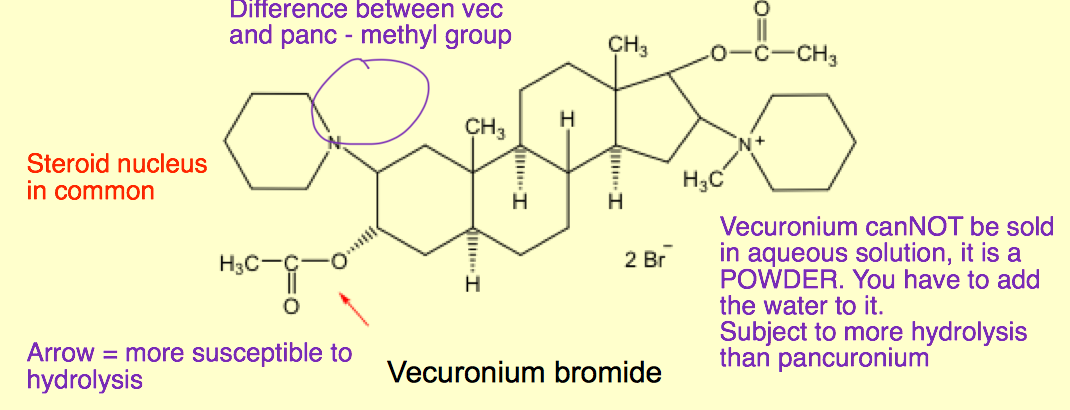
Vecuronium
- Synthetic NMBA containing steroid nucleus, supplied as a powder.
- Each 10 ml vial contains 10 mg vecuronium bromide, 20.75 mg citric acid, 16.25 mg sodium phosphate, 97 mg mannitol (to adjust tonicity), sodium hydroxide to buffer and adjust to pH 4.
- Powder should be stored dry at 15-30°C and away from light.
- Contains 0.9% w/v benzyl alcohol as preservative.
- The ester designated by the arrow is more susceptible to hydrolysis because it is not “protected” by the quaternary amine as is the other.
Non-depolarizing (Competitive) - Benzylisoquinolinium Compounds
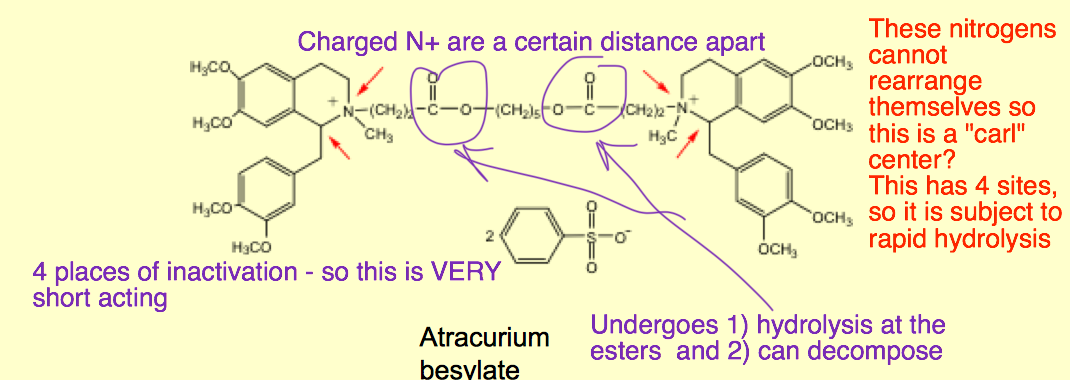
Atracurium besylate
- Atracurium besylate contains four sites at which different stereochemical configurations can occur.
- The symmetry of the molecule results in only ten instead of sixteen, different isomers.
- The manufacture of atracurium besylate results in these isomers being produced in unequal amounts, but with a consistent ratio.
- Those molecules in which the methyl group attached to the quaternary nitrogen projects on the opposite side to the adjacent substituted- benzyl moiety predominate by approximately 3:1.
More Atracurium Info - Refrigeration
Tracurium pH is adjusted to 3.25 to 3.65 with benzenesulfonic acid (besylate). Tracurium slowly loses potency with time and at the rate of approximately 6% per yr under refrigeration (5oC). Upon removal from refrigeration to room temperature, use within 14 days even if re-refrigerated. Tracurium is unstable in acids and bases, and is incompatible with alkaline solutions (eg, barbiturates).
Must be stored in an acid environment because in a basic environment you’re creating a larger population of hydroxyl ions and the hydroxyl can attack the ester and cleave it. So all esters are stored in acid.
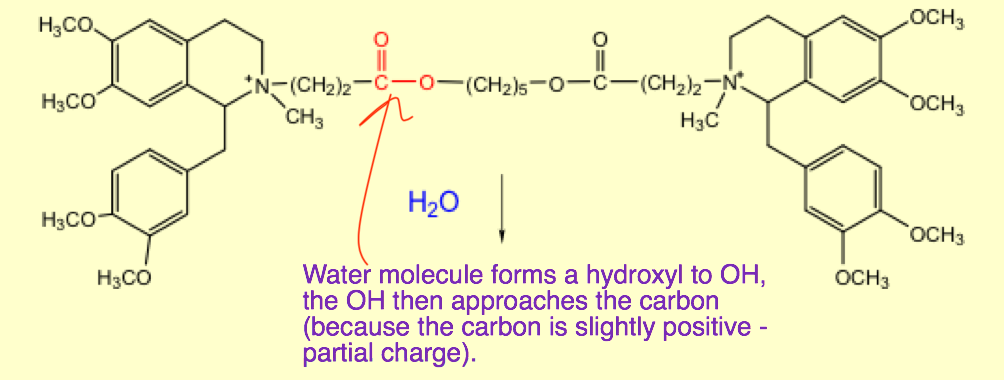
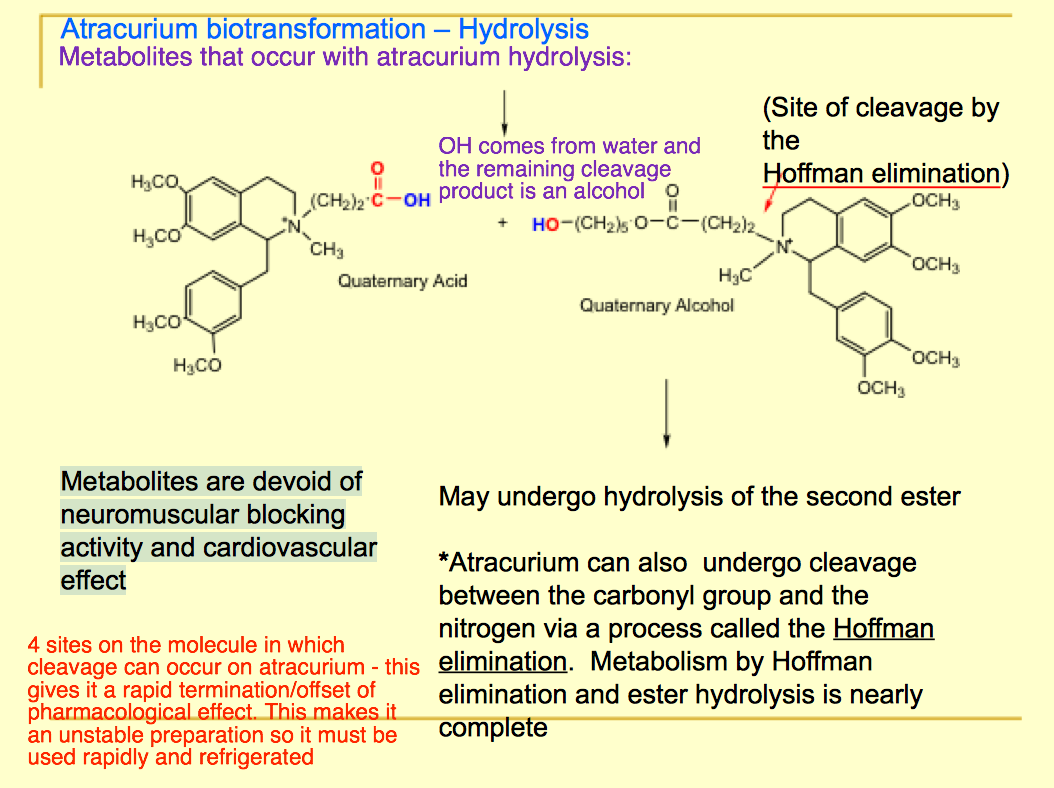
Atracurium biotransformation – Hydrolysis
Nonspecific enzymatic ester hydrolysis; Rate of hydrolysis is independent of plasma cholinesterase concentration.
Hydrolysis rate is enhanced by physiologic decreases in acidity.
Atracurium biotransformation – More Hydrolysis: Metabolites
Metabolites are devoid of neuromuscular blocking activity and cardiovascular effect
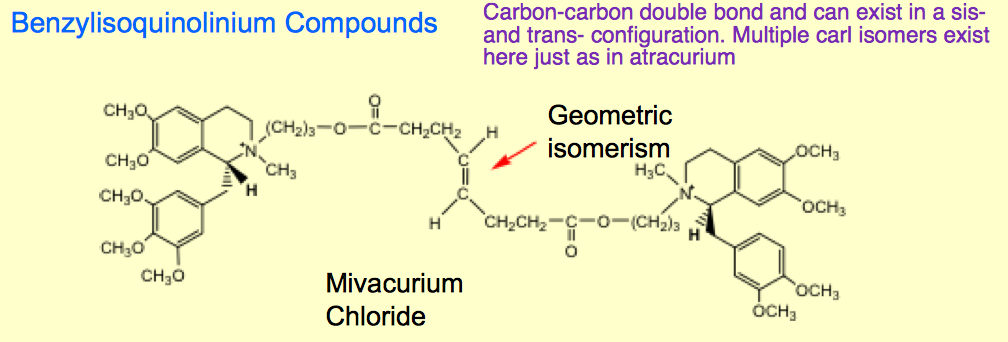
Non-depolarizing (Competitive) NMBA – Benzylisoquinolinium Compounds:
Mivacurium Chloride
- Mivacurium chloride is a mixture of three stereoisomers: (1R, 1 ́R, 2S, 2 ́S), the trans-trans diester; (1R, 1 ́R, 2R, 2 ́S), the cis-trans diester; and (1R, 1 ́R, 2R, 2 ́R), the cis-cis diester.
- The trans-trans and cis-trans stereoisomers comprise 92% to 96% of mivacurium chloride and their neuromuscular blocking potencies are not significantly different from each other or from mivacurium chloride.
- The cis-cis diester has been estimated from studies in cats to have one tenth the neuromuscular blocking potency of the other two stereoisomers.
- MIVACRON Injection is a sterile, non-pyrogenic solution (pH 3.5 to 5.0). Hydrochloric acid may have been added to adjust pH. Multiple-dose vials contain 0.9% w/v benzyl alcohol.
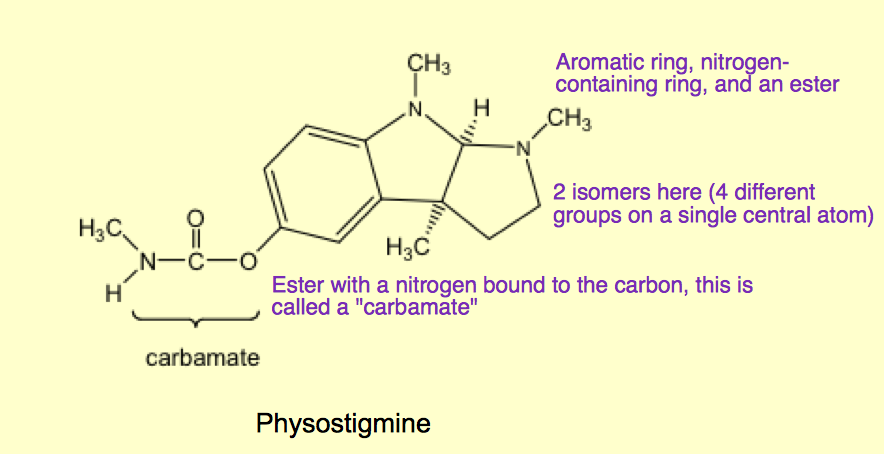
Cholinergics: Physostigmine
Inhibits AChE, therefore increase Ach at the cholinergic receptor and reverses the effects of non- depolarizing blockers
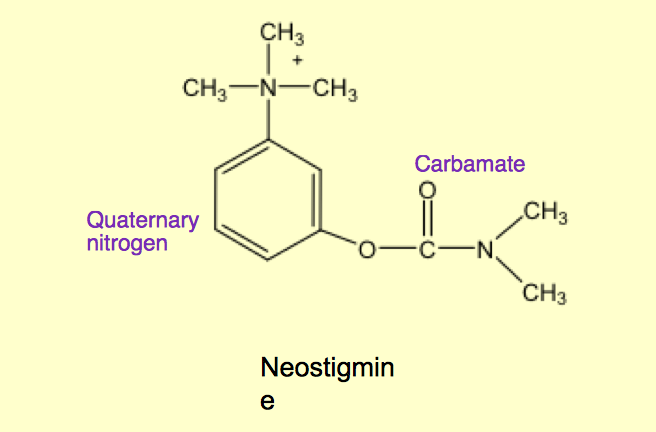
Cholinergics: Neostigmine
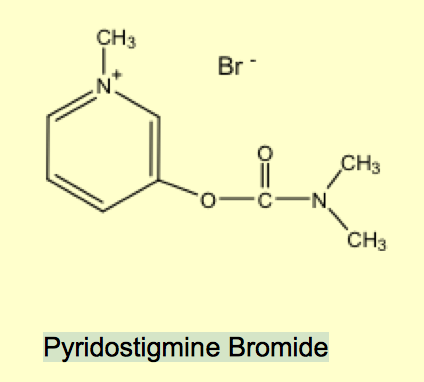
Cholinergics: Pyridostigmine Bromide
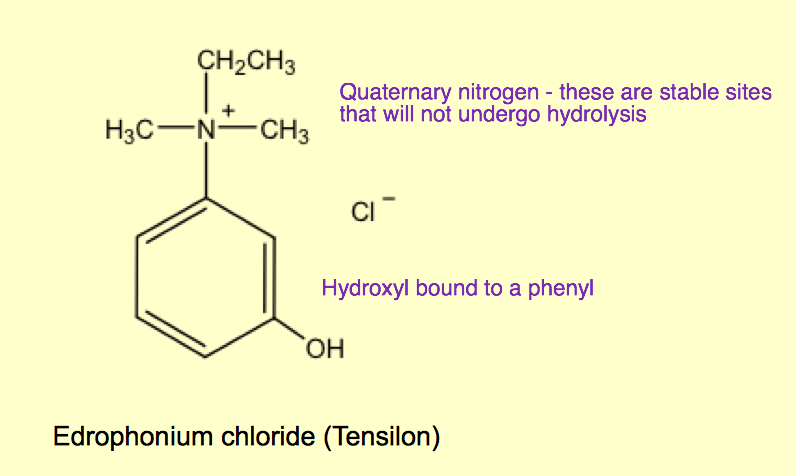
Cholinergics: Edrophonium chloride (Tensilon)
- compounded with 0.45% phenol and 0.2% sodium sulfite as preservative and is buffered with citric acid and adjusted to approximately pH 4.
- Sodium sulfite acts as an anti-oxidant and inhibit microbe growth
Suggamedex - reverses rocuronium
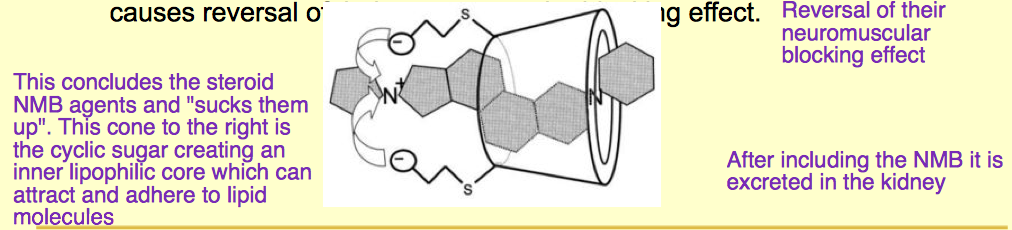
Sugammadex is a type of cyclodextrin that is capable of binding with Rocuronium and similar steroid neuromuscular blocking agents. Cyclodextrins are circular sugar-containing compounds that form a cone with a hollow core. The steroid compounds are “included” in the hollow cone of the cyclodextrin molecule and this causes reversal of their neuromuscular blocking effect.