Bladder Reapair
- Trigone
- <1cm
- Injury to the trigone or ureter needs to be repaired by a urologist, so in this case, the best next step would be to consult urology for repair.
- Foley catheter for 7 to 10 days is acceptable if the cystotomy is less than 1 centimeter in size and is not at the level of the trigone.
- How is a borderline ovarian tumor staged?
- How is it treated?
- What if desires fertility?
- Same as ov cancer, but usually no LND
- Some retrospective studies suggest benefit for adjuvant chemotherapy following optimal debulking of stage III or IV borderline tumors
- Leave one ovary
Most gynecologic surgeons diagnose a borderline ovarian tumor either with intraoperative frozen section or on final operative pathology. Intraoperatively, peritoneal washings should be performed prior to pelvic mass excision, and the mass should be excised intact without spillage into the peritoneal cavity.
Premenopausal patients who have not completed childbearing may undergo unilateral adnexectomy or cystectomy with preservation of the uterus and the contralateral ovary. Of note, agreement between frozen and final pathology has been reported to be a low as 55%, so the need to make management decisions after incomplete staging is relatively common.
In the event that only a cystectomy is performed and final pathology results are consistent with borderline tumor, a gynecologic oncologist can counsel the patient regarding possible reoperation to remove the affected adnexa with possible surgical staging vs. surveillance.
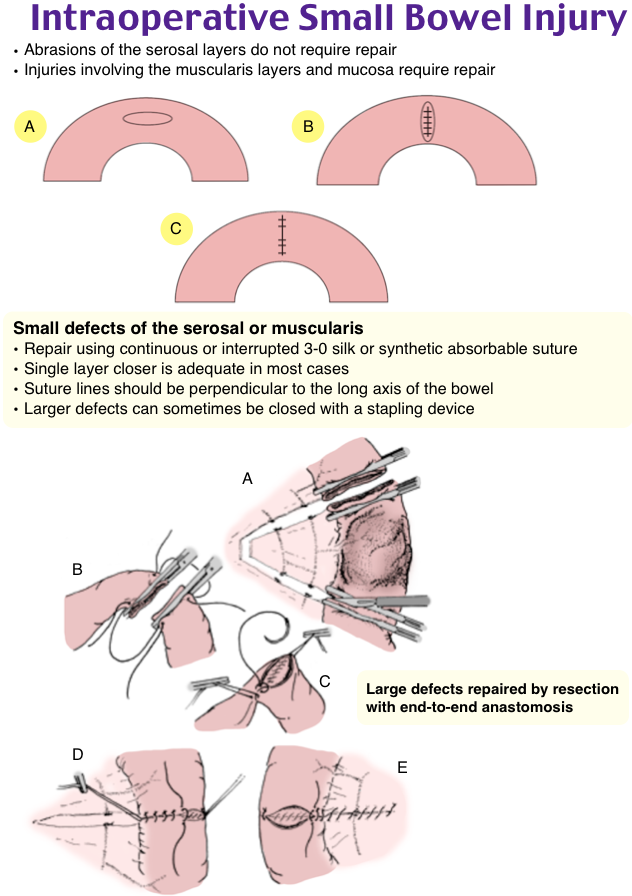
Bowel Injury Repair
- Thermal injury
- Sharp injury <2cm
- Sharp injury >2cm
- Serosal abrasions and Veress needle injuries
- injuries to the seromuscular layer w/ mucosa intact
Intraoperative bowel injuries with trocars or laparoscopic instruments in the absence of thermal energy are usually recognized and repaired intraoperatively with single-layer closure perpendicular to the long axis of the bowel as long as the defect is less than 2 cm.
for injuries caused by thermal energy, the thermal spread is larger than that visible to the naked eye and necrosis occurs days after the injury. Therefore, resection with end to end anastomosis is recommended.
Serosal abrasions and Veress needle injuries do not typically need repair
When injuries involve only the seromuscular layer and leave the mucosa intact, the repair can be accomplished with primary repair with interrupted sutures. 2-0 or 3-0 delayed absorbable suture should be used.
Single-layer repair is appropriate for serosal injuries. Full-thickness injuries require double-layer closure. However, when multiple injuries are adjacent within a bowel segment, the bowel segment containing the injuries should be resected.
- Risk-reducing BSO between ages ___ years and ___ years if BRCA1. In a BRCA2 mutation carrier, this procedure can be delayed until the patient is age __ years.
- BRCA Breast cancer screening.
- When is bilateral mastectomy recommended?
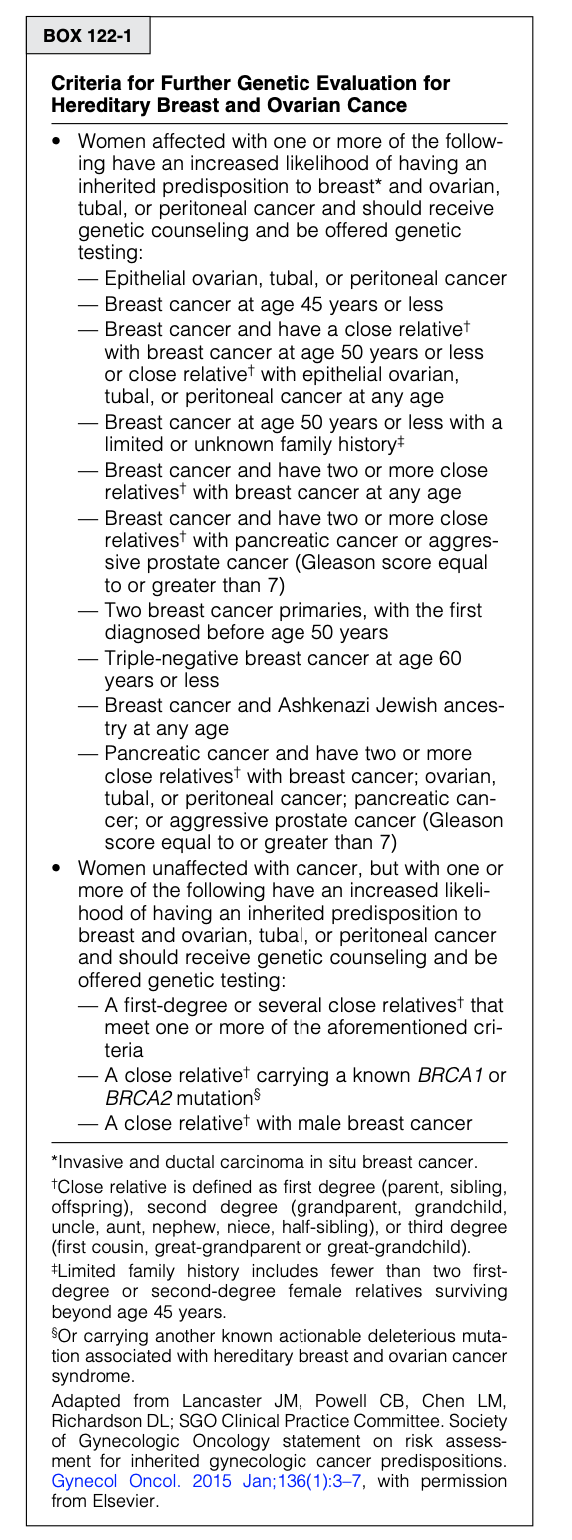
- What historical findings should trigger a referral to genetics for BRCA.
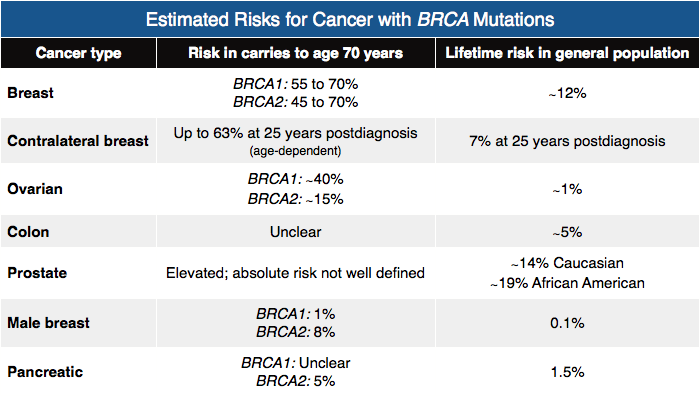
- 35-40; 40-45
- MRI @ 25, Add mammo at 30; q6m clinical br exam
- The timing of such surgery is dependent on many factors, including desire to breast- feed, age of ascertainment of mutation status, and other demographic factors.
- See box
- 1ry treatment of DCIS?
- Risk of CA with atypical ductal hyperplsia.
- LCIS, how rx?
- Pt dx if br cancer. Palpable LND in axilla. What do you do?
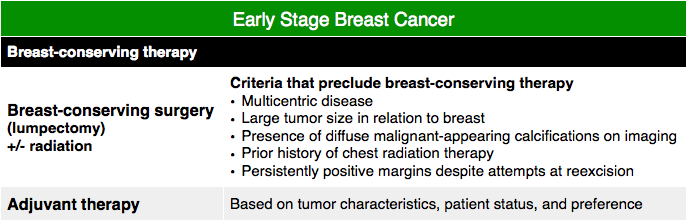
- Early cancers 1-2A are usually treated with surgery + radiation. What precludes breast concerving therapy?
- Locally advanced breast cancer is defined as cancer at stage IIIa to IIIc with lymph node involvement but no metastatic disease. The mainstay of treatment is ….
- WIDE LOCAL EXCISION. +/- chemoprev with tamox/anastrazole or with radiation. DCIS is technically a preinvasive lesion, and aggressive surgery is usually not necessary. Historically, total mastectomy was the treatment of choice. But now, the indications for mastectomy are persistent positive margins, multicentric disease (i.e., DCIS involving more than one quadrant), and cosmetically unacceptable breast conservation surgery due to a large DCIS process.
- There is an approximate 30% risk of either carcinoma in situ or invasive carcinoma in the tissues surrounding a biopsy containing atypical ductal hyperplasia.
- LCIS is a risk factor for breast cancer. lifelong surveillace and chemoprevetion needed. PPX mastectomy if Fx or BRCA. Rx is very individualized.
- Sample the node. If positive, do a complete dissection of axillary nodes at time of surgery. If neg, sentinel LN at time of surgery. If nodes were not palpable at all prior to sx, do sentinel LN at time of surgery.
- Photo
- neoadjuvant chemotherapy followed by unilateral mastectomy
- Generally speaking, how do stages 1,2,3,4 differ?
- How does one stage cervical cancer?
- Stage 1A (1A1, 1A2) 1B (1B1, 1B2, 1B3)
- Stage 2A (2A1, 2A2), 2B
- Stage 3A, 3B, 3C
- Stage 4A, 4B
- Hydronephrosis?
- LND
Stage 1: confined to cervix
Stage 2: invasion beyond uterus but not lower 1/3 of vagina or sidewall
Stage 3: lower 1/3 vagina, sidewall, and LND
Stage 4: rectum/bladder/distant
Staging: traditionally staged clinically, but surgical and radiologic evaluation are now part of assigning stage.
1A: only invasive on microscopy <5mm
- 1A1: <3mm
- 1A2 >=3, <5
1B: deepest >=5mm
- 1B1: >=5mm, <2cm dimension
- 1B2:>=2cm, <4cm
- 1B3:>=4cm
2A: upper 2/3 vag
- 2A1 <4cm
- 2A2>=4cm
2B: parametria
3A: lower 1/3 vagina
3B: pelvic sidewall or hydronephrosis
3C: pelvic and paraaortic LND
4A: rectum / bladder
4B: distant mets
Hydro: 3B
LND 3C
- Surgery for cervical cancer is offered up to and including stage __.
- For those that get offered surgery, what are the components of the surgery?
- Treatment for 1A1 cervical cancer is __.
- Treatment for 1A2 - 2A is __. What if fertility sparing?
- If LND are positive, what treatment is added?
- If LND negative, who gets radiation?
- How are stages 2B-4B treated?
- Surgery for cervical cancer is offered up to and including stage 2A (Basically no parametrial envolvement)
- TAH, BSO, Parametria, pelvic LND, upper 2cm of vagina
- Simple hyst; Cone (fertility sparing)
- Rad hyst; radical trachelectomy (fertlity sparing)
- Chemo +Radiation post-op if + LND.
- If LND -, then radiation if positive sedlis (deep strommal invasion, LVSI, tumor > 4cm)
- Chemo (platinum based) + radiation (external beam + brachy)
- When a termination is desired, how is cervical CA rx-ed?
- The pregnancy is desired. Lets say the patient is > 22 weeks GA.
- Who gets delayed Rx? Who gets neoadjuvant chemo?
- She is 1B2 or greater?
- The pregnancy is desired. Lets say the patient is < 22 weeks GA.
- Who gets a cone?
- Who gets LND? How are they used to guide rx?
- Terminate and proceeed as if not pregnant.
- 1A1 to 1B1: delay treatment until after delivery. 1B2 or > use chemotherapy.
- 1A1 gets a cone. 1A2 - 1B1 get LND. If neg conization or trachelectomy, if positive neoadj chemo. If > = 1B2, neoadj chemo.
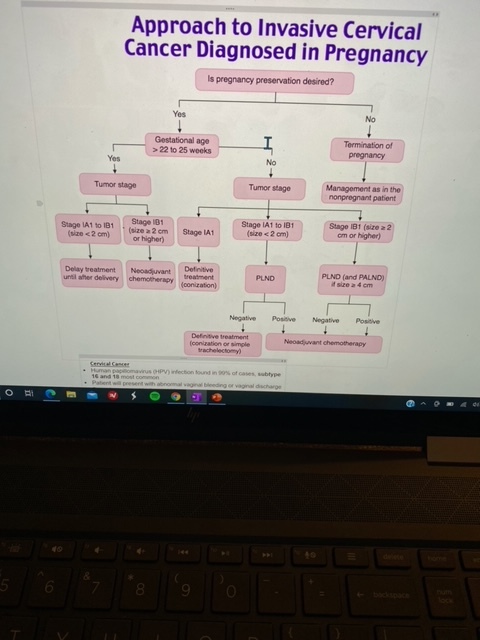
In summary, anyone in pregnancy w/ 1B2 or greater gets chemotheraphy.
Pts early gestation, i.e less than 24 weeks, who are 1A1 can get a cone. If 1A2 to 1B1 get LND, and if neg, cone, otherwise just chemo.
If later gestation and 1A1-1B1, delay rx!
- Taxol:
- Actinomycin:
- Vincristine:
- Carboplatin:
- etoposide
- 5-FU
Which agents are known to ahve the most deleterious effets on ov reserve?
- Taxol: alopecia, perepheral neuropathy (1st line rx agent is duloxetine) (microtubule stabilizer)
- Actinomycin: mucositis
- Vincristine: neuropathy
- Carboplatin: nausea (DNA cross linking), nephrotox, ototox
- myeloid
- thymedine synthase inhibitor
- Alkaltating agents like cyclophos and iphos
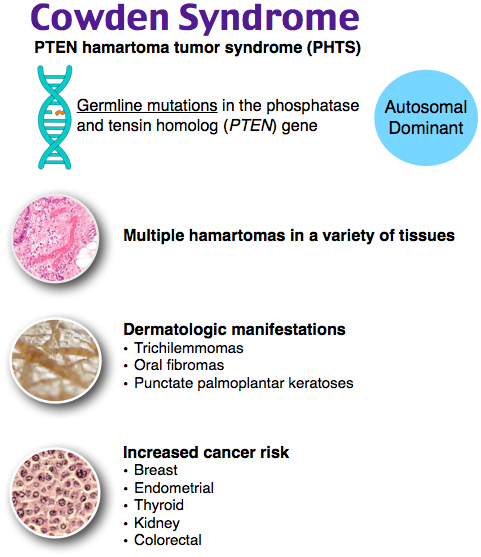
- Cowden Syndrome: gene and cancers. Surveillane?
- Li-Fraumeni: gene and cancers
- Peutz-Jaeger
- What is the second most comon casue of hereditary breast CA?
- PTEN: breast (most common), endometrial, colon, thyroid, hemartomas (skin), kidney
Cowden syndrome is an autosomal dominant disorder resulting from a mutation in PTEN, a tumor suppressor gene, located on chromosome 10 (10q23.3).
Cancer surveillance includes annual thyroid ultrasound, skin exam, breast imaging, endometrial biopsy, colonoscopy, and biennial renal imaging. Prophylactic mastectomy and hysterectomy may be considered.
- P53: sarcoma, bone, brain, adenocortical
- Malignancies associated with Peutz-Jeghers syndrome include colorectal and gastric, breast and ovarian, and rare well-differentiated adenocarcinoma of the cervix (adenoma malignum). Gastrointestinal polyposis (mostly in the small bowel) and mucocutaneous pigmentation are unique to Peutz-Jeghers syndrome and are required for the diagnosis. A mutation in serine/threonine kinase 11 (STK11) confirms the diagnosis.
- Lynch
Cowden syndrome is associated with an 85% lifetime risk of breast cancer, a 35% risk of thyroid cancer (usually follicular), a 35% risk of renal cell carcinoma, a 30% risk of endometrial cancer, a 10% risk of colorectal cancer, and a 5% risk of melanoma.
- Endometrial cancer staging?
- What is the staging procedure
- Who gets LND at time of surgery?
- How to we decide who gets what Rx after surgery and what are those Rx?
- What is the survaillance?
- Psommoma bodies are asso with what type endometrial ca?
- The only factors that generally decrease a patient’s risk of endometrial cancer are combined oral contraceptives and cigarette smoking. t or f
Stage 1a: <50%
Stage 1B: >50%
Stage 2: cervix
Stage 3a: uterine serosa, adnexa, pelvic cyto+
Stage 3b: vag/parametrial
Stage 3c1: pelvic lND
Stage 3c2: paraaortic lND
Stage 4a: rectal/bladder mucosa
Stage 4b: distant mets
_____________
Staging: TAH, BSO, Pelv/ParaA LND
_____________
LND Dissection if: >50%, >2cm, type 2 (serous, clr cell, mmmt –> atrophic background, 50s, P53)
______________
Low risk (grade 1, confined to ut): no further Rx
Interm (age, LVSI, grade 2/3, outer 1/3) : radiation
High (+LND): chemo
_______________
Exam q3-6m x2 yr, then q6-12, +/- cyto
____________
uterine papillary serous carcinomas: psommoma bodies
_____
true
What is the most common ovarian germ cell tumor?
the MOST common ovarian germ cell tumors diagnosed during pregnancy?
Mature cystic teratoma
the MOST common ovarian germ cell tumors diagnosed during pregnancy or the immediate postpartum period are dysgerminomas
- What is the follow-up after a molar preg is evacuated?
- How do we diagnose postmolar GTD?
- How many months should a patient have normal hCG levels after successful treatment for gestational trophoblastic neoplasia before attempting to achieve a pregnancy?
- HCG weekly unitl 0 x3 weeks, then monthly x6 months
- Criteria for intervetion
- HCG level plateau 4 values +/- 10% over 3 weeks
- HCG level increases > 10% accross 3 values over a 2 week period
- Detectable HCG 6 months after evacuation
- 12
- GTD is divided into ___ and ___.
- Two types of moles?
- GTN is divided into nonmetastatic (__) and metastatic (__,___, ___).
- Partial vs complete moles:
- Which has fetal parts?
- Genotype?
- What are the risks of GTN after each?
- What are the risks of metastatic GTN after each?
- Pathologic features?
- Which is associated with theca lutein cysts and hyperT?
- GTN, and moles
- Complete and incomplete
- GTN is divided into nonmetastatic (inv moles) and metastatic (pstt,ett, chorioCA).
- Partial vs complete moles:
- Partial has fetal parts.
- Complete (46XX, 46XY), Partial (69XXY, XXX, XYY)
- Risk of GTN: Complete (15-20%), Partial (3.5%)
- Risk of metastatic GTN: Complete (3%), PArtial (0.7%)
- Complete: diffuse hyperplasia of throphphoblasts and villous edema; p57kip stain abscesnt
- Partial: focal
- complete moles are associated with theca lutein cysts and hyper T

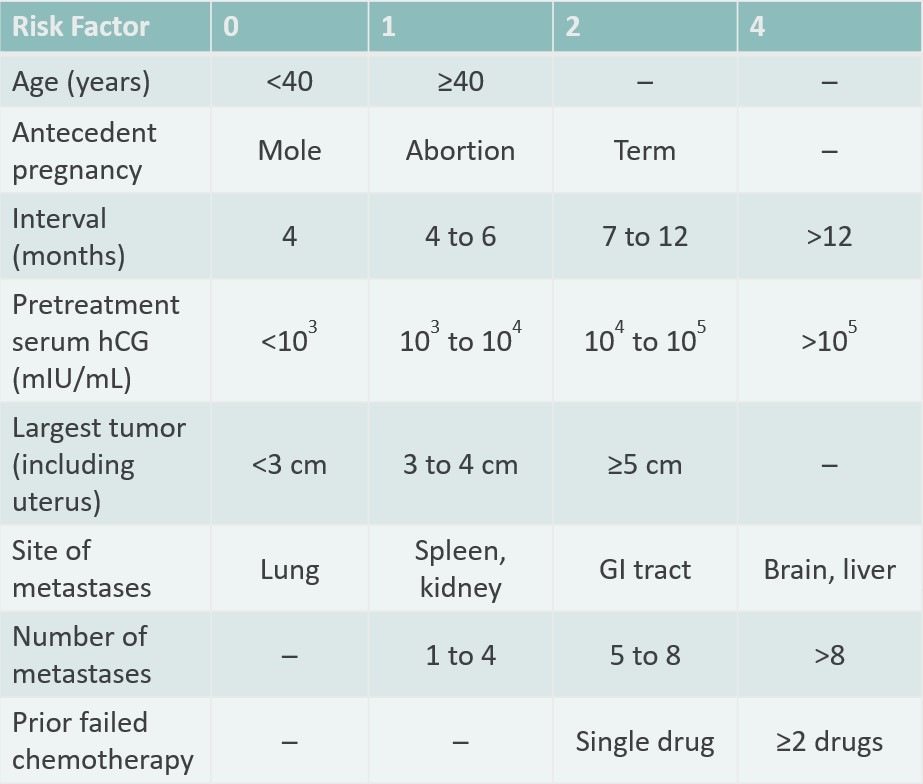
- What is the FIGO staging for GTN?
- What is the WHO staging for GTN?
- What is the cutoff for single agent with multiagent rx?
- What are the treatments of choice?
- FIGO for GTN
- Stage 1: uterus
- Stage 2: ovaries, parametria, vagina
- Stage 3: Lung
- Stage 4: All others
- See Photo for WHO staging.
- >= 7 is high risk! Multiagent
- MTX or actD
- Etop, Mtx, Act D, Cyclop, Oncovin (vincrist)
- GTN is preceeded by moles, missed/ep, term/preterm preg (%..).
- Met sites for GTN
- Basic GTN w/up?
- Pathologic features of:
- ChorioCA:
- PSTT:
- ETT:
- 50/25/25
- lung 80%, vagina (30%), pelvis (20%), brain (10%), and liver (10%)
- H/P, HCG, CXR, PanScan
- Pathologic features of:
- ChorioCA: no chorionic villi
- PSTT: intermediate trophob, usually after term preg -> hyst!
- ETT: rare, HPL
- What genes are mutated in Lynch?
- Pattern of inheritance?
- Associated cancers.
- Diagnostic criteria.
- Health screening recommendations
- MLH1, MSH2, MSH6, PMS2, ePCAM (missmatch repair)
- AD
- Colon (80%), endometrial (60%), ovarian (12%), GI (6%), GU (4%), brain, skin pathologies
- Amsterdam: 3 affected members, 2 generations, 1 under age 50. Immunihist for the proteins is completed. If they are all present, no Lynch. If MLH1 abscent, test for methylation (if methyated, not Lynch), if abscent, germline DNA testing based on protein absence.
- Colo q1-2 years, age 20-25 (oe 2-5 yrs b4 earliest dx) EBX q1-2yr, age 30-35, menstrual cal, report AUB; @ 45 TAH BSO
- Ovarian cancer staging.
- What are the parts of a staging procedure?
- Treatment beyond __ and __ stages requires taxol/platin.
- A woman’s lifetime risk of development of ovarian cancer is approximately 1 in __.
- How do ovarian cencers spread?
Stage 1a: 1 ov
Stage 1b: 2ov
Stave 1c: spill
Stage 2a: uterus
Stage 2b: pelvis (intraperitoneal)
Stage 3a: +retroperit LND and/or micromet beyond pelvis
Stage 3b: periroenal met beyond pelvis <2, +- LND
Stage 3c: peritoneal met beyond pelvis >2,+- LND
Stage 4a: PLeural effusison
Stage 4b: Paranchymal mets, mets to extrab organs
Staging:
Washings, TAH, BSO, Omentectomy, pelvic and paraA LND
Rx:
Anything beyond 1a/1b requires paclitaxol/carbopaltin
1/75 risk of ov ca
Ovarian cancer most commonly spreads via exfoliation throughout the peritoneal cavity
The most important personal risk factor for ovarian cancer is a strong family history of breast or ovarian cancer. It is important to distinguish a family history of ovarian cancer from a familial ovarian cancer syndrome.
Ovarian tumors are divided into: surface epithelial cells, germ cells, sex-cord stromal cells (oocyte supporting cells).
- What tumors do each of these result in?
- Germ cell tumors age group?
- Sumor Markers for GCTs.
- Which GCT is usualy bilateral, most common, malignant, and requires staging?
- Which type of ov cancer is most common in preg?
1.
- Surface epithelial: serous tumors, mucinous tumors, endometriod tumors, clear cell tumors, brenner tumors, cystadenofibromas.
- Germ Cells: teratoma, dysgerminoma, endodermal sinus/ yolk sac, chorioCA
- SCS: granulosa-theca, sertoli-lydig, fibroma
- 20-25yo
Teratoma: AFP, CA125
Dysgerminoma: LDH
Endomdermal sinus / Yolk Sac: schiller duval, AFP
clear cell: hobnail cells
- Dysgerminoma
- Dysgerminoma
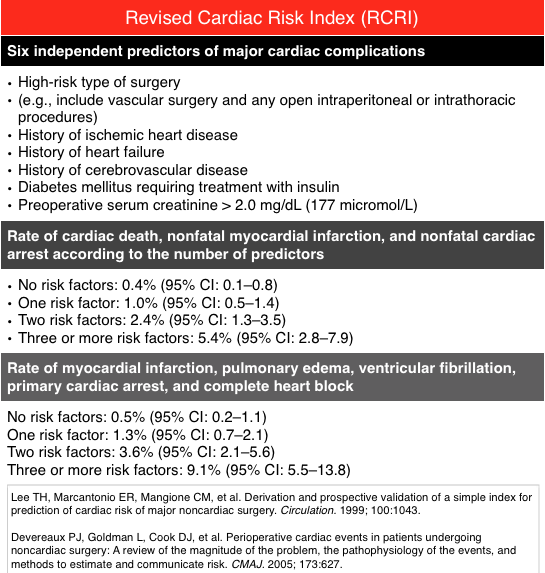
How is periOp Clearance approached?
In elective cases, the first step is to determine the risk of a major adverse cardiac event using a validated risk prediction tool (e.g., Revised Cardiac Risk Index, National Surgical Quality Improvement Program). If the risk is less than 1%, then no further evaluation is needed.
If the risk is elevated, then the next step is to determine the patient’s functional capacity. No further testing is needed if the functional capacity is good (> 4 metabolic equivalents). If the functional capacity is poor (< 4 metabolic equivalents), and testing will change the perioperative plan, then pharmacological stress testing (i.e., dobutamine stress echocardiogram) is recommended.
How to repair the following?
- Ureteral thermal injury at level of uterine artery?
- Ureteral transection at level of uterine artery?
- Resect and stick to bladder (ureteroneocystotomy)
- Ureterouretestomy.
Uncomplicated transection injuries in the middle third of the ureter should be repaired by ureteroureterostomy over a ureteral stent. The ureter should be spatulated at least 1 cm to create a wide-caliber lumen, the repair should be tension-free, and fine absorbable suture should be used. If the ureter is only partially transected, the surgeon can perform a primary repair (A), usually over ureteral stent. If the middle or upper third of the ureter suffers a complicated injury that results in a significant gap between the ureter and bladder, ileal interposition (B) or Boari flap reconstruction should be considered. In the case of ileal interposition, a segment of ileum is interposed between the ureter and bladder. A Baori flap reconstruction consists of forming an anastomosis between the ureter and a wide-based flap raised from the bladder. If the lower third of the ureter is transected, ureteroneocystostomy (C) can be performed. A psoas hitch can help with reimplantation of the ureter high in the pelvis by securing the bladder to the ipsilateral psoas muscle, resulting in a tension-free repair.
- Common types of uterine sarcoma include leiomyosarcoma, endometrial stromal sarcoma, and adenosarcoma. What are two risk factors for uterine sarcoma?
- Rx?
- Carcinosarcoma (MMMT) was previously considered a sarcoma; however, it is now considered a carcinoma. T or F
- Tamoxifen Use and pelvic radiation
- surgery and chemotherapy. Radiation may be used to decrease risk of local recurrence but generally does not have an effect on overall survival. Doxorubicin is the main chemotherapy used in the treatment of this morbid diagnosis.
- True
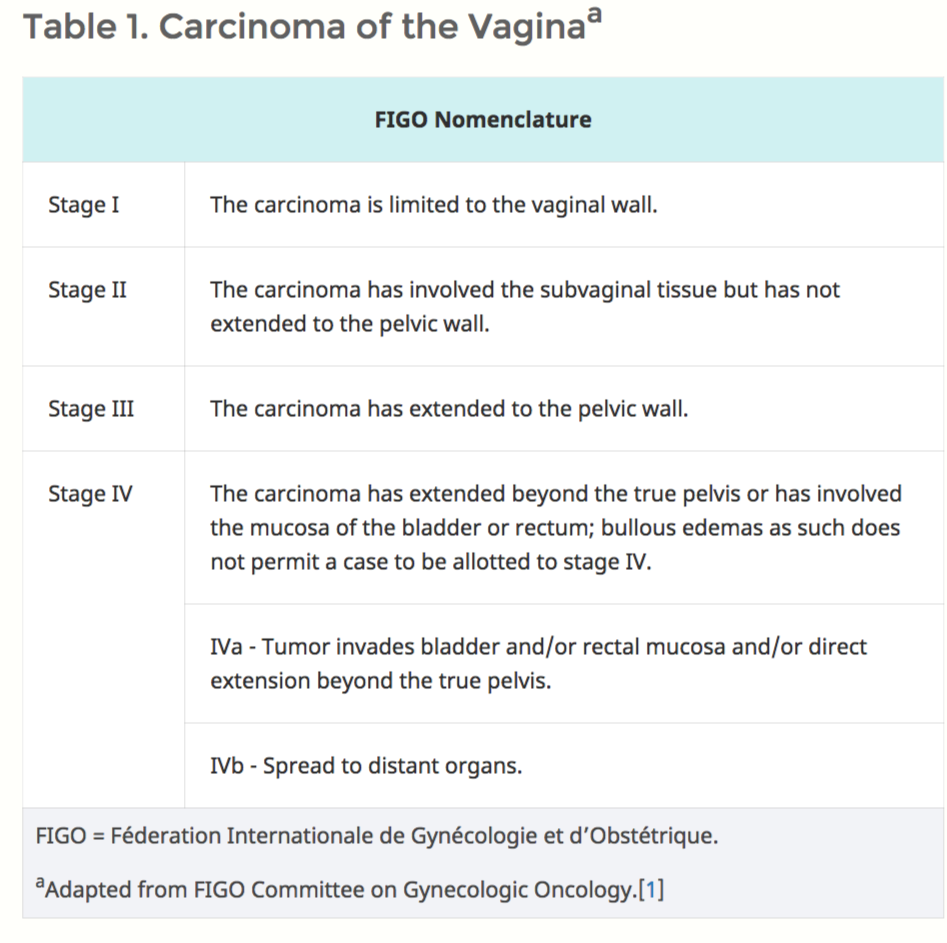
- Vaginal cancer is seen in women 60-70s, and most cases are SCC. T or F
- The lower 1/3 drain to __, uppr 2/3 drains to _.
- What is the most common rx?
- Most common peds vag tumor? rx?
- staging of vaginal CA is clinical. T or F
- What surveillance do we do for daughetersof DES exposure?
- False, most are mets, some are SCC primary.
- Lower 1/3 groin; upper 2/3 pelvic. Think vulval to the groin…lower 1/3 closer to vulva.
- Radiation!
- embryonal rhabdomyosarc (chemo, rad, surg).
- See photo
- Annual mammo and pelvic
- There are two types of VIN. What are they associated with?
- What we do do with VIN1?
- What do we do with VIN2/3.
- What margin?
- f/u?
- What are the two types of VaIN
- Rx of Vain 1
- Rx of Vain 2/3 / HSIL
- Vulvar Pagets is basically vulvar adenoCA. T or F
- Associated with what cancers? What tests do we do?
- Rx
- BCC rx
- Melanoma rx
- usual type: HPV; differentiated type: vulvar conditions.
- Treat if sx, cab ons. Associated with HPV6/11
- Excision. Laser. Imiquinod (TLR7); 5-FU (blocks dna methylation)
- 1 cm margin.
- f/u q6m x5yrs.
- Reasons to choose laser ablative therapy include young age, multiple, discrete lesions, and lesions involving other perineal organs such as the urethra, anus, and clitoris. In addition, wide excision on lesions of the vaginal introitus may cause dyspareunia, making laser therapy a better option.
There are two types of VIN: usual and differentiated. Usual VIN is typically caused by the human papillomavirus and associated risk factors. Differentiated VIN is typically associated with lichen sclerosus and squamous cell carcinoma. It corresponds to a higher-grade lesion and must be treated with wide local excision, with margins between 0.5 and 1 cm. For lesions abutting sensitive areas such as the clitoris, margin requirements may differ to protect function.
- LSIL and HSIL
- expectant
- Colpo + biopsy 1cm margin
—————————-
- True
- Breast, colon, urinary; mammo, colo, CT a/P
- wide local excision
——————————
- 1cm margin
- Radical local excision, margins vary 1-3cm



