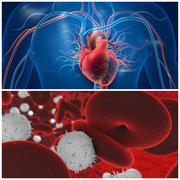
What is the definition of thrombosis?
Formation of a compact mass composed of the circulating blood elements inside a vessel or a heart cavity during life.
What are the causes and pathogenesis of thrombosis?
(Virchow’s triad)
- Roughness of the intima (Endothelial injury).
- Slowing of blood flow (stasis). “Bed rest”
- Changes in the composition of blood (hypercoagulability). “Inherited or acquired (due to cancer)”
What is the morphology of thrombosis?
Grossly and microscopically apparent laminations called lines of Zahn, which are pale platelet and fibrin deposits alternating with darker red cell-rich “RBCs and WBCs” layers.
What are the types of thrombosis?
A) According to site:
1. Venous thrombosis (phlebothrombosis): deep vein thrombosis in the lower limb
- Arterial thrombi: As in coronary, cerebral, & femoral arteries
- Heart chambers or in the aortic lumen are mural thrombi
B) Presence or absence of organism (infection): Septic “due to infection at the site of thrombosis” or Aseptic
What are the fate and complications of thrombosis?
1) Septic thrombus: fragmented by proteolytic enzymes → septic emboli → pyaemic abscesses.
2) Aseptic thrombus: fate depends upon its size
a. if small in size: Dissolution: dissolved and absorbed.
b. if large in size: (PEOC)
1. Propagation: Thrombi accumulate additional platelets and Fibrin
2. Embolization: Aseptic emboli → ischemia.
3. Organization “Replaced by fibrous tissue” & Recanalization
4. Calcification.
What is the definition of embolism?
It is the circulation of insoluble material (solid, liquid, or gaseous) in the blood and its sudden impaction in a narrow vessel.
What are the types of emboli?
1- Thrombo-embolism.
2- Fat embolism.
3- Tumor emboli.
4- Parasitic emboli.
5- Air embolism.
6- Amniotic fluid embolism.
What is the origin of thromboembolism?
A detached thrombus may originate from:
- Systemic veins reach the right side of the heart, then lungs → pulmonary embolism
- Cardiac thrombi: Usually originate in the left side of the heart. They are carried by the systemic arterial circulation to impact any organ (spleen, kidney, brain…etc.)
- Portal vein or its branches passes to the liver (portal embolism).
What are common sites for fat embolism? “Injury in BV + Fat source”
Common in sites containing fat such as; Bone fractures & abdomen due to acute pancreatitis
What do fat globules enter through?
ruptured veins
What is the definition of tumor emboli?
Malignant “not just neoplastic” cells pass as emboli in the circulation and give metastases in the organs.
What forms parasitic emboli?
Bilharzial ova and worm
Is amniotic fluid “contains epithelium” embolism rare or common? And when does it occur?
Rare
Occurs during delivery→ fatal pulmonary embolism.
What is the definition of air embolism?
Sudden admission of 100 cc air in the bloodstream —->sudden death.
The air may block the right ventricle or pulmonary arteries —> acute heart failure.
What are the causes of air embolism?
- Injury of large neck veins → gaping (because they are embedded in the fascia that prevents their collapse) → air is sucked into the vessels then the heart.
- Faulty technique during blood transfusion.
- Criminal abortion (air passes into uterine veins). “Using a tool that damages the BV”
- Caisson’s disease
What is caisson’s disease?
A type of air embolism occurs when deep divers work under high atmospheric pressure, where their nitrogen gas is dissolved in the tissues and blood.
Sudden decompression i.e. sudden ascent produces nitrogen bubbles which act as gas emboli.
What is the effect of embolism?
emboli lodge in vessels too small to permit further passage —-> partial or complete vascular occlusion ——>ischemic necrosis (infarction) of the tissue supplied by this vessel.
What does the effect of embolism depend on?
1- Size of embolus.
2- Nature of the embolus: septic (pyemic abscess) or aseptic (infarction).
3- State of the collateral circulation in the affected organ.
What are the sources of pulmonary embolism?
- Mainly arises from recent thrombi of calf veins in lower limbs (Most common).
- Thrombi in the Rt. side of the heart e.g. in cases of Rt. sided heart failure.
What are the effects of pulmonary embolism?
Depends on the size of the embolus
What are the effects of pulmonary embolism in the case of large embolus?
Occludes the pulmonary trunk or one of its main branches produces sudden death (no time for infarction)
What are the effects of pulmonary embolism in the case of a medium-sized embolus?
If the lung is healthy, no effect will occur as the lung has a double blood supply (pulmonary and bronchial arteries).
If the lung suffers from chronic venous congestion, lung infarct occurs. “ And the patient needs observation as he has hypercoagulability”
What are the effects of pulmonary embolism in the case of recurrent small-sized embolus?
Produce pulmonary hypertension due to lung fibrosis “resists blood flow” and right-sided heart failure “higher work done to overcome resistance” (cor-pulmonale).
What is the definition of ischemia?
Decrease of blood supply to a part of tissue due to occlusion of its artery.