What are the 4 routes by which pathogens can enter the lungs?
- Aerogenous
- Haematogenous
- Lymphatic entry
- Direct entry
Define pneumonia
Lung inflammation
How is lung inflammation classified?
- Bronchopneumonia (enzootic, suppurativem fibrinous)
- Interstitial pneumonia
- Granulomatous pneumonia
- Embolic pneumonia
Explain the pathogenesis of bronchopneumonia
Inhaled agents cause inflammation at the bronchoalveolar junction. An acute inflammatory response is triggered. And exudate of fluid and plasma proteins is formed inthe bronchioles and alveoli. Alveolar macrophages are recruited and neutrophils emigrate to site of inflammation.
How are lesions distributed in bronchopneumonia?
Cranio-ventrally, due to inhalation and gravity. Affects the bronchi, bronchioles and alveoli
What are the causes of bronchopneumonia?
- BACTERIA
- Mycoplasma
- Aspirated food/gut contents
- Viruses (and secondary bacterial infection)
Describe enzootic pnuemonia
- High morbidity, low mortality
- Usually chronic, young animals
- Aetiology - Mycoplasma in sheep and pigs
- Gross - cranioventral, dark red, sharply demarcated, collapse and consolidation. Suppurative material in bronchi and bronchioles
- Histo - peribronchial cuffing
What kind of pneumonia can be seen here?
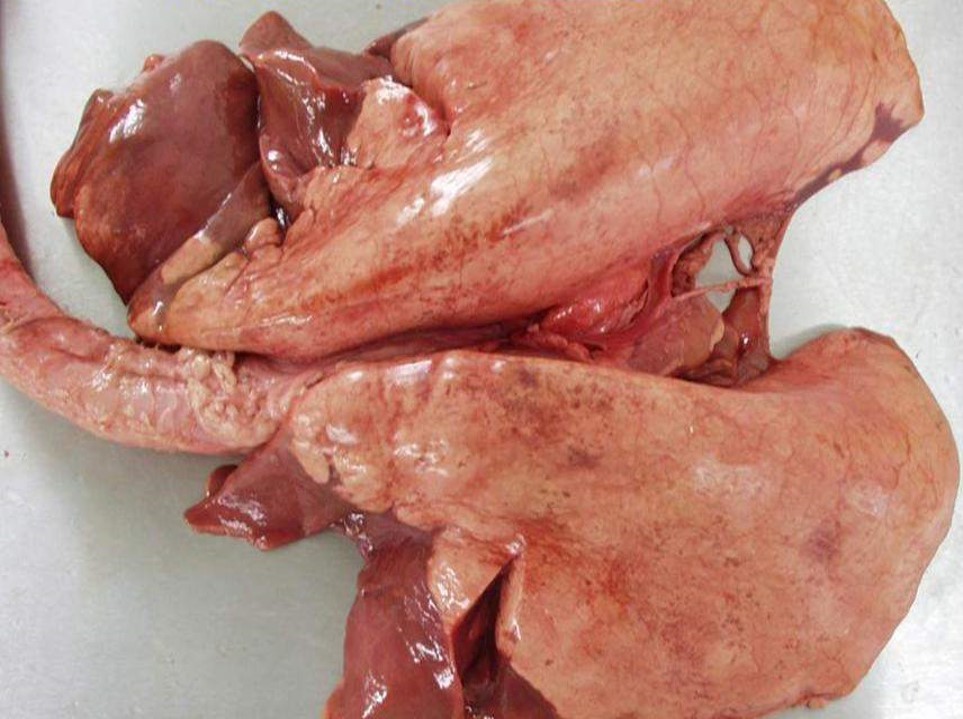
Bronchopneumonia, enzootic
What does this histological image show?
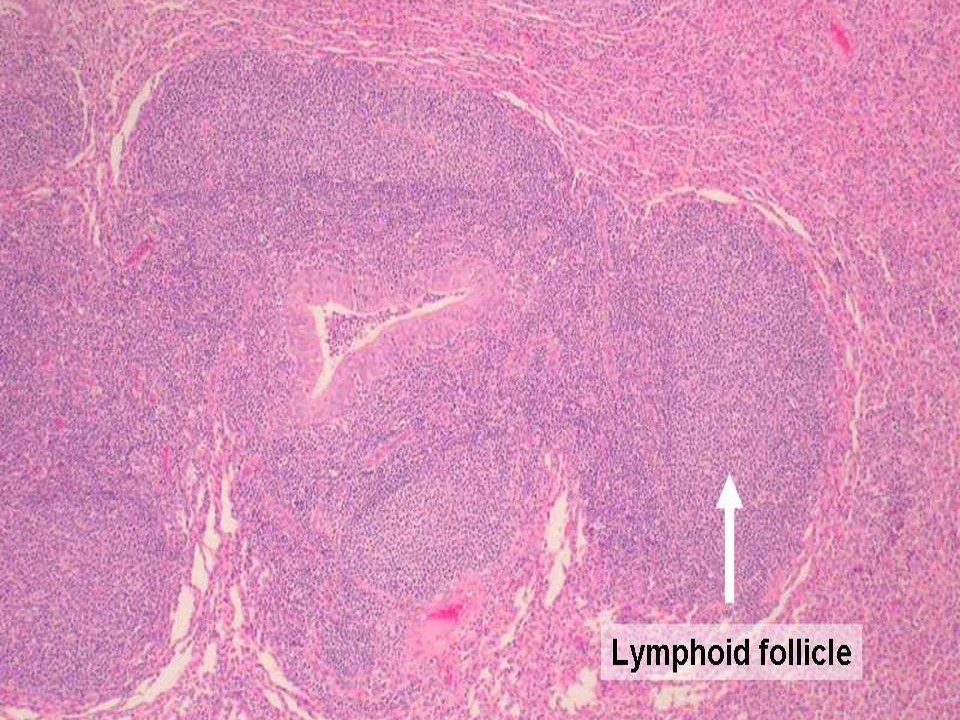
Lymphoid cuffing around a bronchiole. Enzootic pneumonia
Describe suppurative bronchopneumonia
- Presence of degenerative neutrolphils
- Aetiology - mostly bacterial (Pasteurella multocida, Bordetella bronchiseptica, E.coli, Strepp. spp); aspiration of bland contents; viral infection predisposes to bacterial infection
- Exudate - purulent, mucopurulent visible on airway surfaces
- Distribution - cranio-ventral; patchy/confluent areas/whole lobes
- Gross lesions - red, consolidated, bilateral, not as sharply demarcated
- Histo - degenerate neutrophils filling alveoli and airways. NO lymphocytic cuffing
What kind of pneumonia is shown here?
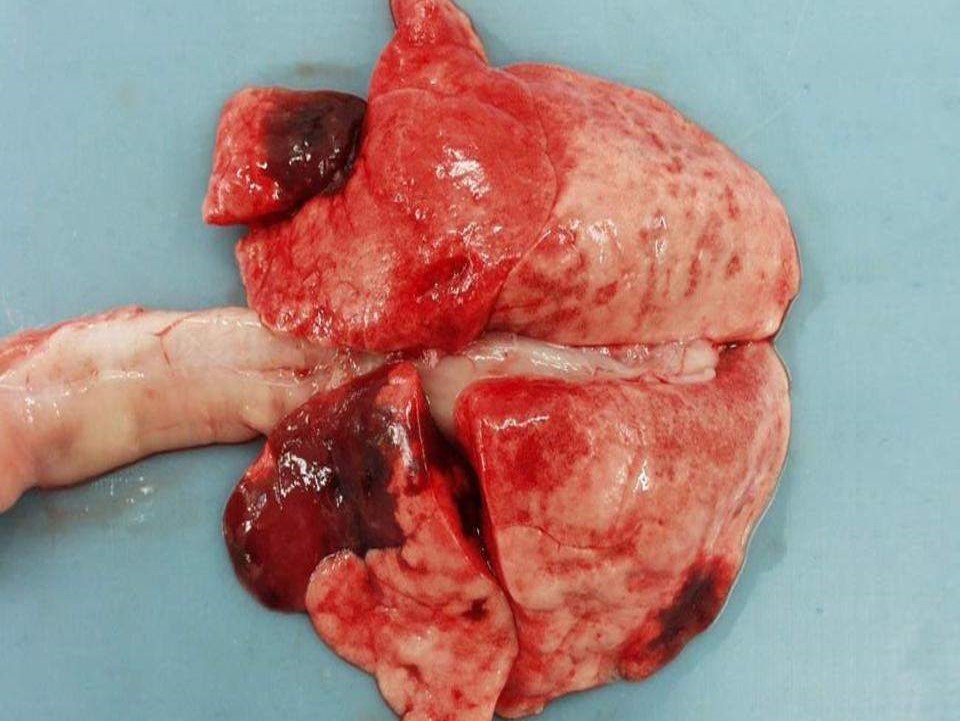
Suppurative bronchopneumonia
What does this histological section show?
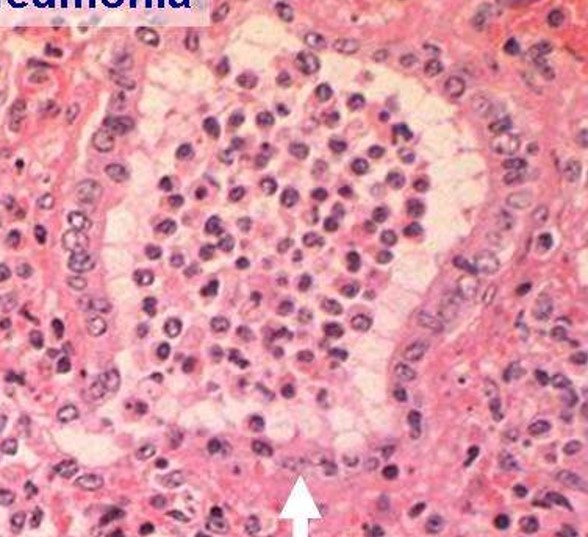
Bronchioles and alveoli with exudation of neutrophils and macrophages. Bright pink = intact septa
Describe fibrinous bronchopneumonia
- Fibrinous = fibrin, oedema, degenerate neutrophils, necrosis
- Aetiology - Cattle (Mannheimia haemolytica)
- Pigs (*Actinobacillus pleuropneumoniae),* not cranio-ventral distribution\* - Aspiration of gut contents - Distribution - cranioventral, spreads rapidly within/between lobules. Often affects large confluent areas and pleura (pleuritis/pleuropneumonia)
- Gross - fibrinous pleural surface and marked expansion of interlobular septae
- Clinical signs and death can occur as a result of severe toxaemia and sepsis
What kind of pneumonia is shown here?
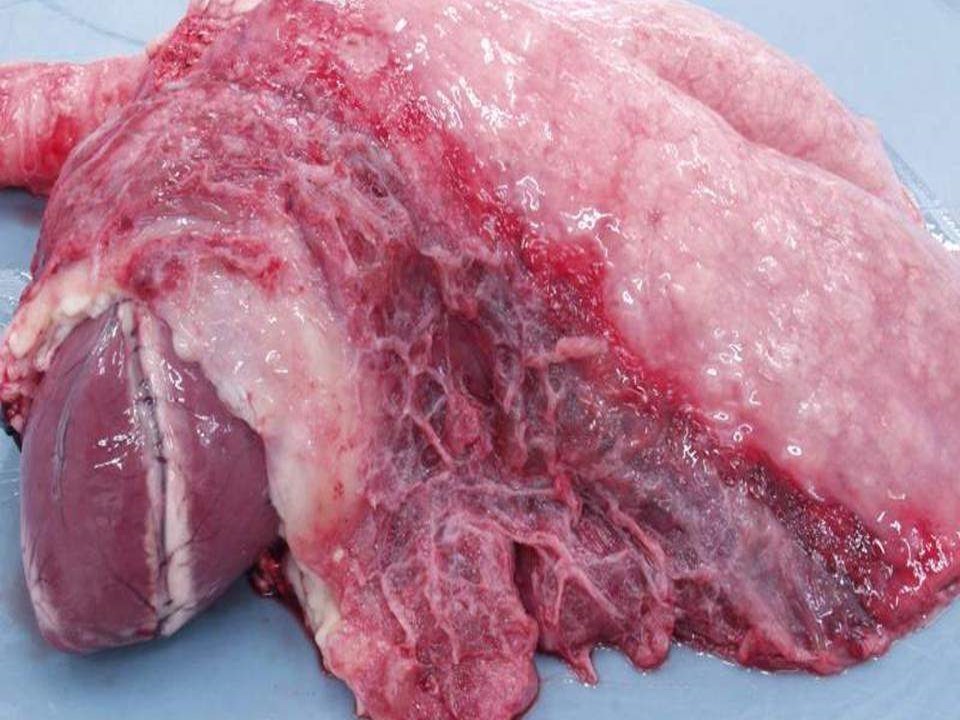
Fibrinous bronchopneumonia
What is shipping fever and in what species is it found?
- Cattle
- Mannheimia haemolytica
- Colonises in the lower resp tract
- Produces leukotoxin - lyses alveolar macrophages nad neutrophils which release lysosomal contents causing tissue necrosis and fibrinous bronchopneumonia. Extensive deposition of fibrin in interlobular septa and on pleura
Describe aspiration pneumonia
- Subset of fibrinous
- Distribution - typically cranioventral; dogs, right middle lobe most commonly affected; may be asymmetric
- Predisposing causes - handfeeding neonatal animals, megaoesophagus, cleft palate, down animals, iatrogenic
- Gross - green/brown/black discolouration, foul smelling
What kind of pneumonia is shown here?
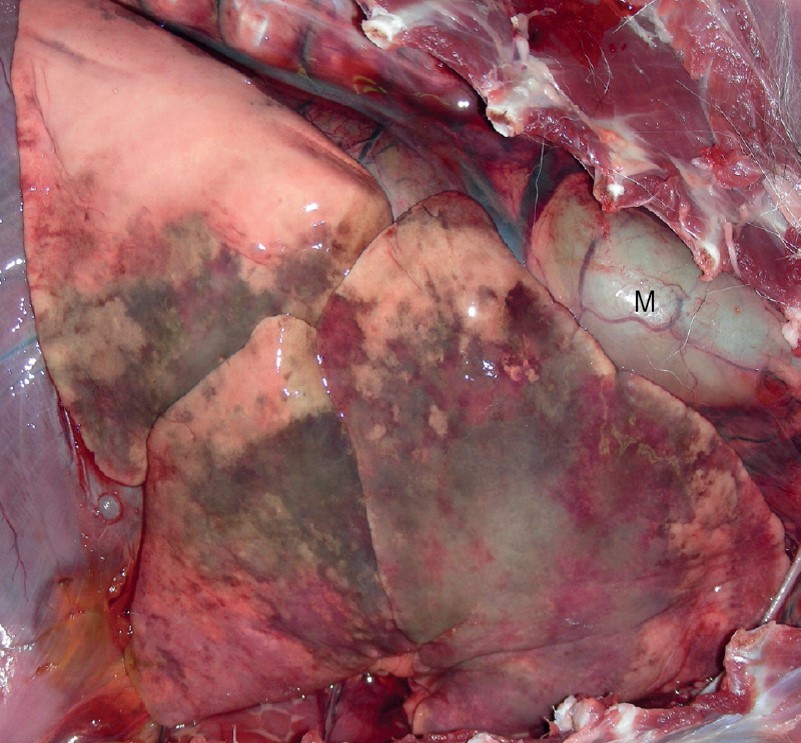
Aspiration pneumonia
What are possible sequelae to acute bronchopneumonia?
- Resolution
- Chronic pneumonia - BALT hyperplasia, bronchiolar goblet cell metaplasia
- Abscess formation
- Pleuritis
- Bronchiectasis
- Death
Describe interstitial pneumonia
- Distribution - diffuse
- No exudate - inflammation involves the interstitium/alveolar epithelium
- Gross - large lungs that don’t deflate (fill up entire thoracic cavity); rib impressions; rubbery texture
- Aetiology - viral (canine distemper, IBR), inhaled toxins/gases, toxic metabolites, acute respiratory distress syndrome, ventilator-induced injury
What kind of pneumonia is shown here?
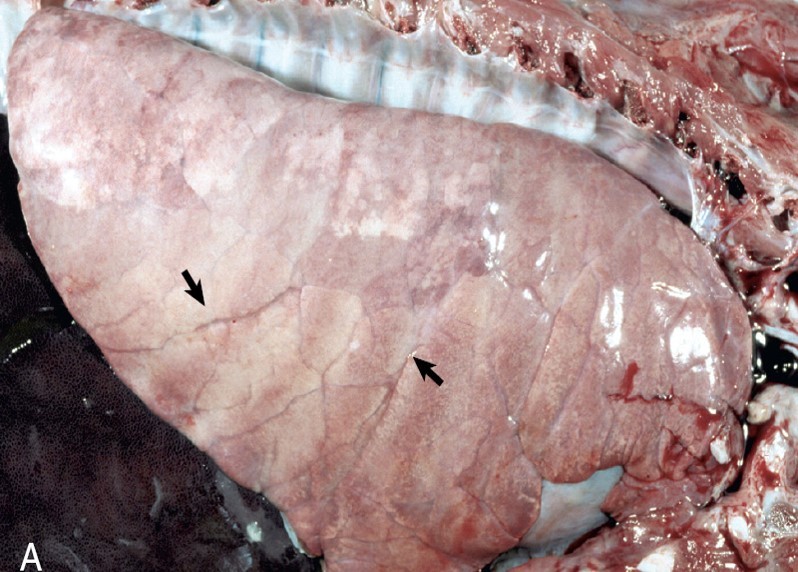
Interstitial pneumonia
Describe granulomatous pneumonia
- Distribution - multifocal, any lobe
- Gross - firm nodules, crumbly dry material
- Histo - epithelioid macrophages, multinucleated giant cells in sheets or discrete granulomas
- Route of entry - aerogenous/haematogenous/lymphatic spread
- Aetiology - bacteria (Mycobacterium bovis), fungi (Cryptococcus neoformans, Coccidiae immitis), parasites (Dictyocaulus spp.)
What can be seen in this histological image?
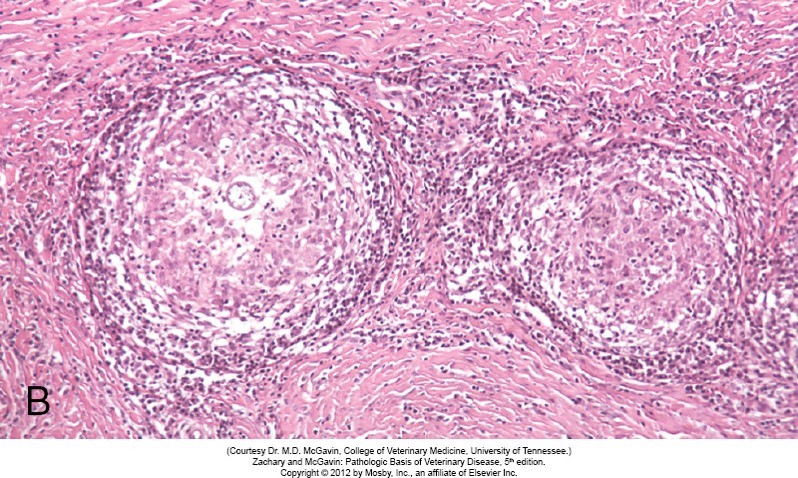
Granulomas
What kind of pneumonia is shown here?
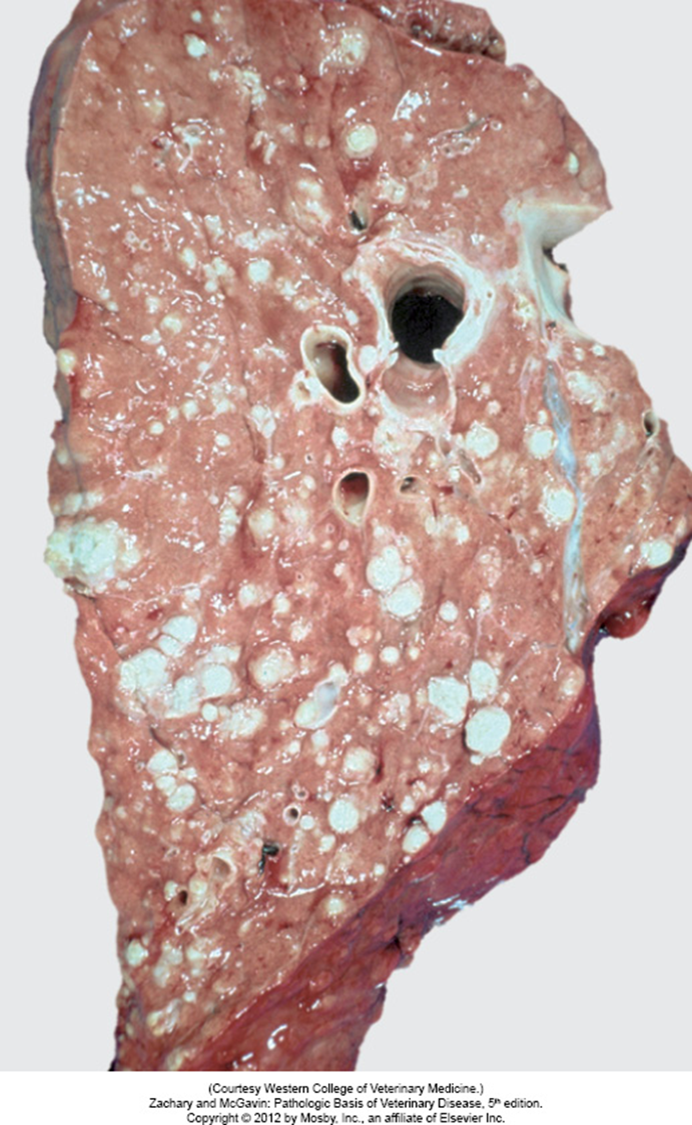
Granulomatous pneumonia
Describe verminous pneumonia in relation to Dictyocaulus
- Interstitial - larval migration
- Bronchitis - intrabronchial adults
- Granulomatous - aberrant parasites, dead larvae or eggs
- Distribution - caudal
- Gross - collapse of lung or small nodules
*parasitic infection can cause a variety of lesions, depends on which stage of the lifecycle the parasite is in*






