What are the goals for ‘safe anesthesia?’
- Allow surgical/medical procedures to be performed with minimal risk to life or HEALTH to the paitent
- Lack of mortality and lack of morbidity (impaired organ function; other complications)
What is safe anesthesia (5)?
- Good pre-anesthetic evaluation
- Adequate preparation and anticipation of possible problems
- Vigilant monitoring through recovery
- Knowledge of the physiologic parameters of the cardiovascular/respiratory systems
- Knowledge of the pharmacodynamic effects of the agents used
T/F: There is no safe anesthetic; only safe anesthetists.
TRUE
What are the 5 main mortality/morbidity risk factors in anesthesia?
- Concurrent disease
- Advanced age
- Extreme weight
- Emergency procedures and after hours
- Human error (poor pre-op and post-op patient care, inadequate monitoring, inadequate teamwork, disorganization/poor communication)
T/F: Over half of anesthesia-related deaths occur within 0-3 hours post-op.
TRUE
What 6 things are included in the pre-anesthetic patient evaluation?
- Signalment and general appearance and attitude
- Pertinent history
- Physical exam and accurate wt.
- Risk assessment (ASA physical status)
- Pre-anesthetic work-up
- Preparation
What does the pre-anesthetic work-up depend on? What is included?
Physical status
Reason for anesthesia Blood work; radiology; ECG or echo if necessary
How much fat does ideal weight contain?
20%
What must you do to avoid overdosing an overweight animal?
Estimate ideal weight for drug dosages–esp. IV induction drugs; central compartment close to ‘normal’
T/F: Thiopental, propofol are very lipophilic–slowly redistributed–>decreased Vd in obese
FALSE–they are rapidly redistributed–>increased Vd in obese
T/F: Premeds are best given IM rather than IV.
FALSE–best given IV rather than IM (low blood flow in fat)
What are some concerns in overweight/obese animals?
- Cardiac output increased–increased blood volume; contributes to volume overload with cardiac disease
- Decreased lung and chest wall compliance
- Decreased functional residual capacity (FRC) excess fat and volume impinging thorax–involved in gas exchange –> resp. depression (low tidal vol; inc. CO2; mechanical ventilation necessary)
T/F: Certain positions can compromise pulmonary function.
TRUE–it can impede adequate ventilation even in lean patients
What should you do before anesthetizing an extremely thin/cachectic patient? What concerns exist?
- Investigate for underlying disease
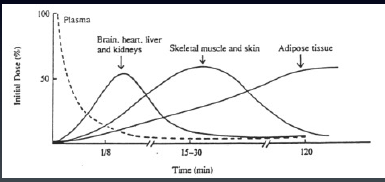
- IV anesthetics–distributed from the plasma to VRG, then to muscle and fat
- No fat = drugs stay in VRG longer
- Careful administration–titrate to effect
- Prone to severe hypothermia
Why is size important when anesthetizing tiny patients (4)?
- The tiny can get very cold
- Accurate weight to avoid overdose of drugs/fluids (use fluid pump to avoid accidental overdose)
- Use appropriate size syringes–think about dilution of induction drugs for titration
- Patient difficult/impossible to access under drapes
- Make sure catheter is accessible
- May often be prone to hypoglycemia
Why does size matter when anesthetizing large breeds (3)?
- Giant breeds–profound response to sedatives (acepromzaine)–slower metabolic rate
- Smaller body surface area (BSA) to body weight ratio–reduce dosage rate or dose to BSA
- Senescence occurs earlier so life expectancy lower
How does age affect anesthesia (specifically young/old)?
- Neonatal (anesth common in large animals)–weeks/month–pediatric (depends on breed)
- Increased sensitivity to drug effects
- Hypothermia
- Avoid hypoglycemia (BBB less developed)
- Geriatric (~>75% of life span)
- Generally, decreased organ reserves; sub-clinical dysfunction
- In general; dosages will be altered and certain drugs might be avoided
What must you keep in mind when anesthetizing brachycephalics?
- Elongated soft palate, everted saccules; obstructed nares–> prone to upper airway obstruction
- Vigilant observation when sedated and after extubation
- High vagal tone predisposes to bradycardia

What should be kept in mind when anesthetizing greyhounds?
- High energy/highly stressed
- Susceptible to stress hyperthermia
- Temp can go up to 105 post-surgery
- Good sedation desirable
- Susceptible to stress hyperthermia
- Lack of fat–> IV anesthetics stay in VRG longer
- Avoid thiobarbiturates
- Sleep times longer (propofol) and pharmacokinetics differ from non-grehyounds–not just because of lack of fat
- Thiobarbiturates (NOT oxybarb or methylatedoxybarb)
- Decreased ability to metabolize drugs via P450 family of enzyme pathways
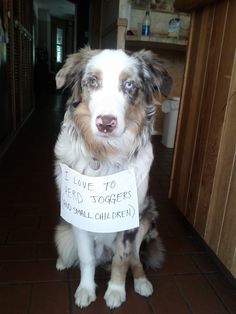
What should be kept in mind when anesthetizing herding breeds?
- Multidrug resistance gene (MRDI) mutation
- MDRI gene code for p-glycoprotein (drug transport pump that limits drug absorption, distribution/excretion–particularly from brain which may lead to drug toxicity): some breeds have mutation
- Ivermectins; anti-cancer; anti-diarrhea
- Acepromazine; butorphanol
- Avoid large dosages to avoid prolonged effects
Which breeds have a predisposition for cardiomyopathy? What should you do?
- Boxer
- Doberman pincher
- Giant breeds
- Maine coon cat
- Careful ascultation–if murmur or dysrhythmia heard further workup warrented (radiography/echocardiogram/ECG)
What cardiac/renal disease medications potentiate anesthesia-related C/V depression?
- Angiotensin converting Enz inhibitors
- Maybe best to avoid acepromazine
- Beta or Ca channel blockers
What conditions/medications cause an impediment to the patients’ ability to handle stress response?
- Hypoadrenalcorticism (Addison’s)
- Treatment for Cushing’s (mitotane, trilostane) or sudden termination of long-term corticosteroids
What are some common drug interactions that should be considered before anesthetizing patients?
- Serotonin reuptake inhibitors, tricyclic antidepressants; MAO inhibitors
- Interactions with tramadol
- Some opioids (serotonin syndrome)
- Phenobarbitol–P450 inducer–increases metabolism of other drugs metabolized similarly
- Herbal medicines


-
Intro15
-
Machine46
-
Breathing systems52
-
Inhalant anesthesia68
-
Patient evaluation45
-
Principles of monitoring44
-
Monitoring the anesthetized patient37
-
Premedication70
-
Induction24
-
Injectable anesthetics15
-
Blood gas analysis34
-
Recovery38
-
Mechanical ventilation37
-
Neuromuscular blocking drugs21
-
Ruminant anesthesia52
-
Swine anesthesia36



