Classification and causes of immunodeficiency (9.1)
Primary: A congenital immunodeficiency. Arise due to genetic mutations in genes involved in immune function - most rae autosomal recessive.
- Antibody abnormalities
- Lymphocyte e.g. SCID
- Leukocytes e.g. leukocyte adhesion deficiency
- Innate: Complement, phagocytes
- Developmental defect e.g. of brachial arches (DiGeorge - 3rd and 4th brachial arches)
Secondary: Acquired (infection/disease/aging/malnutrition/iatrogenic causes): Arise due to environmental insults and/or as a consequence of other illnesses.
- AIDS (following HIV infection)
- Immunosuppression for transplant
Consequences of immunodeficiency:
Leaves individuals more susceptible to infection. These infections are often Serious Persistent Unusual (opportunitsic) and Recurrent (SPUR). The immune defect often corresponds to the type of infection seen, e.g. bacterial infections are often associated with complement, phagocyte and antibody defects whilst fungal and viral infections are associated with T cell defects.
HIV (9.1)
- Types, infection, routes of transmission, sequence of infection, pathogenesis, outcome of infection, sequelae*
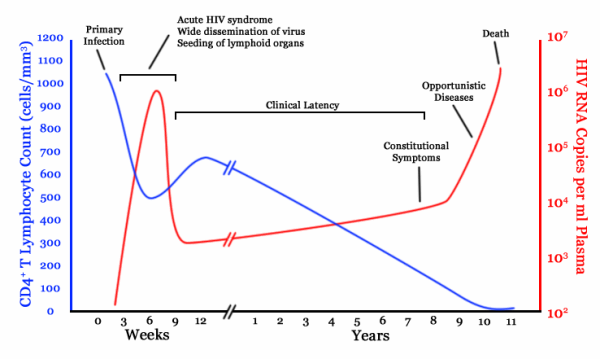
- (draw course of infection diagram)*
HIV - Human immunodeficiency virus
A retrovirus.
Types:
HIV-1: Very pathogenic
HIV-2: Not as pathogenic. Predominantly seen in Africa. Previous HIV 2 infection may ‘protect’ against HIV-1 infection
Infection:
Viral gp120 binds to cellular CD4+ receptors alongside co-receptors (CCR5 and CXCR4 = chemokine receptors). Fusion of the virus particle and the cell is dependent upon the hinge activity of the gp41 fusion domains, which allows for membrane fusion.
Cells which express CD4+: Helper T cells, macrophages, monocytes, dendritic cells
CCR5: Macs., DCs, T cells
CXCR4:
Once inside the cell HIV uses reverse transcriptase to synthesise cDNA from its RNA genome. dsDNA is subsequently formed and integrated into the host genome, by integrase. As cellular DNA replication proceeds the cell inadvertently synthesises viral DNA, allowing for viral protein synthesis.
Viral protein translation produces a polyprotein which must be cleaved into individual proteins by a protease. Polycistronic RNA
Viral RT allows for rapid replication but is highly error prone - leading to the development of mutations and subsequent resistance.
Routes of transmission:
Sexual, mother to baby (placental, peri-natal and breast milk), blood or blood products (e.g. transfusion, sharing needles)
Sequence of infection:
Primary/acute infection a.k.a. serum conversion phase →assymptomatic infection → symptomatic infection
Pathogenesis:
Characterised by the continual loss of CD4+ cells, with ultimate failure to regenerate CD4+ T cells. Loss of immune function results leaving the host susceptible to opportunistic infection.
Outcome of infection:
Outcome is dependent upon viral set point, also upon a range of host and viral factors.
Anti-retrovirals look to decrease viral set point and subsequently improve prognosis/decrease progression
Host factors: CCR5 delta 38 mutations. Homozygous leads to decreased susceptibility to infection (loss of viral co-receptor binding abilty)
Viral factors: Nef
Sequelae
Immunocompromised - Below CD4+ T cell count of 400 cells per uL. Allows for opportunistic infection.
AIDS - A HIV patient with an AIDS defining diseases e.g.
Innate, humoral and cellular immune responses (9.1)
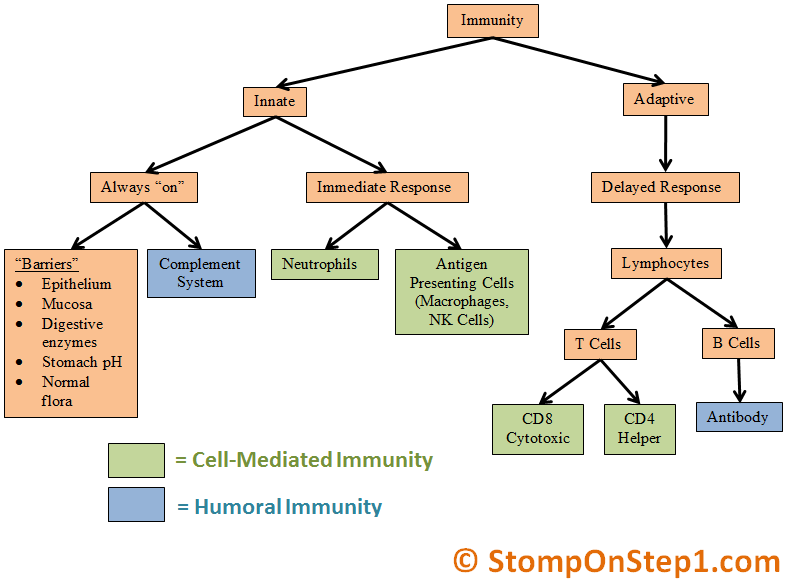
Innate: Complement, neutrophils, phagocytes, NK cells
Humoral: Complement, Igs. IgM is the first Ig produced during infection - class switching to a different subtype then follows, through gene switching of the heavy chain.
Cellular: T and B lymphocytes (adaptive), neutrophils + macrophages + NK cells (innate)
Skin pathology (9.1)
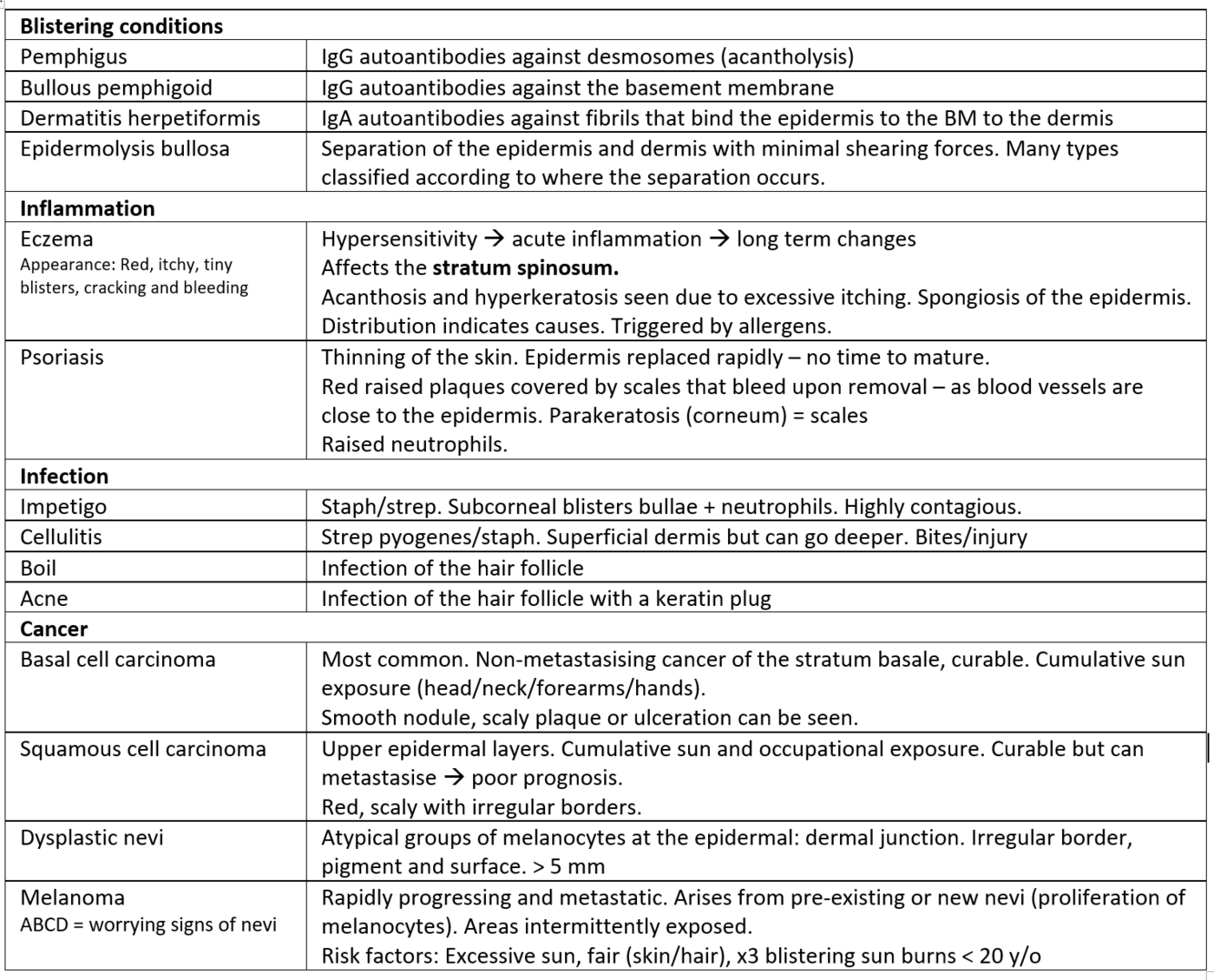
Blistering conditions, inflammation, infection, cancer
RTIs in immunocompromised or deficient patients (9.1)
- Common cause of mortality, morbidity and health-care costs
- Mucosal barrier is most common entry point for pathogens, even in immunocompetent individuals
- Increased susceptibility to infection → opportunistic infectious agents
- Aspergillosis and candidiasis
Viral latency and pathogenesis of viral infections (9.1)
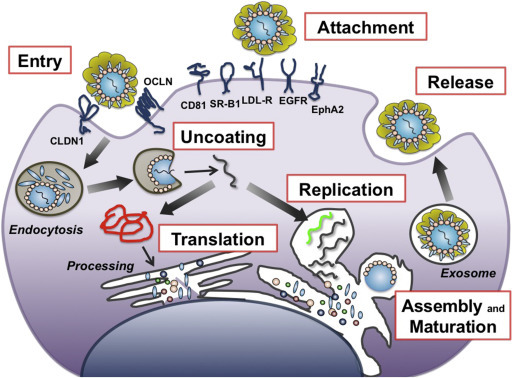
Outline the viral life cyle
Latent viral infection: The full viral genome is retained within the host cell but expression is dramatically reduced such that very few viral antigens and no viral particles are produced. The virus must be persistent and reversible (able to reactivate the viral genome) to be classified as latent.
The herpes simplex virus (lytic) and retrovirus families are capable of latency.
Pathogenesis of viral infection
The virus infects host cells. The virus then uses host cell machinery to synthesise its own genome and proteins. The virus may cause cell lysis, chronic infection, transformation or return latent.
AIDS and AIDS defining illnesses (9.1)
Diagnosis requires HIV infection and the presence of an AIDS defining illness.
AIDS defining illnesses emerge when CD4+ cells are < 200 cell/mm3
AIDS defining illnesses:
- Candidiasis of the oesophagus, bronchi, trachea or lungs (NOT mouth)
- CMV disease
- CMV retinitis
- Kaposki sarcoma: Low-grade vasoformative neoplasm (growth of inner lining of blood vessels). Sees the formation of skin lesions. May affect lymph nodes and internal organs.
- Toxoplasma gondii: Brain abscess
- EBV: Lymphoma
- Pneumocystis jiroveci: Pneumocystis pneumonia
Causes of RTIs in immunocompromised or deficient patients (9.1)
- Pneumocystis jirovecii → pneumocystsis pneumonia
- Mycobacteria tuberculosis → TB
- Bacterial pneumonia (strep pneumonia/staph aureus/H. influenza) → TB
- Candida albicans → Eosophagitis
HIV - Clinical presentation and staging (9.1)
Clinical presentation:
- Consider risk factors: IV drug use, sexual transmission, blood products (needle stick injury/tranfusion?)
- Fatigue
- Recurrent infection e.g. herpes
- TB/shingles/Kaposki’s sarcoma
- Fever and night sweats: Unexplained, lasting > 1 week
- Weight loss
- Diarrhoea
Staging:
Primary infection/serum conversion phase: Flu-like symptoms may be experienced. High levels of viral replication until the infection is brought under control
Assymptomatic/latent phase: No outward sign of disease but CD4 count declines. Very active viral replication. May persist for 10 + years
Symptomatic HIV infection and AIDS: Immune system failure and disease progresses.
HIV - Laboratory diagnosis (9.1)
Immunoassays: Very sensitive and specific
- Detect viral p24 Ag capsid protein
- IgG Abs to HIV1/2
Viral load tests: > viral load indicates poorer prognosis
- May be performed in the early stages due to lack of Ig presence
- Recommended for babies with suspected HIV due to maternal antibody transfer
HIV - Pathogenesis of immunodeficiency (9.1)
> viral load indicates poorer patient prognosis.
A continual loss of CD4+ (T) cells and the ultimate failure to replace the cells leads to a loss of immune function - leaving the patient susceptible to infection, particularly opportunistic infection e.g. candidia
Through the integration of viral DNA into immune cell nuclei the virus is able to utlise host cell ‘machinery’ to perform its replication - allowing for further increase in viral load.
HIV -Routes of spread (9.1)
Sexual transmission: Virus present in mucosal secretions. Transmission is greatest from men.
Maternal-foetal transfer: Placenta, during birth (via blood) or breast milk
Blood products: Sharing needles, blood transfusion, needle stick injury
Opportunistic infection (9.1)
An infectious agent that would not cause infection/illness in an healthy individual but is able to in an immunocompromised individual.
Examples:
- Candida albicans
- HSV (cold sores)
- CMV (retinitis)
- Toxoplasmosis (brain lesions)
- TB
- Cryptosporidosis (chronic diarrhoea)
- Cryptococcus (meningitis)
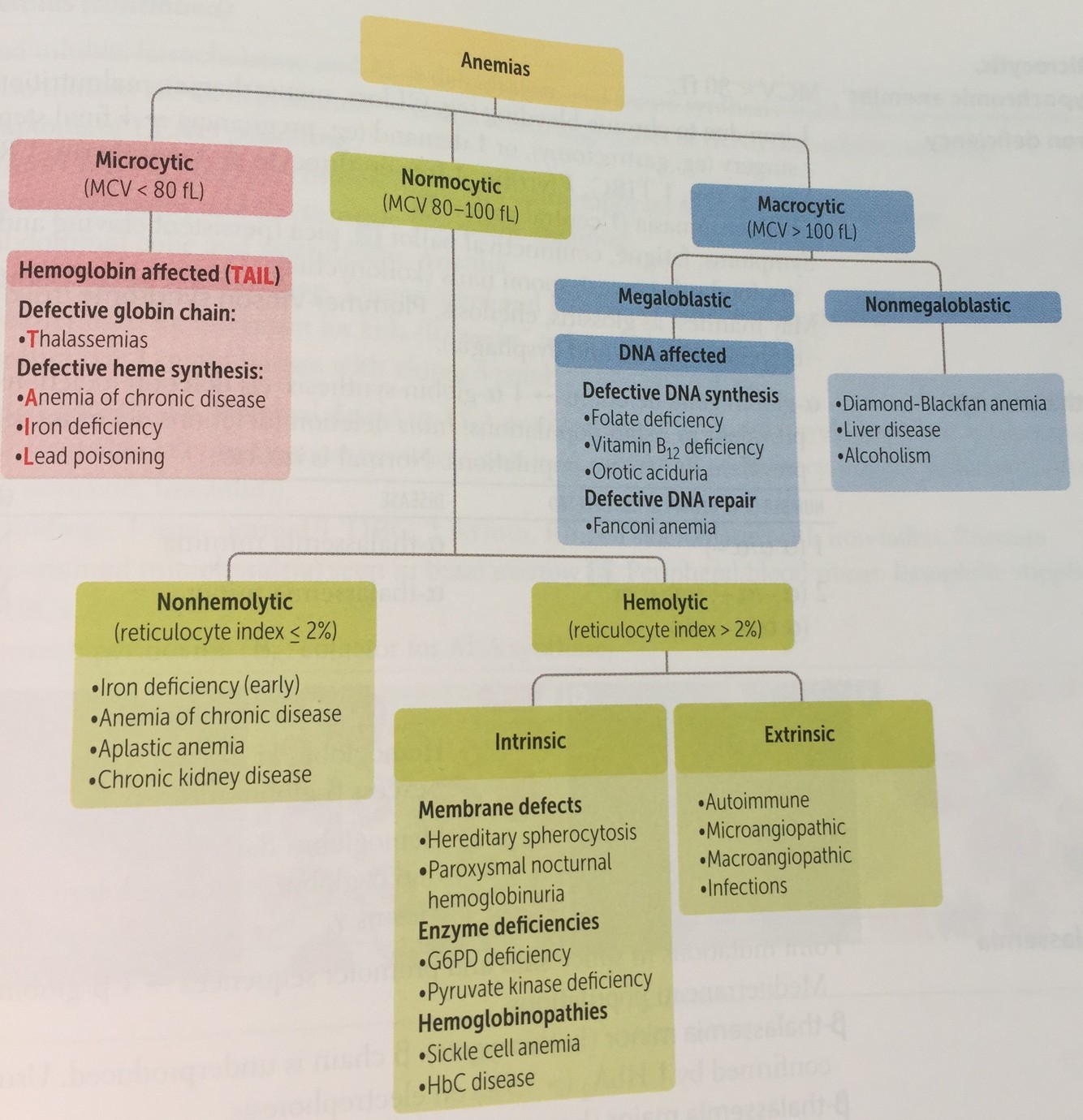
Anaemia (9.2)
Outline types (draw diagram)
An abnormality in the number of red blood cells or the amount of haemoglobin within red blood cells.
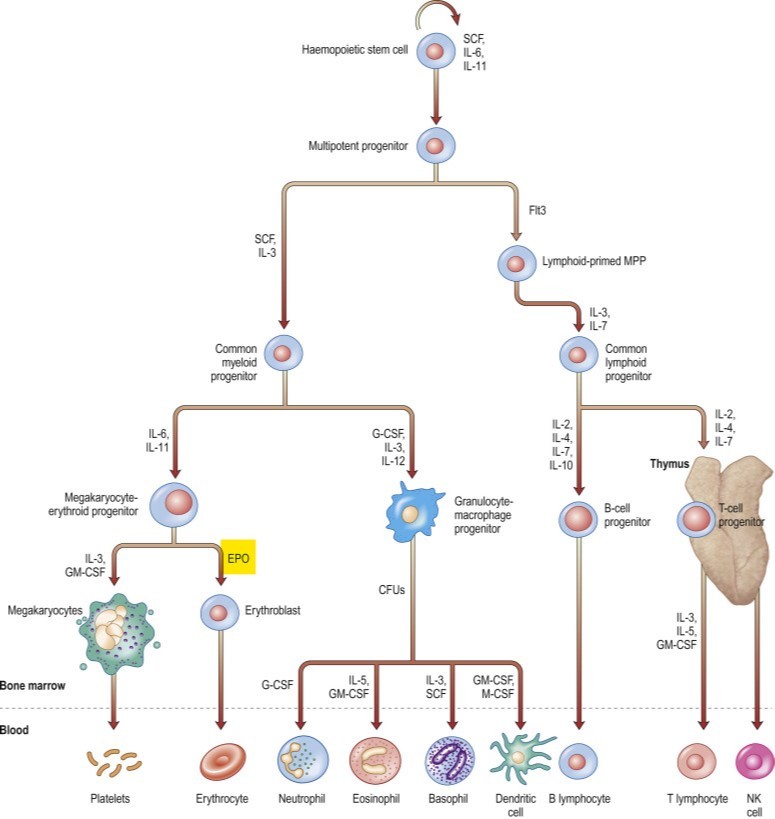
Blood cell production and turnover (9.2)
Life span of RBC: 120 days
Life span of platelet: 7 days
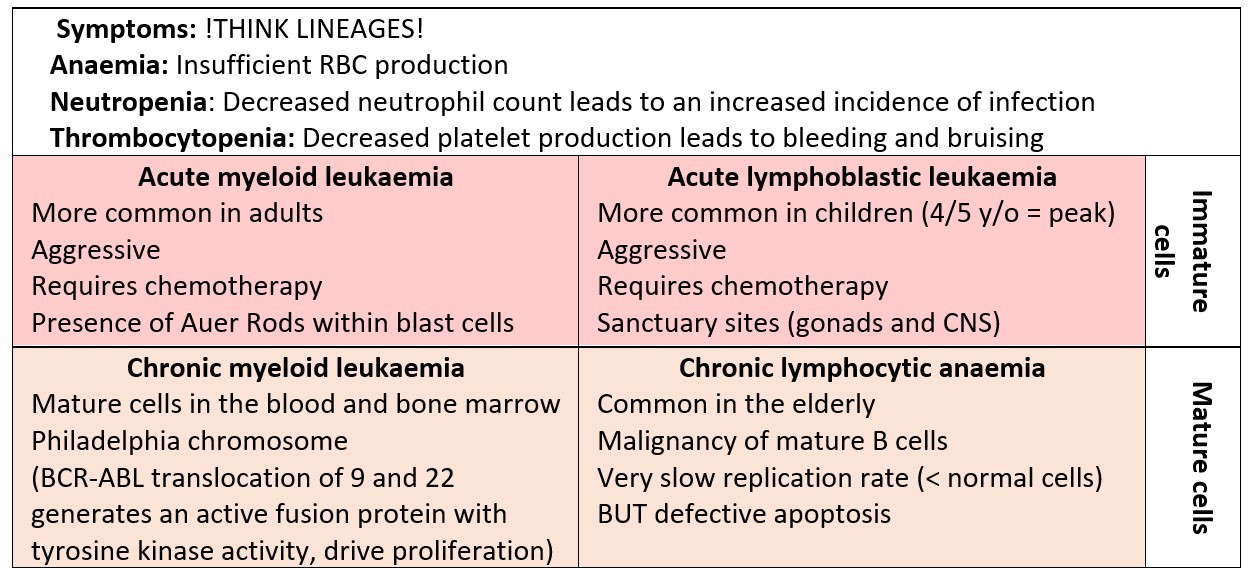
Leukaemias (9.2)
Symptoms, AML, ALL, CML and CLL
Spleen: Function and splenomegaly (9.2)
Functions of the spleen:
- Sequestrates platelets (storage for when required)
- White pulp: Immune processes - antigen recognition, Ig production
- Red pulp: Removal of defective RBCs from circulation
- Extramedullary haematopoiesis (pathology)
Splenomegaly
Causes:
- Storage diseases
- Autoimmune : SLE
- Congestive: Cirrhosis, portal hypertension
- Infection/inflammation: Acute, RA,
- Neoplasm:
Consequences:
Panocytopenia: Deficiency of RBCs, WBCs and platelets
Haemolysis
Increased plasma volume
What are biological medicines? (9.2)
A substance made from a living organism or its products.
Include hormones, enzymes, clotting factors and antibodies
Bone marrow donation and compatability (9.2)
Allogenic stem cell transplantation
Bone marrow donation matching is based upon HLA tissue antigen.
Bone marrow transplantation (9.2)
Harvesting, conditioning treatment
Harvesting of stem cells:
- From blood: Separation of stem cells from the blood using a machine to do so
- From bone marrow: Collection of bone marrow from the pelvis (iliac bone). Uses a syringe, performed under general anaesthetic.
- From cord blood: Blood from the placenta and umbilical cord of a newborn baby is used as a source of stem cells
Conditioning treament:
The recipient must undergo high doses of chemotherapy, and sometimes radiotherapy prior to receiving the transplant.
This ensures that the existing bone marrow cells are destroyed, destroys cancer cells and causes immunosuppression (preventing rejection).
Chemotherapy and radiotherapy (9.2)
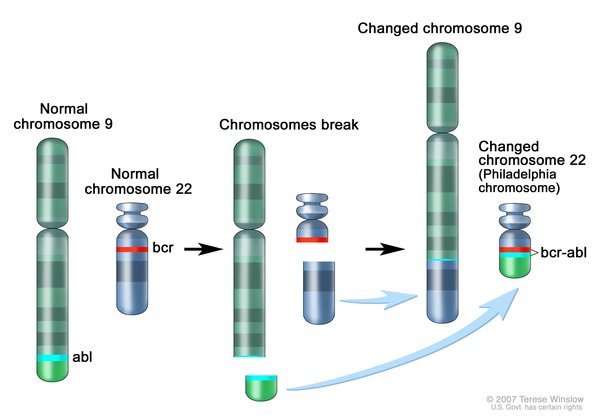
CML chromosome rearrangements (9.2)
Chronic myeloid leukaemia - Increased levels of mature cells within the bone marrow and blood.
Associated with the Philadelphia chromosome.
BRC-ABL translocation between chromosomes 9 and 22 leads to the generation of a functional fusion protein (changed chromosome 22 forms the Philadelphia chromosome). The protein produced has tyrosine kinase activity, allowing it to phosphorylate proteins. This phosphorylation activity drives proliferation - but does so quite sedately.
Graft versus host disease (9.2)
A type IV hypersensitivity reaction
Grafted immunocompetent T cells proliferate within the immunocompromised host and reject host cells with ‘foreign’ proteins. Can cause severe organ dysfunction.
May be advantageous in bone marrow transplant for leukaemia - graft vs tumour effect.
Current treatment for CML (9.2)
Treatment for chronic, accelerated and blast phases:
Tyrokine kinase inhibitor - Imatinib
- Not very successful in the blast phase of CML (not used)
Chemotherapy and allogenic bone marrow transplant (Haematopoietic Stem Cell Transplant - HSCT)






