Pelvis Flashcards

(93 cards)

1
Q

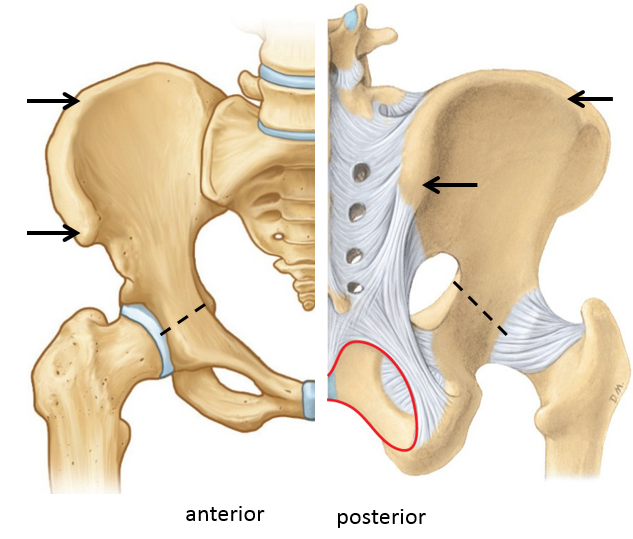
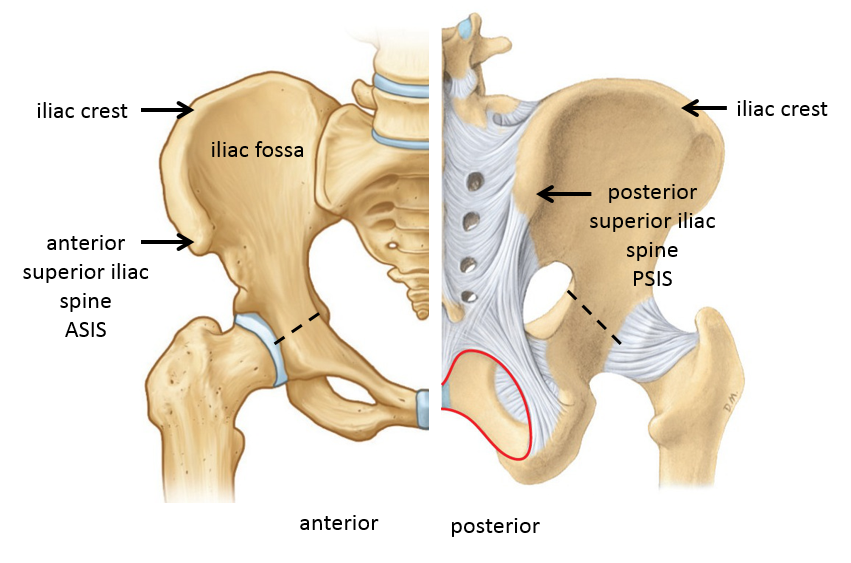
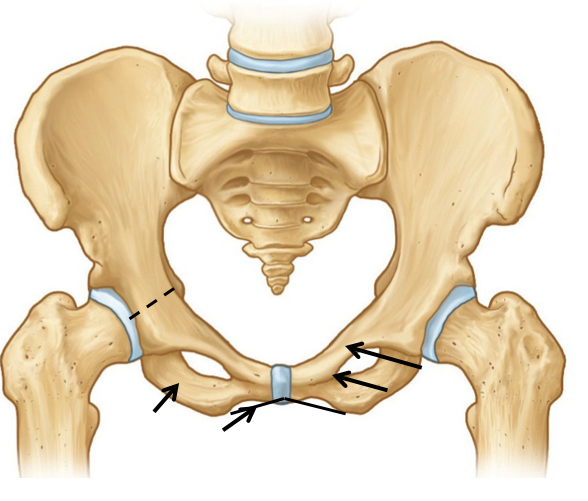
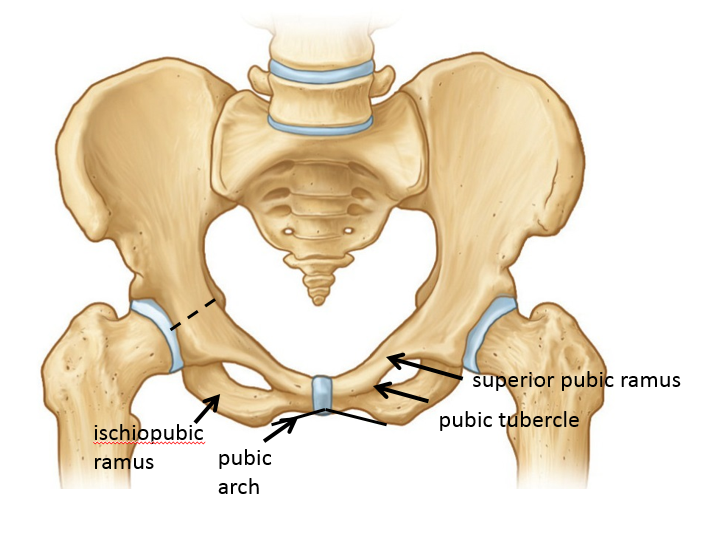
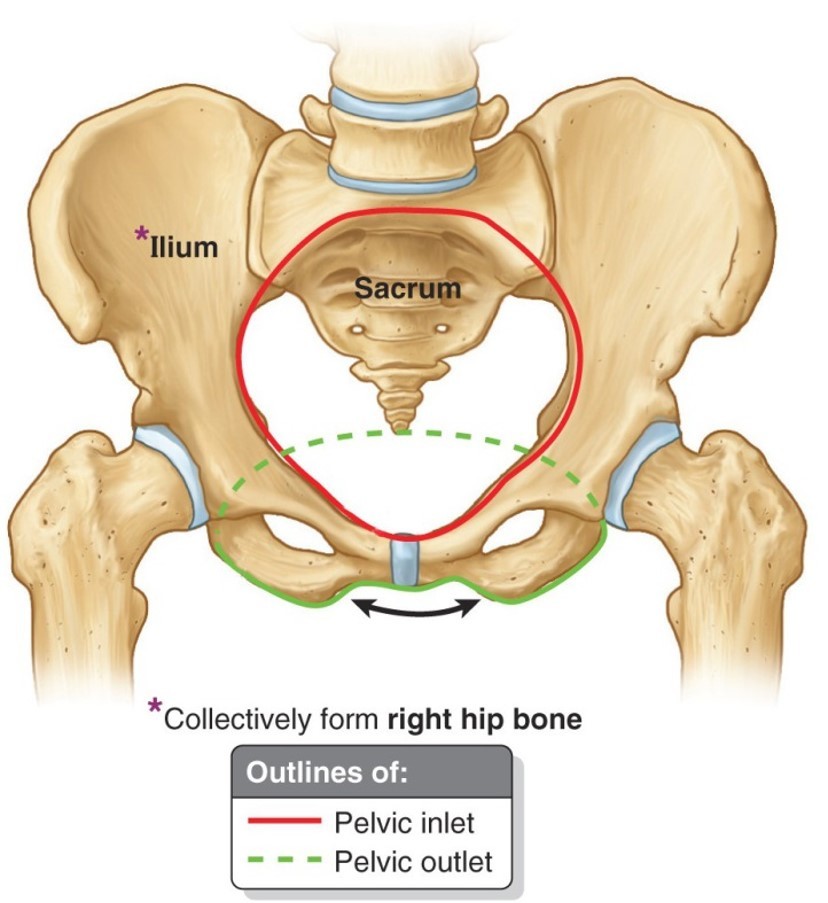
Label these bony parts of the hip bone.
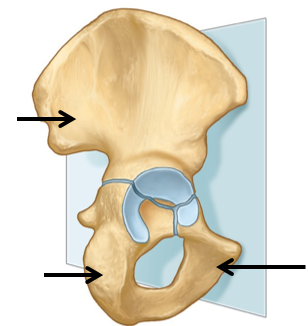
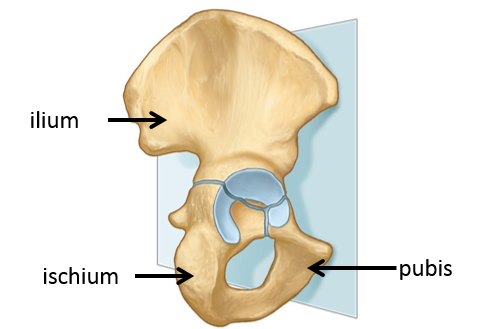
A
2
Q

Label these parts of the ilium.

A
3
Q

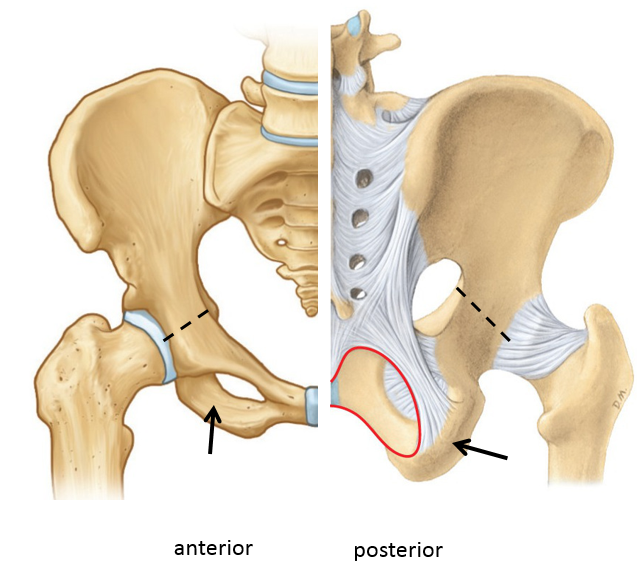
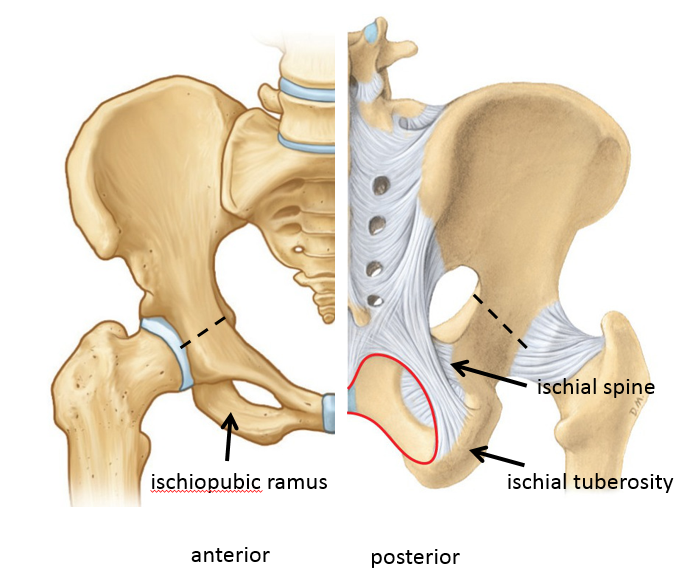
Label these parts of the ischium.

A
4
Q

Label these parts of the pubis.

A
5
Q

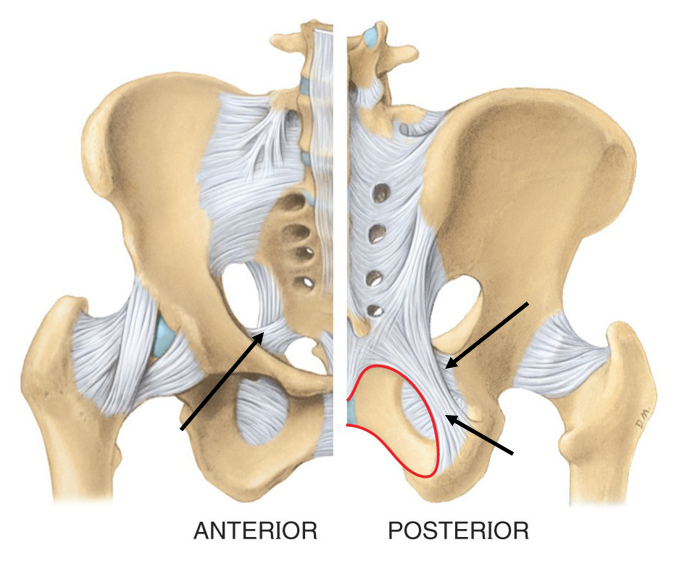
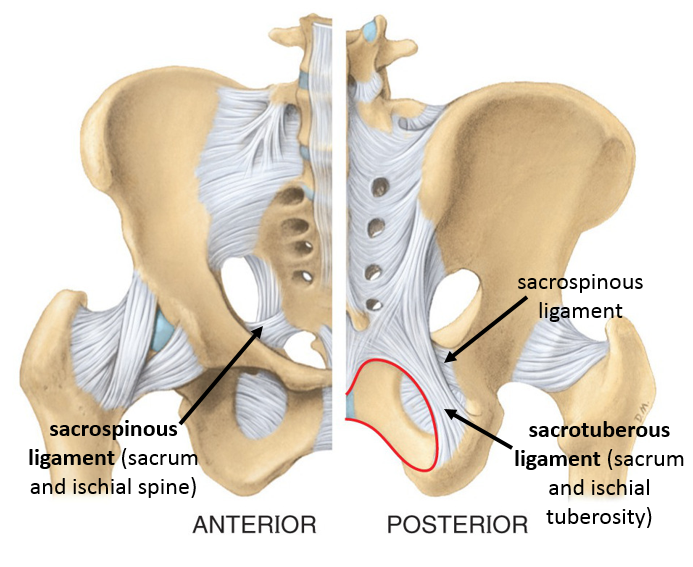
Label the ligaments of the pelvis.

A
6
Q

What is the purpose of the sacrospinous and scarotuberous ligaments?

A

They ensure the inferior part of the sacrum is not pushed superiorly when weight is suddenly transferred vertically through the vertebral column (e.g. when jumping or during late pregnancy)

7
Q

Which foraminae does the presence of the sacrospinous and sacrotuberous ligaments create in the pelvis?

A

The greater and the lesser sciatic foramen

8
Q

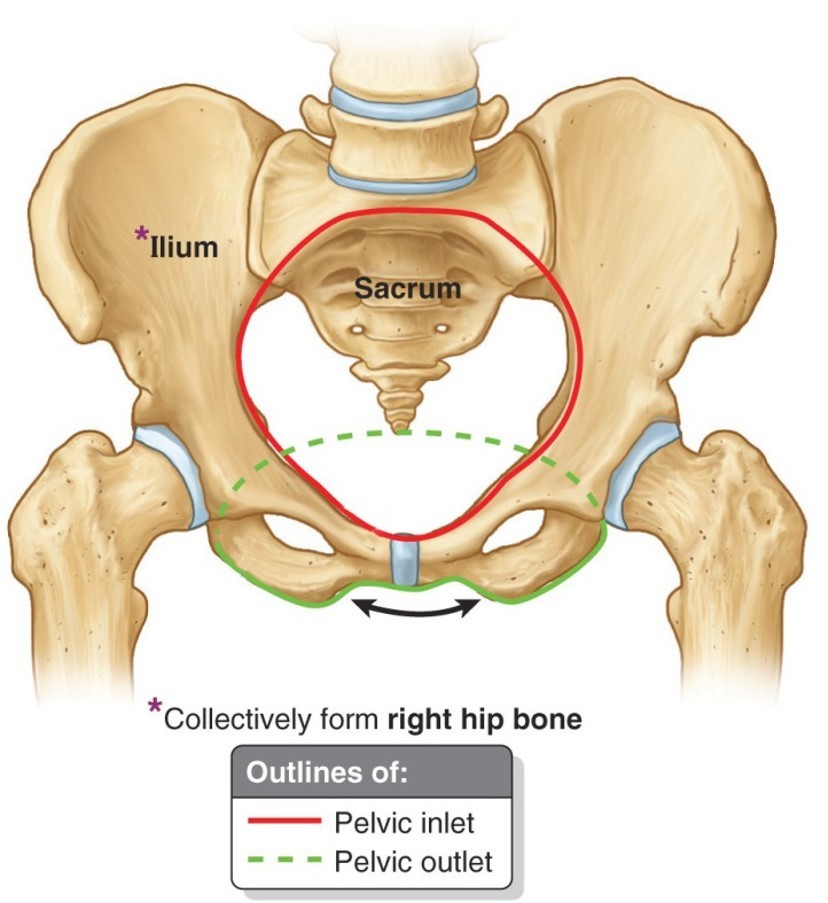
What bones make up the pelvic inlet?

A
  • sacral promontory
  • ilium
  • superior pubic ramus
  • pubic symphysis
9
Q

What structures make up the pelvic outlet?

A
  • pubic symphysis
  • ischiopubic ramus
  • ischial tuberosities
  • sacrotuberous ligaments
  • coccyx
10
Q

What organs of the female reproductive system lie within the pelvic cavity?

A
  • Ovaries
  • Uterine tubes
  • Uterus
  • Superior part of vagina
11
Q

What organs of the female reproductive system are found in the perineum?

A
  • Inferior part of vagina
  • Perineal muscles
  • Bartholin’s glands
  • Clitoris
  • Labia
12
Q

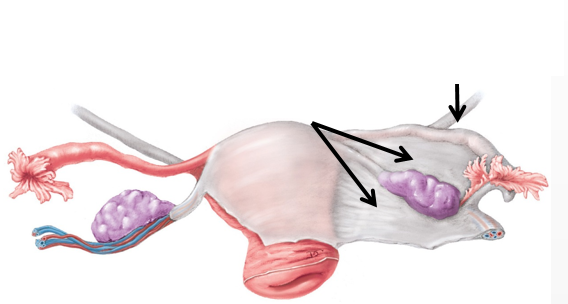
Label these structures.

A
13
Q

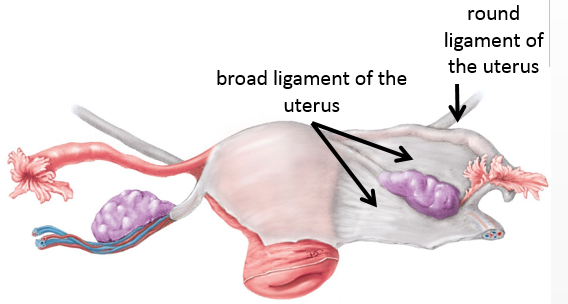
What is the broad ligament and where is it found?

A

A double layer of peritoneum that extends between the uterus and the lateral walls and floor of the pelvis

14
Q

What structures are contained within the broad ligament?

A

Uterine tubes

Proximal part of the round ligament

15
Q

Decribe the bony attachments of the sacrospinous ligament.

A

Sacrum to ischeal spine

16
Q

Describe the bony attachments of the sacrotuberous ligament.

A

Sacrum to ischeal tuberosity

17
Q

How does the male pelvis differ from the female pelvis?

A

More prominent sacral promontory

More curved coccyx

Narrower, taller pelvic cavity

Narrower pelvic inlet and outlet

Thicker, more robust bones

18
Q

When may it be necessary to palpate bony landmarks of the pelvis?

A

Ischeal spines (internally) - landmark to guide pudendal nerve block (S2,3,4)

Pubic symphysis - to measure symphysis fundal height

19
Q

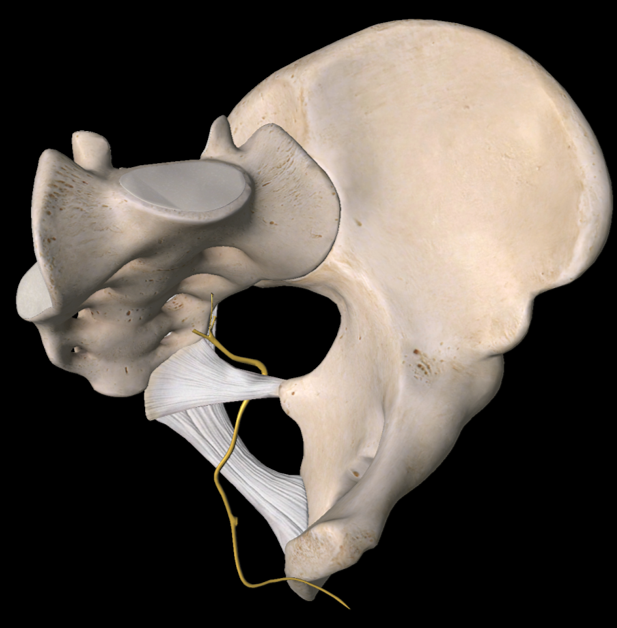
Describe the relationship between the ischial spine and the pudendal nerve.

A

Travels from the sacrum through the greater sciatic formen, and loops around the sacrospinous ligament before reentering the pelvis through the lesser sciatic foramen
20
Q

Which structures does the pudendal nerve innervate and which spinal cord levels does the nerve originate from?

A

S2, 3, 4

Supplies: clitoris and other perineal structures

21
Q

How can fluid collection in the pouch of Douglas be drained?

A

Via needle aspiration passed through the posterior fornix of the vagina

22
Q

What are the attachments of the round ligament?

A

Attaches to the lateral aspect of the uterus, and then passes through the deep inguinal ring to attach to the superficial tissue of the female perineum

23
Q

What are the three layers of the uterus?

A

perimetrium

myometrium

endometrium

24
Q

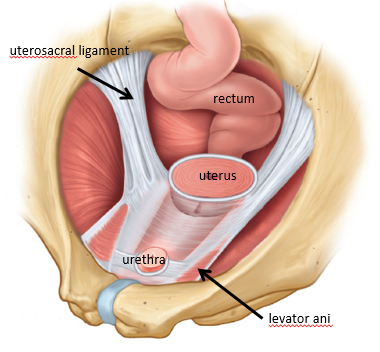
What are the three layers of support that hold the uterus in place?

A
  • ligaments (e.g. uterosacral ligaments)
  • endopelvic fascia
  • muscles of the pelvic floor (e.g. levator ani)
25
What is the most common position of the uterus?
Anteverted and anteflexed
26
What does anteverted mean?
Uterus tipped anteriorly relative to the axis of the vagina
27
What does anteflexed mean?
Uterus tipped anteriorly relative to the axis of the cervix (the mass of the uterus lies over the bladder)
28
Where do the ovaries develop and what structure moves them to their final position?
Develop on the posterior abdominal wall and move onto the lateral wall of the pelvis Round ligament of the uterus
29
What is the nerve supply of the levator ani?
Nerve to levator ani, S3, 4, 5 sacral plexus
30
What is the perineal body?
A bundle of collagenous and elastic tissue into which the perineal muscles attach
31
What is this structure?
Bartholins gland
32
What are the muscles labelled?
33
What is the rectus sheath?
A strong fibrous layer immediately deep to the superficial fascia, consisting of the combined aponeuroses of anterolateral abdominal wall muscles
34
What muscles does the rectus sheath surround?
Rectus abdominis muscles
35
What is the difference in the rectus sheath above and below the umbilicus?
Above the umbilicus there is an anterior and posterior rectus sheath Below the umbilicus there is only anterior
36
Which level do the iliohypogastric and ilioinguinal nerve come from and in which direction do they travel?
L1 Travel in plane between internal oblique and transversus abdominis
37
Which artery is the suprior epigastric artery a continuation of and where can it be found?
Internal thoracic artery Lies posterior to rectus abdominus
38
Which artery is the inferior epigastric artery a branch of?
External iliac artery
39
What layers must be opened to perform a lower section cesarean section (LSCS)?
- Skin and fascia - (anterior) Rectus sheath - Rectus abdominis – separate the muscles laterally - Fascia and peritoneum - Retract bladder (a urinary catheter is usually already inserted) - Uterine wall - Amniotic sac
40
What layers must be stitched closed following an LSCS?
- Uterine wall with visceral peritoneum - Rectus sheath - (Fascial layer if increased BMI) - Skin
41
What artery must be avoided when inserting a lateral port during laparoscopy?
Inferior epigastric artery
42
How can the inferior epigastric artery be avoided during laparoscopy?
Artery emerges just medial to the deep inguinal ring (located half way between ASIS and pubic tubercle) Insert port laterally to this
43
What kind of nerve supply does the pelvis have?
Sympathetic, parasympathetic and visceral afferent
44
What kind of nerve supply does the perineum have?
Somatic motor and somatic sensory
45
What is the sensory supply to the superior part of the pelvis, and what defines this?
Superior part defined as 'touching the peritoneum' Visceral afferents run alongside sympathetic fibres
46
What level of the spinal cord do the visceral afferents from the superior pelvis enter?
T11-L2
47
What is the sensory nerve supply of the inferior aspect of the pelvic organs?
Visceral afferents running alongside parasympathetic fibres
48
Which level of the spinal cord do the visceral afferents supplying the inferior part of the pelvic organs enter?
S2, S3 and S4
49
At what level does the subarachnoid space end?
S2
50
At what level does the spinal cord become the cauda equina?
L2
51
What level is the anaesthetic injected in a spinal/epidural procedure?
Subarachnoid space of L3-L5
52
What structures does the needle pass through to administer a spinal anaesthetic??
- supraspinous ligament - interspinous ligament - ligamentum flavum - epidural space (fat and veins) - dura mater - arachnoid mater
53
How may a mediolateral episiotomy reduce the risk of faecal incontinence developing after a difficult vaginal delivery?
Tear can be directed away from the anus
54
What is the mahjor structure incised during a median episiotomy and what potential issues are faced if further tearing occurs?
Perineal body Urgence, flatulence, faecal incontinence
55
Which nerve block could be performed to abolish sensation from the anterior aspect of the perineum?
Ilioinguinal Posterior cutaneous femoral nerve
56
How does a spinal anaesthetic differ from an epidural anaesthetic?
Epidural injected into epidural space and acts on the rootlets passing through rather than the cord itself Spinal anaesthetic injected into the subarachnoid space
57
What are the potential side effects of a spinal or epidural anaesthetic?
Temporary paralysis/immobility Dural headache Hypotension
58
What is the pudendal canal?
A passageway within the obturator fascia Contains the pudendal nerve, internal pudenal artery and vein and the nerve to obturator internus
59
Into which structure is an episiotomy incision made?
Ischioanal fossa
60
What are the three layers of the pelvic floor?
pelvic diaphragm muscles of perineal pouches perineal membrane
61
What muscles make up the levator ani?
Puborectalis Pubococcygeus Iliococcygeus
62
Label these muscles.
63
What nerves innervate the levator ani?
Pudendal nerve Nerve to levator ani
64
What is this structure?
Tendinous arch of levator ani
65
What muscle forms the tendinous arch of levator ani?
Obturator internus
66
What is the origin and insertion of the piriformis muscle?
Origin: pelvic surface of sacrum Insertion: superior aspect of greater trochanter
67
What is the origin and insertion of the obturator internus muscle?
Origin: ischiopubic ramus & obturator membrane Insertion: medial aspect of the greater trochanter
68
What is the obturator membrane?
The obturator membrane is a thin fibrous sheet, which almost completely closes the obturator foramen
69
Label these structures.
70
Where is the deep perineal pouch located?
Lies below the fascia covering the inferior aspect of the pelvic diaphragm Lies above the perineal membrane
71
What is contained in the deep perineal pouch?
Contains part of the urethra and vagina in females Bulbourethral glands in male Neurovascular bundle for penis/clitoris Extensions of the ischioanal fat pads and muscles
72
What is the difference between the deep transverse perineal muscle in males and females?
In females this is smooth muscle In males this is skeletal muscle
73
Label these structures.
74
What structures are the last passive support for the pelvic organs?
Perineal body Perineal membrane
75
What is the perineal membrane?
Thin sheet of touch, deep fascia located superficially to the deep perineal pouch
76
Where does the perineal membrane attach laterally?
Pubic arch
77
What structures are contained in the superficial perineal pouch of the male?
Root of penis: Bulb – corpus spongiosum Crura – corpus cavernosum Associated muscles – bulbospongiosus and ischiocavernosus Proximal spongy (penile) urethra Superficial transverse perineal muscle Branches of internal pudendal vessels and pudendal nerve
78
Label these structures.
79
Label these structures.
80
Label these structures.
81
Label these arteries.
82
The majority of arteries of the pelvis and perineum arise from the internal iliac, with the exception of which two arteries?
Gonadal Superior rectal
83
What arteries arise from the posterior division of the internal iliac artery?
Gluteal
84
What arteries arise from the anterior divison of the internal iliac artery?
Obturator artery Superior vesical arterie Inferior vesical artery/vaginal artery Internal pudendal artery
85
Most arteries in the male perineum arise from the internal pudendal artery, with the exception of which artery?
Anterior scrotal artery - comes from external iliac
86
What is the significant anastamosis in the female pelvis and why?
Anastamosis between uterine and ovarian artery Uterine artery comes from internal iliac Ovarian artery comes from abdominal aorta
87
Why might prostate cancers spread to the cranial cavity?
Venous drainage of prostate occurs through lateral sacral veins, which have no valves
88
Describe the venous drainage of the pelvis.
Drain mainly to internal iliac vein: - some will drain via superior rectal into hepatic portal system - some will drain via lateral sacral veins into internal vertebral venous plexus
89
What is the drainage of the gonadal veins?
Right - drains directly into IVC Left - into left renal vein
90
Why does ureter damage in females during surgery more commonly occur on the left than the right?
The right usually crosses the external iliac, the left is more medial and crosses common iliac
91
Where does lymph from the superior pelvic viscera drain?
- external iliac nodes - common iliac, aortic, thoracic duct - ,venous system
92
Where does lymph from the inferior pelvic viscera drain?
- deep inguinal - internal iliac nodes - common iliac, aortic, thoracic duct, venous system
93
Where does lymph from the superficial perineum drain??
Superficial inguinal nodes