define internal respiration
intracellular mechanisms which consume O2 and produce CO2
define external respiration
exchange of O2 and CO2 between the external environment and the cells of the body
outline the four stages of external respiration
- ventilation
- gas exchange between alveoli and blood
- gas transport in the blood
- gas exchange at tissue level
Boyle’s Law
At any constant temperature the pressure exerted by a gas varies inversely with the volume of the gas
how does Boyle’s law influence ventilation
- air must flow down a pressure gradient from atmosphere to intra alveolar space
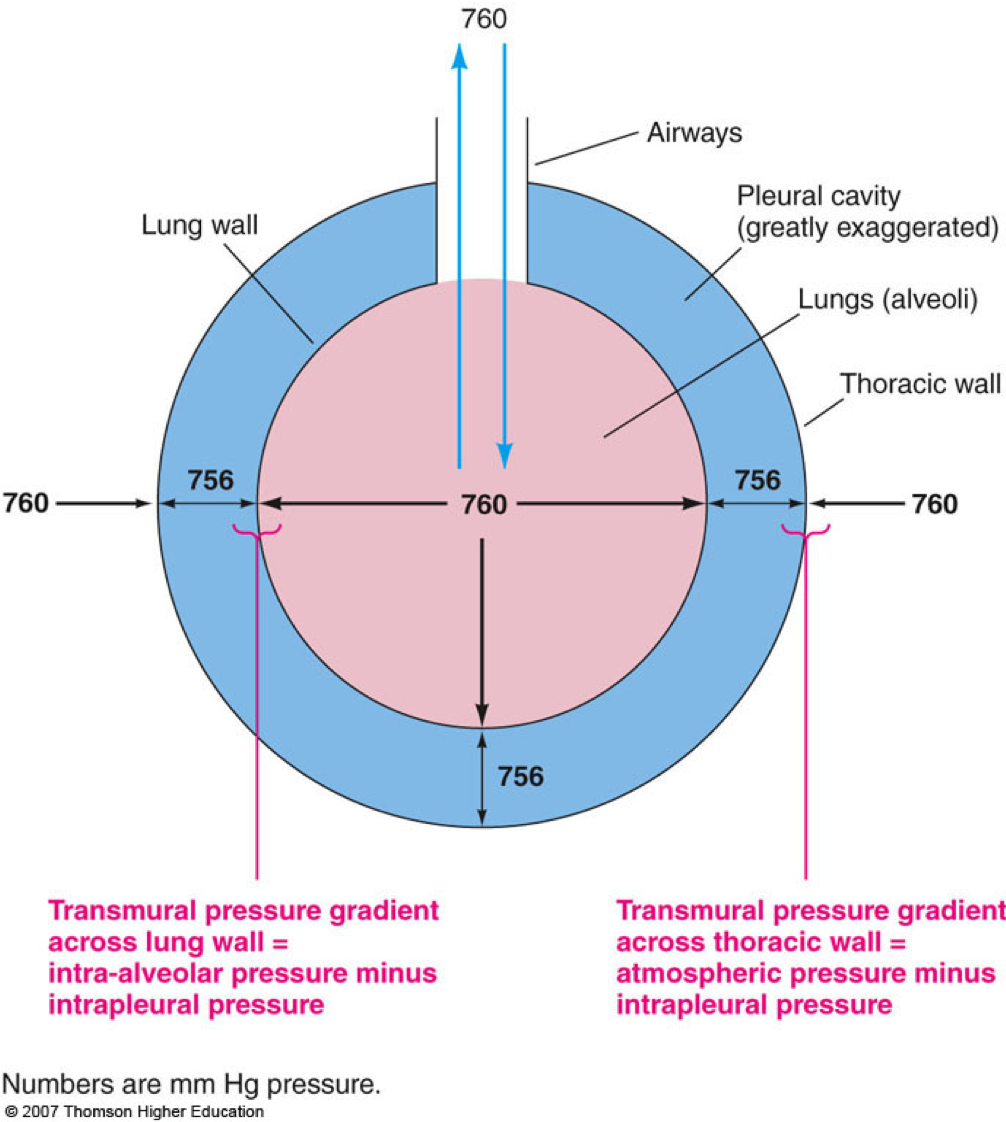
- before inspiration, intra-alveolar pressure is equivalent to that of atmposphere
- during inspiration, thorax and lungs expand (inc volume), and according to Boyle’s law this means that the pressure decreases (inverse)
which two forces hold the lungs to the thorax
- intrapleural fluid cohesiveness: water molecules in the fluid are attracted together
- negative intrapleural pressure: lungs expand outwards and chest squeezes inwards
how is volume of thorax increased during inspiration
- diaphragm contracts and flattens - inc volume vertically
- external intercostals lift the ribs and move out the sternum
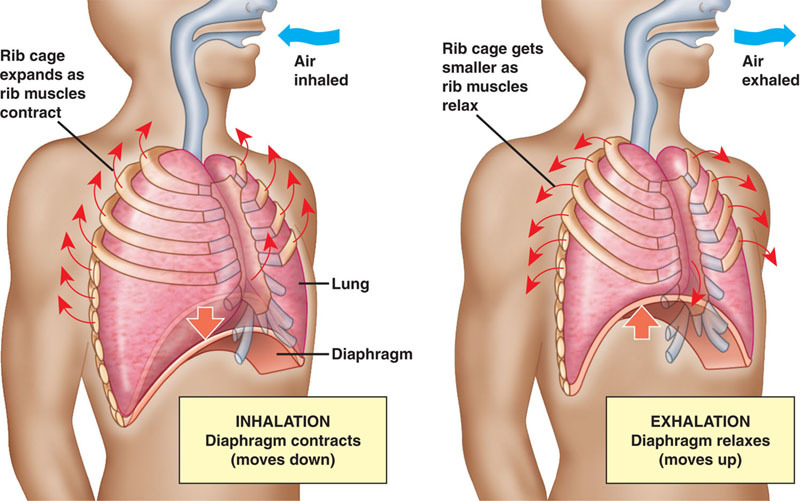
is expiration passive or active
passive
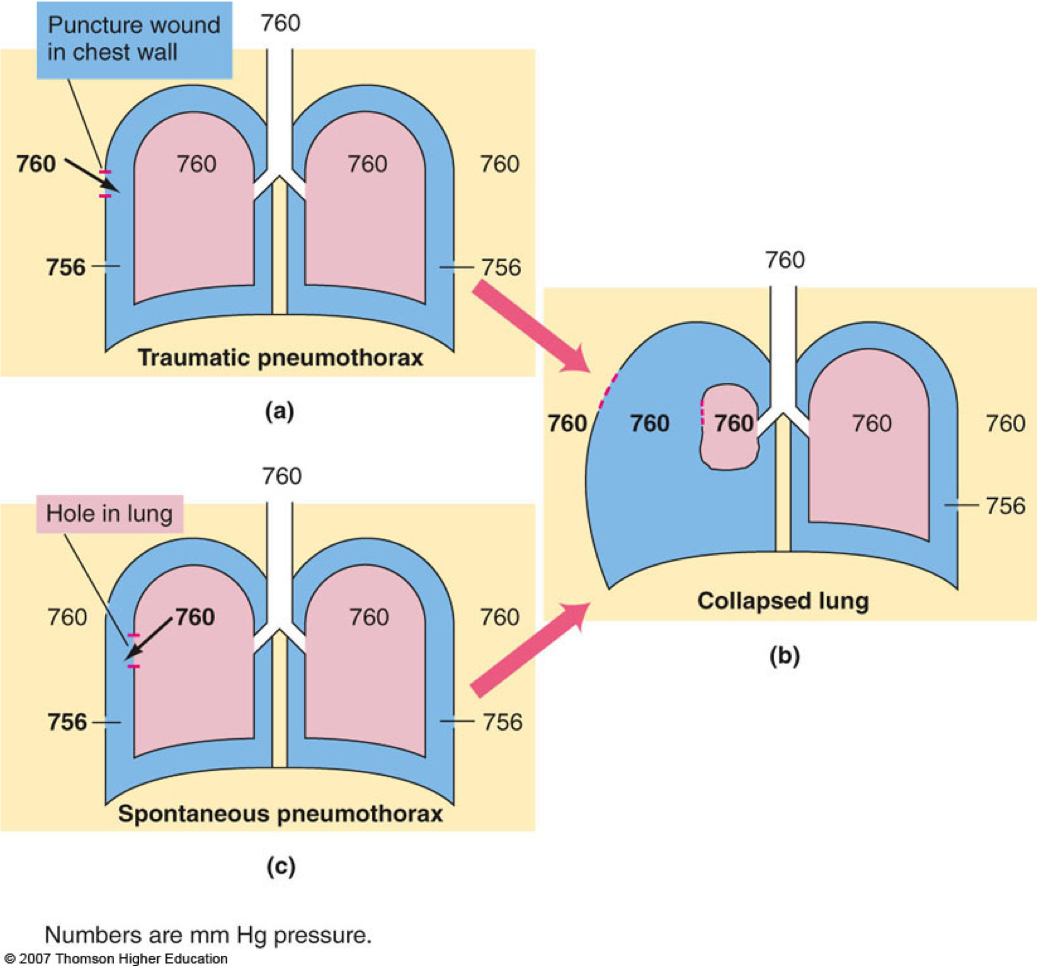
pneumothorax
- traumatic - hole in chest wall, spontaneous - hole in lung wall
- abolishes transmural pressure gradient, lung collapses to unstretched size and chest wall spring outwards
what gives thle ungs their elastic behaviour, and when is this important
- elastic connective tissue and alveolar surface tension
- important during passive expiration
alveolar surface tension
- the attraction between the water molecules at the liquid air interface, resists stretching of the lungs
- if the alveoli were lined with water alone, they would collapse. so surfactant reduces surface tension by interspersing between the water molecules lining the alveoli
- as, according to LaPlace’s law, smaller alveoli are more likely to collapse. the surfactant lowers the surface tension of smaller alveoli more than larger ones, preventing them from collapsing
law of La Place
P = (2T / r)
- smaller alveoli (smaller radius) are more likely to collapse
- P = inward collapsing pressure
- T = surface tension
what is pulmonary surfactant produced by
type II alveoli cells
RDS of newborn
- developing foetal lungs dont synthesize surfactant unti late in pregnancy, so premature babies dont have enough of it
- there is a really high surface tension between alveoli, so babies have to work really hard to overcome it and inflate the lungs
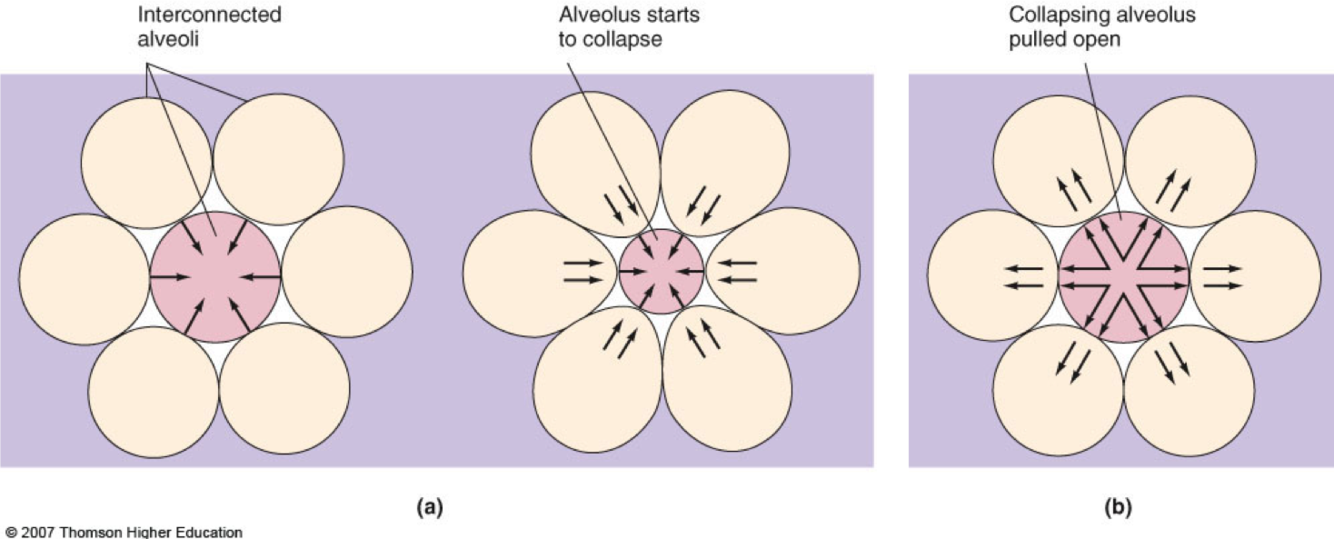
alveolar interdependence
If an alveolus start to collapse the surrounding alveoli are stretched and then recoil exerting expanding forces in the collapsing alveolus to open it
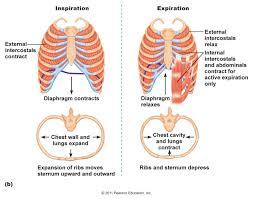
what are the accessory muscles of inspiration
sternocleidomastoid and scalenus - contract during forceful inspiration
what are the muscles of active expiration
internal intercostal muscles and abdominal muscles
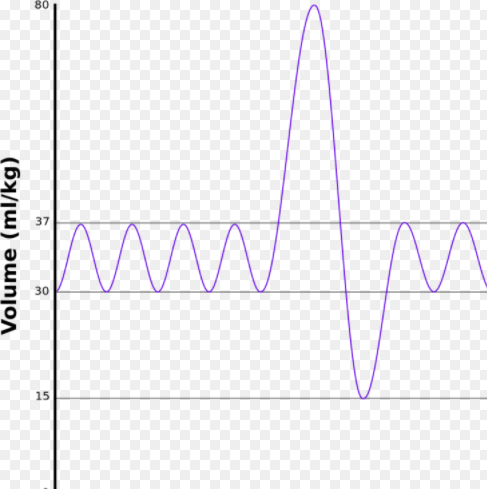
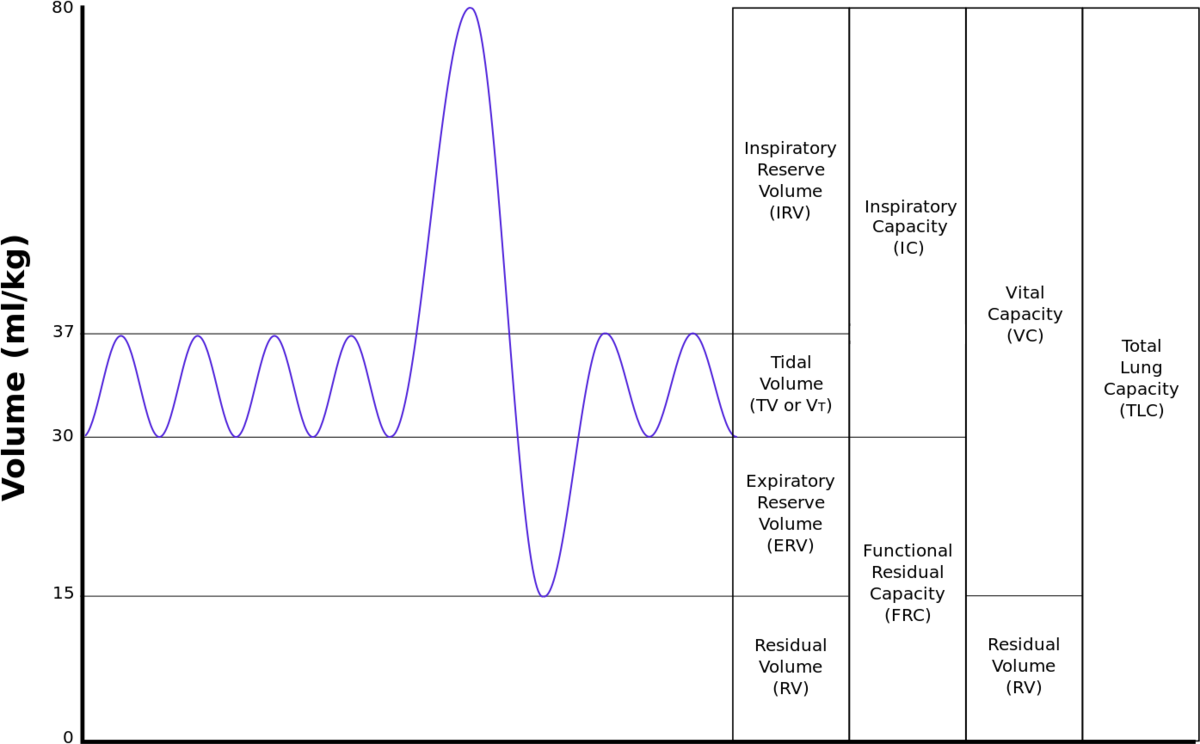
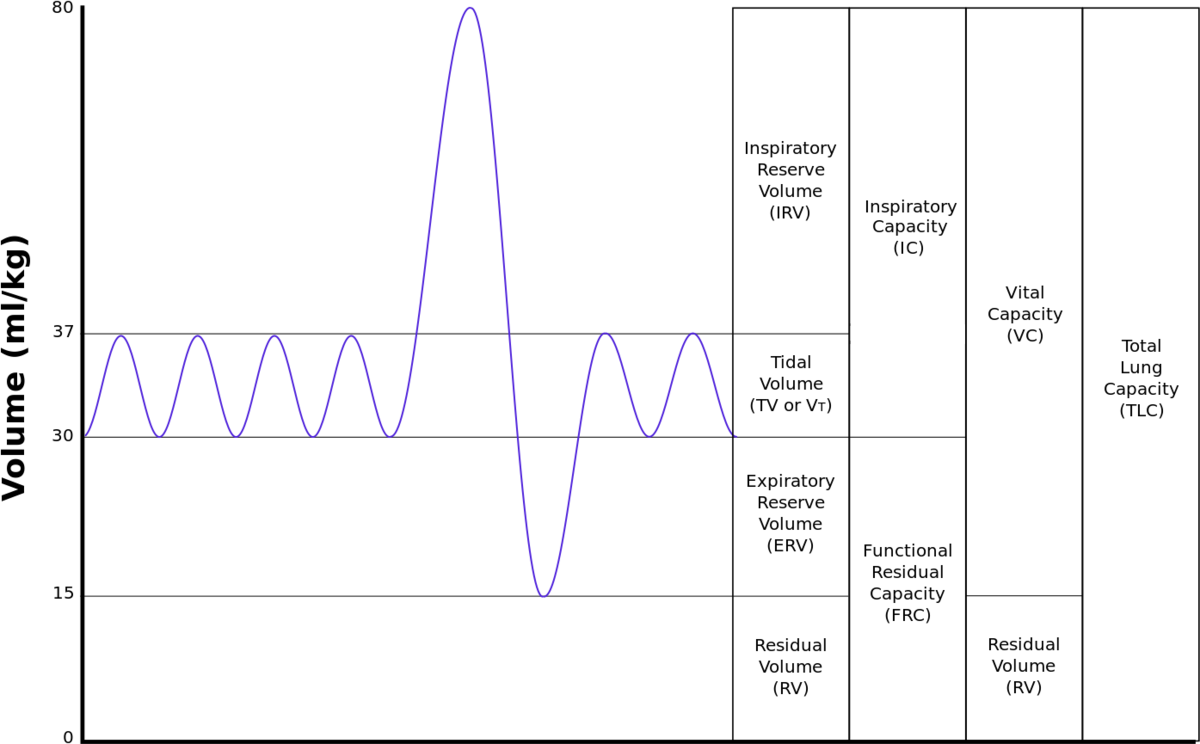
FRC
volume of air in lungs at end of normal passive expiration (ERV + RV)
arond 2.2L in young man
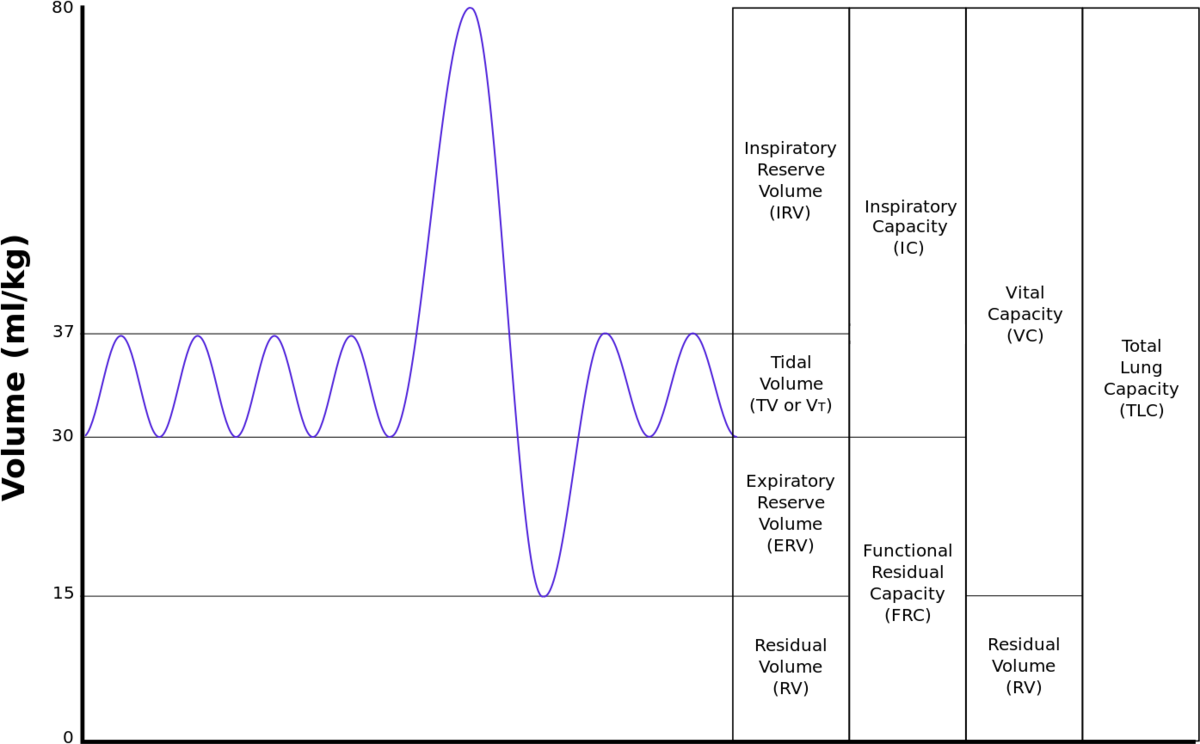
VC
maximum volume of air that can be moved out during a single breath following maximal inspiration (IRV + TV+ ERV)
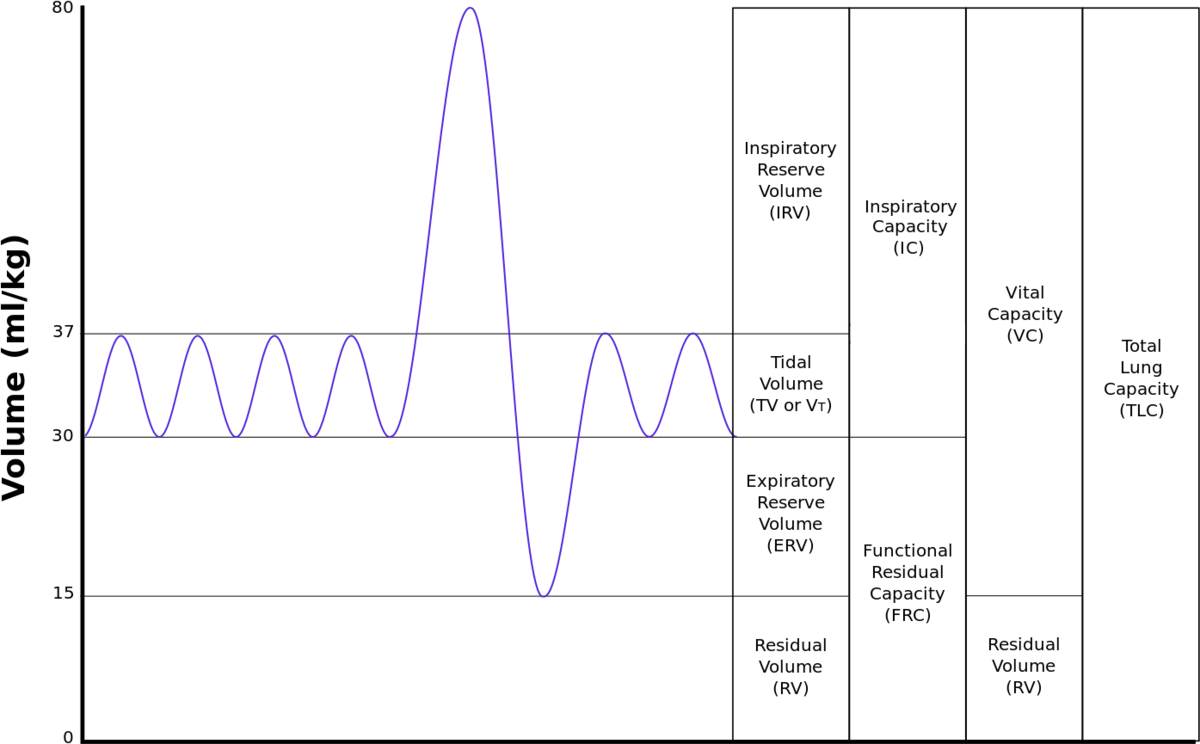
TLC
- maximum volume of air that the lungs can hold (VC + RV)
- average value: 5700ml
when does RV increase
when elastic recoil is lost eg emphysema, old age
why is it not possible to measure TLC by spirometry
RV cannot be measured by spirometry
FVC and FEV1
- FVC is the maximal volume forcibly expelled from lungs following maximal inspiration
- FEV1 volume of air expired in first second of expiration in and FVC



-
atypical pneumonia17
-
features of bronchial carcinoma5
-
histology19
-
causative organisms14
-
paediatric lung disorders8
-
CXR22
-
URT infections21
-
TB24
-
lung cancer - paraneoplastic features28
-
microbio compilation idk39
-
pharmacology47
-
stridor and sleep apnoea20
-
absestos related diseases33
-
pneumoconiosis22
-
extrinsic allergic alveolitis18
-
physiology supplementary71
-
Pertussis9
-
ARDS13
-
bronchiectasis15
-
embryology16
-
vaccines28
-
Primary Immunodeficiency36
-
hypersensitivity83
-
asthma19
-
thromboembolic disease37
-
cor pulmonale6
-
CF20
-
sarcoidosis18
-
COPD36
-
diptheria8
-
bronchiolitis9
-
Physiology - new64
-
IPF16



