Pigs Flashcards

(230 cards)

1
Q

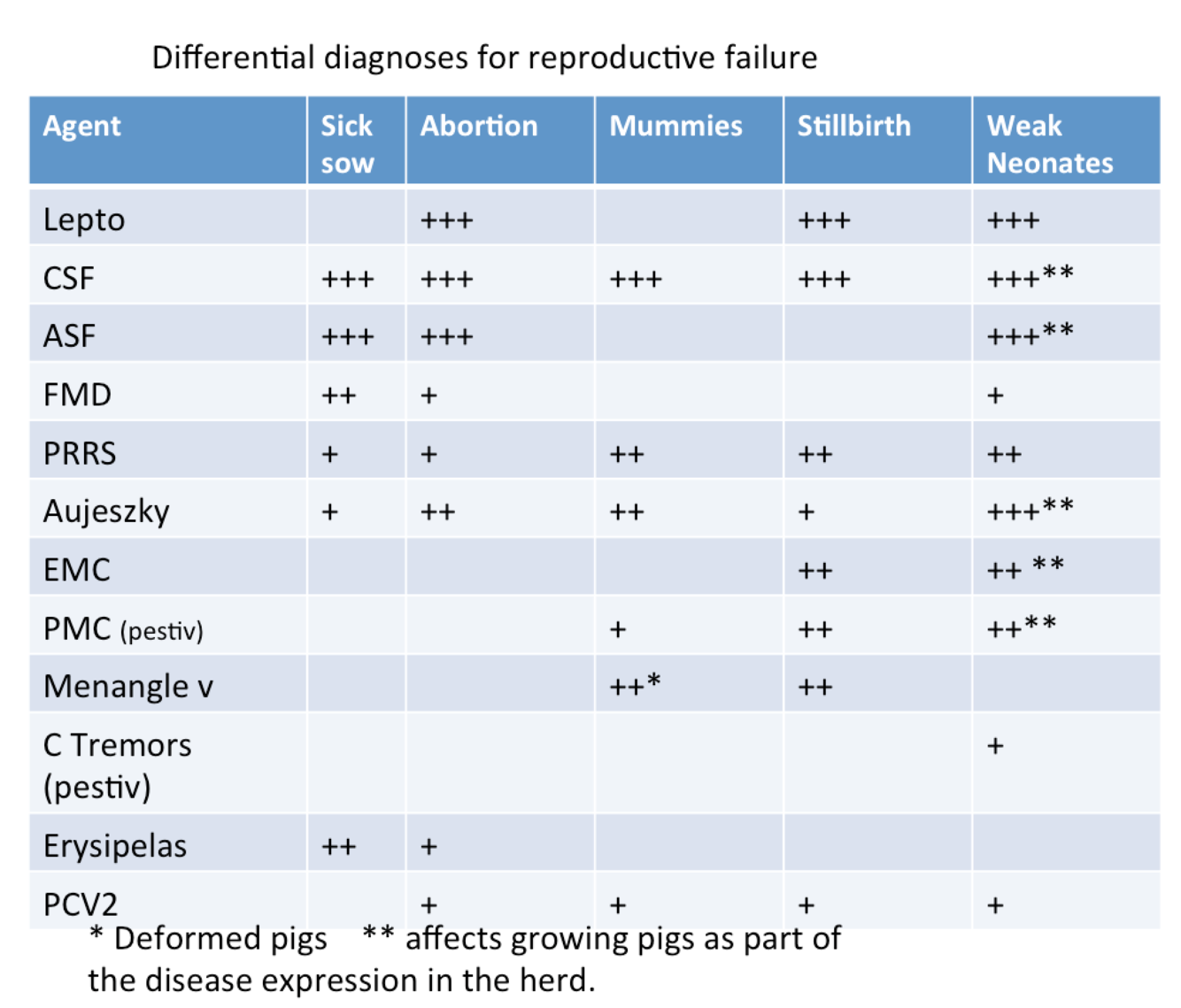
What are the differential diagnoses for reproductive failure in pigs?

A

Leptospirosis, Classical Swine Fever, African Swine Fever, FMD, Porcine reproductive and respiratory syndrome, Aujeszky disease (Eur), Encephalomyocarditis, Porcine myocarditis (PMC, pestivirus), Menangle Virus, Congenital Tremors (probably Pestivirus), Erysipelas (Erysipelothrix rhusiopathaie), Porcine circovirus type 2, Porcine Parvovirus
2
Q

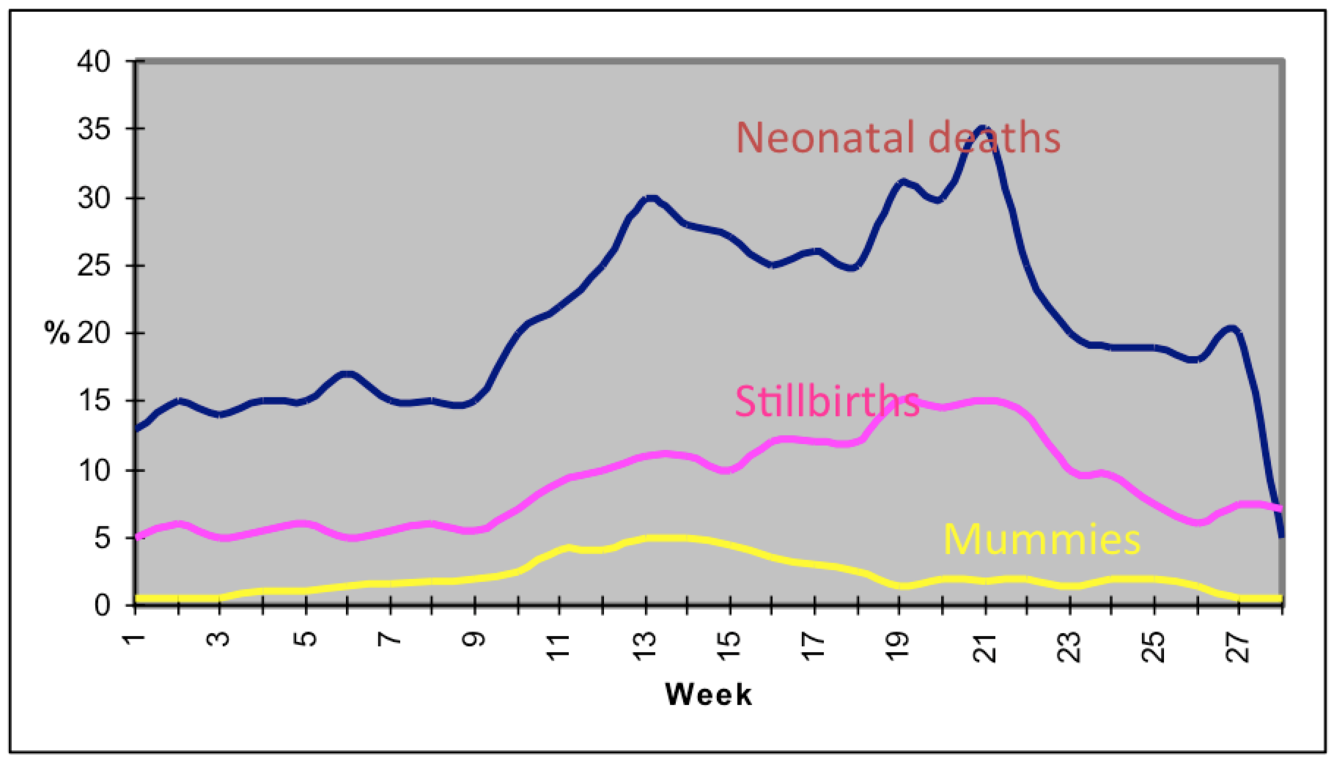
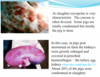
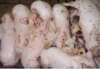
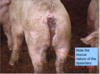
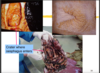
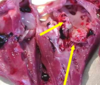
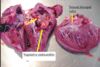
What might this pattern show?

A

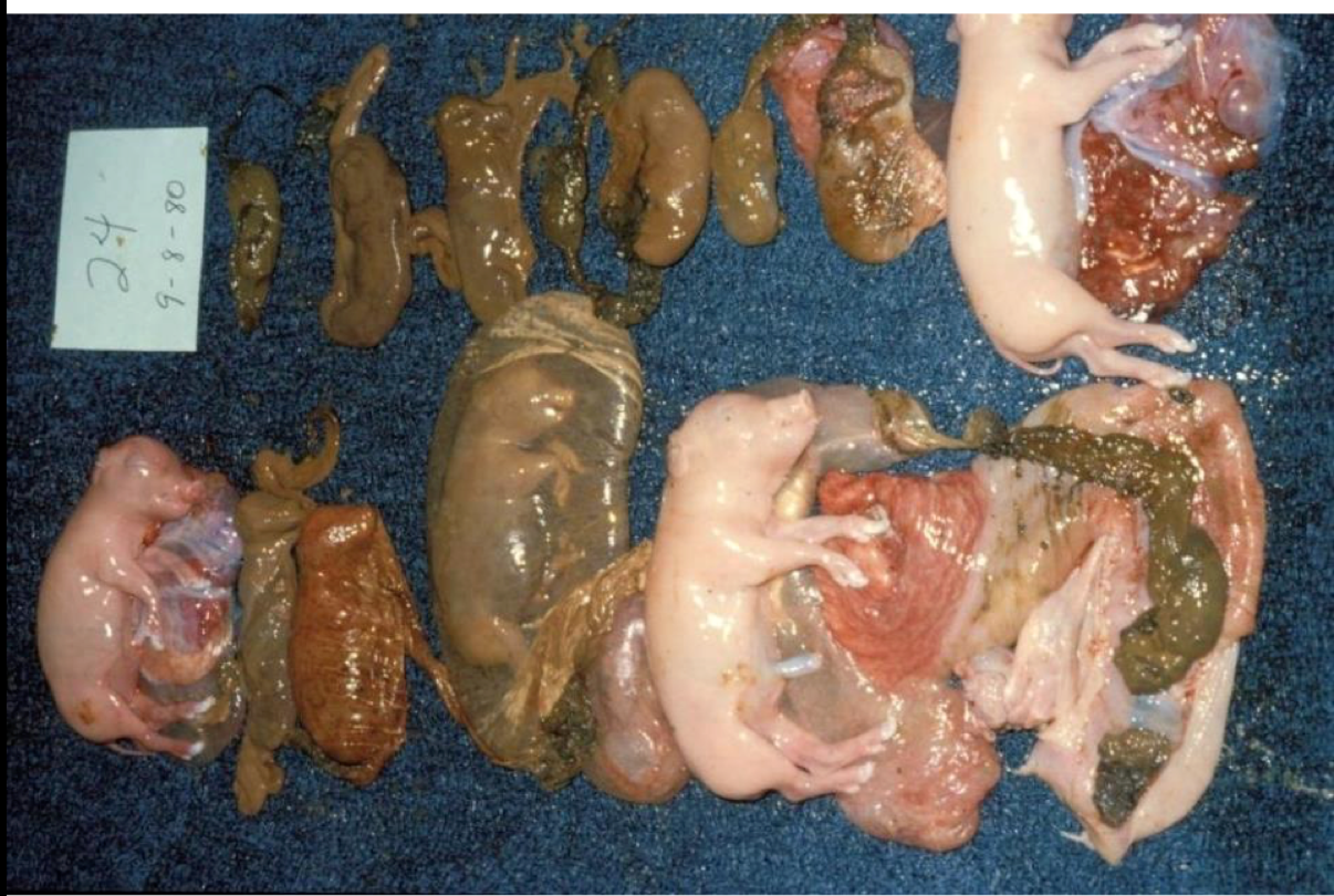
An example of a viral disease infecting sows in mid gestation with consequent effect on neonates.

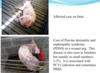
Porcine myocarditis (PMC), Similar: PRRS, Aujeszky’s, PCV2

3
Q

Diagnostic principles with sick pregnant sow

A

* Serology

* Foetal fluids- thorax/heart blood for IgG

* Histopath- foetus and placenta

* Virus isolation, PCR, Haemagglutination (HA), Culture (foetal stomach, liver)

* Record analysis- season and parity

* Response to vaccines in gilts

4
Q

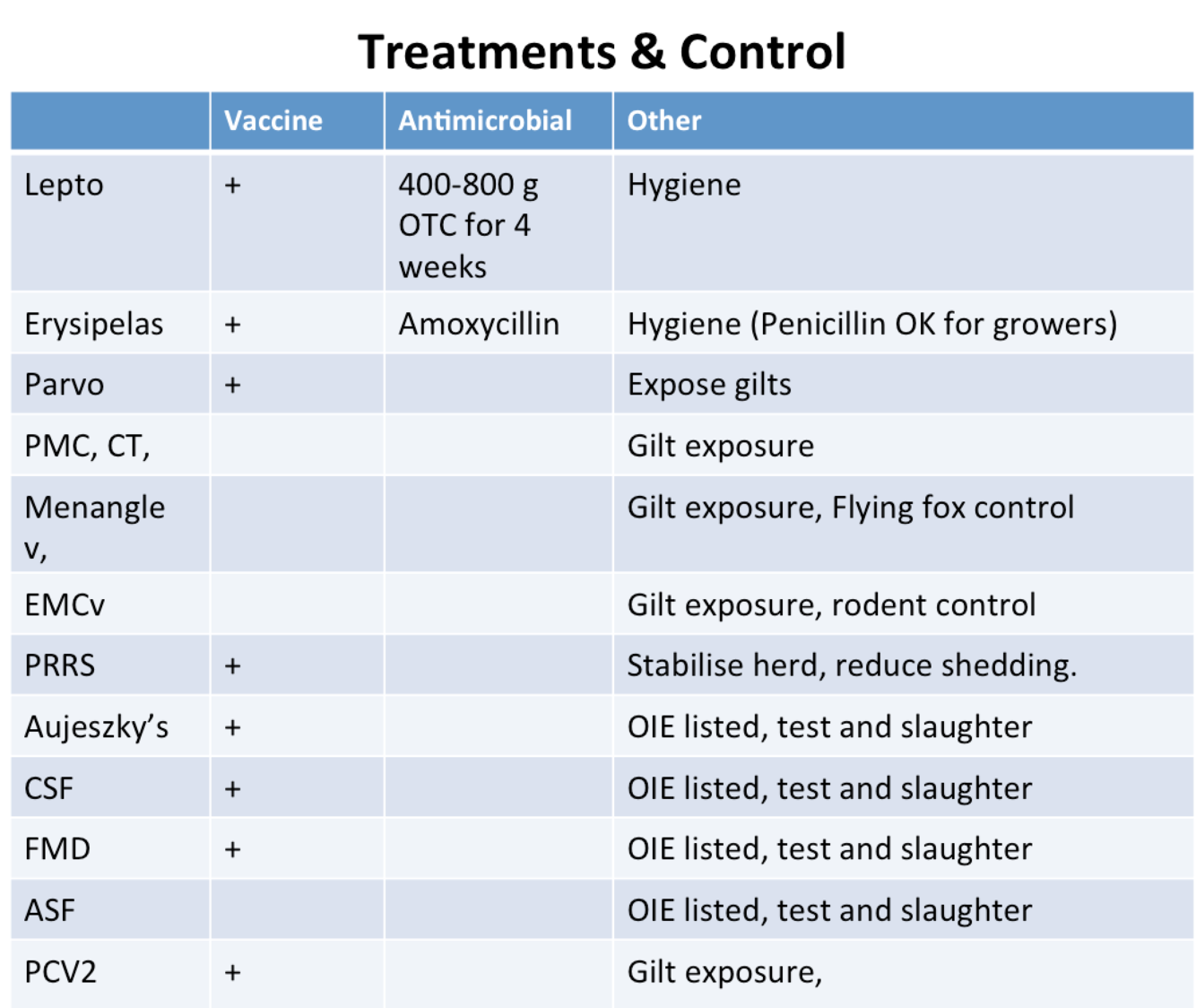
Treatment and Control of Infectious Disease in pigs
A
5
Q

What sow replacement rate do you need to manage herd age, culling and deaths?

A

* 30%

* The way gilts are managed often determines herd output

6
Q

What can help you detect sows on heat? What can you use to synchronize gilts?

A

Vasectomised boars or mature boars

* Regumate is used to synchronize

7
Q

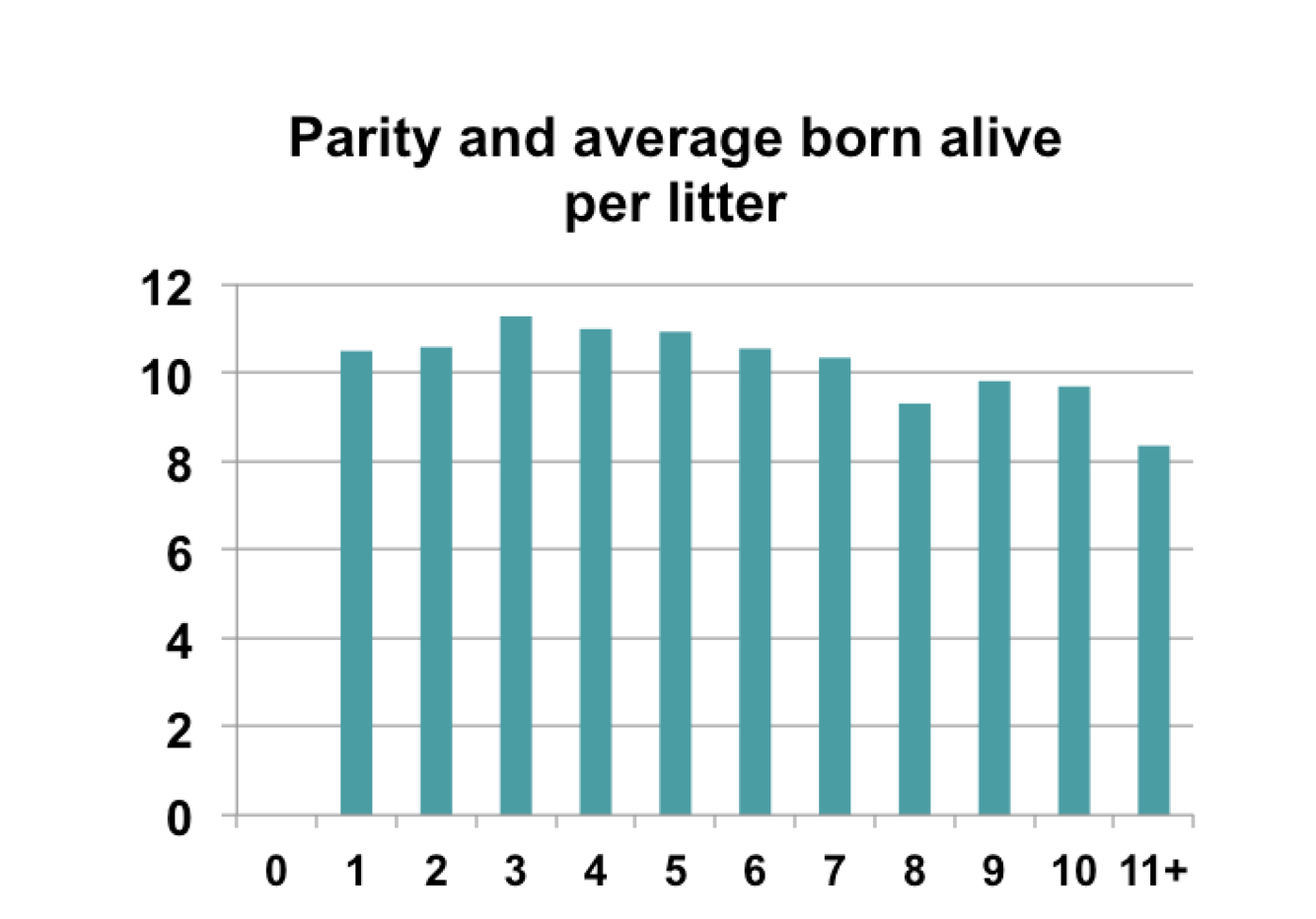
What happens with litters as sows age? Average litter size?

A

Old sows produce same total born but more pigs are still born as parity (number of litters in lifetime) increases
8
Q

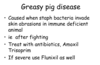
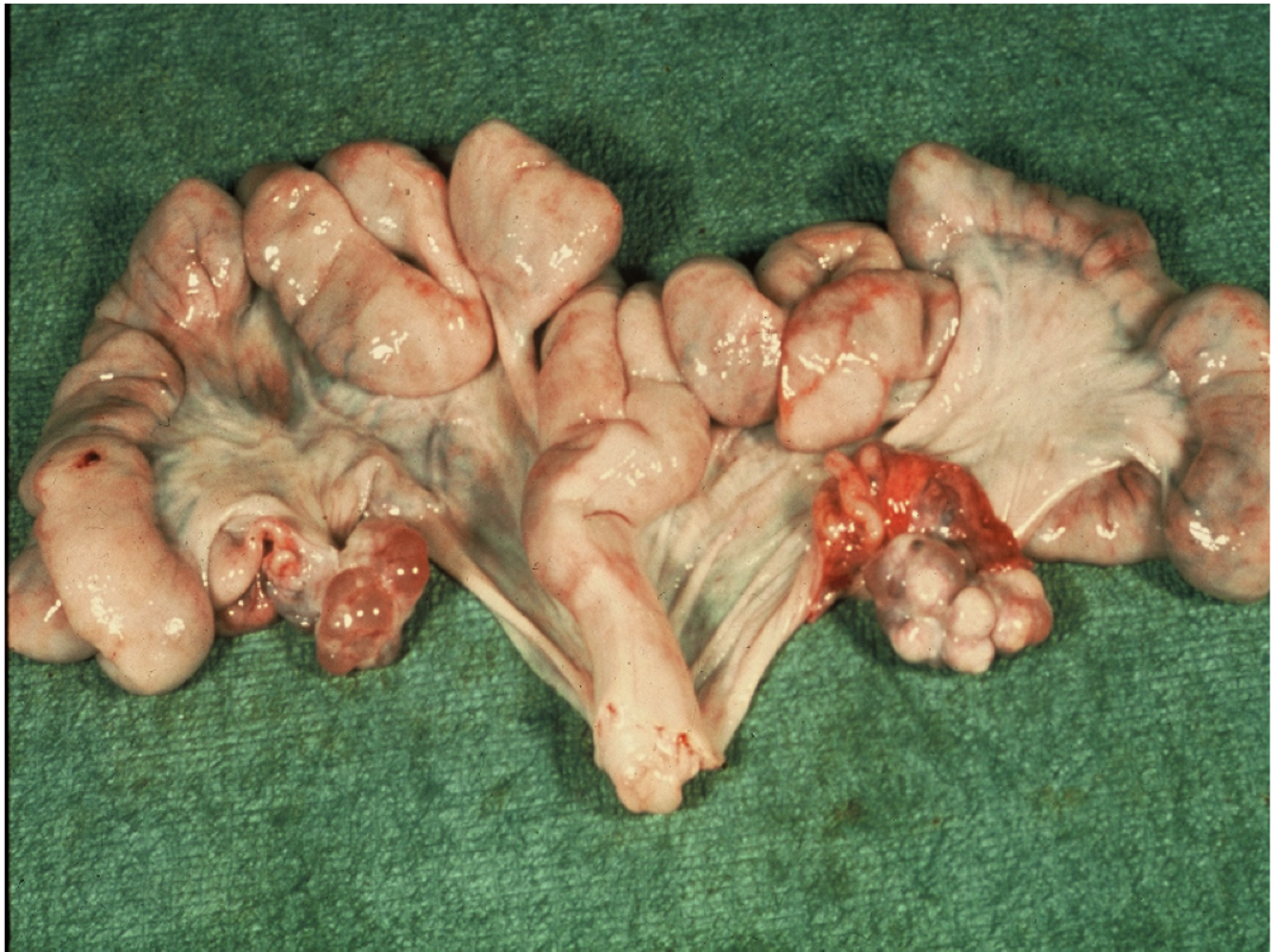
How can you tell a sow is in oestrus?

A

Swelling and redness of vulva, sows ears erect, vocal, rigid stance, responds to back pressure, sticky vaginal discharge (responsive for 15-30 minutes)

* Inseminate/mate 16 hours ahead of ovulation
9
Q
A

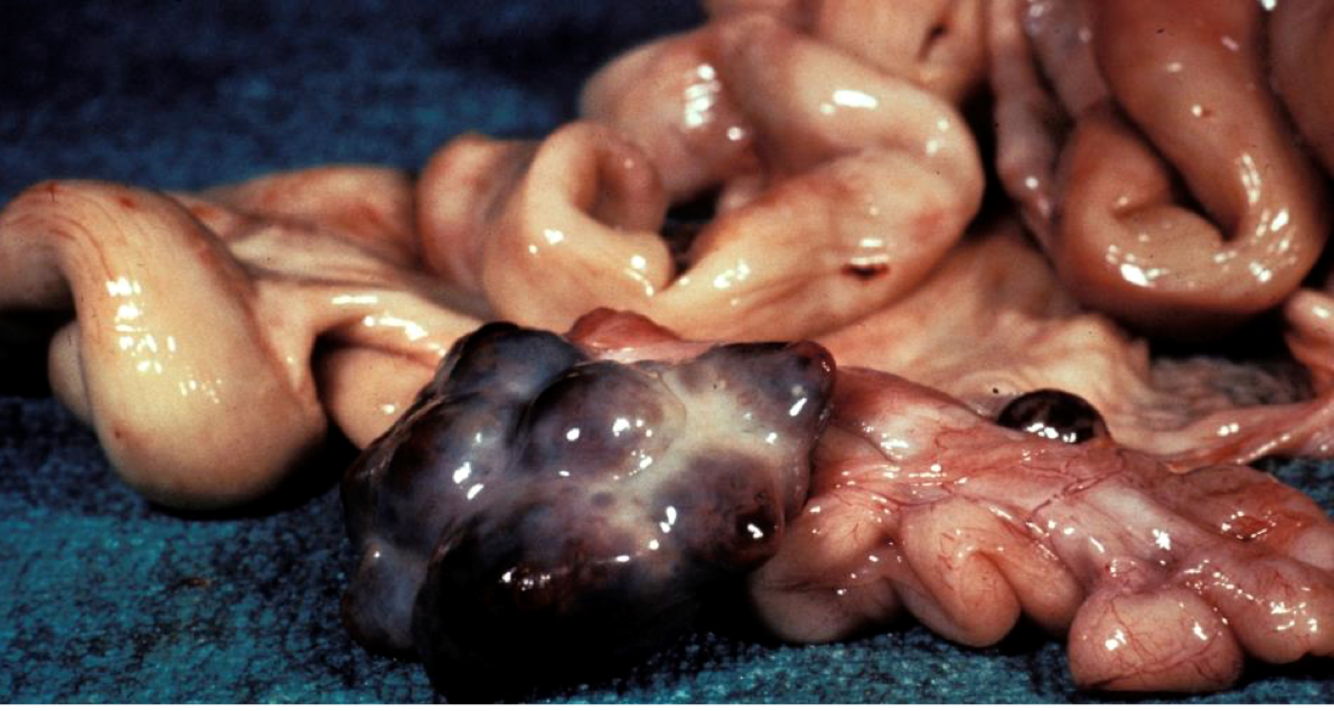
Preovulation

Responds to FSH at this stage
10
Q
A

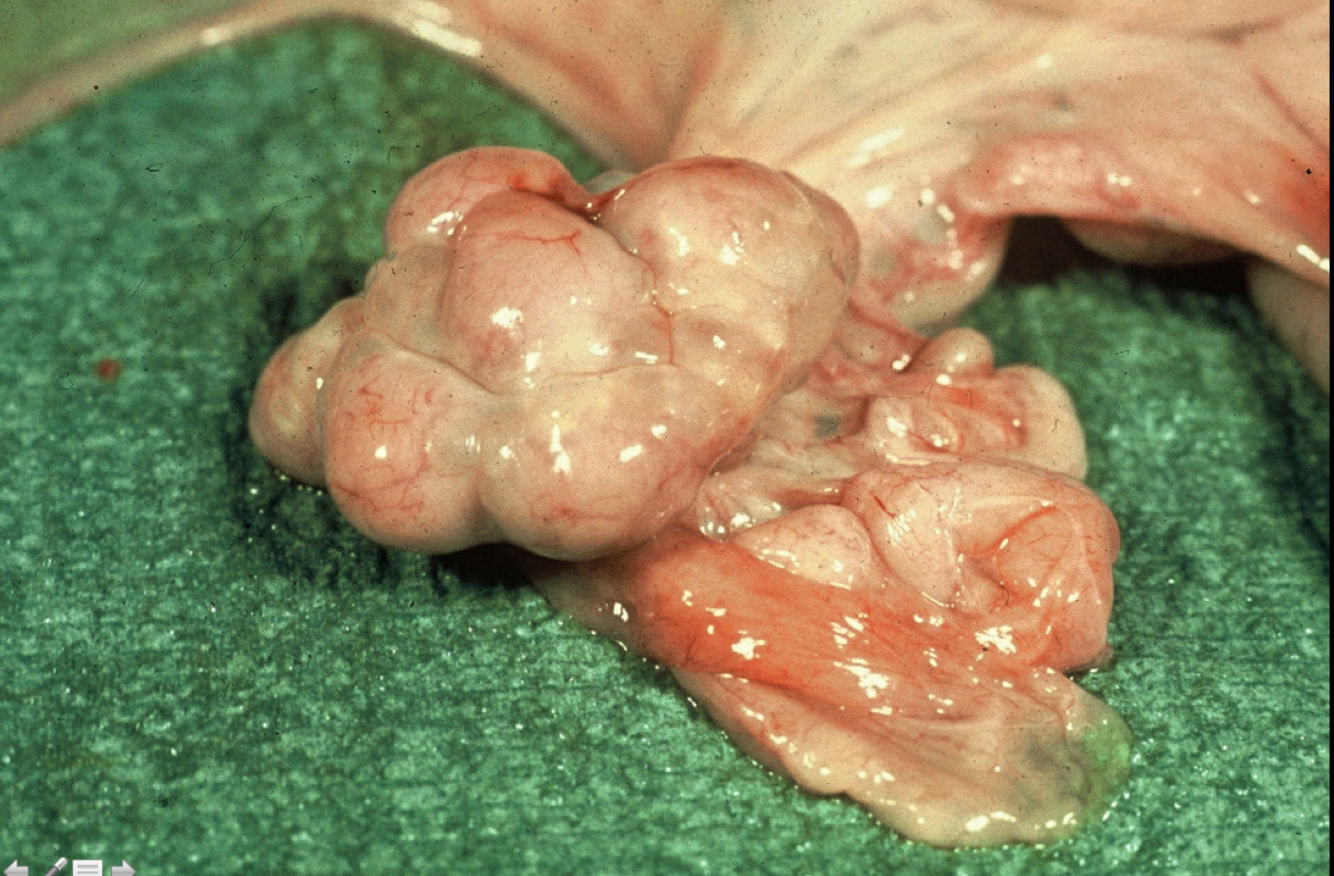
Recently ovulated: blood filled CL, unresponsive to FSH
11
Q
A

Pregnant or Mid- cycle 10-12 days

* if mid cycle then responsive to FSH

* Responsive to Regumate (synthetic progestagen)

12
Q

Where does fertilization occur in the sow? When are the embryos equally spread in the uterus? What is the signal for maternal recognition of pregnancy?

A

* Fertilization occurs in the oviduct

* The embryos migrate to the uterus. By day 11 they are equally spread

* The signal for pregnancy is oestrone sulphate from the embryos (at least 4 needed) it is given by day 9-11 and again between days 15-30

13
Q

When does foetal calcification occur in the sow foetuses? Pregnancy check by ultrasound on what day? When is foetal immunocompetence? Duration of pregnancy?

A

* Foetal calcification by about 30 days

* Pregnancy check by ultrasound at 30 days

* Foetal immunocompetence from day 70

* Duration of pregnancy 115 days

14
Q

Who is infected first with PPV?

A

Depending where it crosses– in this case PPV crossed in the top horn first

* Maternal infection safe-ish after about 60 days because it takes 7-10 days after infection to cross the placenta AND foetuses are safe after about day 70
15
Q

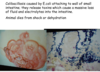
Reproductive problems in a pig herd (drove, team)

A

* Gilts not cycling, 21 day returns, out of sequence returns (25-35 days whereas normal returns are 18-24 days), low farrowing rates, abortions, not in pig, low litter size, stillbirths, long weaning to remating intervals

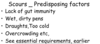
* Where herd oestrus detection is poor many of these problems will be manifested by low farrowing rates

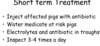
16
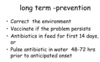
Q

How does season impacts sows fertility?

A

** Season effect itself is a function of heat and day length

* Sows and gilts can be anoestrus in summer and early autumn

* Gilts need mature boar exposure to assist the rapid onset of puberty

* Poor space allowance compromises oestrus detection

* Feeding during lactation and intake around puberty affects later performance

17
Q

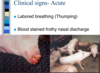
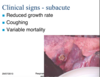
To increase the % sows bred by 7 days after weaning

A
  1. Check feeding levels (heat decreases feed intake, sow lose BC especially young sows and then are slow to come into oestrus– therefore oocyte development can be affected which decreases litter sizes)
  2. Check space allowance (2m^2/ sow) after weaning
  3. Use FSH/LH combinations at weaning for parity one sows
18
Q

How do you overcome seasonal factors that negatively impact fertility with sows?

A

* Increase the number of sows mated (10% more matings during summer than at other times)

* Space allowance adequate

* Cooling systems in place

19
Q

Where should you place semen with AI on sows?

A

Post cervical AI reduces semen dose and hence decreases boar stud load and increases capacity to spread high value genes further

* e.g. post cervical AI requires a dose of 2 x 10 ^9 sperm per dose

vaginal AI requires 3 x 10^9 sperm per dose

20
Q

AI troubleshooting

A
  1. Heat detection and timing
  2. Frozen semen (gilts)
  3. Old semen
  4. Storage temperatures (15-18C)
  5. Collection procedure (temp and hygiene)
  6. Addition of extender slowly (45 minutes) at 35C
  7. Inseminator skill and patience
  8. Dose: less than 2.5 x 10^9 sperm
  9. Volume minimum 80 mL
21
Q

What induces farrowing in a sow?

A

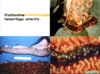
* At about 112 days foetal pituitary releases ACTH

* Foetal adrenals produce glucocorticoids and release of maternal PGF2alpha and foetal placental oestrogen followed by:

* Luteolysis, a fall in progesterone, a rise in relaxin (luteal cells) and uterine contractions in response to oxytocin

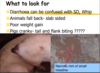
22
Q

Signs a sow is about to farrow and piglets intervals, length of farrowing?

A

* Sows nest for about 72 hours before

* Restless

* Pelvis drops

* About -8 hour milk spurts

* about -30 minutes RR incrases

* Tail wags

* Pigs appear at about 12-25 minute intervals

* farrowing takes about 3 hours

23
Q

Which piglets in a litter are most vulnerable?

A

The last 3 in old fat sows in summer, piglets are oxygen deprived

24
Q

When are stillbirths likely to occur?

A

* Old sows, mostly the last to be borne, large litters, summer or hot farrowing houses, very thin or very fat sows, sow has multiple still births in one litter she will have more in later one

* After long farrowing > 4 hours

* After long interpig interval > 40 minutes

* With gas heaters and increased CO levels

* After induced farrowing and oxytocin

* Associated with premature rupture of the cord and foetal anoxia
25
First aid for farrowing sows
\* Manual examination after 45 minutes after pig #7 then Oxytocin 10 IU, Caesars not required \* Antimicrobial cover
26
How do you know when you have an increase in stillbirth rate whether it is infectious or associated with heat?
\* Affecting older sows more than younger, perhaps more likely heat
27
How does the sow's body know it is time to lactate?
\* As progesterone drops and oestrogen rises there is major metabolic activity in the mammary gland \* Relaxin increases growth of mammary gland parenchyma \* Gland capable of producing milk from day 105 \* At birth there is copious milk \* For the first 24 hours the sow lets down continuously, after that she lets down about every hour
28
What is the normal sow mortality rates on intensive farms indoor farms? Are rates lower or higher on outdoor farms?
3-18% sow mortality rate. Lower on outdoor farms.
29
Common causes of death in sows
\* Hyperthermia at point of farrowing (heart failure), post farrowing infection, oesophago-gastric ulcer, gastric accident- torsion of stomach intestine or organ, retained pig, cystitis, clostridium novyi, lameness/downer, Erysipelas and classical swine fever
30
How do fix heat problems on intensive pig farms?
\* Water- immediate cooling, wallows management, cooling system for long term (drip cooling applied to sows in farrowing crates-- reduces RR and increases comfort)
31
Why is the period around farrowing high risk for sow deaths? Signs? Tx?
\* Ascending infection within 24 hours of farrowing-- often associated with retained pigs \* Signs: discharge, feed intake decrease, temperature increase, poor milk production \* Tx: antibiotics (amoxycillin, OTC), Meloxicam
32
What is agalactia?
Lactation failure. Most commonly due to insufficient prolactin. Range of causes, obesity can predispose.
33
What percentage of piglets are stillborn? What percentage die efore weaning? Avg. pigs weaned/ litter?
7-8% piglets are stillborn \* 15% of all liveborn pigs die before weaning \* 10+ pigs per litter weaned on a well managed farm
34
What is the sows comfort range? What temp do piglets need?
17-21C \* Piglets- 30C
35
Times of year and good management practices that result in low percent of neonatal piglet deaths?
\* In spring and autumn \* In young sows \* IN new, clean facilities \* Well trained staff \* High health status herds \* In farrowing crates on full mesh floors
36
Basic farrowing house procedures in first week?
\* Iron shots 100 mg Iron Dextran \* Tails docked \* Males castrated (5 days better than day old) \* Fostering in the first 24 hours
37
Risk factors for neonatal mortality
\* Low temps \< 30C at pig/creep level, large litter size, old sows, low birth weight (\< 900 g), neonatal diarrhoea, sow illness, gilts savaging, starvation \* Parities 6, 7, 8 biggest mortality problems due to still births, trauma, variation in birth weight, starvation due to piglet size and teat variation, piglet illness
38
Principles to improve survival in neonatal piglets
\* Hygiene, warmth, colostrum, fostering int he first 24 hours, early treatment for sows and piglets (fluids, NSAIDs (flunixin, metacam for sows))
39
Causes of piglet preweaning mortalities
\* Overlain in the first 3 days (too cold, crate design, sow feeding or other disruptive factors) \* Piglet illness: diarrhoea- Non Haemolytic E. coli in the first 3-5 days (C. perfringens also occurs up to 10 days), Coccidiosis 5-14 days, Haemolytic E. coli 10-21 days, Transmissible gastroenteritis, Porcine Epidemic Diarrhoea
40
E. coli diarrhoea in piglets prevention? Tx?
\* Prevention: Killed E. coli bacterins given to sows week 11-13 because linked to sow immune status (IgG response), Live E. coli vaccines given orally (milk) to sows to control E. coli diarrhoea in the second and third week of life (IgA response), hygiene, temp (cold newborns don't suckle) \* Tx: fluids (oral or SC), antibiotics based on microbial sensitivity- potentiated sulphonamides, neomycin, amoxycillin
41
Coccidiosis in piglets, caused by what? Signs and symptoms? Tx?
\* Isospora suis- profuse diarrhoea- pasty white faeces in 5 to 15 day old pigs, death related to dehydration, oocysts from the environment (rarely from sows), oocysts ingested- go through asexual and sexual stages in the SI \* Tx: Toltrazuril: 20 mg/kg at about day 3-5
42
Diagnosis of neonatal diarrhoea
\* Age \* Culture and typing (K88, K99, F41, 987P, O8, O139, O141, O149) \* PCR PED, TGE \* Faecal exam for oocysts (pooled samples) \* Collect from several litters \* Histopath- backup
43
Cause of "savaging" and prevention?
\* Cause: gilt litter phenomenon, fear related, frustration from inability to properly nest, related to temperment \* Prevention: supervision, sedation, pheromones (apaisine), rabbits in the pens before giving birth
44
Why are pigs who weight 800-900 g in so much trouble? Prevention?
\* Hypothermic, poor competitors, can't reach teats \* Prevention: crib and bottle or tube fed, fostering
45
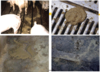
Splay leg in piglets ? consequences? Tx?
\* Myofibrillar hypoplasia (esp semimembranosis) \* Unable to support weight soon after birth, slippery floors, genetic origins, zearelanone, PRRS... usually OK in 48 hours \* Consequences: Pigs crushed, chilled, starve \* Tx: TLC, tape the hind limbs with velcro, massage, harnesses
46
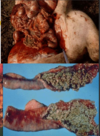
Greasy pig disease, cause? Tx? Prevention?
\* Staphylococcus hyicus (likely secondary to a viral infection) \* Tx: penicillin (key is to get them on penicillin fast), fluids, NSAIDs because there is acute systemic inflammation \* Autogenous vaccination
47
Most common physical injuries in piglets?
\* Abraded soles on feet of piglets kept on rough floors (concrete)-- rubber mats, LA penicillin for infection
48
Haemagglutinating encephalomyelitis virus? Dx? Prevention?
\* Asymptomatic in sows \* Two forms: - CNS signs in pigs up to 7 days old then vomiting and wasting in older pigs \* Virus multiplies in URT then spreads to CNS tissue and ganglia- especially gastric ganglia hence delayed gastric emptying and starvation \* Lasts 6-8 weeks in a naive herd \* Piglets born to immune sows protected by colostrum \* Diagnosis: Histopath- perivascular cuffing \* Prevention: culling or do nothing
49
How often do piglets feed in the first 12 hours? How much do they consume per feed? What would you feed instead if mom does not have colostrum?
15 times Consume 15 mL milk/ feed = 225 mL \* Artificial colostrum or cows colostrum 20 mL/hr
50
Rules for fostering piglets
\* cross foster within 24-48 hours (after 24 hours fostering big to big and small to small doesn't work.. nobody grows) \* Foster pigs to fill teat spaces (\> 10 pigs lead to more deaths) \* Kill debilitated pigs \* Don't move poor pigs back \*PG might help
51
Mastitis in sows? Tx?
\* Often post farrowing, ascending infection, usually isolated gland but may involve several glands, may be a consequence of asynchronous lactation and engorgement OR constipation OR feeding to excess in the last week of gestation or early lactation \* Always check hygiene \* Tx: Antibiotics (broad spectrum), flunixin, meloxicam, Lasix when oedema is excessive, oxytocin to assist let down (need 2-4 mL)
52
Causes of ulcers in sows? Signs?
\* Pelleted feed, low fibre diets, variable and small particle size, reduced intake \* Signs: Vomiting blood, poor condition
53
Gastric accident in pigs, cause?
\* Torsion of stomach and/or abdominal organs, gastric dilation as a consequence of fermentation and gas production \* Associated with rapid intake of water and feed, pellets, poor grain quality
54
Signs and symptoms of Clostridial infection?
\* Acute deaths seen in mid-lactation when feed intakes are suddenly high \* Differentiate from gastric accident \* rapid decomposition, gas bubbles soon after death \* Zinc bacitracin (200 ppm)
55
Treatment of rectal prolapse in a pig?
\* Reduce and stabilise with anal purse string suture \* If nectrotic, amputate and suture
56
Common mycotoxins pigs
\* Fusarium spp, Zearalenone: repro impact, Vomitoxin (deoxynivalenol): feed refusal, Ochratoxin: nephropathy, Aflatoxin: immunosuppression, Ergot (sorghum): agalactia following vasoconstriction, Fumonisin: liver dysfunction
57
Cystitis in sows? Causes? Tx?
\* Older sows, stalled sows but also pens, link between frequency of feeding and urination, urinary stasis, contamination \* Actinomyces/ Eubacterium/ Corynebacterium (now Actinobaculum) suis, others \* Tx: antibiotics 10-14 days
58
Increase in stillbirths in December and January... well ventilated, enough room for sow, cooling system, does not vaccinate against lepto but others, have we done something to increase litter size?? How old are the sows?? Body condition??
Got rid of the older sows and decreased numbers of stillbirths \*\* attend to vaccination, make sure that the recommendation not to vaccinate against Lepto is acceptable
59
What percentage of pigs die during farrowing?
7%
60
Spurting milk, how far out are we from giving birth? Tail wag?
\* spurting milk: - 8 hours \* tail wag: - 2 hours
61
How do you rule out Erysipelas in pigs?
Penicillin failure
62
Cause? What is it? Ddx upon post mortem? Prevention? Treatment?
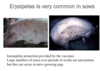
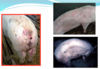
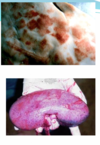
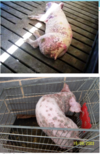
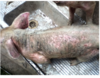
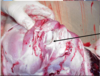
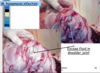
Erysipelothrix rhusiopathiae (pigs carry the pathogen on tonsils and excrete it)-- sometimes linked to hygiene, often in replacement breeders. Survives well in soil and straw. Or entry via GI tract or tonsil. Can cause abortion. ZOONOSIS \* Acute diamond skin lesions, synovitis, kidneys were grossly enlarged and covered in petechial haemorrhages – the turkey egg kidney what else could that be??? Porcine dermatitis and nephropathy syndrome (PDNS). CHRONIC: lameness \*\* There is a vaccine but only 80% effective \* Treatment: Penicillin by injection or in feed or water.
63
64
65
66
What is this? Who does this disease impact? Treatment? Prevention?
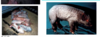
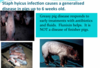
\* Greasy pige disease- Staph hyicus - outbreaks, sometimes acute epizootic - appears to follow injury - starts as discrete greasy lesion - spreads to involve whole skin surface - Antibitoic penicillins, fluids, udder cream - Prevention: hygiene
67
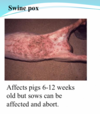
Who does it affect?
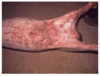
\* naive herds \* pox lesions: belly, head, face \* Course ~ 6 weeks, long immunity \* Sows may abort, some fevere \* Prevention: do nothing
68
Aetiology? Treatment?
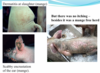
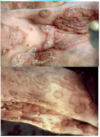
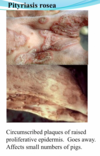
—Epidermis: remarkable thickening. —Superficial and deep perivascular infiltration of eosinophils. —Small blood vessels dilatated and congested —Etiology: hereditary predisposition \* Treatment: Do nothing. It goes away
69
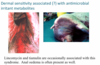
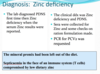
Zinc deficiency (parakeratosis) at an advanced stage. Zinc is usually added at 50- 100 ppm. Calcium can compete with Zinc.
70
Epitheliogenesis imperfecta
71
Common skin disease in young pigs + cause
\* Staph pustular dermatitis AND fight wounds - isolated lesions around head, usually no treatment required - Fight wounds: consequence of unclipped teeth, BUT clipping slows growth, can treat with LA pen
72
Cause of Borrelial ulcers? Prevention? Treatment
\* Treponeme (spiral bacteria) infection- hygiene usually poor \* Prevention: clean up, clean wound, lotagen (stringent) \* Tx: antibiotics- penicillin, amoxicillin
73
What is lincocin induced dermal sensitivity?
\* Most affected pigs heavily stocked \* Irritant principle toxic in low concentrations \* Rectal Oedema \* See also with Tylan, DMZ \* Prevention: clean, decrease stocking rate- remove lincocin
74
What is this? Signs and symptoms? DDX? Treatment?
Zinc deficiency \* Zinc left out of premix or Ca competes \* Need Zn at 100 ppm (decreases synthesis of fatty acids mediated by Zinc) \* Thickened skin, subacute inflammatory change, incomplete keratinisation \* DDX: mange \* Treatment: serum Zn, Histopath, response to Zn
75
Anthrax
76
FMD
77
78
Common Toxicities in Pigs
79
Stress factors at weaning? Factors affecting weaner health?
Age and weight at weaning Environment and housing Nutrition Disease
80
Requirements for weaners
81
What causes scours in weaners?
82
PCV2
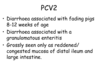
There are two types of porcine circovirus, although only PCV2 is considered pathogenic. swine that show signs of PCV2-SD usually are infected with multiple agents, including porcine parvovirus, porcine reproductive and respiratory syndrome virus, Mycoplasma hyopneumoniae, Actinobacillus pleuropneumoniae, Pasteurella multocida, Haemophilus parasuis, Staphylococcus spp, and Streptococcus spp. PCV2-SD is characterized by overt weight loss. Disease often occurs in the fattening units in pigs 8–18 wk old, although the disease can be also seen in older or younger pigs. Morbidity is typically 5%–20% among cohorts in the late nursery or finishing stages. Mortality in swine with signs of PCV2-SD can occasionally be \>50%. In addition to death loss, PCV2-SD in finishing pigs may cause a substantial increase in time to reach market weight, resulting in economic loss. Growth retardation, wasting, and dyspnea are the clinical signs seen most frequently in outbreaks. Pallor, a
83
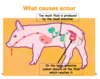
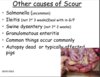
What causes scours?
84
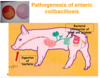
Pathogenesis of enteric coclibacillosis
85
Post-weaning E. coli scours
86
How do E. coli attach to the gut?
e.g. K88
87
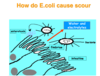
How does E. coli cause scouring?
88
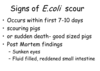
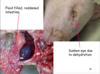
Signs of E. coli scouring
89
90
91
Predisposing factors to scours
92
Short term treatment for scours
93
Long term prevention of scours
94
Other than E. coli, what other causes of scours frequently impact weaners?
95
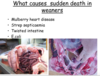
What causes sudden death in weaners?
96
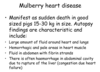
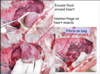
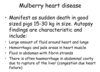
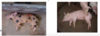
How does Mulberry Heart Disease present?
97
98
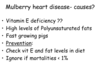
Causes and prevention of Mulberry Heart Disease?
99
DDX? Cause?
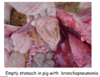
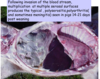
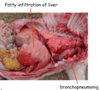
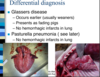
Glassers disease (polyserositis)- Pigs can be colonized by different microorganisms before weaning, but some of those early colonizing agents are potentially pathogenic. This is the case with Haemophilus parasuis, a commensal organism of the upper respiratory tract of swine that causes severe systemic disease characterized by fibrinous polyserositis, arthritis, and meningitis. Disease has a sudden onset, short course, and high morbidity and mortality. Young animals (4–8 wk old) are primarily affected, although sporadic disease can be seen in adults (eg, introduction of a naive adult to a healthy herd). Survivors can develop severe fibrosis in the abdominal and thoracic cavities, which can result in reduced growth rate and carcass condemnation at slaughter. Glässer's disease is seen worldwide, and its incidence appears to have increased since the introduction of porcine reproductive and respiratory syndrome
100
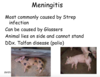
What can strep do to a weaner?
101
102
What causes coughing?
103
Glasser's disease?
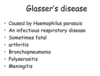
Pigs can be colonized by different microorganisms before weaning, but some of those early colonizing agents are potentially pathogenic. This is the case with Haemophilus parasuis, a commensal organism of the upper respiratory tract of swine that causes severe systemic disease characterized by fibrinous polyserositis, arthritis, and meningitis. Disease has a sudden onset, short course, and high morbidity and mortality. Young animals (4–8 wk old) are primarily affected, although sporadic disease can be seen in adults (eg, introduction of a naive adult to a healthy herd). Survivors can develop severe fibrosis in the abdominal and thoracic cavities, which can result in reduced growth rate and carcass condemnation at slaughter. Glässer's disease is seen worldwide, and its incidence appears to have increased since the introduction of porcine reproductive and respiratory syndrome
104
105
106
Glasser's Disease
107
Glasser's Disease
108
109
Glasser's Disease
110
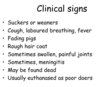
Clinical Signs of Glasser's Disease
111
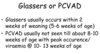
Glasser's or Porcine Circovirus Associated Disease (PCVAD)?
112
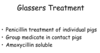
Glasser's Treatment
113
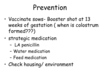
Glasser's Prevention
114
Staph hyicus
115
What is a weaner? Grower? Finisher?
116
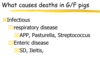
What causes death in G/F pigs?
117
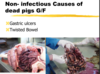
Non-infectious causes of dead pigs G/F
118
What causes scouring in grower/ finisher pigs?
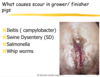
119
Scours control strategies
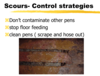
120
Scours treatment
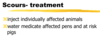
121
Swine Dysentery
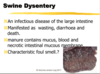
122
Swine Dysentery
123
SD
124
125
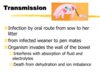
Transmission of SD
126
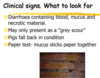
Clinical signs of SD
127
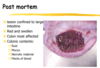
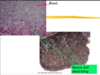
Post mortem lesions in SD
128
SD
129
Diagnosis of SD
130
Other than SD, other causes of scours in G/Fs?
131
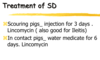
Treatment of SD
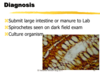
132
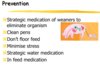
Prevention of SD
133
Eradication of SD
134
How long does SD last in the environment?
135
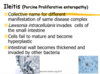
What is Ileitis?
136
137
Ileitis
138
139
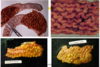
Proliferative haemorrhagic enteritis
140
141
How do pigs get Ileitis?
142
What to look for with Ileitis?
143
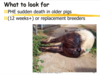
What to look for with PHE?
144
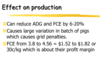
Ileitis effect on production
145
Treatment of ileitis
146
Prevention of ileitis
147
148
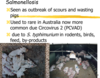
Salmonellosis in pigs
149
Infection source Salmonelllosis
150
151
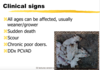
Clinical signs of Salmonellosis
152
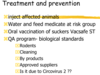
Treatment and prevention of Salmonellosis
153
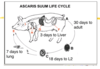
Ascaris suum life cycle
154
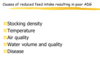
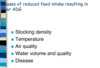
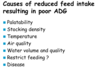
Causes of reduced feed intake resulting in poor ADG
155
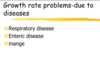
Growth rate problems due to diseases
156
Growth rate problems due to nutrition
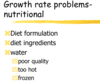
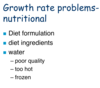
157
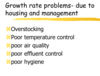
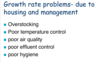
Growth rate problems due to housing and management
158
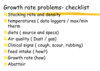
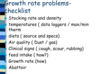
Growth rate problems checklist
159
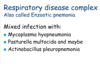
What is the respiratory disease complex?
160
161
162
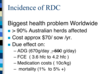
Incidence of RDC
163
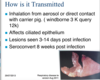
How is RDC transmitted?
164
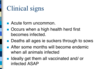
Clinical signs of RDC
165
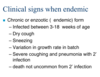
Clinical signs when endemic of RDC
166
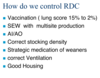
How do we know if we have RDC well controlled?
167
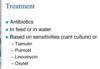
Treatment of RDC
168
Control of RDC
169
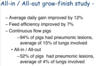
Benefits of AI/AO grower/finisher
170
How do you eradicate RDC?
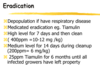
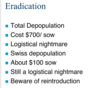
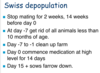
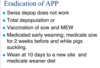
total depopulation- Have to find somewhere to put 1000 pigs between 1 day and 18 weeks of age-- there aren't piggeries around not being used Swiss depopulation- cheaper but still have same logistical problem... not many that do it and those that do it do it when pig prices are low.. but this is a bad time to do it. When prices are high everyone wants your pigs (but human nature really keeps this from happening)
171
What is a swiss depopulation?
172
173
174
175
176
177
How are pigs infected with APP?
178
179
APP
180
APP
181
APP
182
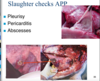
Slaughter checks APP
183
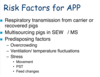
Risk factors for APP
184
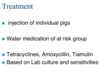
Treatment APP
185
Prevention of APP
186
Eradication of APP
187
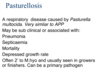
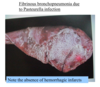
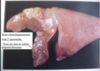
Pasturellosis in pigs
188
189
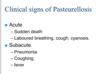
Clinical signs of Pasteurellosis
190
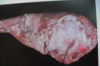
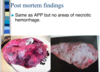
Post mortem findings in Pasturellosis
191
Treatment of Pasturellosis
192
193
194
195
196
197
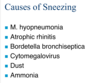
Causes of sneezing
198
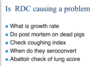
How to tell if RDC is causing a problem
199
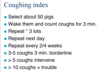
How do you do a coughing index?
200
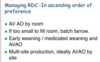
Managing RDC
\* 250-300 pigs in batch \* 0.55m^2 & 2.5m^3 / grower (65 kg) \* 0.74 m^2 & 3 m^3/ finisher 100 kg \* Clean between batches \* insulate sheds \* large ridge vents \* effluent removal
201
Causes of reduced feed intake resulting in poor ADG
202
Growth rate problems due to disease
203
Growth rate problems- nutritional
204
Growth rate problems due to housing and management
205
Growth rate problems checklist
206
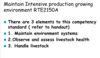
Maintain Intensive production growing environment RTE2150A  There are 3 elements to this competency standard ( refer to handout)
207
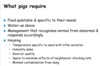
What pigs require
208
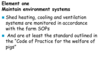
Maintaining environment systems
209
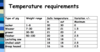
Temperature requirements of different ages
210
How can you keep track of temp?
Data loggers can check temp and humidity-- can be graphed. They can also measure ammonia
211
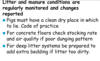
Litter and manure conditions req?
212
What about lighting with pigs?
Need to be able to see pigs to assess health Melatonin as well \* should be able to read the fine print in a newspaper in the darkest spot in the shed \* Light globes are regularly cleaned and maintained
213
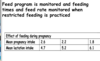
Feeding requirements of pigs
214
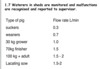
Waterers flow rate different ages? Who is authorized to turn the water off?
Who is authorised to turn the water off?  This can only be done by the most senior person on the farm  It is a serious animal welfare concern  whoever turns the water off to a shed should tie their car keys to the tap, until the water is turned back on.
215
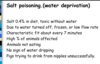
Salt poisoning in pigs
216
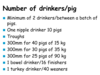
Number of drinkers/pig
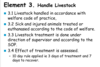
217
Observing and assessing livestock health refers to?
 2.1 livestock are checked regularly – this will vary from every 20 minutes for farrowing animals to twice a day for finishers. – All animals should be quickly checked at the beginning and end of each day. – This will take no more than 10 minutes and immediate problems can be identified – Always carry rifle or captive bolt with you in ecosystems so you can deal with an immediate need  2.2 Incidence of ill health is recognised and appropriate action is taken. – This will usually be done in consultation with the manager/ leading hand – Treatment required will be dictated by the treatment list for the farm. – Animals which fail to respond to treatment will require euthanasia.Note 10 day rule or CS 1.5  2.3 Disease prevention strategies appropriate to the unit are carried out. – Vaccination – Pulse medication for disease prevention eg ileitis – acclimatisation of gilts – quarantine of introduced animals from an approved supplier. – Observance of biosecurity guidelines.
218
Handling pigs?
219
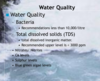
pig water quality
220
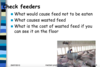
Salt poisoning would cause this If you see wasted feed costing you 10% more to feed them 300$ a ton, you are now paying 330$ a ton
221
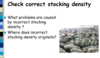
Cold in winter take in more feed, hot in summer and eat too little Incorrect stocking densities originate when you selecting gilts 7 weeks before they are due to be mated, or back in the farrowing house when you only mated 18 when you meant to mate 25 and played catch up the next week. important you look back at least 23 weeks to make sure this week that you have the correct number of animals mated... too late in week 46 to decie you have a problem. Important because income depends on number of pigs you sell each week
222
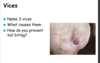
Flank biting, vulva biting, tail biting Southern side-- where it warmed up earlier Enrichment- tires, straws and chains-- the textbooks say.... but hasn't seen.... Docking tails doesn't help.
223
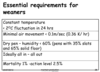
Essential requirements for weaners
224
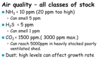
Air quality- all classes of stock
225
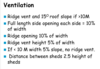
Ventilation
226
Causes of reduced feed intake resulting in poor ADG (average daily gain)
227
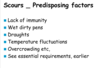
Predisposing factors of scours
228
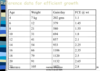
Reference data for efficient growth
229
Improving air quality
230
Environmental Audits-- the key env. factors that should be considered