1
Q
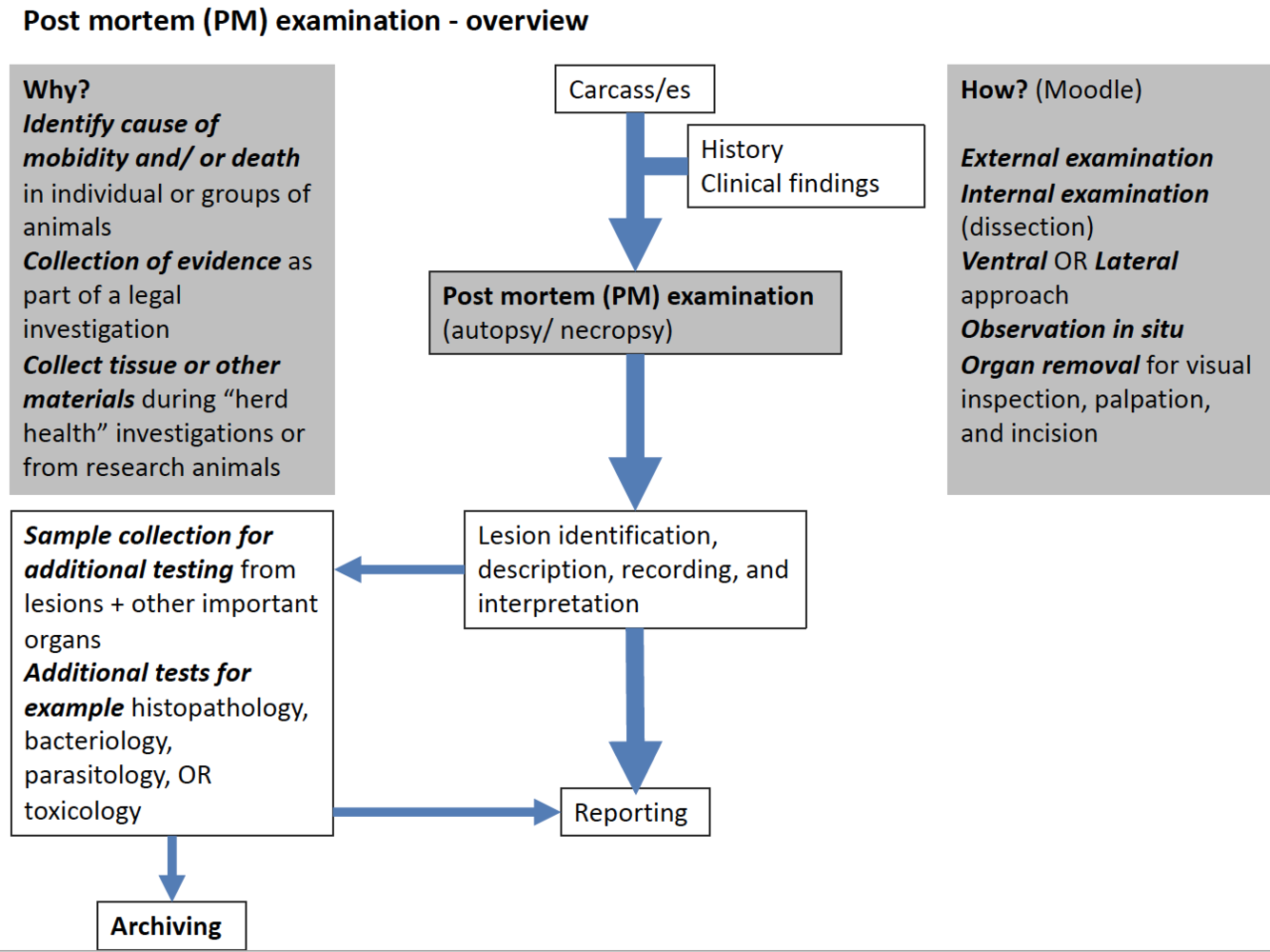
why are PM exams done (3)
A
- identify cause of morbidity and/or death in individual or groups of animals
- collection of evidence as part of legal investigation
- collect tissue or other materials during “herd health” investigations or from research animals
2
Q
what is the overall pathway for a PM exam
A
3
Q
how are lesions identified
A
- normal for that species (breed)?
- post mortem change? (ex. green discolouration of abdomen, rapid loss of rumen mucosa following death)
- artefact (barbiturate crystals)
4
Q
how are lesions described (6)
A
- location
- distribution
- size
- shape
- colour
- consistency
5
Q
what are the steps in a PM exam
A
- external exam (age, breed, sex, body condition, weight,
6
Q
what are the steps in dorsal recumbency exam (13)
A
- External examination
- Stabilise the body in left lateral recumbency – reflect right fore and hind limbs
- Midline skin incision, mandible to pelvis. Reflect skin dorsally, leaving muscular body wall intact
- Examine exposed peripheral lymph nodes
- Expose abdominal cavity by reflecting abdominal wall ventrally
a. Quick explore of abdominal organs – location, general assessment b. Check for fluid
c. Check for bile duct patency
d. Check portal vein / shunts e. Evaluate pancreas f. Evaluate adrenals - Check diaphragm and pierce
- Open thoracic cavity
a. Quick evaluation of heart and lungs - Remove abdominal organs and pluck (tongue to thoracic organs) separately
- Evaluate individual organs, section appropriately and collect samples for histology
- Collect bone marrow - femur
- Open joints
- Collect brain if requested
- Collect spinal cord if requested
7
Q
A




