Phenotype
Refers to the observable characteristics of an individual ex.: size, shape, color
Genotype
Refers to the set of genetic variants that an individual bears
–> plays a crucial role in giving rise to the phenotype
Genes
Refers to a DNA sequence coding for a protein
–> consist of alternations of axons + introns
Prokaryotes
Are organisms whose cells lack a distinct nucleus
ex.: bacteria
Eukaryote
Refers to an organism whose cells have a distinct nucleus
–> all animals + plants
Proteins
Are large molecules made up of long chains of amino acids
–> give cells their shape and make up about 12-18% of total body weight in humans
Amino acids
Are the molecular building blocks of proteins
–> its sequence along the chain determines what the properties of the protein will be
What where the 3 phases in genetics ?
- Classical genetics
–> discovering the concept of the gene (Mendel)
- Molecular genetics
–> discovery of the DNA (Watson + Crick)
- Genomics
–> ability to read genes
Principles of classical genetics
- Certain genes are based from parents to offspring
- Genes often come in alternate forms, called alleles
- Individuals have two copies of each gene, with one copy coming from each parent
Diploid
Refers to a cell/organism containing 2 sets of genes, one from each parent
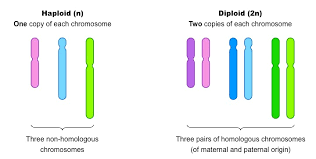
Haploid
Refers to a cell/organism containing only one set of genes
–> in humans, only sperm + egg cells are haploid
Classical genetics established that genes have 2 functions.
Which are they ?
- Genotype influences the PHENOTYPE
* –> function a* - Genes REPLICATE themselves to produce new cells
* –> function b*
Central dogma
Refers to the idea that changes in DNA sequences can lead to changes in proteins, but changes in proteins cannot change the sequence
–> the flow of information is one way
ex.: muscles that are built during a lifetime are not passed down to the next generation
Somatic cells
Refer to the cells in the body other than gametes
–> are only capable of function a (making more phenotype) by engaging in mitosis
Germ cells/ Gametes
Refer to sperm + egg cells
–> are only capable of function b (making more genotype) by engaging in meiosis
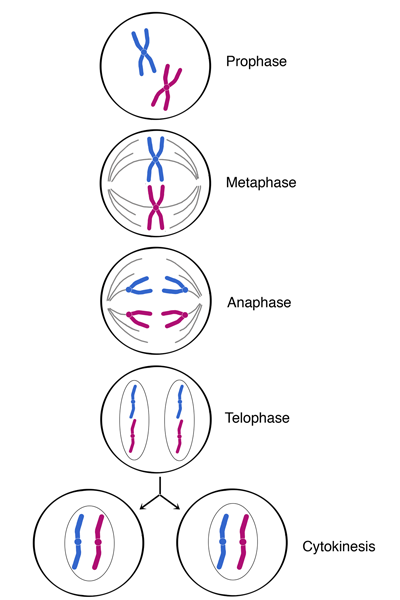
Mitosis
Refers to a process whereby cells split into genetically identical copies of themselves
–> 2n to 2n
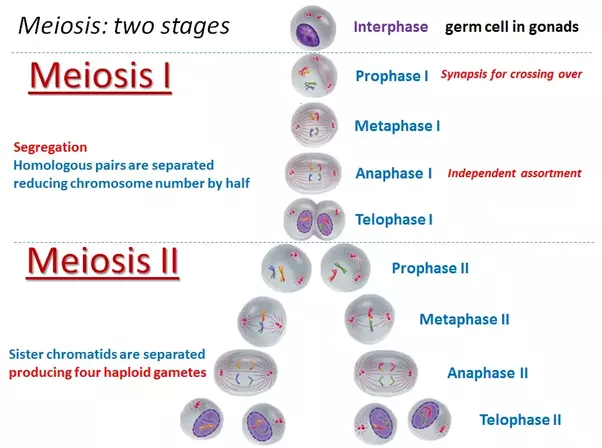
Meiosis
Refers to a special cell division process that produces a haploid gamete from a diploid cell
- recombination occurs here
- 2n to 1n
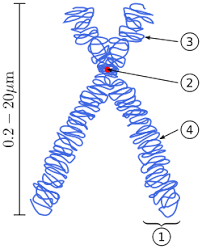
Chromosomes
Consists of DNA wound around proteins called histones
- come in homologous pairs, one from each parent
- 23 pairs
Desoxyribonuclein acid (DNA)
Is a long chain molecule/poymer consisting of 2 strands bound to + twisted around each other in a double helix
- each strand is made up of a backbone of sugars + phosphates
- along each backbone are strung the bases
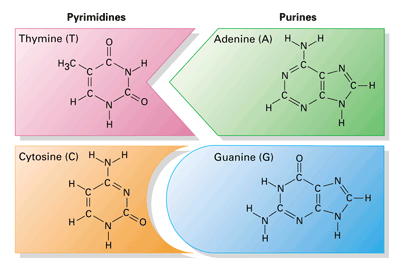
Which are the 4 Nitrogenous bases? How can you differentiate them ? Which bases binds to which (Basepairing) ?
- Adenine, Guanine, Cytosine, Thymine
- Adenine + Guanine are PURINBASES, Cytosine + Thymine are PYRIMIDINEBASES
- Adenin + Thymin, Cytosin + Guanin
Hydrogen bonds
Refer to the bonds between the 2 strands
- AT have 2 bonds whereas GC have 3, making them slightly stronger
- are weak and can be easily split apart
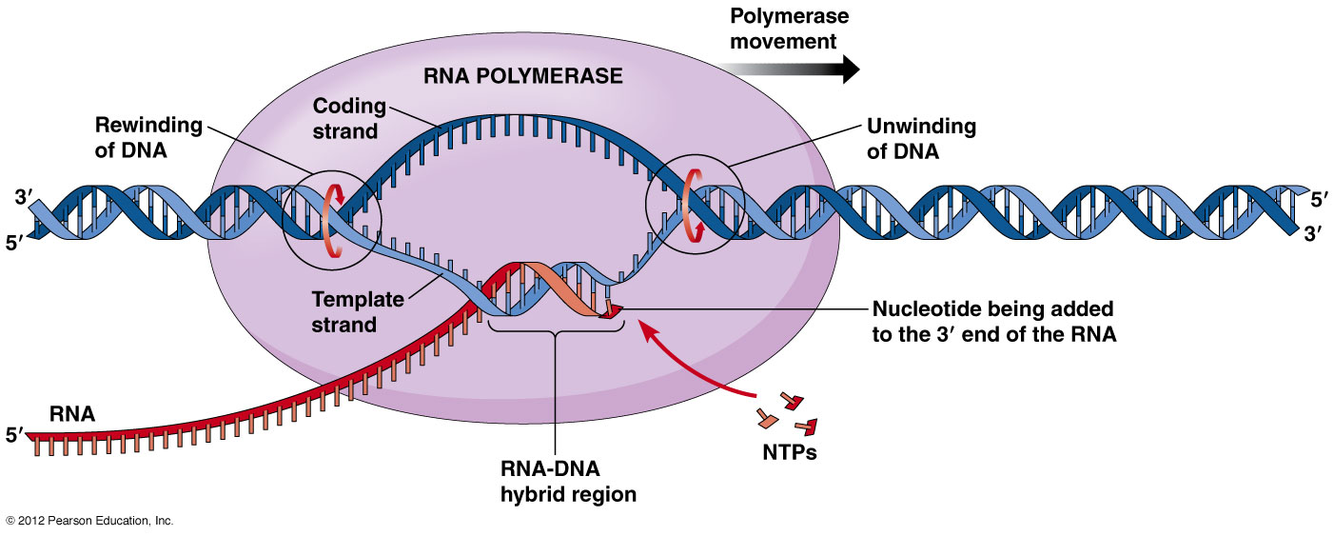
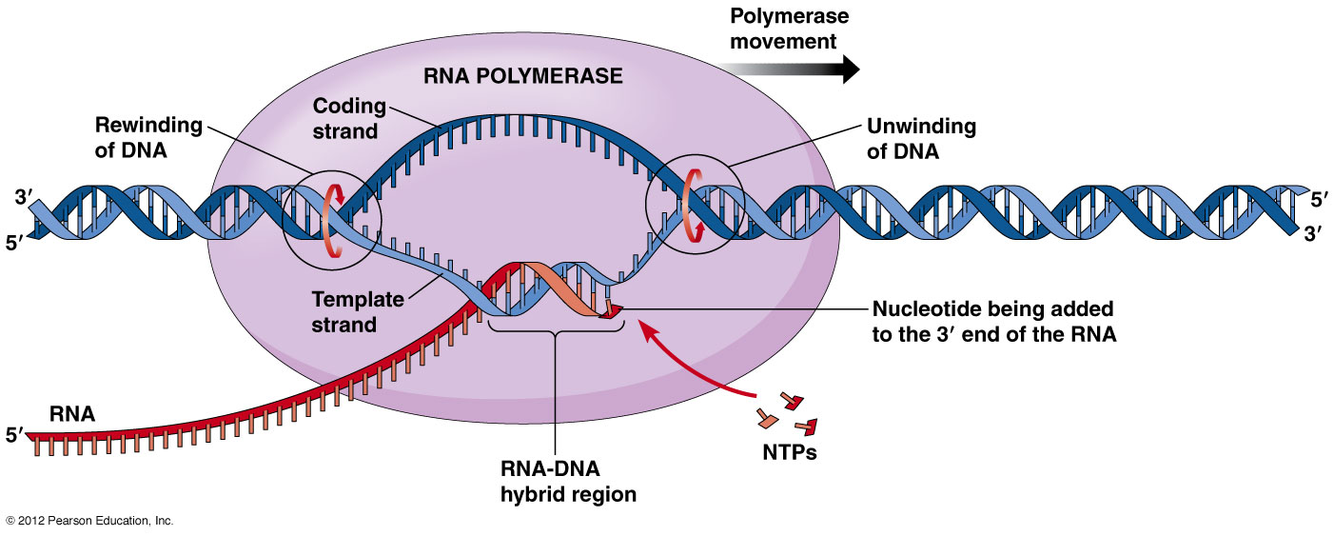
Process of Transcription
- RNA Polymerase binds to Promotor + unzips double helix
- RNA is synthesized by copying the leading strand
–> done by Polymerase
- When the Polymerase meets a terminator, copying ends + RNA separates from the DNA to become mRNA
- Introns are cut out of the mRNA in a process of splicing
- mRNA moves to Ribosomes
Process of Translation
- Ribosome is the site of translation
- The initiation codon (AUG) methionine signals the start for translation
- Termination codons signal the end
- tRNA consists of an amino acid at its top + the anticodon at its bottom, always binding to its component at the mRNA
- the tRNAs bind together their subsequent amino acids into a polypeptide chain
–> RESULT: Protein
Codons
Refer to triplets of bases from the mRNA, which stand for one particular amino acid






