What are we protecting the pulp from?
bacterial insult
thermal discomfort
chemical attack
What can cause a chemical attack
- constitutes of certain resorative materials
- acids in certain dentine bonding agents
- residual acid from acidogenic bacteria
What causes thermal discomfort?
- Heat released during polymerisation reaction when curing materials
- hot food/drink
- cavity preperation produces heat
What happens to pulp in cavity preperation?
- Increase in inflammatory cell infiltrate
- preperation results in ‘smear layer’ left; which occludes the dentine tubules with:
- bacteria from cavity
- collagen
- Hydroxyapatite
What is the ideal pulp protection?
non toxic
non irritant
bacteriostatic
gives good coronal seal
thermal/Electrical insulator
strength to withstand restoration placement e.g. condensing amalgam
radiopaque
compatible with wide range of restorative materials
Obtundant (soothing) effect on dental pulp
DENTINE IS THE IDEAL ONE!
What materials are available to protect pulp?
Calcium hydroxide
Reinforced/resin-modified glass polyalkenoates (glass ionomers)
What is calcium hydroxide?
what are its brand names?
brand names: Dycal, Unocal
- initially irrates pulp due to high pH- reactionary dentine laid down
- High pH means it is also bacteriocidal
- thermal/eletrical insulator
- radiopaque
- insufficient strength for condensation
- not adhesive- no doronal seal
What is Glass polyalkenoates?
what is its brand name?
Brand name: Vitrebond
- Low pH- only mildly irritant to pulp
- contains fluoride- bacteriostatic
- thermal/eletrical insulator
- sufficent strenght to withstand condensation
- directly adhesive so good coronal seal
- good compatibility with other materials
- may be chemical cured or reinforced with ‘resin modification’
what to use where and when?
- Cavities of 2mm or less - no lining required
- Cavities significantly deep - withing 0.5mm of pulp - hard setting CaOH
- do not need to cover with RMGIC unless restoring with amalgam
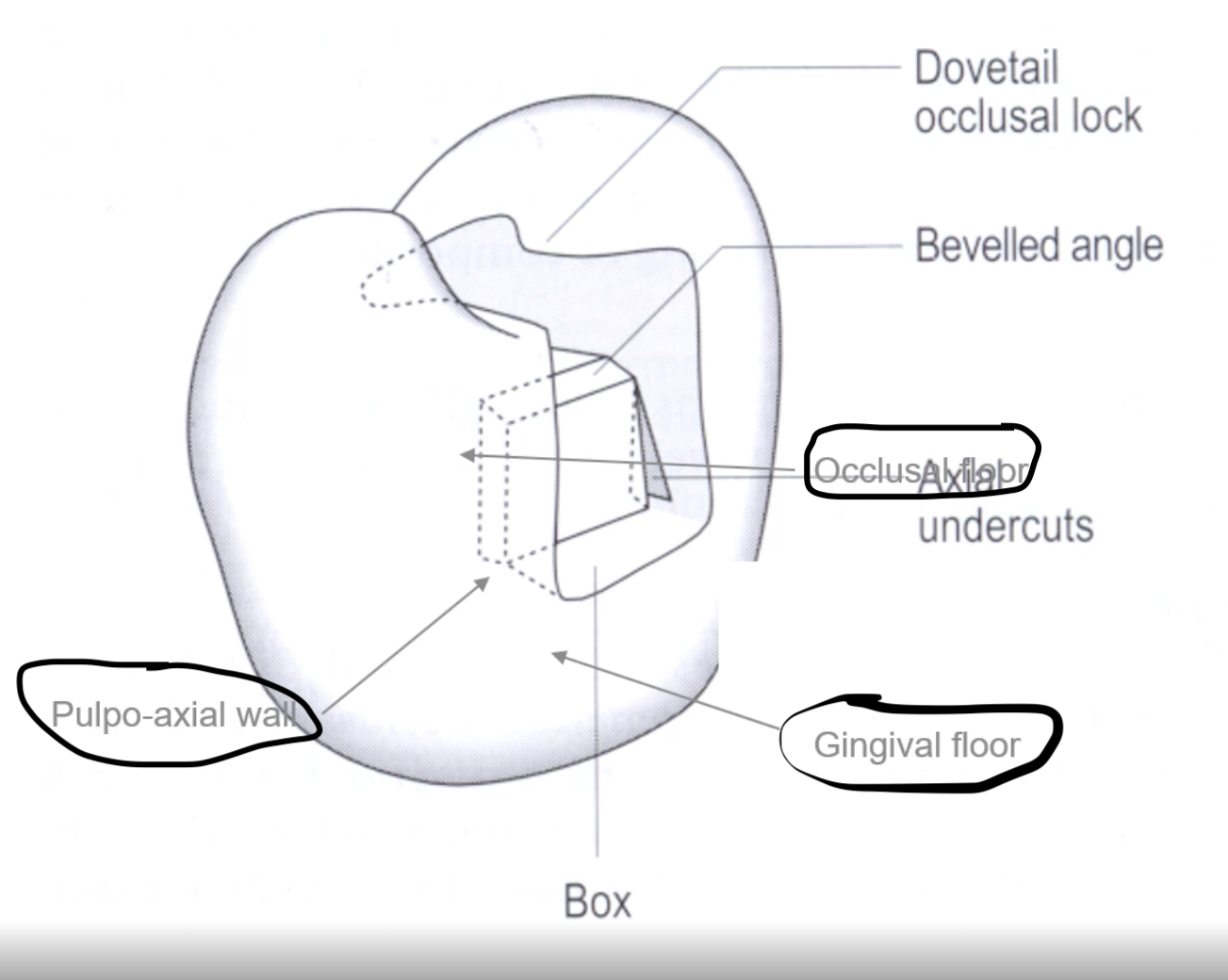
Where to use linings?
- Pulpo-axial wall
- Occlusal floor
i.e areas directly overlying the pulp
do not place ever on gingival floor as pulp is not effected in these areas
What are methods of protecting the pulp?
Indirect pulp cap
When cavity extended to within 0.5mm of pulp
Capping material is applied to deapest part of cavity
Restored as normal
Direct pulp cap
When an exposed pulp is covered by a capping material
Use hard setting calcium hydroxide
Only successful outcomes under certain conditions
Stepwise Excavation
What is criteria for direct pulp capping?
what is the technique?
Criteria
- tooth is vital
- no pain history in tooth
- no perio history
- pulp pink and healthy and no excessive bleeding
Technique
- __micro-exposure dired with cotton wool! NO AIR DRYING!!!
- Pulp capping material applied to exposure, and other areas if close to pulp
- resotre tooth as normal
What happens in Stwpwise Excavation?
- management of deep carious lesion to avoid pulp exposure and thus reduce the risk of pul[ pathoses
- partial caries removal employed
- caries overlying pulp left in situ
- cavity dressed and revisited later…
Pulp exposure avoided by allowing time for new dentine to be laid down and for lession to ARREST
What is stepwise excavation technique?
- LA, access lesion and begin caries removal as normal
- Clear ADJ/margins of all carious tooth tissue
- Soft leahery wet caries on pulpal floor/pulpo-axial wall left alone
- Dress the tooth with a material that gives a good coronal seal- GIC (pink useful)
- Remove all of the dressing at least 12 months later and review the cavity.
- Cavity floor should now be stained but no longer soft - now firm. LESION ARRESTED.
- tooth can now be restored with a pernament material
- if soft dentine still present - consider repeating stepwise procedure again. (good coronal seal)

-
Intro to Operative Dentistry26
-
Principles of cavity preparation15
-
Moisture Control14
-
Management of Occlusal Caries11
-
Using resin composites 19
-
Using resin composites 22
-
Protecting the pulp14
-
The Management of Approximal Caries12
-
Restoring Cavities with Dental Amalgam11
-
Using Glass Ionomers15
-
Management of Tooth Wear33
-
Consequences of Treatment8
-
Pulpal Diagnosis41
-
Diagnosis and Treatment planning15



