what determines the shape of protein?
- each protein has a unique a.a sequence
- polypeptide chains fold to unique shape
what determines the function of a protein?
- ‘external’ chemistry of protein. i.e which groups sticking out of a.a. (hydrophobic?)
- shape
both determined by a.a. compositon
what are the levels of structure of protein?
- primary - sequence of a.a.
- secondary - 2D fold
- tertiary - 3D fold
- Quaternary - interaction of subunits
describe primary structure of primary structure
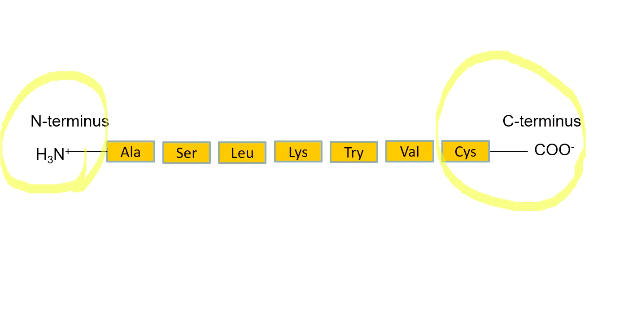
- sequence of amino acids
- at one end: N terminus (H3N+)
at other end: C terminus (COO-)
always read in direction of N terminus to C terminus
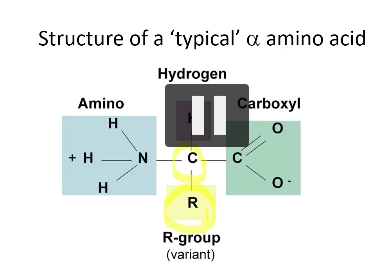
describe the structure of a typical alpha amino acid
- amino group (NH3+)
- carboxyl group
- H
- C in middle
- R group
how does the R group of amino acid impact its properties?
how many r groups?
- twenty R groups
- result in different: hydrophilic/phobic, if polar/non-polar, structure and chemistry
name different types of R groups
- non polar, aliphatic R groups : made from C + Hs (apart from methionine)
2. Polar, uncharged R groups
3. Aromatic R groups (R group has benzine ring in it)
4. Positively charged R groups
5. Negatively charged R groups
what does the the chemical characteristic of a.a. determine in an area of a protein?
the structure determines the function of the protein due to the chemistry of the proteins:
e. g. hydrophobic non-polar a.a.s -> will be hydrophobic
e. g. polar a.a. -> may need to react with water in cytosol.
how are do two a.a. connect?
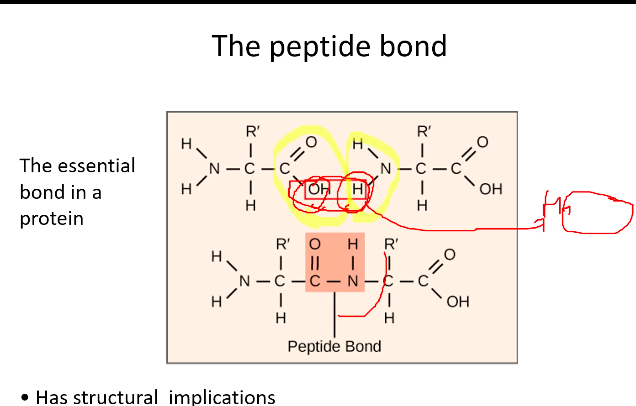
2 a.a. next to each other: hydroxyl group of one a.a. lost from the carboxyl group, H of other is lost from the other a.a. molecule of water leaves = condensation reaction
forms a peptide bond
when do you class a chain of a.a. a protein c.f. a peptide chain?
what is a typical chain of a.a. in protein?
- when the is 50+ chain of a.a. = protein
- 50 - 2500 = typical protein ( but can be up to 5000)
large number of protein variations bc the fact there are 20 possilbe a.a.
- describe the two types of secondary structure?
- what determines the difference?
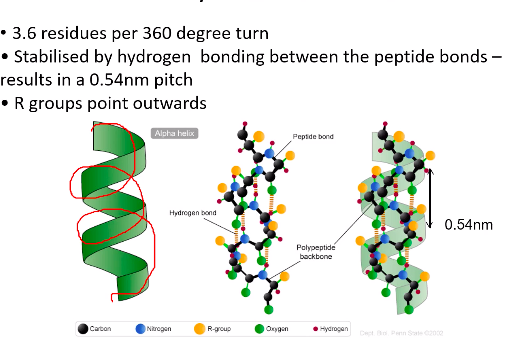
- alpha helix and beta sheet secondary structures:
alpha helix: every turn of the helix, get a.a.s forming H bonds (0.54 nm pitch from each other). this stabilise the peptide bonds. R groups point out of helix structure.
beta sheet: flat sheets that run parralel to each other. all the C terminals can be in the same direction (N->C) = parralel beta sheets. BUT - if get N->C, then N-> C in different direction = antiparralel sheets. H bonds between sheets stabilise bonds.
( = structures essentialyl formed by H bonds interacting with different a.a. within structure)
what do we call regions of protein dont have alpha or beta regions?
disordered regions (have specific roles in protein interactions)
describe tertiary structure
what determines the tertiary structure?
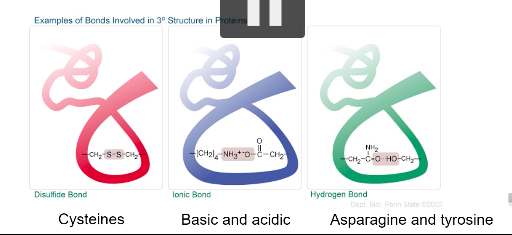
- general folding of polypeptide chain into its final 3D shape, brings together the 2D structure
- tertairy structure determined by primary structure (a.a. sequence) and the R groups of the a.a.
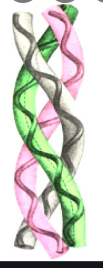
explain the 3D structure of collagen
- triple helix that are staggered. each helix contains a large number of ‘Pro-Pro-Gly’ (proline and glycine). the prolines also interact with each other across the helixes to form crosslinks. also disulfide bonds occur between cysteines and lyceins in collagen chain = strong and stable strucutre
decribe quaternary structure of proteins
how can you classify?
e.g?
two or more subunits that fit together.
classified: homo or hetero (same or different subunits)
e. g. Hb = 4 monomers (2 alpha and 2 beta)
what are the two groups that we name proteins?
what is this based off?
fibrous or globular
based of their 3D shape
describe what fibrous shaped proteins are like
- extensive packing of 2 structure (alpha or beta)
- dominated by one type of 2 structure
- form structural proteins (e.g. collagen)
- proteins can be made of domains -> descrete regions of 3D structure (part of fibrous could be alpha helical, then part beta sheet)
describe structure of globular proteins
overall globular shape -> mix of 2 structures
- majority of proteins
how do we go from froma a peptide chain to fully folder protein? (what can spontaneously happen to peptide chains?)
- peptide chains can spontanously fold into their final structure (-> all info required to fold is within a.a. sequence)
BUT NOT ALL DO THIS. e.g. peptide might nedd modifcation or help in order to fold
- describe relationship between energy levels and the no. of intramolecular or intermolecular contacts made in a protein
- what exist to help proteins fold?
- what happens if dont have 2?
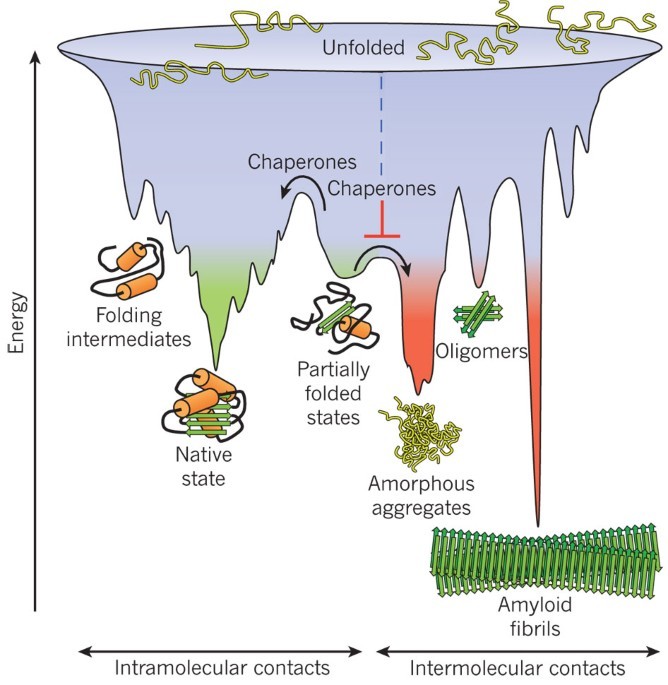
- as a protein folds, the amount of energy within the protein required decreases. this means can have folded intermediate peptide. as protein enters the fully folded protein, the energy within the protein decreases.
therefore proteins can use:
2. chaperones: helper proteins. binds to peptide, assists in folding. requires ATP.
- if dont have chaperones - get misfolds of proteins that aggregates (aka amorphous aggregates), which can lead to fibrils. e.g A.D.
what are different types of chaperones?
heat shock proteins - .e.g HSP70 -> binds to hydrophobic residues in partially folded peptides
what are oligom_ers? go over this slide!!!_
what do post-translational modifications allow?
modify the function of the protein by adding:
- functional groups ( phosphates -> switches protein on)
- other peptides
- change chemical nature of a.a. (deamination , elimination reactions)
- structural changes (di-sulphide cleavage)



