proteins are the links between
genotype and phenotype
gene expression
- process by which proteins are DNA directs protein synthesis
- two stages: transcription and translation
why can’t proteins be directly translated from DNA
- use of RNA protects DNA and its genetic material
- allows more proteins to be created simultaneously
amino acid
- 20 types
- order determines the protein formed
peptide bond
- bonds between amino acids
- form between the hydrogen and carboxyl groups
polypeptide
- protein composed of one or more long chains
(blanks) provide the instructions to make certain proteins
genes
protein shape determines (blank)
function
primary structure
- describes order of amino acids
- any of 20 amino acids can appear at a position in the protein
- primary structure for protein antidiuretic hormone (ADH) can be written as Cys-Tyr-Phe-Gln-Asn-Cys-Pro-Arg-Gly
* important to note side groups don’t play a role in peptide strucutre, but do play a role in primary structure
secondary structure
- 3D shape
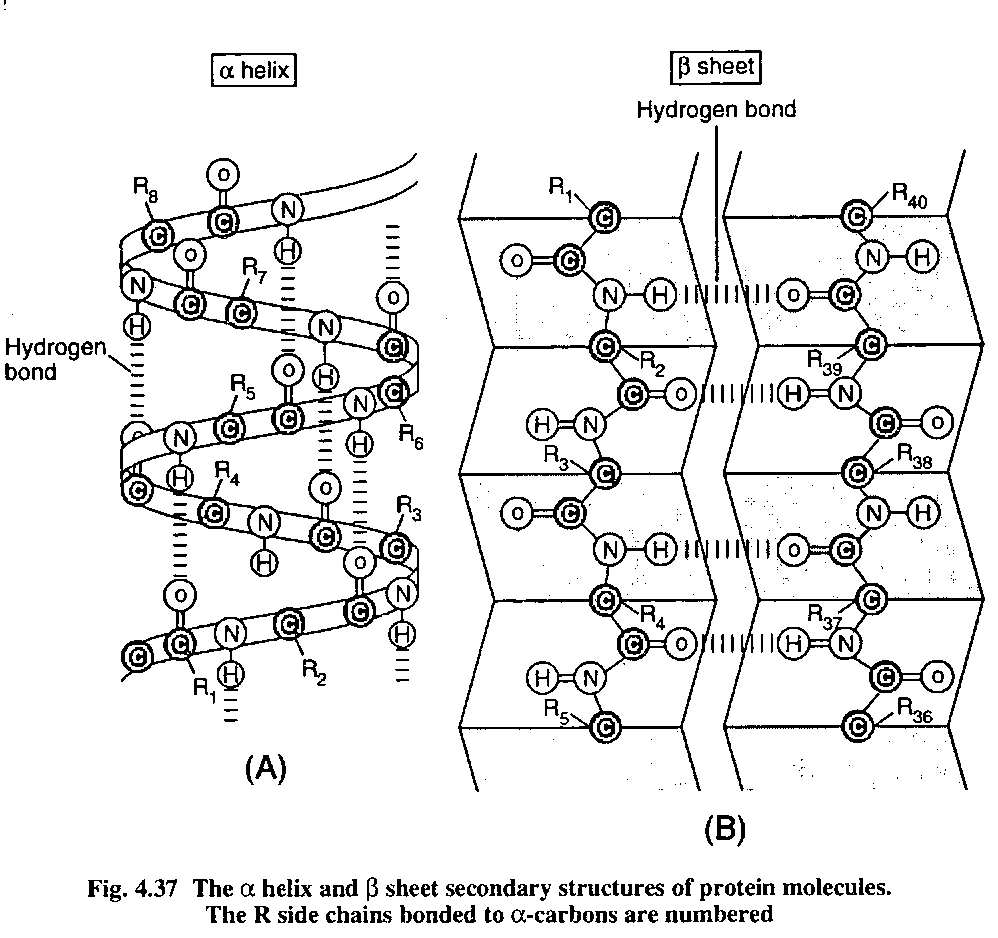
- results from hydrogen bonding between amino and carboxyl groups of adjacent amino acids
- bonding produces either
spiral (alpha helix): when hydrogen bonds form in a chain
OR
folded plane that looks like pleats on a skirt (beta pleated sheet): parallel chains linked into pleated shape
- protein whose shapes are dominate by two patterns often form fibrous proteins
tertiary structure
- additional 3D shaping
- often dominates structure of globular proteins
- factors that contribute to tertiary
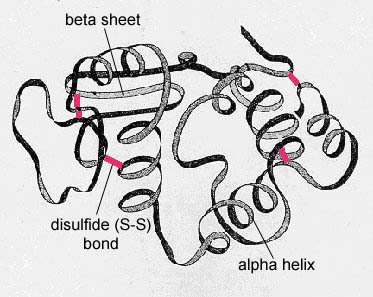
= hydrogen bonding between R groups of amino acids
= iconic bonding between R groups of amino acids
= hydrophobic effect: occurs when sulfur atom in amino acid cysteine bonds to sulfur atom in a nother cysteine (forming cysteine, kind of double amino acid); disulfide bridge helps maintain folds of amino acid chain
quaternary structure
- describes protein that is assembled from two or more separate peptide chains
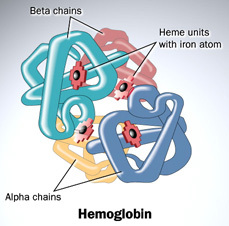
- ex. globular protein hemoglobin consists of four peptide chains that are held together by hydrogen bonding and interactions among R groups
structural -
1/7 major functions of proteins
support
keratin in the hair and horns of animals
collagen in connective tissues
silk in spider webs
storage -
2/7 major functions of proteins
holds/collects molecules like calcium and iron
casein in milk
ovalbumin in egg whites
zein in corn seeds
transport -
3/7 major functions of proteins
moves certain small molecules/ions
in membranes of cells that transport materials into and out of cells
oxygen carrying hemoglobin in red blood cells
proton pump
motion -
6/7 major functions of proteins
contract muscles
actin
myosin
defense -
4/7 major functions of proteins
recognizes foreign substances; center of immune system
antibodies that provide protection against foreign substances that enter bodies of animals
immunoglobulins
regulation -
7/7 major functions of proteins
receives or sends information to regulate body functions
hormones
enzyme catalysis -
5/7 major functions of proteins
facilitates or speeds up certain chemical reactions
enzymes
denaturation
- proteins unfolding
- can occur if pH, ionic concentration, or temperature change
- leads to biologically inactive proteins
- most enzymes can only function in specific conditions
channel proteins
- provide open passageways through membrane for certain hydrophilic (water-soluable) substances such as polar and charged molecules
aquaporins are channel proteins of certain cells (such as those in kidneys and plant roots) that dramatically increase the passage rate of H2O molecules
ion channels
- allow passage of ions across membrane
in nerve and muscle cells, ion channels called gated channels open and close in response to specific chemical or electrical stimuli to allow passage of specific ions (like Na+ and K+)
carrier proteins
- bind to specific molecules
- transferred across membrane after carrier protein undergoes change of shape
passage of glucose into cells is by carrier protein
transport proteins
- use energy in form of ATP (adenosine triphosphate)
- transport materials across membrane
- when energy used, materials said to be actively transported through active transport
sodium potassium pump uses ATP to maintain higher concentrations of Na+ and K+ on opposite sides of plasma membrane

-
Sample deck2
-
Chemical Cycle10
-
DNA Replication18
-
Prokaryotic vs. Eukaryotic cells13
-
Regulating Eukaryotic Genes14
-
Cell Receptors and Transduction Pathways14
-
C4 and CAM Photosynthesis12
-
Griffith, Hershey, Chase11
-
Innate immunity26
-
RNA Processing Review18
-
Genetic Mutations17
-
degrees of dominance, multiple alleles, polygenic inheritance, pleiotropy10
-
Operons11
-
Allopatric vs. Sympatric Speciation and Hybrid Zones10
-
Aerobic Cellular Respiration16
-
Evidence for Evolution11
-
Functional Groups10
-
Meiosis- Origins of Genetic Variation10
-
Gene Cloning and Transformation12
-
Elements of Natural Selection11
-
Restriction Enzymes & Gel Electrophoresis6
-
Proton and Sodium-potassium pumps10
-
Proteins28
-
Proto-oncogenes, Oncogenes, Tumor-Suppressor Genes10
-
Photosynthesis10
-
Structure of DNA10
-
Differentiation, Morphogenesis, Induction, Cytoplasmic Determinants10
-
Osmosis15
-
Genetic Drift & Gene Flow11
-
Cell Organelles14
-
Control of the Cell Cycle14
-
Intercellular junctions10
-
Diffusion & Facilitated Diffusion18
-
Virus Structure & Lytic vs Lysogenic Cycles12
-
Anaerobic Respiration and Fermentation10



