course of PTSD:
type I trauma → ___ __ disorder (3-30d) → ___ (1mo+)
type I trauma → acute stress disorder (3-30d) → PTSD (1mo+)
2 key subtypes of PTSD
- with dissociative symptoms (including derealization or depersonalization)
- severe/complex PTSD (many symptoms, affecting dysregulation, impaired relationship with others, suicidal thoughts. dissociation, negative belief systems)
Note: Etiologies of PTSD
- Neuroendocrine systems in PTSD
- ANS hyperactivity
- Reduced serotonin
- Opioid system reduction in endorphins
- Reduced GABA receptor density
- Glutaminergic dissociative symptoms
- Reduced concentration of neuropeptide Y
- HPA axis hyperexpression.
Outline Criteria for PTSD
A. __ to actual or threatened death, __ ___ or __ violence.
- a. Directly experiencing trauma event
- b. Witnessing in person
- c. Learning that the traumatic event occurred to
- close family member or close friends and was accidental or violent
- d. Experiencing repeated or extreme exposure to aversive details of trauma (first responders, occupational exposure)
B) __ symptoms and re-experiencing (at least 1)
- a. Recurrent involuntary and intrusive distressing memories
- b. Recurrent nightmares
- c. Dissociative reactions such as flashbacks
- d. Intense psychological/physiological distress when triggered
C) Persistent __ of trauma stimuli (at least 1)
- a. Avoidance of, or efforts to avoid memories, thoughts, feelings
- b. Avoidance of external reminder of trauma that trigger distressing memories
D) Negative alterations in ___ and __ (at least 2)
- a. Parts of trauma memory absent due to dissociative amnesia
- b. Persistent negative self-beliefs/distorted cognitions
- c. Persistent negative emotional state/fear/horror/anger/guilt
- d. Diminished interest in significant activity
- e. Emotional numbing/lack of joy or positive emotions
E) ___/__ symptoms (at least 2)
- a. Irritability/short fuse/impatience/road rage
- b. Reckless self-destructive behaviour
- c. Hypervigilance
- d. Poor concentration
- e. Insomnia
F) Greater than ____ of duration
G) Symptoms cause ___ ____
H) Not caused by medical illness/EtOH/drugs
Outline Criteria for PTSD
A. Exposure to actual or threatened death, serious injury or sexual violence.
- a. Directly experiencing trauma event
- b. Witnessing in person
- c. Learning that the traumatic event occurred to
- close family member or close friends and was accidental or violent
- d. Experiencing repeated or extreme exposure to aversive details of trauma (first responders, occupational exposure)
B) Intrusion symptoms and re-experiencing (at least 1)
- a. Recurrent involuntary and intrusive distressing memories
- b. Recurrent nightmares
- c. Dissociative reactions such as flashbacks
- d. Intense psychological/physiological distress when triggered
C) Persistent avoidance of trauma stimuli (at least 1)
- a. Avoidance of, or efforts to avoid memories, thoughts, feelings
- b. Avoidance of external reminder of trauma that trigger distressing memories
D) Negative alterations in cognitions and mood (at least 2)
- a. Parts of trauma memory absent due to dissociative amnesia
- b. Persistent negative self-beliefs/distorted cognitions
- c. Persistent negative emotional state/fear/horror/anger/guilt
- d. Diminished interest in significant activity
- e. Emotional numbing/lack of joy or positive emotions
E) Hyperarousal/reactivity symptoms (at least 2)
- a. Irritability/short fuse/impatience/road rage
- b. Reckless self-destructive behaviour
- c. Hypervigilance
- d. Poor concentration
- e. Insomnia
F) Greater than 1mo of duration
G) Symptoms cause functional impairment
H) Not caused by medical illness/EtOH/drugs
Development of emotional or behavioural symptoms in reponse to an identifiable stressor, within 3 months of onset of the stressor
Clinical significant symptoms of either
- Marked distress out of proportion to severity and intensity of the stressor
- Significant impairment in social, occupational, or other area of function
Not another mental disorder
Not a normal bereavement
No persistence for >6 mo after stressor ends
WHAT IS THIS
Adjustment Disorder
timeline for acute stress disorder
3 days to 1 month after stressor
9+ symptoms from 5 categories
- Intrusion (memories, dreams, dissociation, distress)
- Negative Mood (no positive emotions)
- Dissociative Symptoms (altered sense of reality, amnesia)
- Avoidance (thoughts/feelings, external reminders)
- Arousal (sleep, irritable, hypervigilance, concentration, startle)
5 categories that you need 9+ symptoms from in order to diagnose acute stress disorder
9+ symptoms from 5 categories
- Intrusion (memories, dreams, dissociation, distress)
- Negative Mood (no positive emotions)
- Dissociative Symptoms (altered sense of reality, amnesia)
- Avoidance (thoughts/feelings, external reminders)
- Arousal (sleep, irritable, hypervigilance, concentration, startle)
20-50% prevalence after a trauma
T/F comorbidities for PTSD is common
true
Investigations: comorbidities are very common (80% have 3+ disorders): borderline PD, eating disorder, anxiety ,addiction, somatic symptom disorders, major depression, ADHD
Screen for ACEs
first phase of PTSD managemen
Stabilization phase; develop a therapeutic relationship, risk assessment, treatment setting (out/inpatient, day program), PTSD psychoeducation, relaxation skills (meditation, mindfulness), harm reduction (substance use), pharmacotherapy
T/f pharmacotherapy is just as helpful for PTSD as psychotherapy
false. unlike depression and anxiety where meds are truly beneficial, psychotherapy is way better for PTSH. Pharmacotherapy is often only indicated if you have a safet risk or comorbid condition (ex/ functionally impaired because of MDD in addition to trauma)
Pharmacotherapy (trauma therapy >>> medications): indicated with safety risk, psychosis, severe symptoms, functional impairment with ADHD
§ 1st line: fluoxetine, paroxetine, sertraline, venlafaxine
§ 2nd line: fluvoxamine, mirtazapine, phenelzine
**insufficient evidence for meds to prevent PTSD
Habituation therapy for PTSD
decrease in response to a stimulus after repeated presentations. Each time you stay in the situation, your fear goes down. When you stay in a feared situation for a prolonged period, you learn that it is safe, and your anxiety goes down.
accelerated resolution therapy for ptsds
Accelerated Resolution Therapy: good for fear-based trauma. Involves repeated prolonged imaginal exposure to the trauma memories (10-15 sessions). Repeated in vivo exposure to avoided situation in daily living
Dropout rates 30-40%
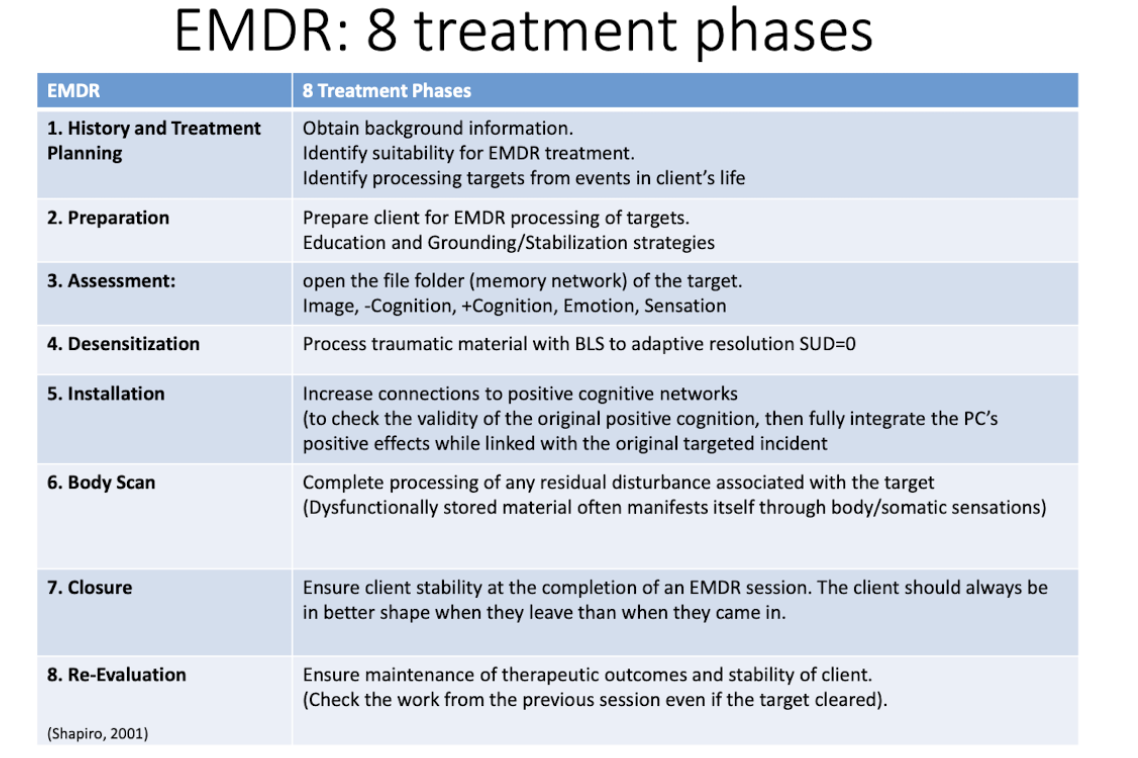
outline the phases of Eye Movement Desensitization Therapy
Eye Movement Desensitization Therapy: good for anger, guilt and shame. Decrease vividness of trauma images and introduce new positive beliefs
Dropout rate 18.9%
Past: maladaptive encoding/incomplete processing
Present: memory activated while using bilateral stimulation; body scanning
Future (goal of therapy): installation of positive beliefs related to target memory
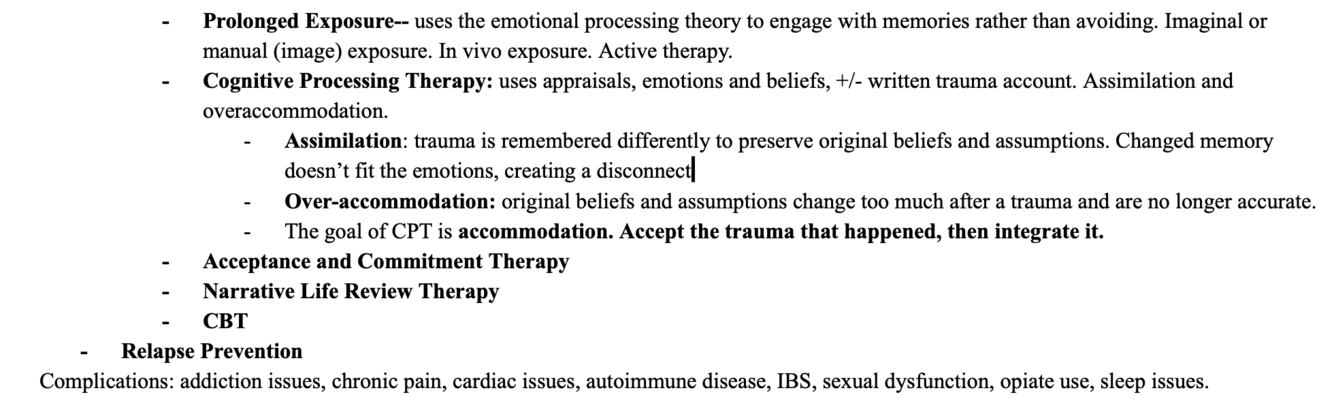
Note; other ezposure-based therapies for PTSD
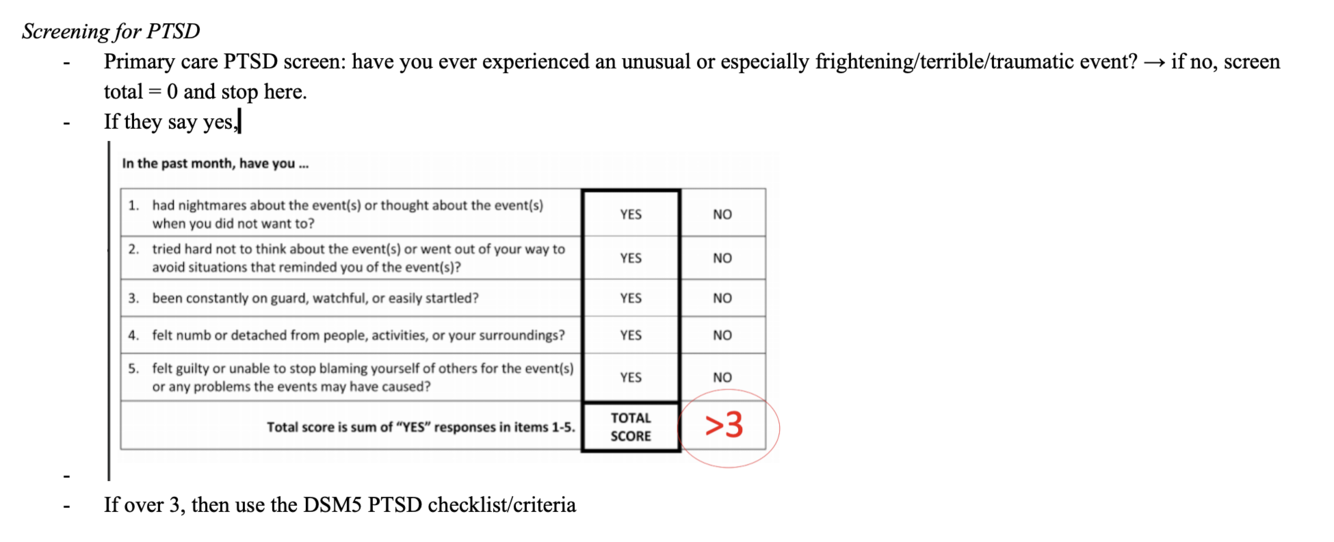
screening process for PTSD
PTSD Specifiers:
With ___ __: full criteria not met until 6 months after event
With ___ ___: sudden disruption in the continuity of sense of self or agency (affect, behaviours, consciousness, memory, perception, cognition, sensory motor function), the experience of depersonalization (limbs/voice/ body feel deformed, different or distant feelings of detachment or disconnection, watching self from outside), or the experience of derealization (world has become strange or unreal).
PTSD Specifiers:
With delayed expression: full criteria not met until 6 months after event
With dissociative symptoms: sudden disruption in the continuity of sense of self or agency (affect, behaviours, consciousness, memory, perception, cognition, sensory motor function), the experience of depersonalization (limbs/voice/ body feel deformed, different or distant feelings of detachment or disconnection, watching self from outside), or the experience of derealization (world has become strange or unreal).

-
Mood Disorders22
-
Psychosis26
-
Pharmacology of Mood Disorders19
-
Pharmacology of Psychotic Disorders10
-
Pharmacology of Anxiety8
-
Anxiety Disorders29
-
Mood and Anxiety Disorders in Children28
-
PTSD16
-
Addiction I and II30
-
Personality Disorder26
-
Suicide8
-
Forensic Psychiatry19
-
Paraphilias and Sexual Disorders22
-
Disruptive Behaviour Disorders19
-
Pharmacology19
-
Pediatric Pharmacologic31
-
Psychotherapy5



