A researcher opens the chest of an anesthetized mouse and microinjects a small amount of a fluorescent dye into a single cardiac muscle cell at the base of the left ventricle. Over time, the dye spreads toward the left atrium. Which structure listed below is most likely responsible for facilitating this spread? A. Endomysium B. Intercalated discs C. Parasympathetic fibers D. Sarcoplasmic reticulum E. T tubules
B. Intercalated Discs
- While hiking in Canyonlands National Park, a 24-year-old medical student experienced a puncture wound on her leg from a cactus needle. Several days later, she noticed that the wound was swollen and tender, indicating an infection. Because of a class she had taken, she knew that immune system cells are attracted from the blood to the connective tissue involved. What barrier did these cells most likely have to move past to exit the blood and enter the infected tissue? A. Collagen fibers of the tunica adventitia B. Elastic fibers of the tunica intima C. Smooth muscle of the tunica media D. Tight junctions between endothelial cells
D - tight Junctions
- Endothelial cells of a capillary bed can regulate the amount of blood flowing into the bed by releasing signaling molecules that affect which nearby structure? A. End arteries B. Lymphatics C. Metarterioles D. Pericytic venules E. Vasa vasorum
C- Smooth muscle sphincters of metarterioles regulate the flow of blood into the capillary beds they supply. The smooth muscle cells are sensitive to chemical signals, including those released by endothelial cells.
A researcher is investigating the pathology produced by a newly discovered jungle microbe. This bacterium releases a toxin that produces dramatic leakage of fluid and cells from capillaries and postcapillary venules. The researcher determines that this reaction is not associated with an increase in the release of histamine or other known vasoactive molecules. To her surprise, studies using cultures of purified human endothelial cells indicate that the toxin does not bind to these cells and has no noticeable effect on their physiology. Which of the following would be the researcher’s next logical cellular target? A. Atrial myocytes B. Fibroblasts C. Pericytes D. Smooth muscle E. Sympathetic neurons
C – Pericytes are the only cells listed that are routinely associated with capillaries and postcapillary venules. These cells provide many important activities, including the production of factors involved in maintaining the integrity of microvessels.
Ehlers– Danlos syndrome is a group of inherited disorders. One form of this syndrome apparently involves the inability to produce type III collagen. In this case, death often results from massive internal bleeding due to spontaneous rupture of the aorta. Which portion of the aorta should be most affected by this form of the syndrome? A. Tunica intima B. Internal elastic lamina C. Tunica media D. Tunica adventitia E. External elastic lamina
C – The smooth muscle cells of the tunica media produce the type III collagen fibers and elastic fibers found in this layer. Recall that fibrillin mutations in Marfan syndrome, which perturb elastic fiber assembly, can also result in the rupture of large vessels.
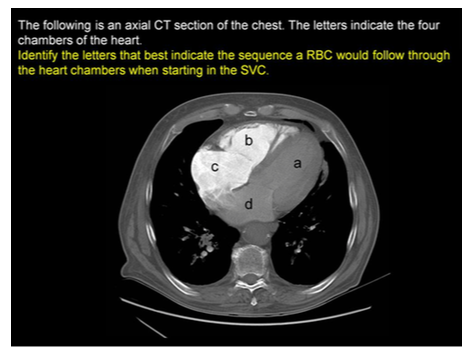
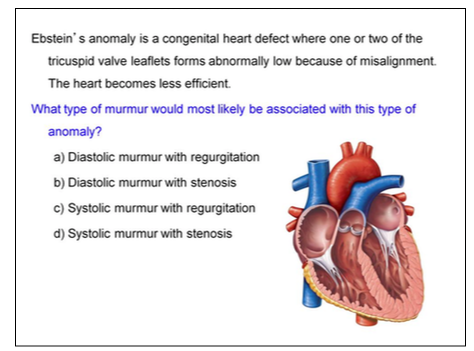
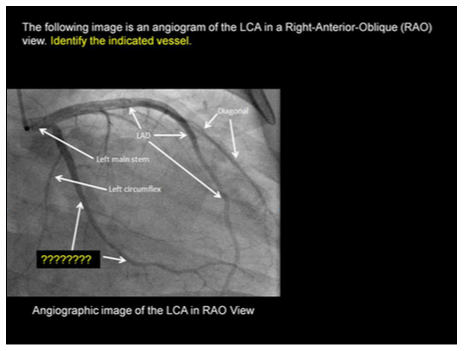
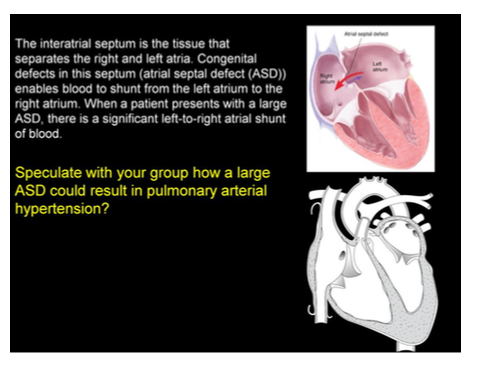
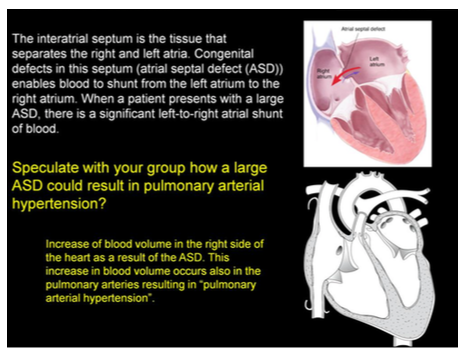
CBDA
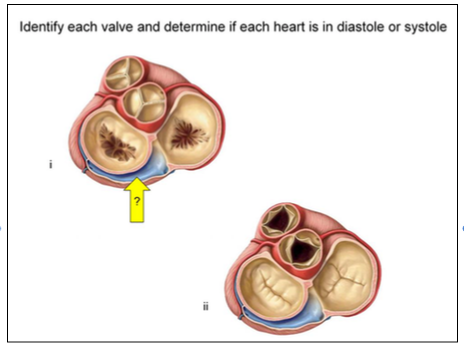
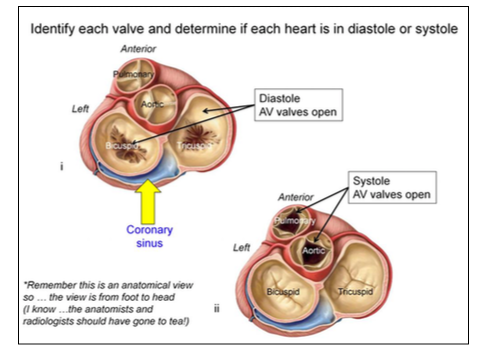
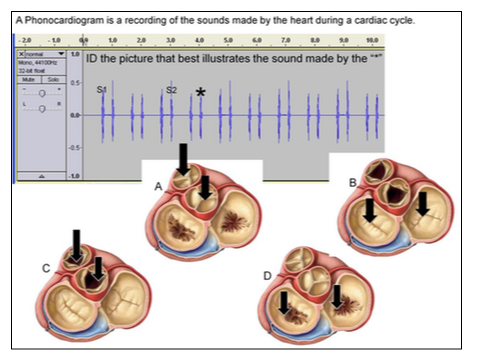
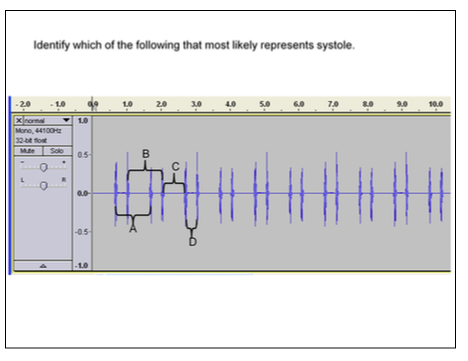
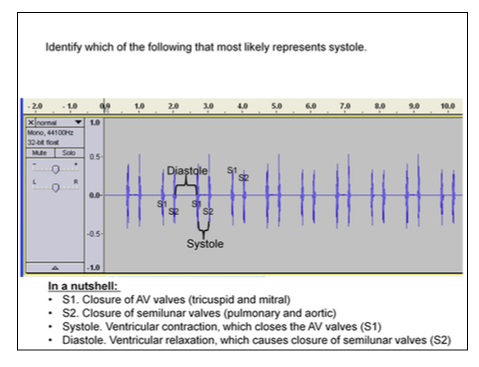
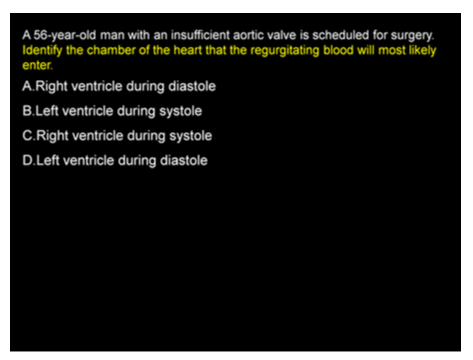
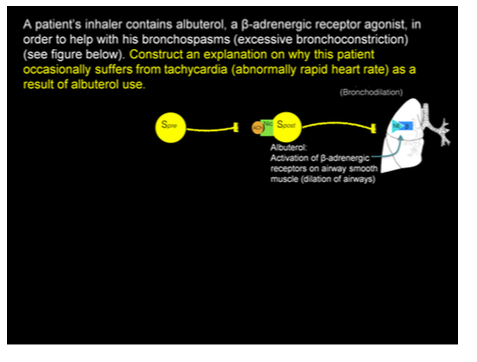
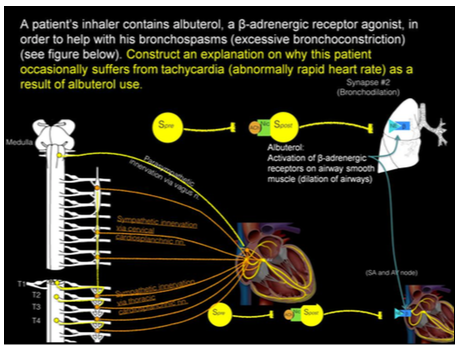
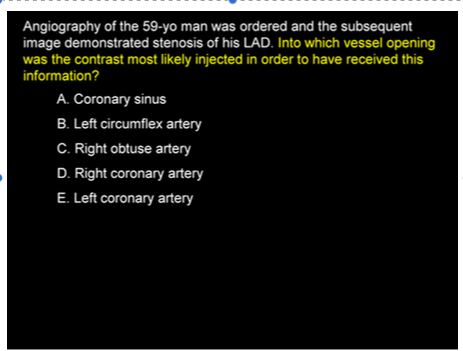
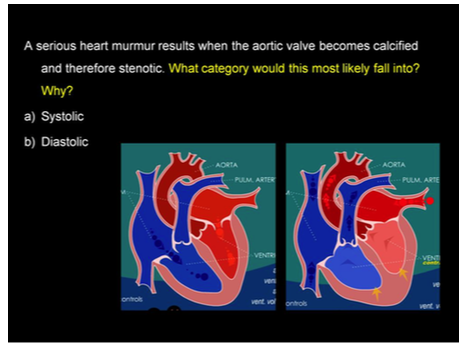
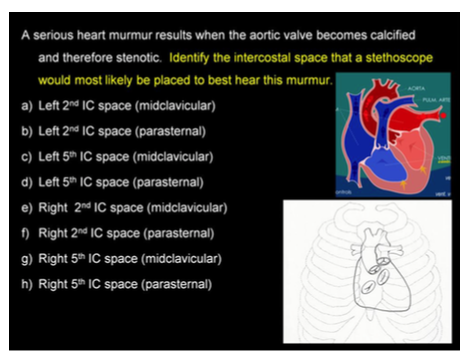
A systolic
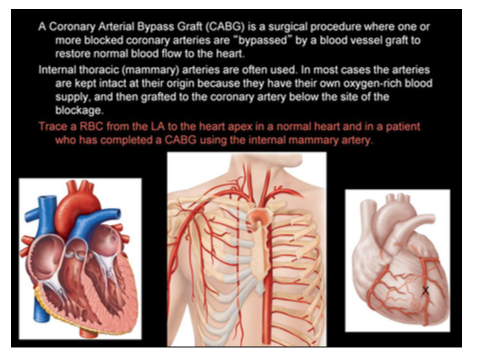
- A prenatal ultrasound of a 35-year-old
woman in her 12th week of gestation reveals
an abnormal image of the fetal heart. Instead
of a four-chambered view provided by the
typical cross, a portion just below the crosspiece is missing. What structures constitute
the cross, and what defect does this infant
probably have?
Sadler, T. W. (2014-10-07). Langman’s Medical Embryology (Longmans Medical Embryolgy) (Page 217). LWW. Kindle Edition.
- A four-chambered view is sought in ultrasound scans of the heart. Th e chambers are
divided by the atrial septum superiorly, the
ventricular septum inferiorly, and the endocardial cushions surrounding the atrioventricular canals laterally. Together, these
structures form a cross with integrity readily
visualized by ultrasound. In this case, however, the fetus probably has a ventricular
septal defect, the most commonly occurring
heart malformation, in the membranous portion of the septum. Th e integrity of the great
vessels should also be checked carefully because the conotruncal septum dividing the
aortic and pulmonary channels must come
into contact with the membranous portion of
the interventricular septum for this structure
to develop normally.
Sadler, T. W. (2014-10-07). Langman’s Medical Embryology (Longmans Medical Embryolgy) (Page 377). LWW. Kindle Edition.
- A child is born with severe craniofacial defects and transposition of the great vessels.
What cell population may play a role in both
abnormalities, and what type of insult might
have produced this eff ect?
- Because neural crest cells contribute to much
of the development of the face and to the
conotruncal septum, these cells have probably
been disrupted. Crest cells may have failed to
migrate to these regions, failed to proliferate,
or may have been killed. Retinoic acid (vitamin A) is a potent teratogen that targets neural crest cells among other cell populations.
Because retinoids are eff ective in treating acne,
which is common in young women of childbearing age, great care should be employed
before prescribing the drug to this cohort.
Sadler, T. W. (2014-10-07). Langman’s Medical Embryology (Longmans Medical Embryolgy) (Page 377). LWW. Kindle Edition.
A patient complains about having difficulty
swallowing. What vascular abnormality or
abnormalities might produce this complaint?
What is its embryological origin?
- What type of tissue is critical for dividing
the heart into four chambers and the outflow
tract into pulmonary and aortic channels?
- Endocardial cushion tissue is essential for
proper development of these structures. In
the common atrioventricular canal, the superior, the inferior, and two lateral endocardial
cushions divide the opening and contribute
to the mitral and tricuspid valves in the left
and right atrioventricular canals. In addition, the superior and inferior cushions are
essential for complete septation of the atria
by fusion with the septum primum and of
the ventricles by forming the membranous
part of the interventricular septum. Cushion
tissue in the conus and truncus forms the
conotruncal septum, which spirals down to
separate the aorta and pulmonary channels
and to fuse with the inferior endocardial
cushion to complete the interventricular septum. Th erefore, any abnormality of cushion
tissue may result in a number of cardiac defects, including atrial and ventricular septal
defects, transposition of the great vessels, and
other abnormalities of the outflow tract.



-
9/2 Anatomy Lab60
-
9/1 Anatomy78
-
9/1 Cardio Vascular system66
-
9/1 Electrochemistry of the heart42
-
9/1 Embryology of the heart44
-
9/3 Anatomy38
-
9/3 ECG71
-
9/4 Edocrine Intro18
-
Quiz 2 Practice Problems131
-
9/8 Intro to Blood51
-
9/8 Immune disease30
-
9/8 Intro to metabolism36
-
9/8 Reading Chest X-rays24
-
9/9 Anatomy Lab65
-
9 10 Genetic Diseases-Table 134
-
9 10 Hematopoiesis-Table 159
-
9 11 Anatomy-Table 162
-
9 11 Clinical Coorilations-Table 122



