What thought process should you follow when you see a radiolucency on a radiograph?
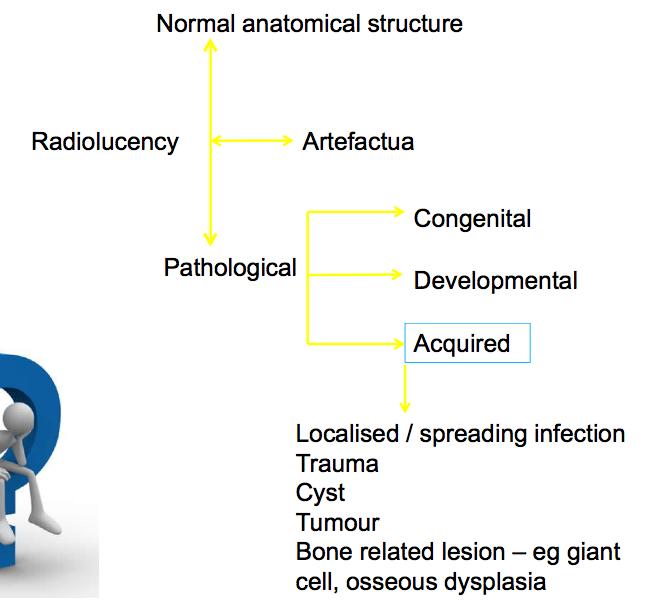
What do the submandibular fossa look like on a radiograph?
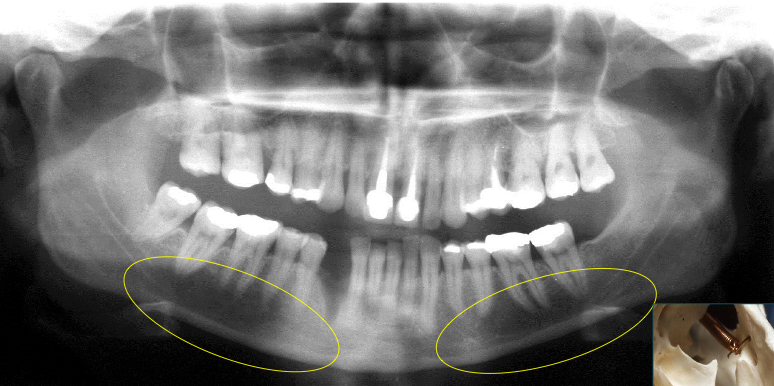
What does unilocular mean?
having, consisting of, or characterized by only one loculus or cavity; single-chambered.
What are the different types of cyst?
- Odontogenic cysts (formed from tissues involved in odontogenesis):
- radicular dental cyst
- residual dental cyst
- lateral periodontal cyst
- dentigerous cyst - Non-odontogenic cysts:
- nasopalatine duct cyst
- bone cysts (solitary bone cysts, aneurysmal bone cyst)
- nasolabial cyst
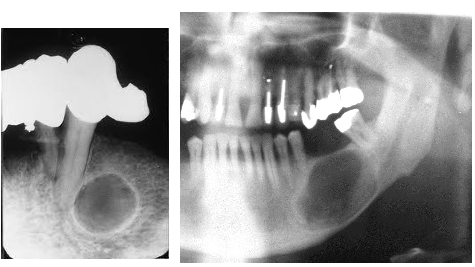
What is a radicular cyst?
- Origin: Cell rests of Malassez from the epithelial remnants of Hertwig’s root sheath.
- Most commonly found in adults aged 2-50.
- Most common of all jaw cysts (>70%)
- Site: Apex of a non-vital tooth
- Size: 1.5 – 3cm
- Shape: Round / Oval and unilocular
- Outline: Smooth, well defined, corticated (unless infected whereby cortication is lost)
- Radiodensity: Uniformly radiolucent
- Effects: Displace teeth, antral floor, IDN canal. Buccal expansion. Can resorb teeth but rarely
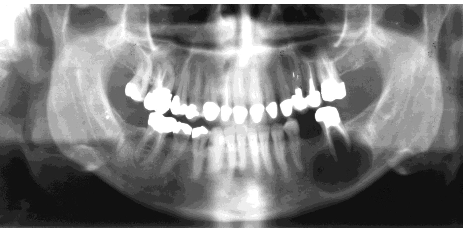
What’s the difference between a chronic and an acutely developed cyst?
See image
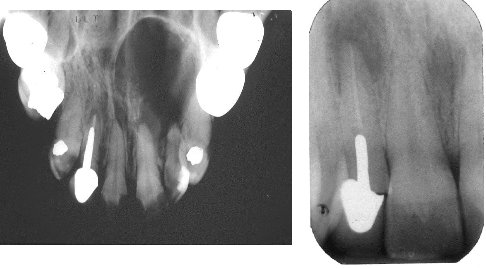
What is a residual cyst?
- Origin: Refers to a radicular cyst remaining after the causative tooth has been removed
- Age: Commonly adults >20 years
- Site: Apical region of the tooth bearing portion of the jaws
- Size: 1.5 – 3cm
- Shape: Round / Oval and unilocular
- Outline: Smooth, well defined, corticated (unless infected whereby cortication is lost)
- Radidensity: Uniformly radiolucent
- Effects: Displace teeth, antral floor, IDN canal. Buccal expansion. Can resorb teeth but rarely
What is a lateral periodontal cyst? (developmental)
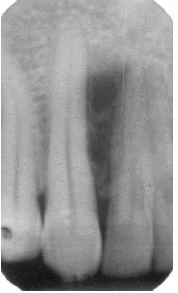
- Origin: ? Reduced enamel epithelium
- Age: Commonly adults >30 years
- Frequency: Rare
- Site: Lateral root surface
- Size: Small
- Shape: Round and unilocular
- Outline: Smooth, well defined, corticated (unless infected whereby cortication is lost)
- Radiodensity: Uniformly radiolucent
- Effects: Displace teeth if large, rarely resorb. May cause buccal expansion
What is a botyroid cyst?
A multilocular variant of a lateral periodontal cyst. It is rare and seen more in middle age to older adults.
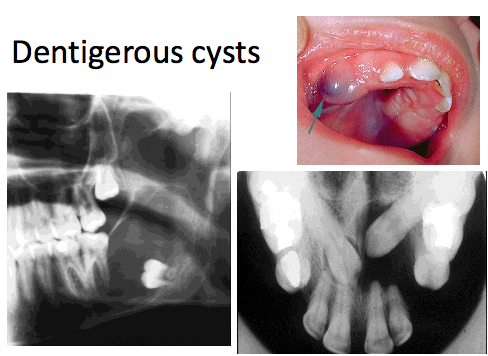
What is a dentigerous (follicular) cyst?
- Origin: Remnants of the reduced enamel epithelium after tooth formation
- Age: Usually adolescents / young adults
- Frequency: ~20% of odontogenic cysts
- Site: Crown of an unerupted and displaced tooth (3’s and 8’s)
- Size: Suspected if follicle >3-4mm can become large (several cm’s)
- Shape: Round / oval and unilocular
- Outline: Smooth, well defined, corticated
- Radiodensity: Uniformly radiolucent
- Effects: Displace teeth and resorb in ~50% May cause bony expansion displacement of the antrum
What is an eruption cyst?
a bluish swelling that occurs on the soft tissue over an erupting tooth. It is usually found in children. The fluid in thecyst is sometimes clear creating a pale-coloured cyst although often they are blue. An eruption cyst (eruption hematoma) is a developmental soft-tissue cyst ofodontogenic origin that forms over an erupting tooth.
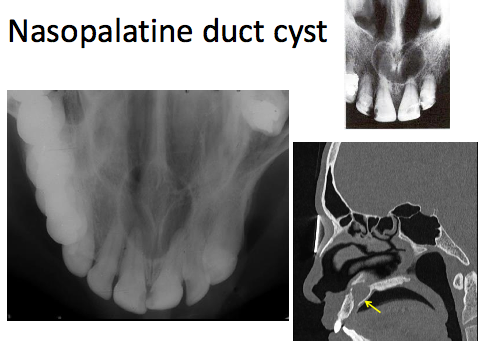
What’s a nasopalatine duct cyst? (incisive canal cyst)
- Origin: Epithelial remnants of the nasopalatine duct or incisive canal.
- Age: Variable but commonly middle aged
- Frequency: Most common non odontogenic cyst ~1% of population
- Site: Midline anterior maxilla
- Size: From 6mm to several cm’s
- Shape: Round / oval and unilocular
- Outline: Smooth, well defined, corticated
- Radiodensity: Uniformly radiolucent
- Effects: Displace teeth distally, rarely resorb. Palatal expansion
What is a solitary bone cyst?
Commonly seen in the young – probable trauma related
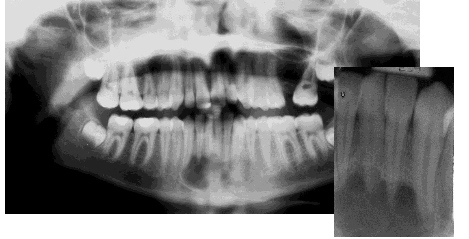
What are the different types of multilocular radiolucencies seen in radiographs of the head and neck?
1. Odontogenic tumours:
- Keratocystic odontogenic tumour (Odontogenic keratocyst)
- Ameloblastoma
- Ameloblastic fibroma Ameloblastic fibro- odontoma
- Odontogenic myxoma
- Odontogenic fibroma
- Sialo-odontogenic tumour
2. Giant cell lesions:
- Central giant cell granuloma
- Cherubism
- Browns Tumour of Hyperparathyroidism
- Aneurysmal bone cyst
What is an odontogenic keratocyst?
- A multilocular radiolucency.
- They are seen in Gorlin Goltz Syndrome.
- Origin: Epithelium of the dental lamina
- Age: Peak incidence 2nd to 3rd decade
- Frequency: Rare but most common (if termed an odontogenic tumour)
- Site: Posterior body / angle of mandible Anterior maxilla canine region
- Size: Variable
- Shape: Oval, extending along the body of the mandible Pseudo / multilocular
- Outline: Smooth and scalloped, well defined and corticated
- Radiodensity: Uniformly radiolucent
- Effects: Tooth displacement, rarely resorb. Extensive expansion within cancellous bone. Possible cortical perforation.
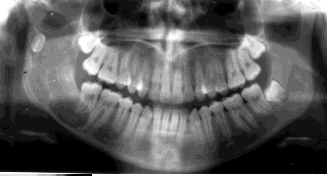
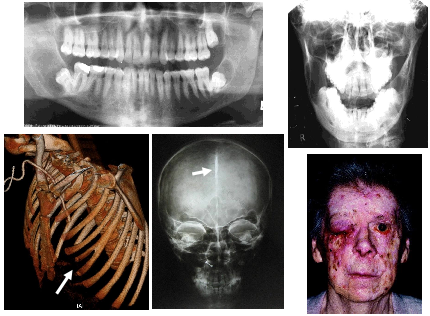
What is Gorlin-Goltz syndrome?
Multiple basal cell carcinomas of the skin
Odontogenic keratocysts: Seen in 75% of patients and is the most common finding. There are usually multiple lesions found in the mandible. They occur at a young age (19 yrs average).
Rib and vertebrae anomalies
Intracranial calcification
Skeletal abnormalities: bifid ribs, kyphoscoliosis, early calcification of falx cerebri
Distinct faces: frontal and temporopariental bossing, hypertelorism, and mandibular prognathism
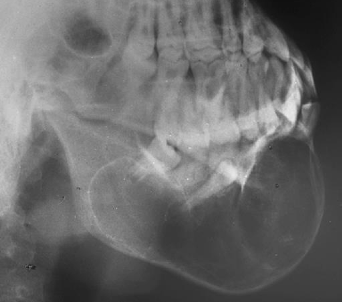
What’s an ameloblastoma?
May mimic other radiolucencies.
- Origin: Remnants of the odontogenic epithelium of the enamel organ or dental lamina
- Age: 30-60 years old
- Frequency: Rare
- Site: 80% posterior body / angle / ramus of mandible Anterior mandible in black Africans
- Size: Variable – can become very large and disfiguring
- Shape: Multilocular, distinct septa dividing the lesion into compartments “soap bubble effect” Occasionally unilocular in early stages
- Outline: Smooth and scalloped, well defined and corticated
- Radiodensity: Radiolucent with Radiopaque septa
- Effects: Teeth displaced, loosened and often resorbed Extension expansion in all dimensions Extension into adjacent structures; for example maxillary sinuses, orbit. Displacement of IDN canal
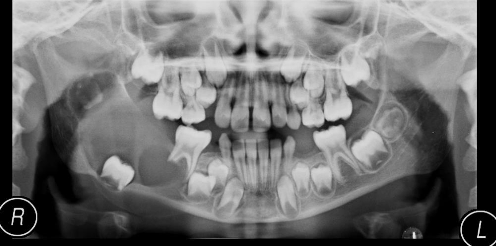
What’s a unicystic ameloblastoma?
Account for ~15% of Ameloblastoma. Equal distribution between maxilla and mandible. Usually unilocular associated with the crown of an un erupted tooth peak age 35 years.
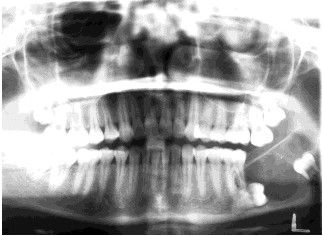
What is this?
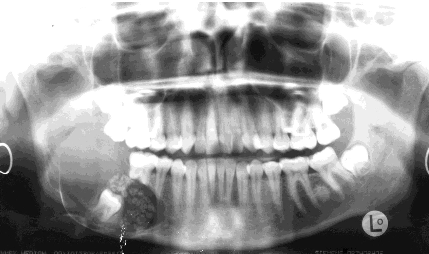
An Ameloblastic fibro-odontoma
What is an Odontogenic myxoma?
Origin: Odontogenic connective tissue fibroblasts of the developing tooth germ.
Age: Young adults 2nd-4th decades
Frequency: Rare
Site: Posterior maxilla or mandible
Size: Variable
Shape: Multilocular – honeycomb or soap bubble
Outline: Well defined with variable cortication
Radiodensity: Radiolucent with fine radiopaque internal septa often arranged at right angles to each other
Effects: Displaced teeth occasionally resorbed, may be associated with an un erupted tooth cortical expansion / breach.
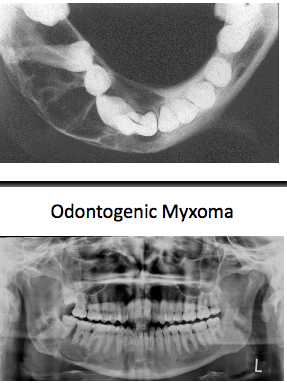
What is cortical expansion?
Cortical expansion is a radiological description which means thickening of the cortex of the bone being radiographed. It can also mean widening of the bone, with a cortex being seen. The cortex is the shell of the bone, versus the medulla which is the central spongy bone. The possible causes are numerous, and vary from trauma to infection to tumor etc.
What are examples of giant cell lesions?
Central Giant Cell Granuloma
Aneurysmal Bone Cyst
Brown’s Tumour of Hyperparathyroidism Cherubism
What is a central giant cell granuloma?
Age: All ages but usually young majority
Frequency: Rare
Site: Mandible – main feature often crosses midline
Size: Variable – can become large
Shape: Multilocular
Outline: Smooth and scalloped, well defined and generally not well corticated
Radiodensity: Radiolucent with Radiopaque thin septa - honeycomb
Effects: Teeth displaced, loosened and often resorbed Extension expansion in all dimensions Extension into adjacent structures; for example maxillary sinuses, orbit. Displacement of IDN canal
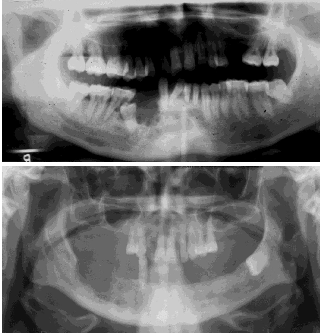
What’s an aneurysmal bone cyst?
Age: Adolescents and young adults under 30
Frequency: Rare
Site: Commonly body / posterior mandible
Size: Can become very large
Shape: Unilocular / Multilocular – may be soap bubble appearance
Outline: Smooth and well defined
Radiodensity: Radiolucent with faint random trabeculation
Effects: Teeth displaced uncommonly resorbed Ballooning expansion Rare cortical perforation



-
General Investigations7
-
Surgical management of diseases of the maxillary antrum19
-
Odontogenic cysts36
-
Radiological interpretation and the differential diagnosis of radiolucencies of the jaws31
-
Odontogenic tumours16
-
Radiological interpretation of radiopacities and mixed lesions of the jaws25
-
Dental implications for the management in patients with systemic disease - 137
-
Dental implications for the management in patients with systemic disease - 222
-
Oral manifestations and management of patients with immunodeficiency40
-
Oral surgery interface with other dental specialties10
-
Maxillofacial Trauma 113
-
Oral and Maxillofacial Manifestations of Congenital Disease45
-
Maxillofacial surgery and dental implants17
-
Potentially malignant lesions and oral cancer38
-
Maxillofacial Trauma 220
-
Management of medical emergencies29
-
Oral Squamous Cell Carcinoma (OSCC)21
-
Oral Cancer: Management - staging, treatment and follow up13
-
Orthognathic surgery7
-
Recurrent oral ulceration43
-
Oral manisfestations of disorders of specific systems35



