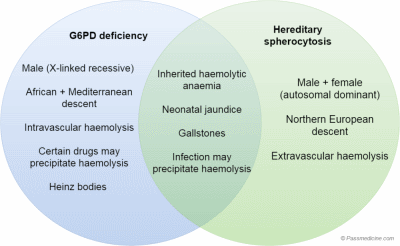
Compare: G6PD deficiency and Hereditary spherocytosis
Consider:
- gender affected
- ethnicity
- typical history
- what’s characteristic on blood film
- diagnotstic test
G6PD deficiency
Hereditary spherocytosis
Gender
Male (X-linked recessive)
Male + female (autosomal dominant)
Ethnicity
African + Mediterranean descent
Northern European descent
Typical history
- Neonatal jaundice
- Infection/drugs precipitate haemolysis
- Gallstones
- Neonatal jaundice
- Chronic symptoms although haemolytic crises may be precipitated by infection
- Gallstones
- Splenomegaly is common
Blood film
Heinz bodies
Spherocytes (round, lack of central pallor)
Diagnostic test
Measure enzyme activity of G6PD
Osmotic fragility test
G6PD deficiency
Consider:
- gender affected
- ethnicity
- typical history
- what’s characteristic on blood film
- diagnotstic test
G6PD deficiency
Gender
Male (X-linked recessive)
Ethnicity
African + Mediterranean descent
Typical history
- Neonatal jaundice
- Infection/drugs precipitate haemolysis
- Gallstones
Blood film
Heinz bodies
Diagnostic test
Measure enzyme activity of G6PD
Hereditary Spherocytosis
Consider:
- gender affected
- ethnicity
- typical history
- what’s characteristic on blood film
- diagnotstic test
Hereditary spherocytosis
Gender
Male + female (autosomal dominant)
Ethnicity
Northern European descent
Typical history
- Neonatal jaundice
- Chronic symptoms although haemolytic crises may be precipitated by infection
- Gallstones
- Splenomegaly is common
Blood film
Spherocytes (round, lack of central pallor)
Diagnostic test
Osmotic fragility test
What the following blood products are used for:
- Packed red blood cells
- Platelet-rich plasma
Fraction
Key points
Packed red cells
Used for transfusion in chronic anaemia and cases where infusion of large volumes of fluid may result in cardiovascular compromise
Platelet rich plasma
Usually administered to patients who are thrombocytopaenic and are bleeding or require surgery
Blood products. What are they used for?
- platelet concentrate
- fresh frozen plasma
Fraction
Key points
Platelet concentrate
Patients with thrombocytopaenia
Fresh frozen plasma
- Contains clotting factors, albumin and immunoglobulin.
- Unit is usually 200 to 250ml.
- Usually used in correcting clotting deficiencies in patients with hepatic synthetic failure who are due to undergo surgery.
- Usual dose is 12-15ml/Kg-1.
- It should not be used as first line therapy for hypovolaemia.
Blood products. What are they used for:
- Cryoprecipitate
- SAG-Mannitol blood
Fraction
Key points
Cryoprecipitate
- Rich source of Factor VIII and fibrinogen
- Allows large concentration of factor VIII to be administered in small volume
SAG-Mannitol Blood
Removal of all plasma from a blood unit and substitution with:
- Sodium chloride
- Adenine
- Anhydrous glucose
- Mannitol
Up to 4 units of SAG M Blood may be administered. Thereafter whole blood is preferred. After 8 units, clotting factors and platelets should be considered.
Case: an elderly patient treated on ICU for AKI and HAP
Physical condition is improving, but despite previously being a very talkative person, now it takes time and effort to encourage him to answer simple questions. He is lethargic. Obs are all normal.
What’s that?
Hypoactive delirium - withdrawal, slow to respond, lethargic and sleepiness
How to differentiate between:
- delirium (hypoactive)
- opiate overdose
- ICU psychosis
- dementia
- delirium (hypoactive) -> sleepiness and withdrawal, obs normal
- opiate overdose -> decreased RR will be present
- ICU psychosis -> delusions and hallucinations present
- dementia -> chronic onset
Case: a patient recently started on chemo for leukaemia/lymphoma. Deteriorating. Blood results:
K+ is high
phosphate is high
CK high
Ca++ is low
What’s that? What’s the treatment?
Tumour lysis syndrome
Pathophysiology: the destruction of tumour cells -> release of uric acid, other chemicals
Risk groups: pts recently started on chemotherapy for lymphoma/leukaemia; rarely pts started on steroids; may be suspected in AKI with high uric acid and phosphate levels
Clinical presentation (apart from blood) may include: arrhythmias, seizures, increased serum creatinine
Prophylactic treatment: IV allopurinol or IV rasburicase
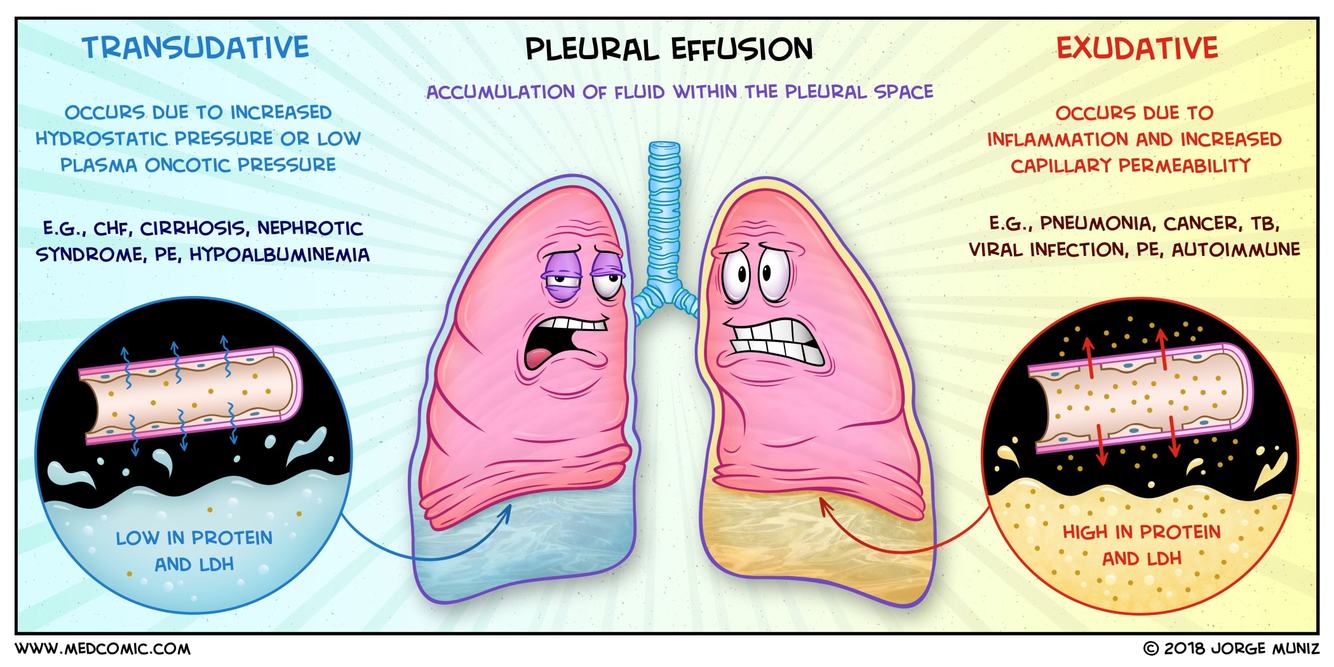
How to differentiate between exudate and transudate?
Transudate < 30g/L protein
Exudate >30g/L protein
Pneumonia
- Infection with what organism causes consolidation on x-Ray?
- What organism is common, if there is no consolidation on X-ray with the picture of pneumonia?
- the most common organism causing pneumonia (with consolidation) -> Streptococcus Pneumoniae
- no consolidation -> Haemophilus Influenzae (the most common cause of exacerbations in COPD)
- How to calculate anion gap?
- What’s normal anion gap?
The anion gap is calculated by:
- (sodium + potassium) - (bicarbonate + chloride)
- A normal anion gap is 8-14 mmol/L
What’s the most likely diagnosis in the picture of (in a patient after aortic repair surgery):
- low platelets
- raised fibrin degeneration products
The combination of low platelet counts + raised FDP in this setting make DIC the most likely diagnosis.
Steps in the management of a primary pneumothorax
Primary pneumothorax
Recommendations include:
- if the rim of air is < 2cm and the patient is not short of breath then discharge should be considered
- otherwise, aspiration should be attempted
- if this fails (defined as > 2 cm or still short of breath) then a chest drain should be inserted
*patients should be advised to avoid smoking to reduce the risk of further episodes - the lifetime risk of developing a pneumothorax in healthy smoking men is around 10% compared with around 0.1% in non-smoking men
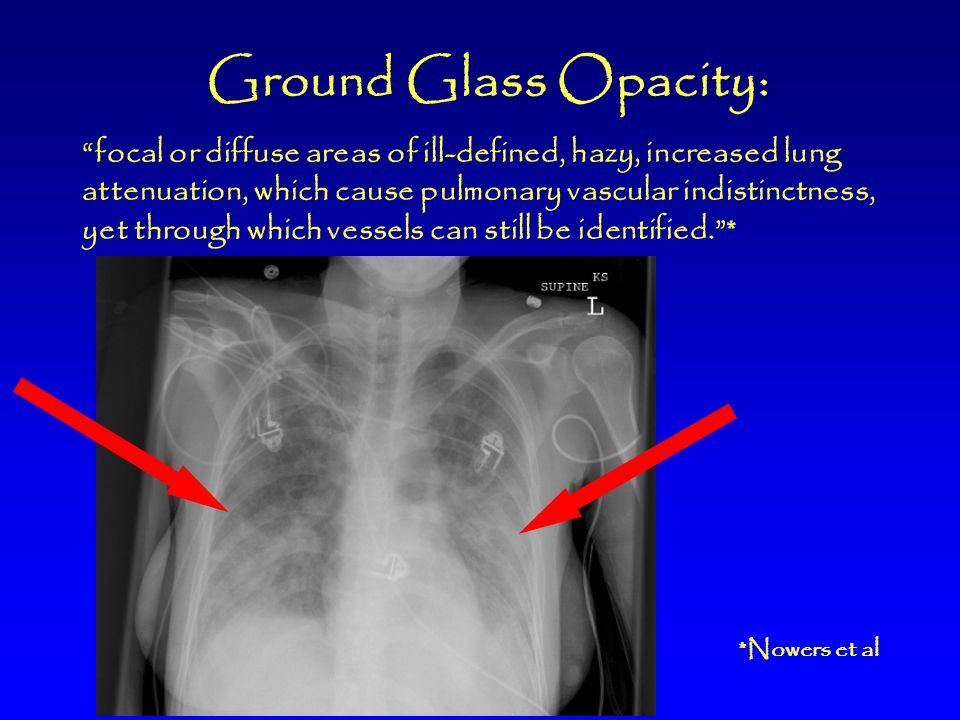
Characteristic (buzzword) lung changes seen on X-ray in a patient with idiopathic pulmonary fibrosis
‘ground-glass’ opacities in lower zones
Characteristic lung changes seen on X-ray in a patient with coal worker’s pneumoconiosis, another occupational lung disease
Multiple rounds nodules predominantly in upper zones
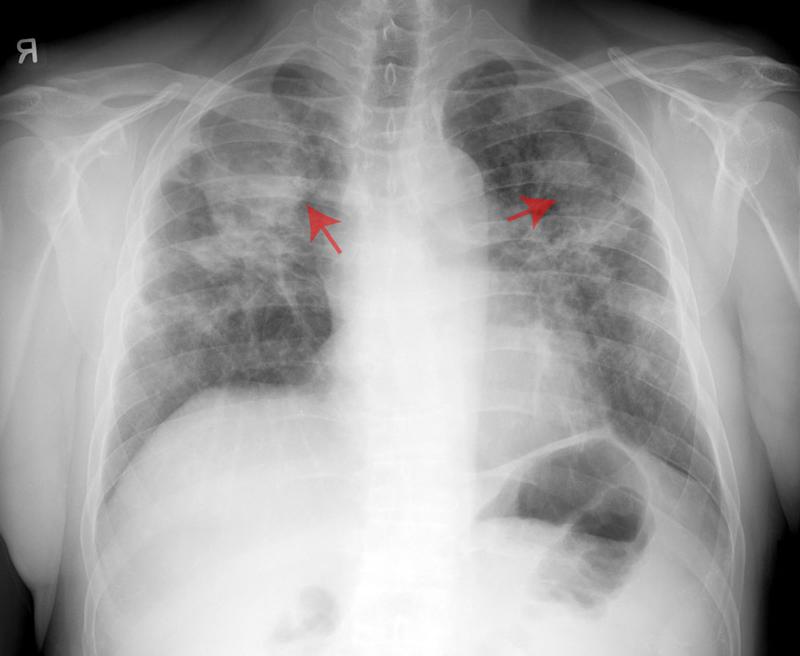
Characteristic lung changes seen on X-ray in a patient with sarcoidosis
Bilateral hilar lymphadenopathy
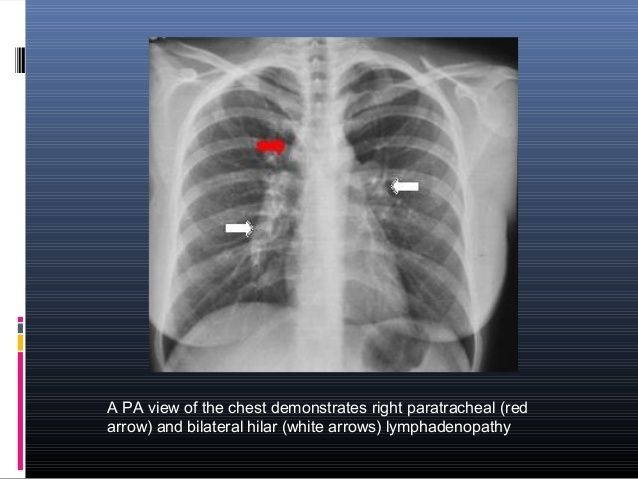
Characteristic lung changes seen on X-ray in a patient with silicosis
(Egg-shell) Calcification of hilar lymph nodes
occupations at risk of silicosis
mining
slate works
foundries
potteries
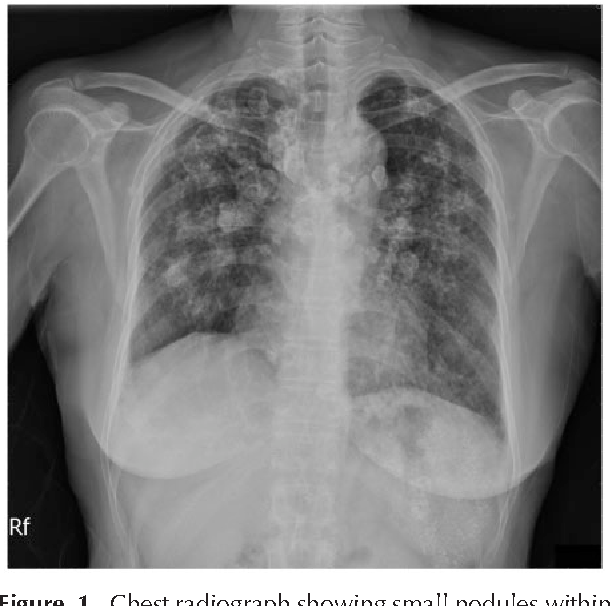
S3 heart sound - cause, conditions, when is it normal
S3 (third heart sound)
- caused by diastolic filling of the ventricle
- considered normal if < 30 years old (may persist in women up to 50 years old)
- heard in left ventricular failure (e.g. dilated cardiomyopathy), constrictive pericarditis (called a pericardial knock) and mitral regurgitation
S4 - heart sound
- what is it caused by
- conditions
S4 (fourth heart sound)
- may be heard in aortic stenosis, hypertrophic cardiomyopathy, hypertension
- caused by atrial contraction against a stiff ventricle
Glasgow Coma Score
- write components and scoring
Glasgow Coma Scale: adults
GCS: Motor (6 points) Verbal (5 points) Eye opening (4 points). Can remember as ‘654…MoVE’
Modality Options Motor response 6. Obeys commands
- Localises to pain
- Withdraws from pain
- Abnormal flexion to pain (decorticate posture)
- Extending to pain
- None Verbal response 5. Orientated
- Confused
- Words
- Sounds
- None Eye opening 4. Spontaneous
- To speech
- To pain
- None
Management of DKA
Management
- fluid replacement: most patients with DKA are deplete around 5-8 litres. Isotonic saline is used initially
- insulin: an intravenous infusion should be started at 0.1 unit/kg/hour. Once blood glucose is < 15 mmol/l an infusion of 5% dextrose/glucose should be started
*as we want to lower ketones; we give dextrose/glucose in order to prevent hypoglycaemia once we try to lover ketones with insulin*
- correction of hypokalaemia
Reactive arthritis
- associated gene
- associated infections
- symptoms
- treatment
- prognosis
Reactive arthritis
A triad of symptoms (conjunctivitis, urethritis, arthritis*) developing after the infection
- STDI
- Dysentery
Associated with HLA B27 gene
Treatment:
- NSAIDs (in acute)
- methotrexate and sulfasalazine (anti-inflammatory) if an illness becomes chronic
Usually resolves in 12 months
*cannot see, cannot pee, cannot climb a tree/bend a knee
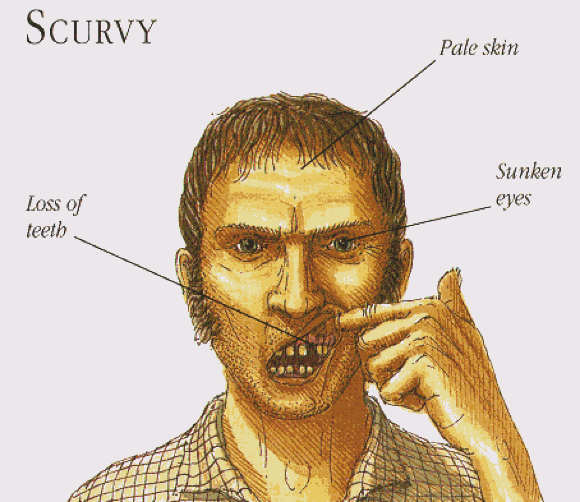
What’s scurvy?
pathology
symptoms
Scurvy - vitamin C deficiency
Symptoms:
- bleeding gums
- petechiae/ bruising to the skin
- anaemia