When performing an end of bed inspection, what should you look out for?
General appearance of patient
Accessory muscle use if breathless
Nutritional status (may be cachexic)
Use of oxygen, fluids or medication
Sputum pot (look inside for colour inication)
What is the area best examined first in a respiratory exam?
Hands
What should be checked for in the hands?
- Peripheral cyanosis - PVD
- Temperature
- Dilated veins - hypercapnia
- Tar staining - smoker
- Finger clubbing
- Koilonychia - iron deficiency anaemia
How should the wrist be examined?
Flapping tremor (CO2 flap) - respiratory failure
Fine physiological tremor - B2-agonist use
Respiratory rate
Radial pulse (rate, rhythm, volume and character)
How should a pulse be described?
Rate - fast, slow (bradycardic/tachycardic)
Rhythm - regular, regularly irregular, irregularly irregular
Volume - normal, small or large
Character - strong, weak, bounding, collapsing etc
When examining the face, what should be checked for?
Eyes
- Conjunctival pallor - anaemia
- Horner’s (one eye has a droopy eyelid and constricted pupil) - pancoast tumour
Mouth
- Central cyanosis - hypoxic lung disease, Eisenmenger’s
- Candida - steroid inhaler misuse, immunocompromised
- Dentition
What should be checked in the neck?
- JVP
- Tracheal deviation - pneumothorax, large effusion
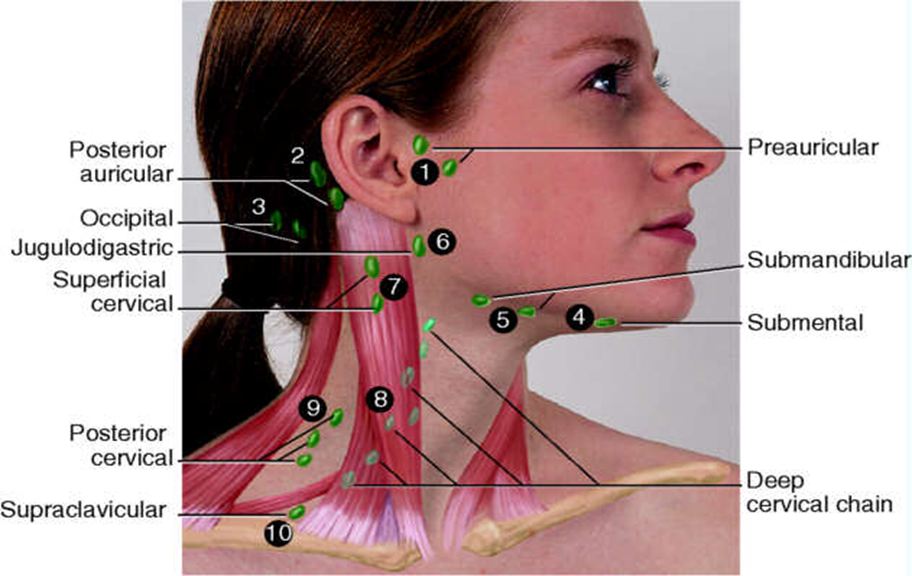
- Lymph nodes
Which lymph nodes are checked in head and neck?
- Submental
- Submandibular
- Anterior triangle
- Pre-auricular
- Posterior triangle
- Post-auricular
- Occipital
- Supraclavicular
At what angle is the patient angled on their bed during the examination?
45º



