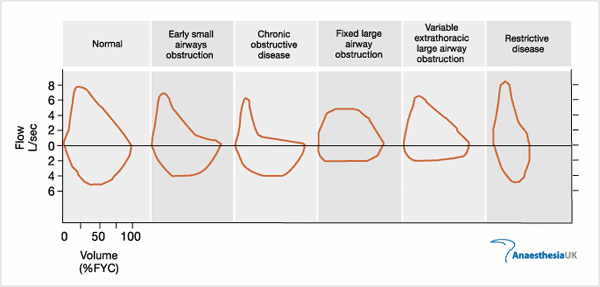
Describe/draw the flow volume curves of normal, restrictive and obstructive lung disease
What is restrictive lung disease?
Pulmonary fibrosis that decreases lung volume and increases work of breathing with inadequate ventilation
- Low FEV1
- Low FVC
- Normal FEV1/FVC ratio
Name some causes of restrictive lung disease
- Pneumoconiosis
- Pulmonary fibrosis
- TB
- Chest wall disease (kyphoscoliosis)
- Weak respiratory muscles
- Sarcoidosis
- RA
What is obstructive lung disease?
Narrowing of airways due to excessive smooth muscle contraction
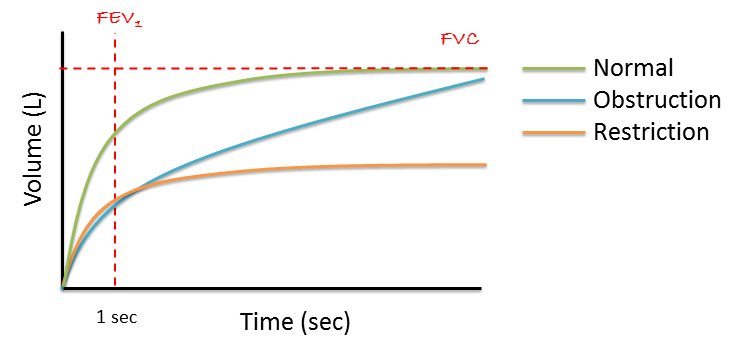
- Normal FVC
- Low FEV1
- Low FEV1/FVC ratio (<0.7)
Name some causes of obstructive lung disease
- Chronic bronchitis
- COPD
- Asthma
- Bronchiectasis
- CF
Describe/draw the spirometry curve of normal, obstructive and restrictive lung disease
What is respiratory failure?
When gas exchange in the lungs is inadequate which results in hypoxia. It is defined as pO2 < 8kPa. Divided into:
- Type 1 - normal or low pCO2
- Type 2 - high pCO2
Name some causes of Type 1 respiratory failure
Mainly ventilation perfusion mismatch
- Pneumonia
- Pulmonary oedema
- PE
- Asthma
- Pneumothorax
- Fibrosing alveolitis
- ARDS
Name some causes of Type 2 respiratory failure
Alveolar hypoventilation
- Pulmonary disease - COPD, fibrosis,
- Reduced respiratory drive - Opiates, CNS tumour, trauma
- Neuromuscular disease - Cervical cord lesion, diaphragmatic paralysis, myasthenia gravis
- Thoracic wall disease - flail chest, kyphoscoliosis
Describe the effects of hypoxia (Type 1 and 2 respiratory failure)
- Impaired CNS function
- Confusion
- Agitation
- Dyspnoea
- Restlessness
- Central cyanosis
- Pulmonary hypertension
- Cardiac arrhythmia
Describe the effects of hypercapnia (Type 2 respiratory failure)
- Headache
- Peripheral vasodilation
- Tachycardia
- Bounding pulse
- Tremor/flap
- Papilloedema
- Confusion
- Drowsiness
- Coma
How is respiratory failure investigated?
- Bloods
- FBC
- U&E
- CRP
- ABG
- CXR
- Sputum culture (if febrile)
- Spirometry
How is respiratory failure managed?
- Treat underlying cause
- Airway maintenance
- Clearance of secretions
- Oxygen by face mask
- Assisted ventilation (CPAP/BIPAP) if pO2 < 8 kPa
- Intubation
What is asthma?
A chronic inflammatory disorder characterised by increased responsiveness of the bronchi to various stimuli, causing reversible airway obstruction
- Airway hyperresponsiveness
- Increased mucosal inflammation
- Hypersecretion of mucus
Describe the symptoms of asthma
- Intermittent dyspnoea
- Wheeze
- Cough (often nocturnal)
- Sputum production
- Exercise intolerance
Name some asthma precipitants
- Allergens (pollen, house dust mites, animals)
- Smoke
- Stress
- Exercise
- VIral infections
- Drugs - NSAIDs, aspirin, beta blockers
Name the clinical signs of asthma
- Tachypnoea
- Audible polyphonic wheeze
- Hyper-inflated chest
- Hyper-resonant percussion
- Diminished air entry
How is asthma investigated?
- Peak expiratory flow monitoring
- Obstructive spirometry result
- Improvement of FEV1 by 12% with beta agonist
- CXR
- Skin prick test - identify triggers
- Fractionated exhlaed FeNO test (>40)
- Bronchial provocation - inhalation of increase dose of histamine until FEV1 declines by 20%
Describe the guidelines to treating chronic asthma
- Short acting inhaled B2 agonist
- Add inhaled low dose steroid (beclometasone 100-400microg/12hrs)
- Add leukotriene receptor antagonist (montelukast)
- Add long acting B2 agonist (salmeterol 50microg/12hrs)
- Increase dose of steroids (up to 1000) / oral theophylline / oral B2 agonist / oral leukotriene receptor antagonist
Continue until no daytime symptoms, no limitations on activity, no exacerbations, no night-time awakening and normal lung function
Describe the emergency treatment of acute severe asthma
- Oxygen via non-rebreathe bag (15L)
- Aim for 94-98% sats
- Salbutamol 5mg delivered with oxygen
- Hydrocortisone 100mg IV or prednisolone 30mg PO
- Continue for 5 days
- Add ipatropium bromide 0.5mg nebuliser
- CXR to exclude pneumothorax
- If life-threatening: add magnesium sulphate 1.2-2mg IV over 20 min
- Salbutamol nebulisers every 15 min
Name some ADRs of B2 agonists
- Muscle tremor
- Tachycardia
- Palpitations
- Arrhythmias
- Hypokalaemia
- Headache
What is chronic bronchitis?
Chronic mucosal inflammation, mucus gland hypertrophy and mucus hypersecretion
What is emphysema?
Progressive destruction of the alveolar septa and capillaries producing enlarged spaces (bullae) with decreased compliance and increased collapsibility
What is COPD?
An irreversible expiratory airflow obstruction. hyperinflation, mucus hypersecretion and increased work of breathing. Includes chronic bronchitis and emphysema.






