Pseudostratified ciliated columnar cells( beat mucus up and out of lungs) extend to beginning of terminal bronchioles, then transition to cuboidal cells
Pseudostratified ciliated columnar cells
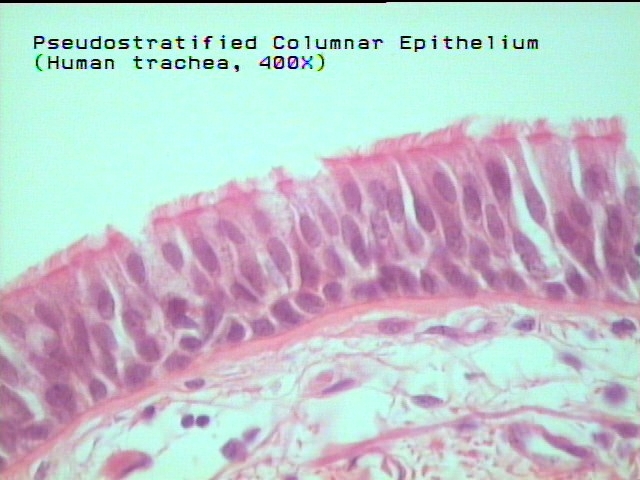
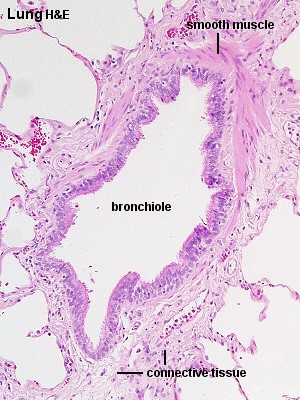
Mostly cuboidal cells in respiratory bronchioles then simple squamous cells up to alveoli
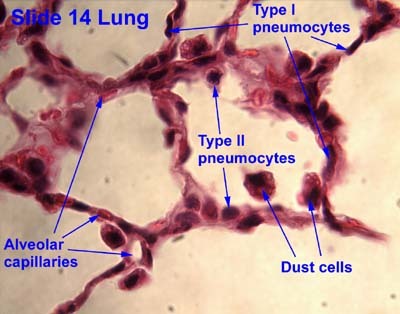
Type 1 cells are squamous and line the alveoli
type II cells are cuboidal and clustered and secrete pulmonary surfractant
clara cells are non ciliated, low columnar/cuboidal with secretory granules, they degrade toxins and act as reserve cells
dust cells are macrophages
Adenocarcinoma
- peripheral
- most common lung cancer in nonsmokers and overall (except for metastases)
- activating mutations inclue kras, EGFR, ALK
assoc. clubbing
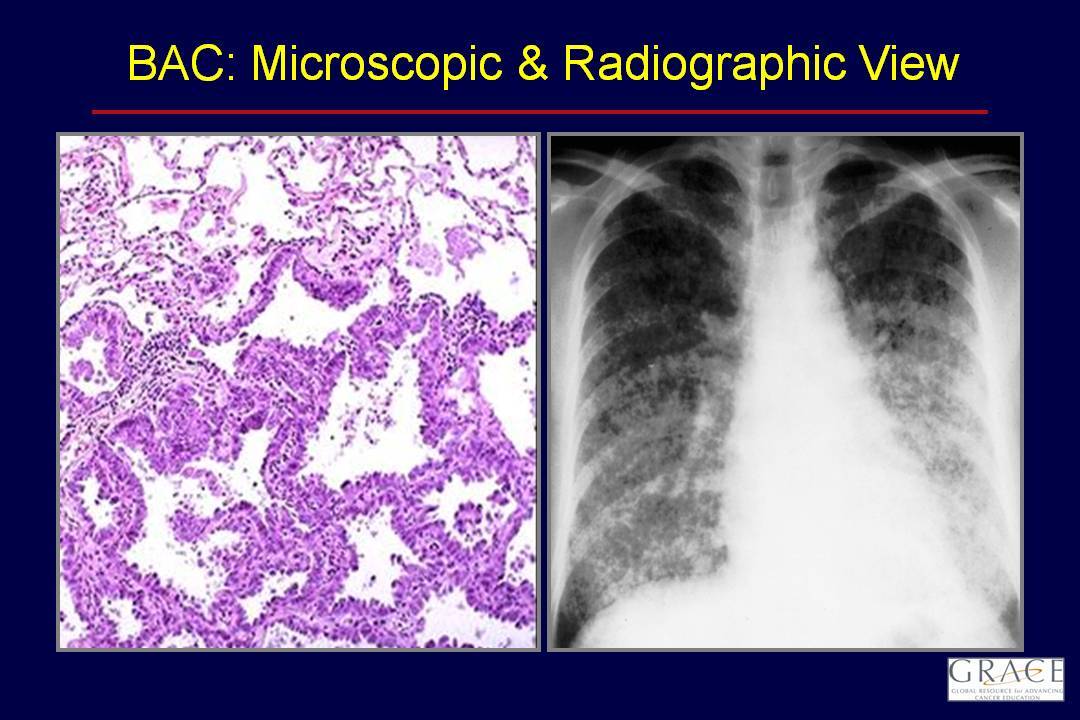
Bronchioalveolar subtype (carcinoma in situ): CXR often shows hazy infiltrates similar to pneumonia; excellent prognosis
The bronchioalveolay subtype grows along alveolar septa–> apparent thickening of alveolar walls
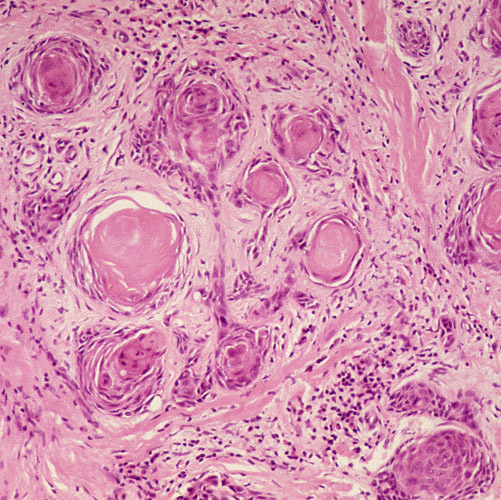
Squamous cell carcinoma
- central
- hilar mass arising from bronchus; cavitation; cigaretres, hypercalcemia (PTHrP)
- keratin pearls and intercellular bridges
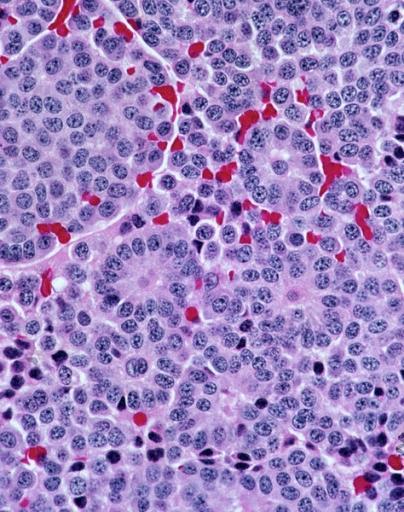
Small cell (oat cell) carcinoma
- central
- undifferentiated–> very aggressive
- may produce ACTH, ADH or antibodies against presynaptic Ca channels (Lambert-eaton myasthenic syndrome)
- amplification of myc genes
- inoperable, treat with chem
- neoplasm of neuroendocrine
- kulchitsky cells –> small dark blue cells
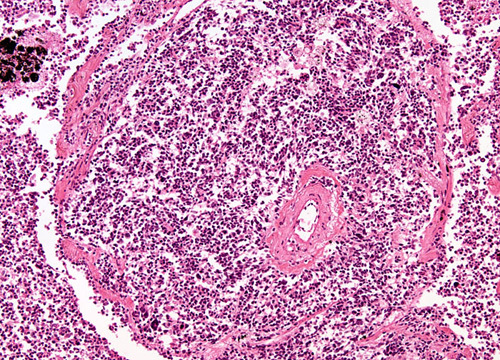
Large cell carcinoma
- peripheral
- highly anaplastic undifferentiated tumor
- poor prognosis
- less responsive to chemotherapy; removed surgically
-pleomorphic giant cells
Bronchial carcidnoid tumor
- excellent prognosis-metastasis rare
- symptoms usually due to mass effect; occasionally carcinoid syndrome (5-HT secretion –> flushing, diarrhea, wheezine)
- nests of neuroendocrine cells, chromogranin A +
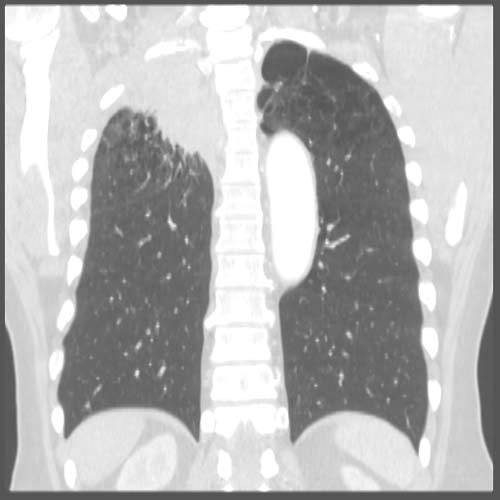
Pancoast tumor
-carcinoma that occurs in apex of lung may affect cervical sympathetic plexus, causing horner syndrom, SVS syndrome, sensorimotor deficits and hoarseness

-
First aid Cardiology136
-
vascular tumors9
-
vasculitis9
-
cardio uworld51
-
cardio pharm34
-
mixed world set 122
-
MSK lower limb7
-
First aid neuro anatomy and physio Part 166
-
First aid neuroanatomy and physio part 277
-
First aid neuro pathology46
-
neuro drugs67
-
First aid neuro - lesions/strokes/hemorrhage61
-
first aid eye section26
-
Neuro images21
-
Psych First aid- psychology section (defenses)25
-
psych randoms from firecracker and first aid74
-
development/ethics4
-
biostats = lame22
-
endocrine5
-
Repro anatomy images and histology21
-
repro physiology20
-
repro path part 158
-
its raining men9
-
Heme/onc just a bit40
-
respiratory small deck10



