To Intubate or not to Intubate?
Gag reflex vs Swallowing reflex
The gag reflex is not recommended for assessment of airway protection or need for intubation. Testing of the gag reflex can result in vomiting and aspiration.
VS
The swallowing reflex is a more complex and reliable indicator of the patients ability to protect the airway than the gag reflex. The presence of pooled secretions is an indication of a need for a protected airway.
Failure to maintain or protect airway, ventillation or oxygenation?
- If the condition is not reversible (i.e. opiate overdose) then intubation is indicated
- If the patient cannot maintain oxygenation with supplemental O2, then intubation is required to facilitate ventilation and oxygenation.
- In patients with penetrating neck injuries, angioedema, etc…..patient condition can deteriorate rapidly.
- Secure airway before it becomes an emergency.
RSI in emergency airway management acheives sucessful intubation in approximatley _____% of patients in one laryngoscopy attempt.
98%
Seven P’s of RSI
- Preparation
- Pre-oxygenation
- Pretreatment
- Paralysis with induction
- Positioning of the airway
- Placement with proof
- Post Intubation Management
Preparation
- Assessment
- Patient Positioning
- Monitors
- IV Access
- Equiptment
- Drugs
If you anticipate that every airway you encounter could be a potential intubation, airway assessment will become as routine as putting on a pair of gloves.
Is this a difficult airway?
Difficult to:
BVM
Laryngoscopy
Extra-Glottic
Crichothyroidotomy
What are the pneumonics that help assess each of these difficult airways?
BVM - MOANS
Laryngoscopy - LEMONS
Extra-Glottic - RODS
Crichothyroidotomy - SHORT
MOANS
Pneumonic for pt’s that are difficult to BVM
Mask Seal
Obesity/obstruction
Age>55
No teeth
Stiff
MOANS is the important first step. The ability to oxygenate a patient with a bag and mask turns a potentially can’t intubate/can’t oxygenate situation requiring urgent cricothyrotomy into a ‘can’t intubate / CAN oxygenate’ situation in which other options can be considered. Identifying and avoiding situations in which mask ventilation will be difficult or impossible is critical to avoiding unnecessary emergency cricothyrotomy.
Mask Seal can be affected by
beards and mustaches, crusty blood on face, disruption of lower facial continuity
Obesity/obstruction
- Obesity can cause redundant tissues in the airways resulting in airway obstruction.
- Women in the 3rd trimester of gestation have increased airway edema, and the weight of the gravid uterus presses against the diaphragm impeding mask ventilation.
- Given that both groups of patients also desaturate much more quickly the ability to ventilate is of even greater importance.
- Also enlarged tonsils, airway masses, angioedema, foreign bodies or hematoma can significantly impair mask ventilation.
Age > 55
55 is not an exact number
- decreased flexibility in chest wall
- decreased elasticity and loss of muscle tone in soft tissues resulting in cheeks, etc to sag and make mask ventilation difficult.
No Teeth can make an otherwise straightforward airway a
difficult mask or a 2 person mask airway
Stiff
- restrictive or obstructive airway disease such as asthma, copd, pulmonary edema, pneumonia
- anatomy such as kyphoscoliosis
**An unrelated ‘S’ is sleep apnea or snoring, though this may not be detectable in an emergency.
LEMON
Difficult laryngoscopy or intubation
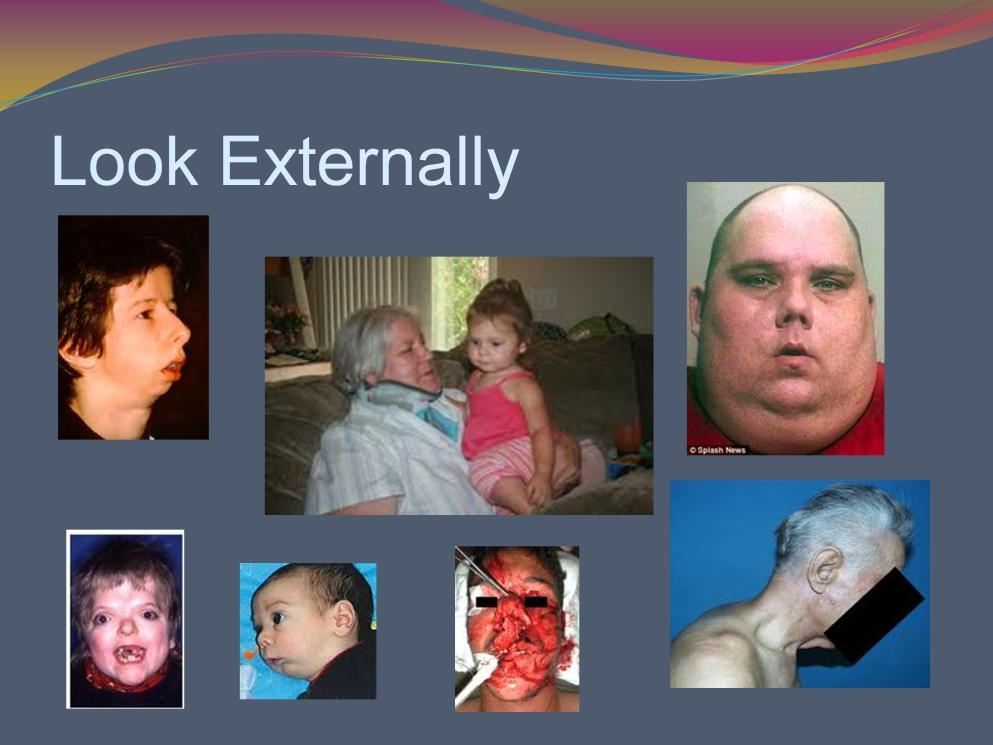
Look externally
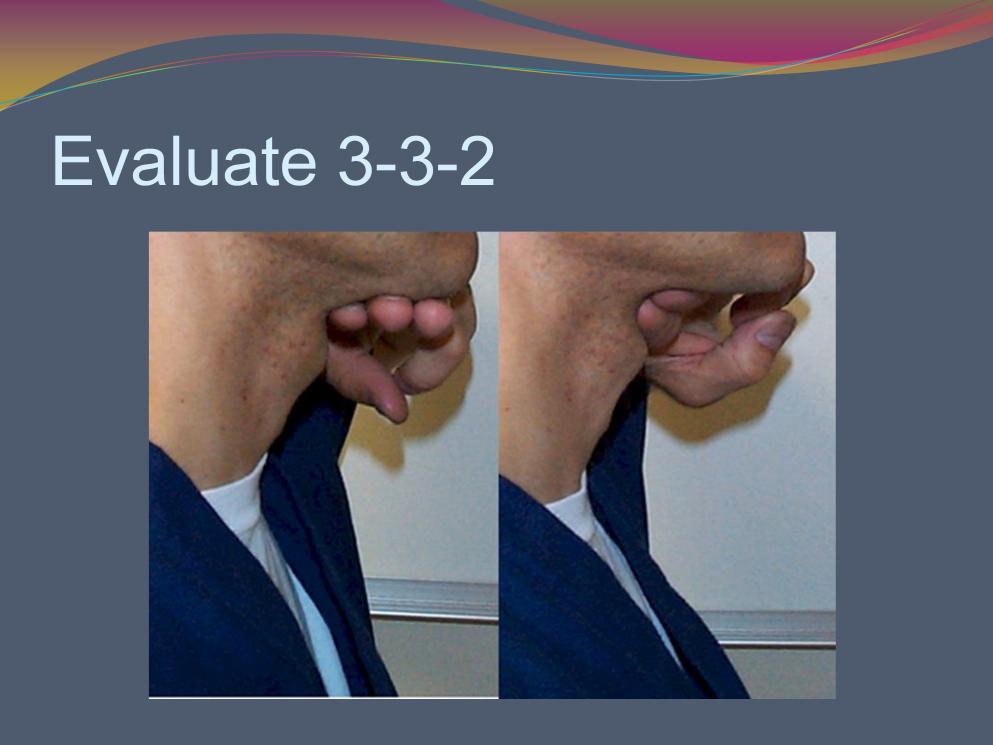
Evaluate 3-3-2
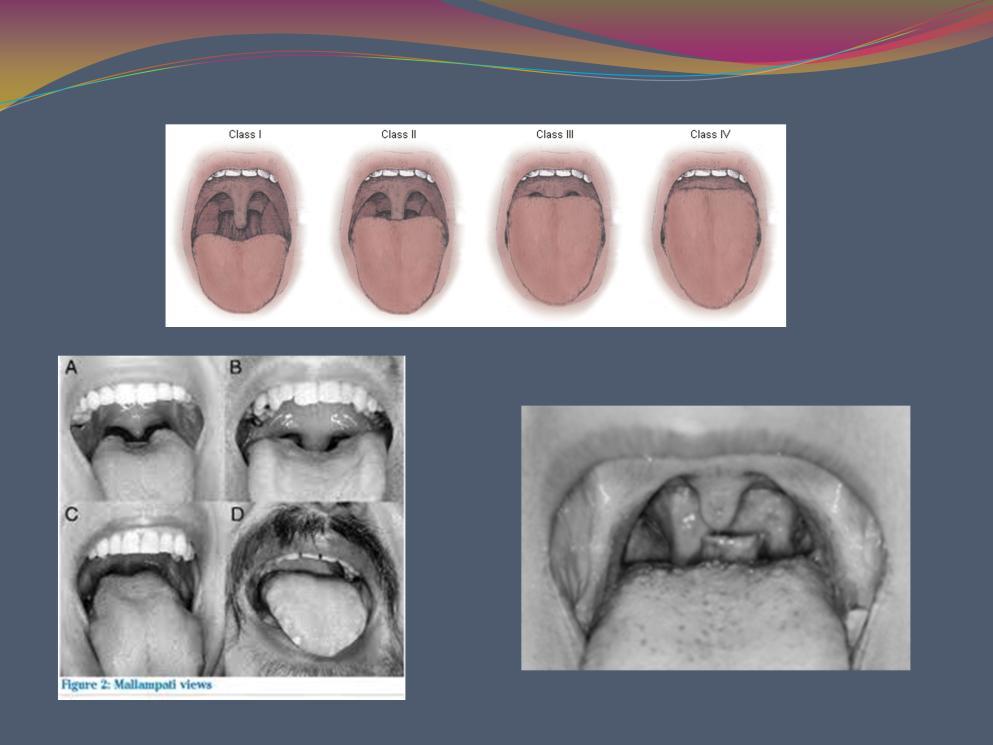
Mallampati Score
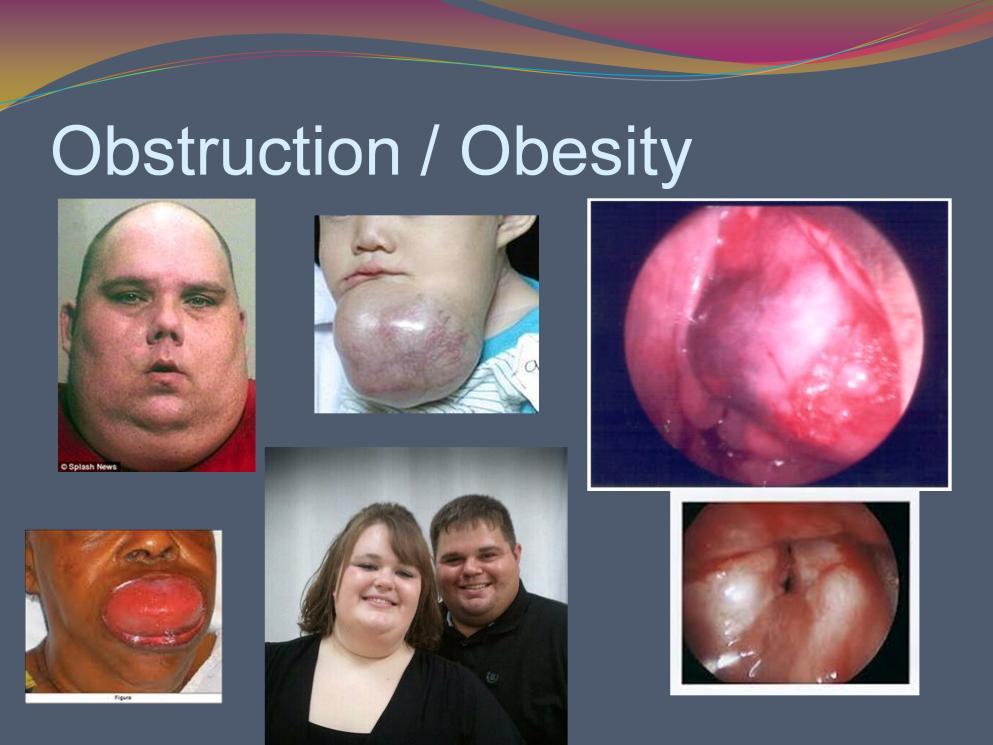
Obstruction/Obesity
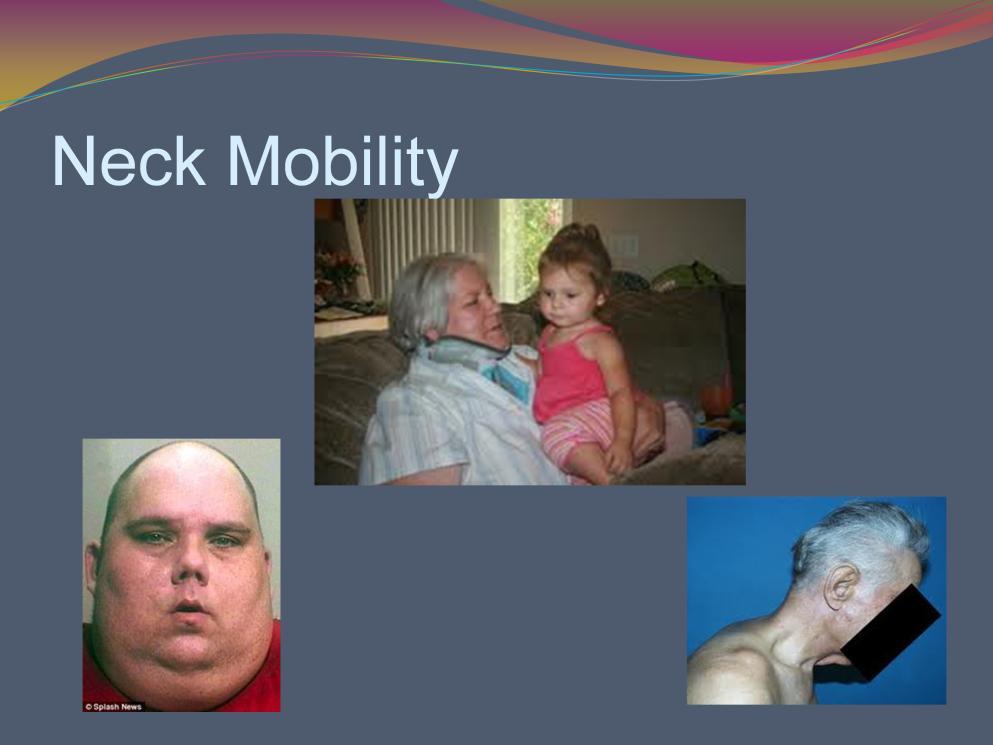
Neck mobility
Look Externally
Evaluate 3-3-2
Mallampati Score
Obstruction/Obesity
Upper airway obstruction should always be considered a marker for a difficult airway.
- muffled voice, difficulty swallowing secretions, stridor and a sensation of dyspnea
- Stridor indicates >50% occlusion of airway
- Even small doses of benzodiazepines may induce total obstruction of the airway
- if any intubation attempt is to be made in upper airway obstruction, a cricothyrotomy should be set up along side intubation equipment.
Obesity
- Obese patients frequently have attributes that are related to a difficult airway and should be considered a possibly difficult airway.
Neck Mobility
RODS
Difficult to place Extra-Glottic Device
Restricted mouth opening
- LMA and other extraglottic devices may require more room to pass into the mouth and pharynx.
Obstruction of the upper airway, larynx or below
- Extraglottic devices do not bypass obstructions, making ventilation difficult.
Disrupted or distorted airways
- Disrupted airways may prevent a proper ‘seat’ or seal. It may be impossible to achieve with a fixed flexion deformity of the neck “kyphoscoliosis” or upper airway distortion such as angioedema
Stiff (lungs/cervical spine)
- Ventilation may be impossible in the face of decreased pulmonary compliance (pulmonary edema) or increases in airway resistance (severe/ status asthmaticus)
SHORT
Difficult Crichothyrotomy
Surgery
Hematoma
Obesity
Radiation distortion of other deformity
Tumor
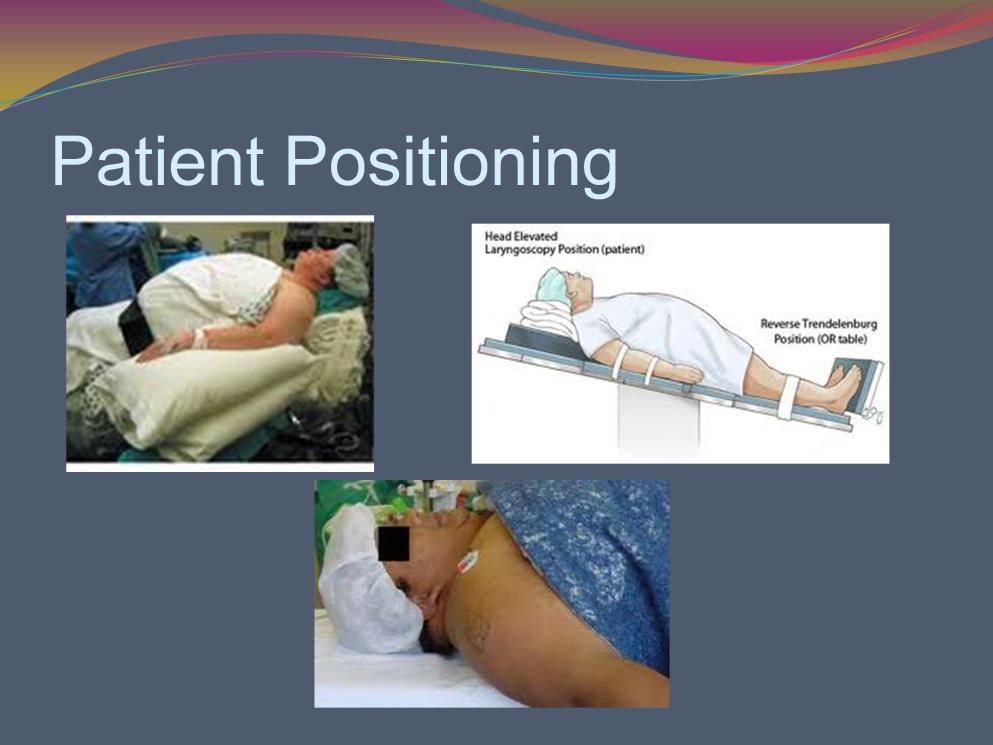
Patient Positioning
- It is best to position the patient, situations and condition allowing such that pre-oxygenation will be maximized
- If C-spine stabilization is required in an obese patient, if you can move them to the stretcher and place them in a head up position
- proper positioning can improve preoxygenation and increase intubation time
- If patients are alert and cooperate ask them to lift their chin to the ceiling in a sniffing position while you preoxygenate.
Equiptment
- Oxygen
- BVM device
- Drugs
- OPA/NPA
- ETT - at least 2 sizes with stylet and cuff tested
- Laryngoscope handle and 2 blades tested
- Suction
- Intubating stylet
- Alt. airway immediatley avaliable
- Stetoscope
- Capnometry
- Materials to secure ETT
Drugs
- Etomidate / Amidate
- Succinycholine
- Vecuronium
- Rocuronium
- Midazolam / Versed
- Lorazapam / Ativan
Etomidate
- Hypnotic
- NO ANALGESIA
- Produces vasoconstriction
- Decreases ICP
- Not for PEDI
- 0.3 mg/kg induction dose
- Painful on injection
- Produces myoclonus
- Rapid recovery
The literature suggests dosing on TBW (total body weight) in the morbidly obese. While amidate is distributed through the body much like other anesthetics that are given in LBW dosages, these other medications are limited to the lean body weight due to their impact on cardiovascular stability. Amidate promotes CV stability and therefore it is recommended to be given in the TBW dose.






