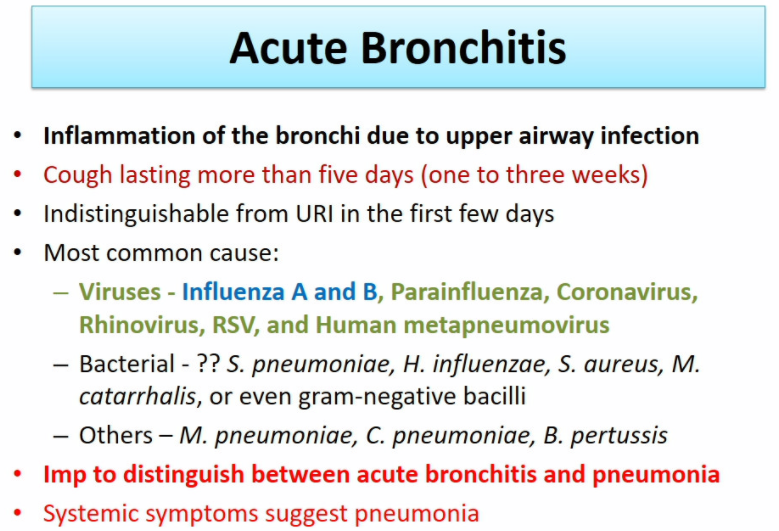
describe acute bronchitis
- inflammation of the bronchi due to upper airway infxn
- cough lasting more than 5 days (1-3 weeks)
- indistinguishable from URI in the first few days
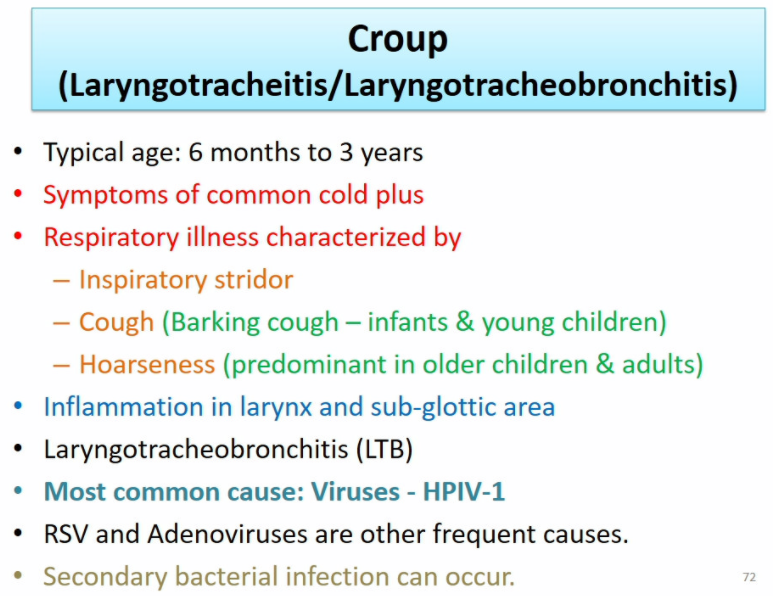
describe croup (laryngotracheitis/laryngotracheobronchitis)
- symptoms of common cold PLUS:
- resp. illness characterized by:
- inspiratory stridor
- cough (barking cough - infants and young children)
- hoarseness (predominant in older children and adults)
- inflammation in the larynx and sub-glottic area
the most common cause of croup is ____
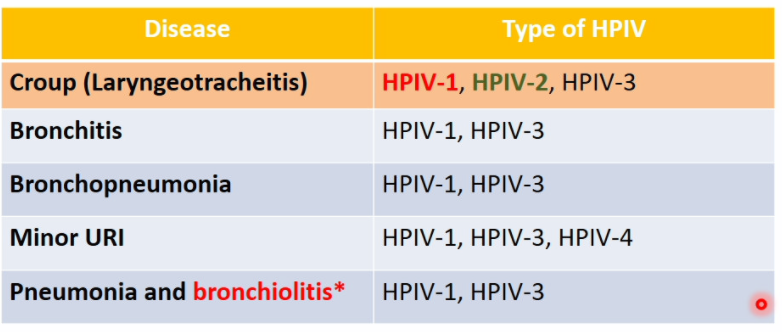
the most common cause of croup is viruses - HPIV-1
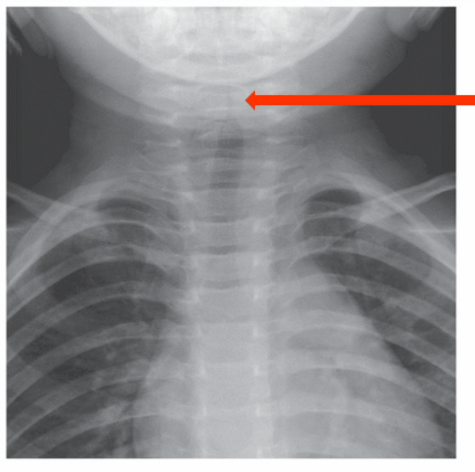
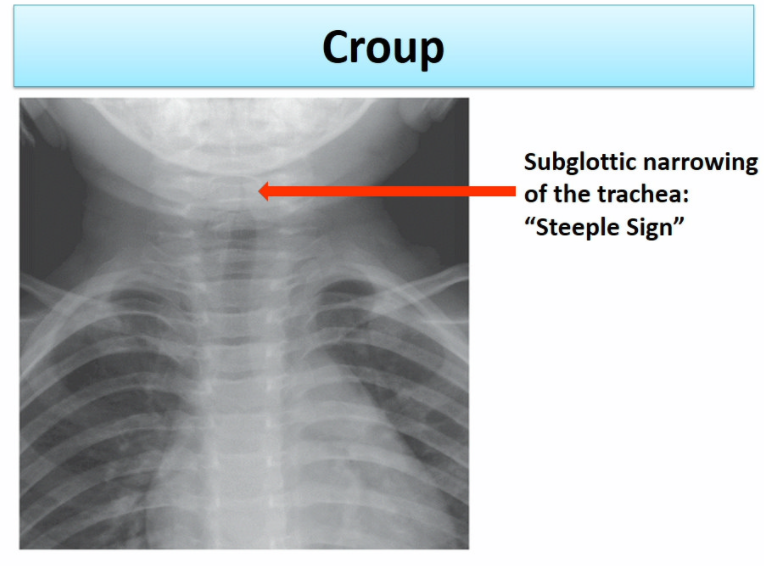
describe the image
describe the paramyxoviridae and pneumoviridae subfamilies
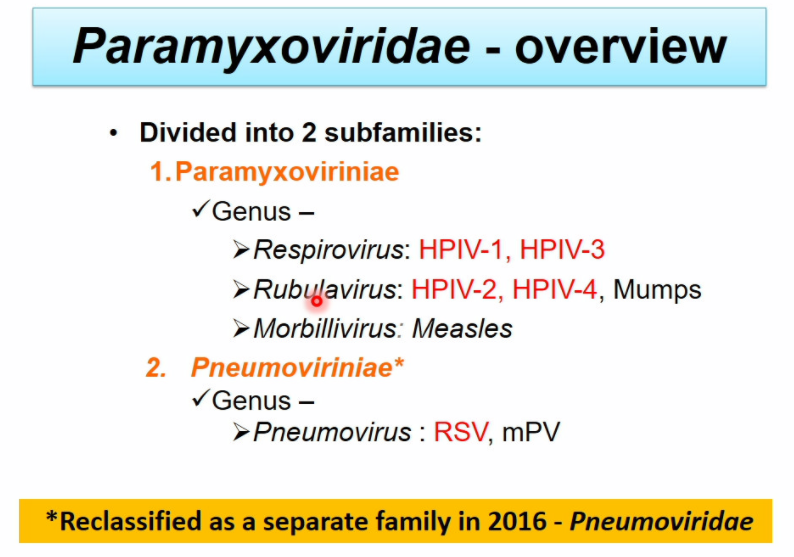
describe the classification of paramyxoviridae
- negative sense, ssRNA genome in helical nucleocapsid
- enveloped
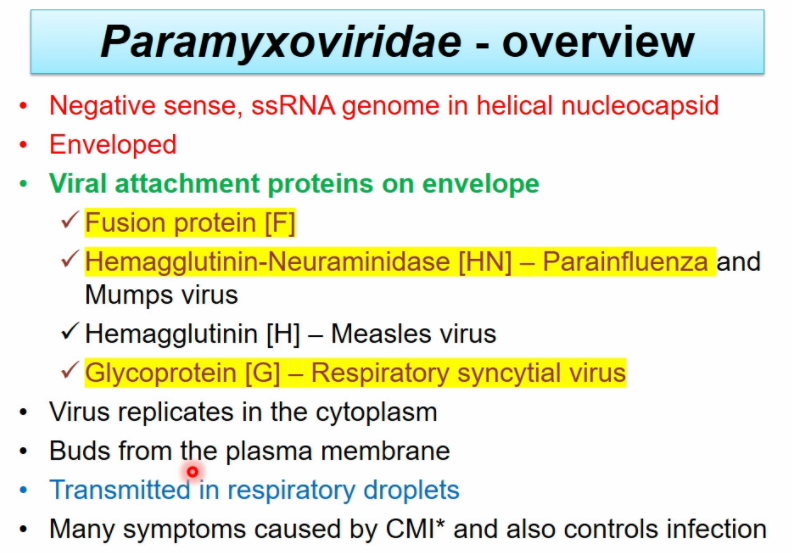
describe the role of the F protein in human parainfluenza viruses (HPIVs) which is part of the paramyxoviridae family
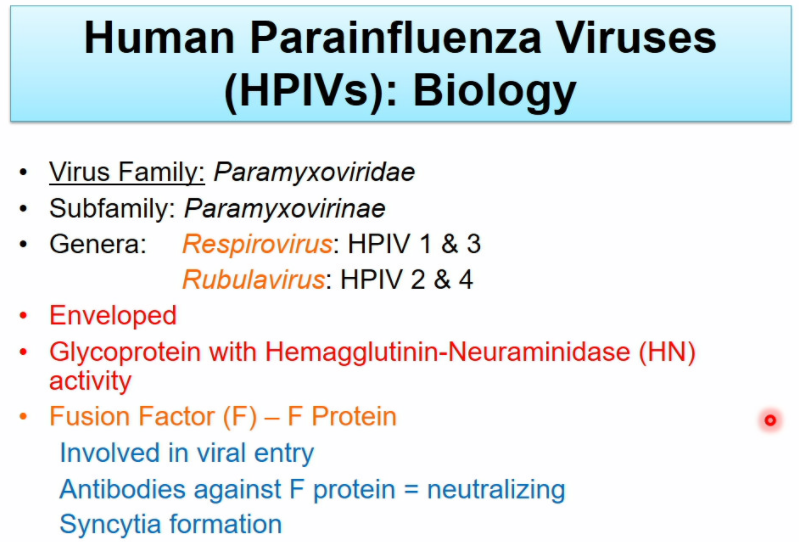
- fusion factor (F) - F protein
- involved in viral entry
- antibodies against F protein = neutralizing
- syncytia formation
name predisposing factors to HPIV infection
- predisposing factors
- malnutrition
- overcrowding
- vit. A def.
- lack of breastfeeding
- environmental smoke or toxins
name the disease and the type of HPIV associated with it
describe the key viral proteins found in HPIV
HPIV = linear ss (-) sense RNA
- key viral proteins:
- P and F = immune evasion
- F protein = role in syncytium formation
- HN protein = structural hemagglutinin and neuraminidase activity
- L protein = multifunctional polymerase
- M = matrix structural protein
describe the role of P and F protein
P and F protein (non-structural protein): role in evasion of immune response
- functions:
- plays an essential role in the inhibition of host immune response
- prevents the establishment of cellular antiviral state by blocking interferon-alpha/beta (IFN-alpha/beta) production and signaling pathway
describe bronchiolitis
inflammation of the bronchioles and small bronchi
- < 2 years of age; fall and winter
- URI symptoms followed by LRT infxn with inflammation, resulting in wheezing and/or crackles (rales)
- causative pathogen (virus) infects terminal bronchiolar epithelial cells → direct damage and inflammation
- edema, excessive mucus, sloughed epithelial cells → obstruction of small airways and atelectasis
the most common cause of bronchiolitis is _____
the most common cause of bronchiolitis is respiratory syncytial virus (RSV)
name risk factors for bronchiolitis
- risk factors:
- prematurity, low birth weight, congenital heart disease, chronic pulm. disease
- passive smoking, overcrowding, day care
describe clinical features of bronchiolitis
- begins with URT symptoms, followed by LRT signs and symptoms
- symptoms and signs:
- fever
- cough
- resp. distress (increased RR, retractions, WHEEZING, crackles)
- preceding history of URI (nasal congestion and/or discharge)
____ is the leading cause of LRTIs in infants and young children
respiratory syncytial virus (RSV) is the leading cause of LRTIs in infants and young children
describe the biology of RSV
- family = Pneumoviridae (formerly paramyxoviridae)
- genetic material = linear ss (-) sense RNA
- enveloped
- helical nucleocapsid
- virally-encoded surface proteins:
- fusion factor (peplomer): main viral antigen
- G glycoprotein: involved in attachment
- 2 subgroups: A & B
- lacks glycoprotein with HN activity
name risk factors for RSV
similar to bronchiolitis
- underlying lung disease
- premature birth (<35 weeks)
- congenital heart disease
- passive smoking
- Down syndrome
describe the pathogenesis of RSV
- entry is via epithelia of nose and eye
- F & G proteins mediate attachment; F mediates membrane fusion
- primary site of replication = nasopharyngeal epithelium
- direct cytopathic effect → loss of function
the primary site of replication of RSV is the ____
the primary site of replication of RSV is the nasopharyngeal epithelium
Bordatella pertussis is a (G+ve/G-ve) ____ (shape)
Bordatella pertussis is a G-ve coccobacillus
Bordatella pertussis typically occurs in _____ and ___ are important as reservoirs
Bordatella pertussis typically occurs in unvaccinated children and adults are important as reservoirs
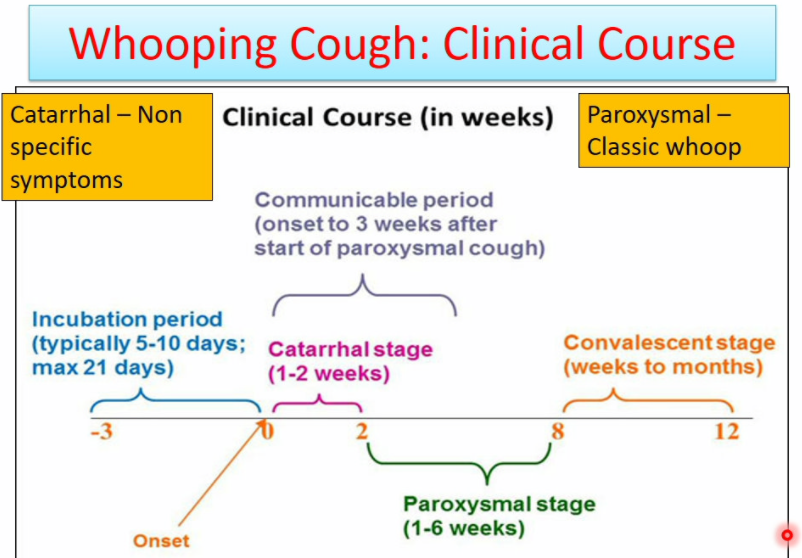
describe the clinical course of whooping cough
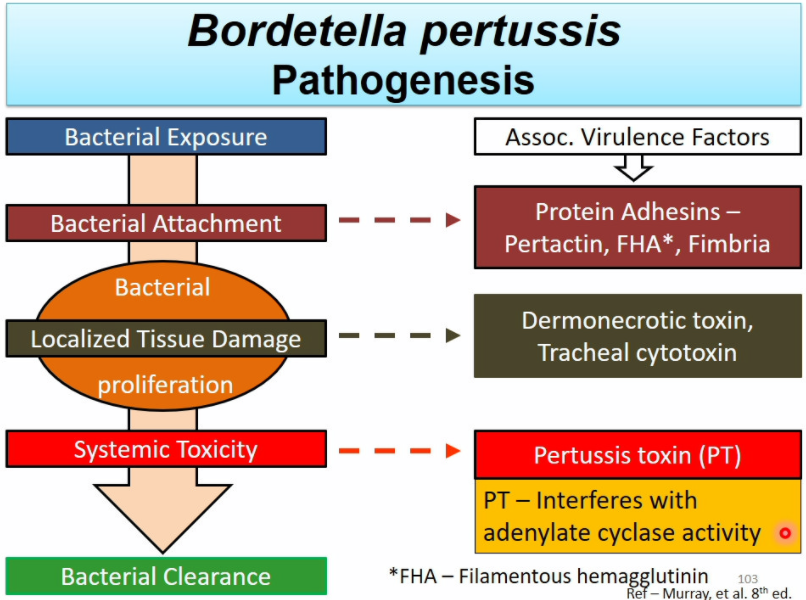
describe the pathogenesis of Bordatella pertussis

-
Blood and Lymphatic System I33
-
Infections of the Cardiovascular System34
-
Blood and Lymphatics II and III36
-
Infections of the CVS II33
-
Resp. Tract Infections I & II41
-
RTI III29
-
RTI IV44
-
RTI V27
-
RTI VI38
-
RTI VII29
-
RTI VIII34
-
RTI IX35
-
GI Intro, Esophagitis, Gastritis, H. pylori25
-
GI II12
-
GI III15
-
GI Acute Non-Inflammatory Bacteria30
-
GI Acute Non-Inflammatory: Viruses + Cryptosporidium27
-
GI Acute Inflammatory Diarrhea33
-
GI Acute Inflammatory Diarrhea II40
-
GI Acute Diarrhea with Vomiting (Food Poisoning)19
-
GI Persistent/Chronic Diarrhea37
-
GI Persistent/Chronic Diarrhea II46
-
Hepatitis A & B28
-
Hepatitis B, C & E and Parasites30
-
Skin I16
-
Skin II36
-
Skin III31
-
Skin IV45
-
Skin V46
-
Skin VI45
-
Skin VII40
-
Skin VIII50
-
Skin IX31



