What determines the size of a cell population?
- Rate of cell proliferation
- Rate of cell differentiation
- Rate of cell death by apoptosis
When does cell proliferation occur?
- Cell proliferation occurs in physiological and pathological conditions
- Excessive physiological stimulation can become pathological e.g. prostatic hypertrophy
What regulates normal cell proliferation?
Proto-oncogenes
Chemical signals from the microenvironment either stimulate/inhibit cell proliferation
Identify the four effects of chemical signals
- Survive – resist apoptosis
- Divide – enter cell cycle
- Differentiate – take on specialised form and function
- Die – undergo apoptosis
How can a cell population increase its numbers?
Increased growth occurs by:
- Shortening the cell cycle
- Conversion of quiescent cells → proliferating cells (enter cell cycle)
The restriction (R) point is the most critical checkpoint in the cell cycle.
What happens at this checkpoint?
- Checkpoint activation delays cell cycle and triggers DNA repair mechanisms / apoptosis via p53
- Majority of cells that pass R point will complete cell cycle
How is the cell cycle controlled?
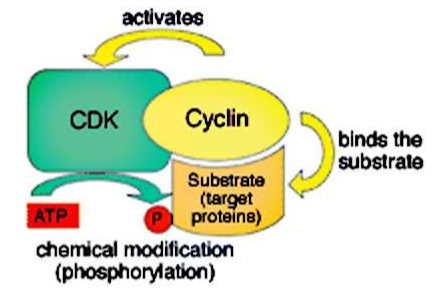
- Controlled by cyclins and cyclin dependent kinases (CDKs)
- CDKs become active by binding with cyclins
What is cellular adaptation?
Cellular adaptation is the reversible state between a normal unstressed cell and an overstressed injured cell occurring when cells respond to challenges which are not completely pathological
What are the 5 different types of cellular adaptation?
- Regeneration – multiply to replace loses
- Hyperplasia – increase in number
- Hypertrophy – increase in size
- Atrophy – decrease in size/number
- Metaplasia – replaced by a different type of cell
What is hyperplasia?
- Hyperplasia is an increase in tissue/organ size due to increased cell numbers
- It is a response to increased functional demand and/or hormonal stimulation
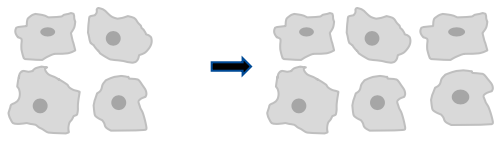
Describe the occurrence and control of hyperplasia
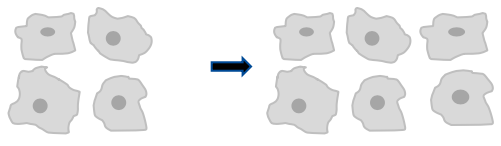
- Occurs in labile/stable tissues
- May occur secondary to a pathological cause but the proliferation is a normal response
- Remains under physiological control
Provide two examples of physiological hyperplasia
- Increased erythrocyte production by bone marrow due to hypoxia
- Proliferative endometrium under the influence of oestrogen
Provide two examples of pathological hyperplasia
- Epidermal thickening in chronic eczema/psoriasis
- Enlargement of thyroid gland due to iodine deficiency
What is hypertrophy?
- Hypertrophy is an increase in tissue/organ size due to an increase in cell size without an increase in cell numbers
- It is a response to increased functional demand and/or hormonal stimulation
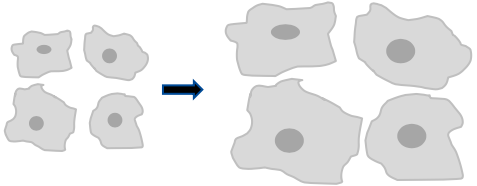
Where does hypertrophy occur?
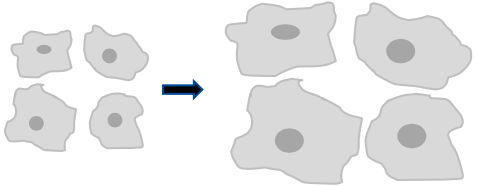
- Occurs in labile (easily changed), stable and permanent tissues
- Seen especially in permanent cell populations due to little/no replicative potential
Provide two examples of physiological hypertrophy
- The skeletal muscle hypertrophy of a bodybuilder
- The smooth muscle hypertrophy of a pregnant uterus (also involves hyperplasia) under the influence of oestrogen
Provide three examples of pathological hypertrophy
- Ventricular cardiac muscle hypertrophy due to systemic hypertension / valvular disease
- Smooth muscle hypertrophy due to intestinal stenosis
- Bladder smooth muscle hypertrophy due to prostate gland enlargment
What is compensatory hypertrophy?
Compensatory hypertrophy is an increase in the size / function of an organ or part to counteract a structural or functional defect
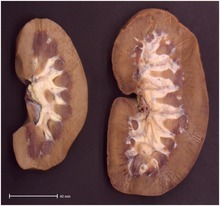
e.g. if one kidney is removed the other enlarges
What is atrophy?
- Atrophy is the shrinkage of a tissue / organ due to an acquired decrease in size and/or number of cell
- Due to a reduced supply of growth factors and/or nutrients
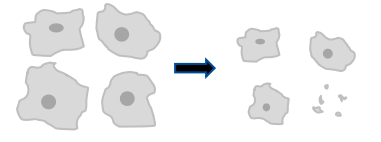
What is happening in cell atrophy?
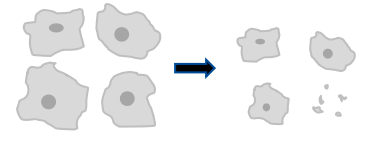
- Shrinkage in the cell size to a point at which survival is still possible
- Reduced structural components of the cell
Which processes underpin organ/tissue atrophy?
Organ/tissue atrophy is typically due to combination of cellular atrophy and apoptosis (programmed cell death)
Provide two examples of physiological atrophy
- Ovarian atrophy in post-menopausal women
- The decrease in size of the uterus after parturition
What are the 8 different pathological causes of atrophy?
- Reduced functional demand/workload (atrophy of disuse)
- Loss of innervation (denervation atrophy)
- Inadequate blood supply
- Inadequate nutrition
- Loss of endocrine stimuli
- Persistent injury
- Aging (senile atrophy)
- Pressure
Provide an example for the following forms of pathological atrophy:
- Atrophy of disuse
- Denervation atrophy
- Reduced functional demand/workload – muscle atrophy after disuse
- Loss of innervation – wasted hand muscles after median nerve damage


-
S1) Introduction to Pathology36
-
S5) Haemostasis50
-
S5) Thrombosis and Embolism50
-
S1) Cell Injury98
-
S2) Acute Inflammation96
-
S2) Learning from the Dead11
-
S3) Chronic Inflammation48
-
S4) Healing and Repair55
-
S6) Atherosclerosis58
-
S7) Cellular Adaptations55
-
S8) Introduction to Neoplasia38
-
S8) Invasion, Metastasis and Effects of Neoplasms38
-
S9) Causes & Mechanisms of Neoplasia39
-
S10) Incidence, Prognosis & Treatment of Neoplasms43
-
Clinical Conditions48



