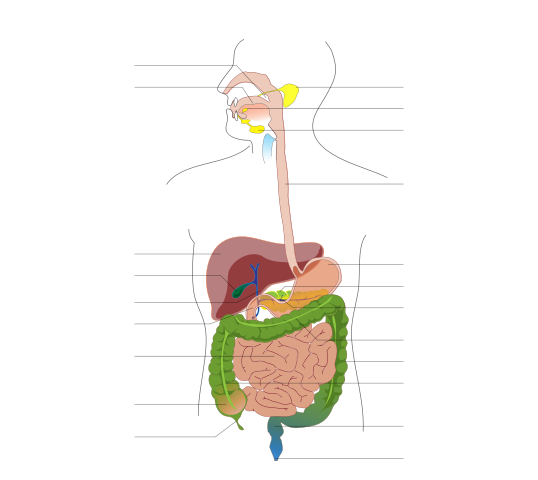
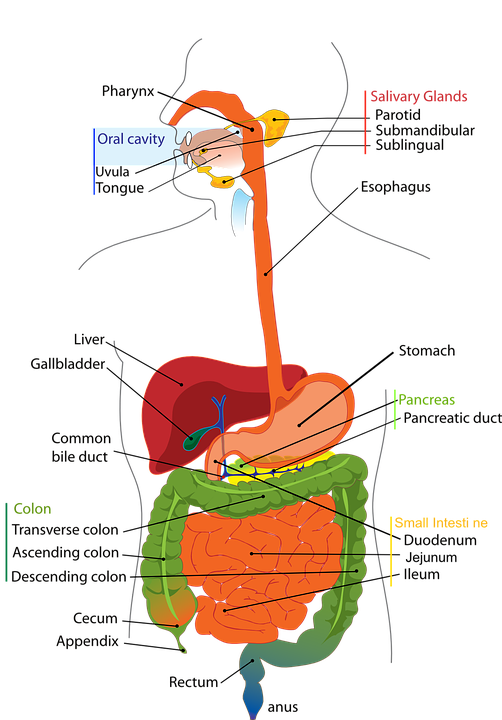
Label the following components of the alimentary canal:
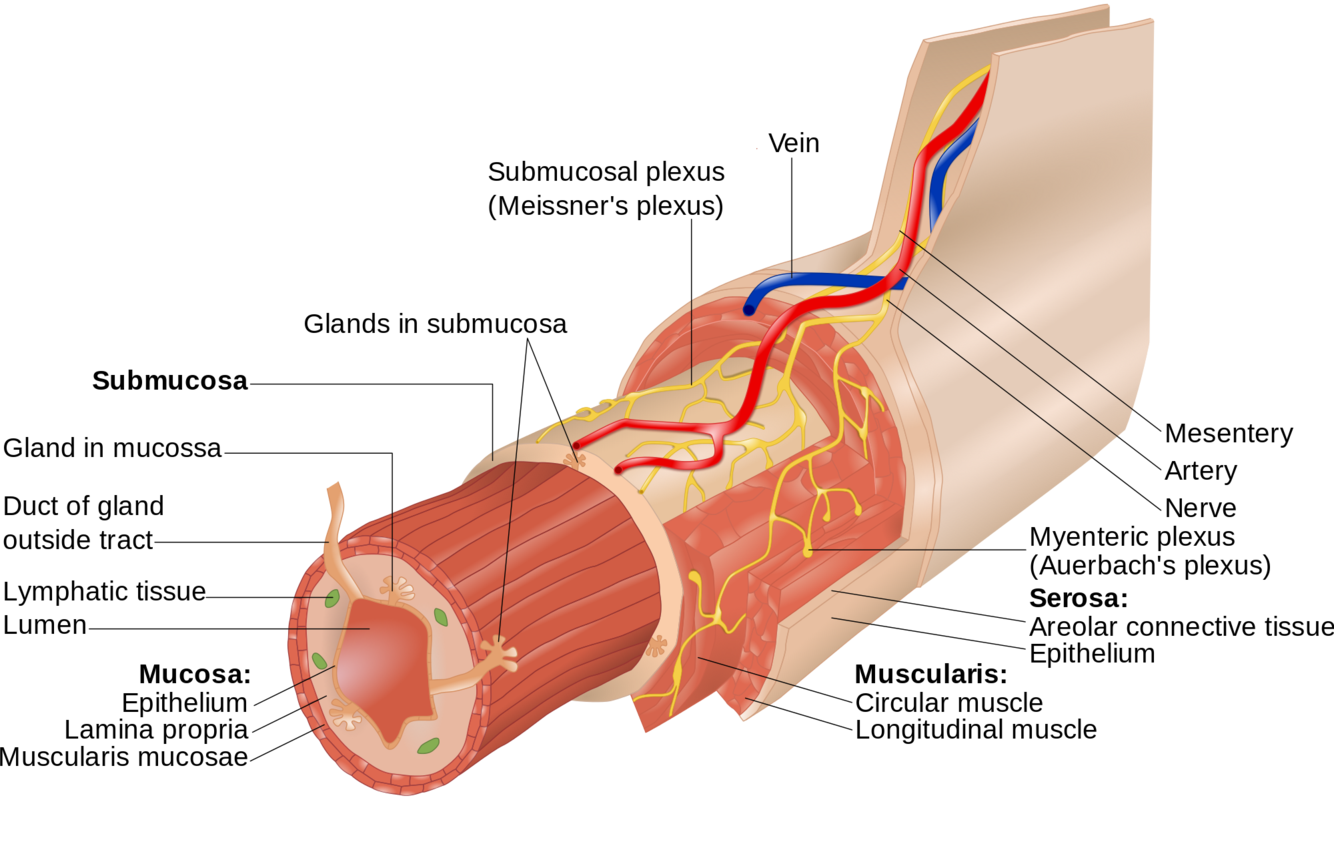
What are the four layers of the gut wall?
- Mucosa (innermost)
- Submucosa
- Muscularis externae
- Serosa (outermost)
Identify the 8 functions of the gut
- Provides a port of entry for food
- Mechanically disrupts food
- Temporarily stores food
- Chemically digests food
- Kills pathogens in food
- Moves food along the tract
- Absorb nutrients from the resultant solution
- Eliminate residual waste material
What is digestion?
Digestion is the conversion of what we eat by physical and chemical disruption into a solution that is relatively sterile, neutral in pH and isotonic; from which we can absorb our nutrients
Identify 4 roles of saliva in the GI tract
- Starts digestion (amylase & lipase)
- Assists swallowing
- Protects mouth & teeth (high calcium)
- Bacteriostatic (IgA antibody)
Compare physical and chemical disruption in the mouth and stomach respectively
- Begins in the mouth:
I. Physical - by teeth, tongue, muscles of mastication
II. Chemical - by salivary amylase and lipase
- Continues in the stomach:
I. Physical - by churning
II. Chemical - by HCl and enzymes
Describe the transport of food in the GI tract
- Mouth forms a bolus which enters the oesophagus
- Rapid peristaltic transport (even when upside down) moves bolus to stomach (8-9 seconds)
Describe the neural control of the oesophagus
- Upper end oesophagus – voluntary control (striated skeletal muscle)
- Lower end oesophagus – involuntary control (solely smooth muscle)
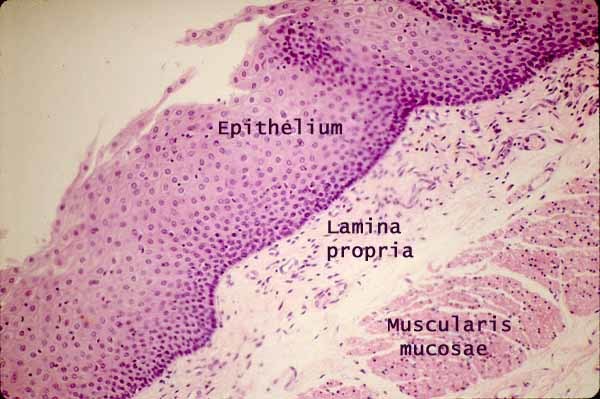
Identify and describe the different components of oesophageal mucosa
- Epithelium – stratified squamous non-keratinized
- Lamina propria – loose connective tissue bearing blood & lymph vessels, smooth muscle and immune cells
- Muscularis mucosae – thin layer of smooth muscle cells
Identify and describe the structure of the layer of the oesophageal wall, apart from the mucosa
- Submucosa – connective tissue containing mucus-secreting glands
- Muscularis externa – smooth muscle layers which move food by peristalsis
- Adventitia – thin outermost layer of connective tissue
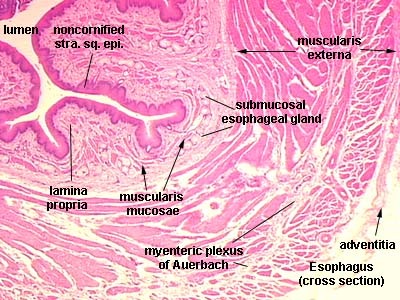
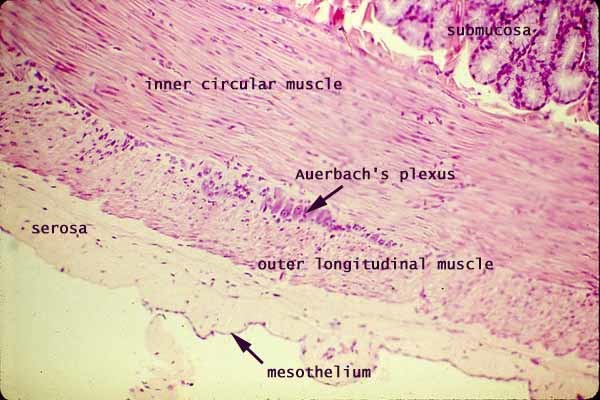
Identify the different smooth muscle layers in the muscularis externa of the oesophageal wall
- Inner layer is circular muscle
- Outer layer is longitudinal muscle
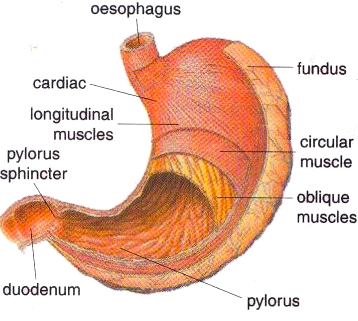
State 4 roles of the stomach
- Temporarily stores food
- Receptive relaxation to maintain pressure
- Proteolytic enzyme and acid secretion
- Produces hypertonic incompletely digested chyme
What are the three layers of smooth muscle in the stomach?
- Oblique
- Circular
- Longitudinal
How does the stomach protect its epithelium
The stomach protects its epithelium by secreting bicarbonate-rich mucus
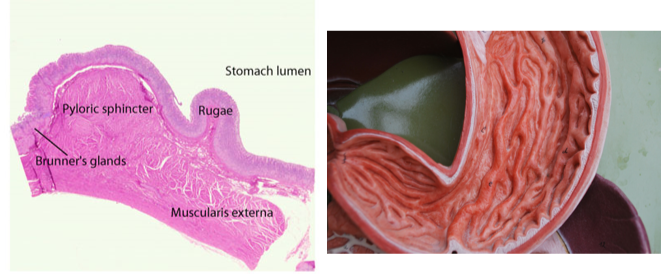
What is rugae?
Rugae are folds of gastric mucosa, forming longitudinal ridges in the empty stomach
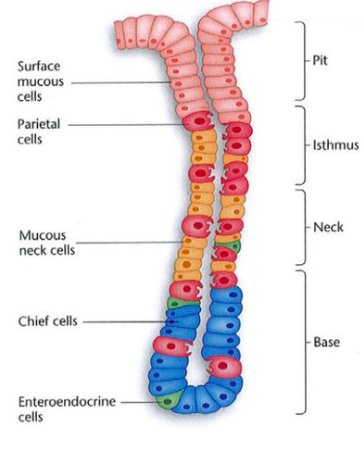
What is the gastric pit of the gastric gland ?
The gastric pit is the region of the gastric gland lined by mucus secreting cells, similar to goblet cells
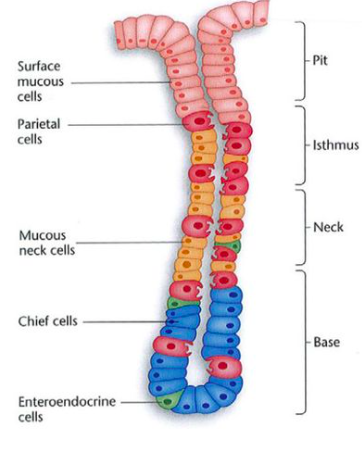
What is the isthmus (of the gastric gland)?
The isthmus is the region in which stem cells divide to populate the gland by upward or downward migration
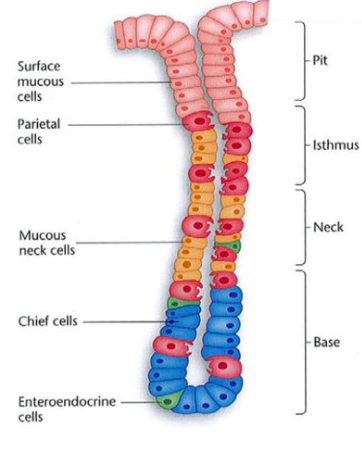
What do parietal cells do?
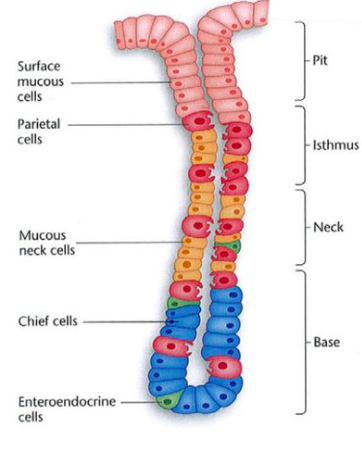
Parietal cells secrete H+ ions into the lumen and HCO3+ ions into nearby capillaries, which move it to the surface mucous cells
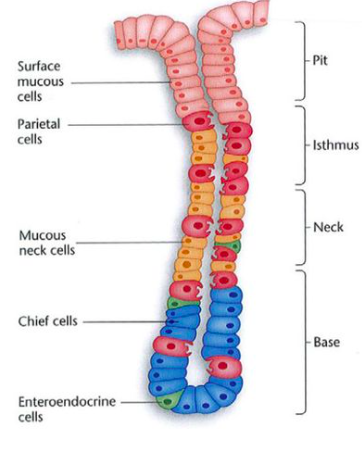
What do chief cells do?
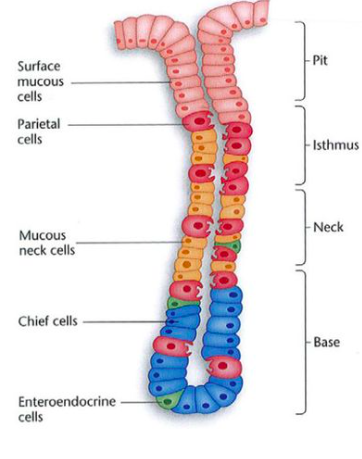
Chief cells secrete pepsinogens which are converted into pepsins which partly hydrolyse proteins
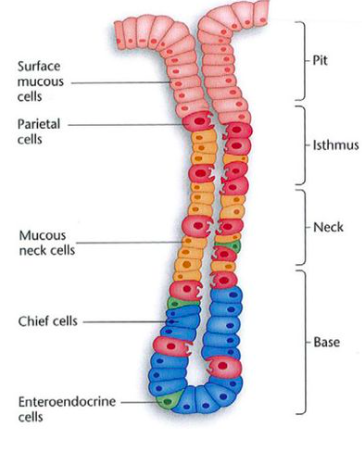
What are enteroendrocrine cells?
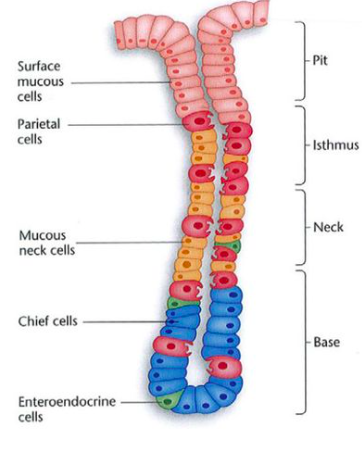
Gastric enteroendrocrine cells (G cells) are cells found at the base of the gastric gland which secrete gastrin
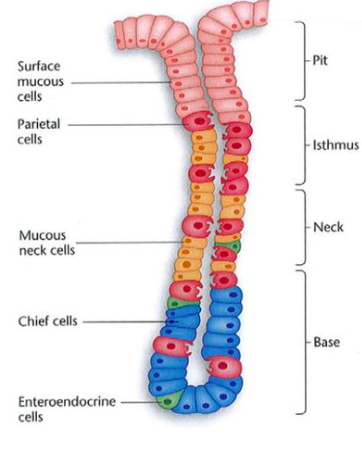
What are surface mucous cells and what do they do?
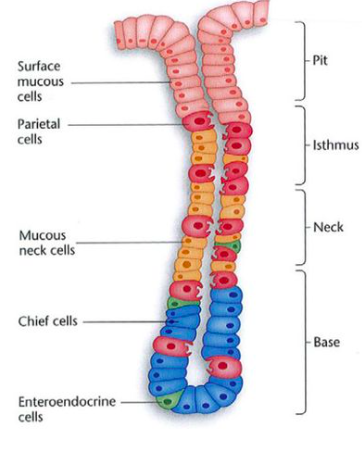
Surface mucous cells are cells which are abundant in gastric pits and release mucus in response to distension, stomach contents and acid secretion from gastric glands
Discuss the resistance/vulnerability of surface mucous cells
- Their secreted mucus is resistant to pepsin degradation
- They can be damaged by aspirin/alcohol
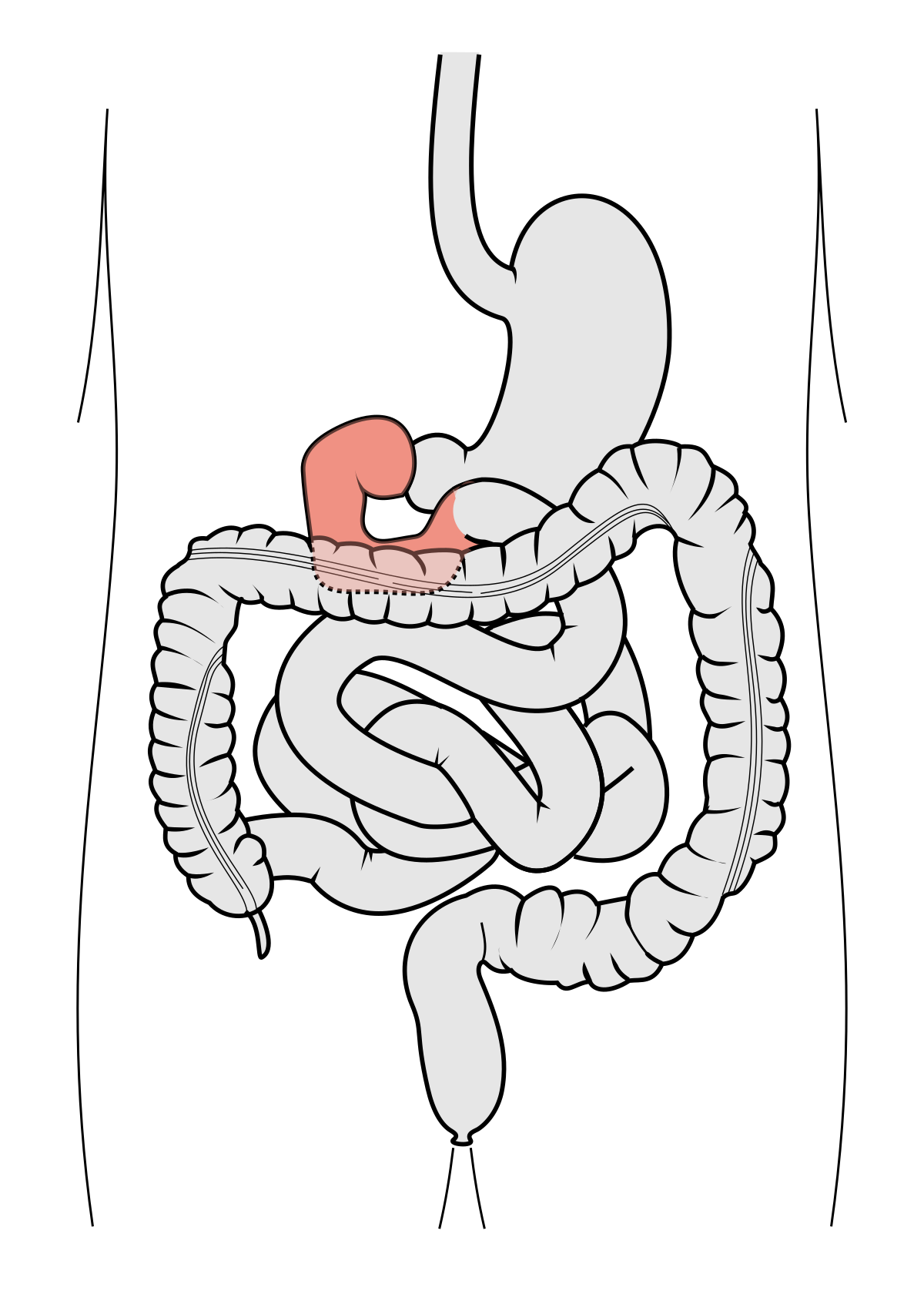
Describe the structure, location and function of the duodenum
- Structure: proximal portion of the small intestine
- Location: curves around the head of the pancreas
- Function: walls contain Brunner’s glands which secrete bicarbonate-rich mucus to neutralise acidic chyme
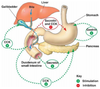
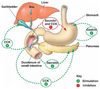
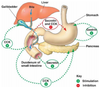
Describe the dilution and neutralisation of chyme
- Water drawn in from ECF to dilute hypertonic chyme
- Pancreas & liver secrete alkali and bile to neutralise acidic chyme

-
S1) Introduction to Body Systems25
-
S1) Investigative Techniques19
-
S2) Integrating Cells into Tissues21
-
S2) Connective and Adipose Tissues34
-
S3) Anatomical Terminology26
-
S4) Surface and Core Anatomy15
-
S5) Epithelial Tissues and Glands45
-
S6) Lymphatic System39
-
S7) The Nervous System21
-
S8) The Liver17
-
S8) The Digestive System43
-
S9) The Respiratory System48
-
S9-10) Embryology40
-
S11) The Endocrine System35
-
S12) Cartilage18
-
S12) Bone38
-
S13) Muscle44
-
S13) Cardiovascular System35
-
Clinical Conditions25



