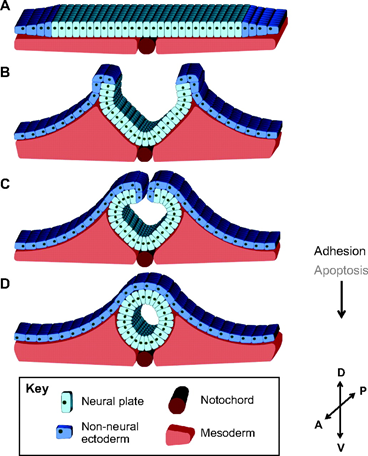
Describe the transformation of the neural groove (and timeline)
- By the end of 3rd wk folds begin to fuse to form neural tube (10th C-stage) - It begins in the from the middle and moves rostrally and caudally - The openings still left at ends - neuropores Rs & Cad close on d-24&27 C.s (11&12) - The neural tube is the forerunner of brain and spinal cord
What is the neuroepithelium
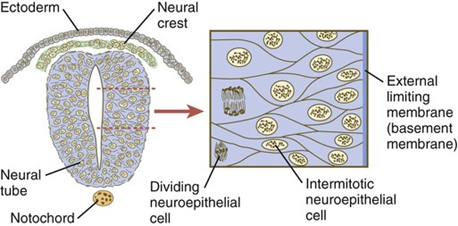
The cells lining the neural tube
It will give rise to the neurons and most other cells in CNS
What is the neural crest
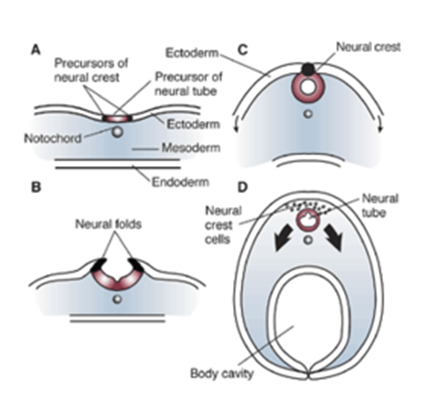
-Cells from the edges of the neural plate (border with
other ectoderm) that are not incorporated
into the tube and gather dorsal to it
-the migrate dorsally an latterly to from various other
ganglia and nonnerual elements
What are placodes
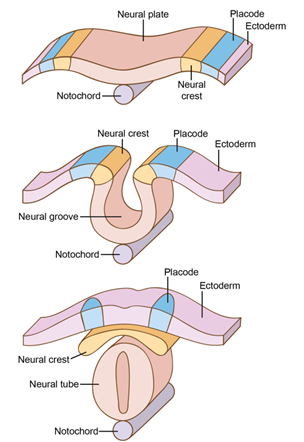
Thickened regions of the ectoderm of the embryonic
head
(remain in the ectoderm after forming of tube)
That are the origin of some neurons and other cells in
the peripheral sense organs
What is the first population of cells produced in the neural tube and when does it happned
- Neurons that are formed between the 4th and 20th week
Describe the initial development of neurons
They migrate , grow cytoplasmic processes and form synaptic connections with other neurons
What is apoptosis specifically in neurons
-cell death
- Many neurons die in the normal course of development
- It is genetically programmed process
- The neurons that die are those that failed to make synaptic connections
Describe the development of sensory ganglia neurons
- they are derived from the neural crest
- they send neurites to the neural tube and the PNS
- by the 8th wk the central directed neurites have
extensive synaptic connections with spinal
neurons
- this process continues long after birth
What are neuroglial cells (Glia) and where do they
develop
Cells in the nervous system that are not neurons
the CNS the develop in the neural tube
in the PNS the develop from the neural crest
what is the first development of neuroglial cells
radial glia - it happens alongside the first neurons
the develop processes from the lumen to the outside
surface of the neural tube
they guide the migration of the young neurons
where does neurons originate
in the CNS from the neural tube
in the PNS from the neural crest
What is neurulation
Neurulation is a process in which the neural plate bends up and later fuses to form neural tube that will differentiate into the brain and the spinal.
What are the first signs of the CNS
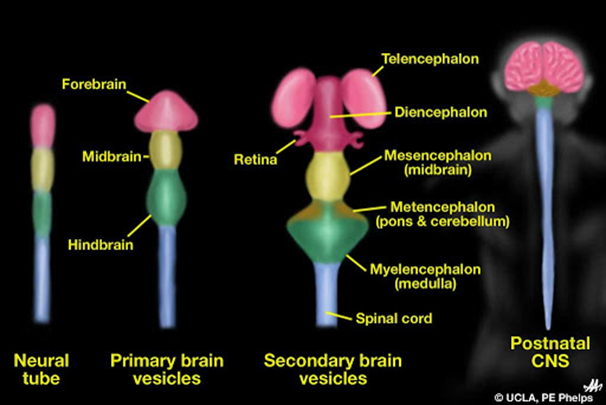
before the closure of the neural tube a visibly bigger rostral end of the embryo Precede the brain (with irregularities corresponding its major divisions)
while the remainder of the neural tube becomes the spinal cord.( the closing of the caudal neuropore correspond to its upper lumbar segments)
What is secondary neurulation (and when)
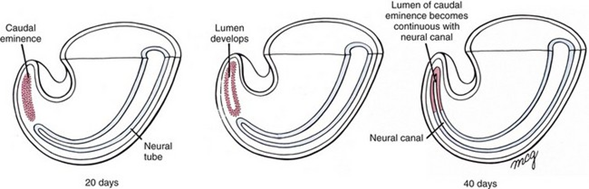
The forming of the part of the spinal cord further caudally of the upper lumbar segments
By The joining of vesicles derived from the caudal eminence
continuous with the lumen about 3r weeks after the caudal neuropores closes
What is the caudal eminence?
a mass of pluripotent (capable of giving rise to several different cell type ) cells located dorsal to the developing tailbone
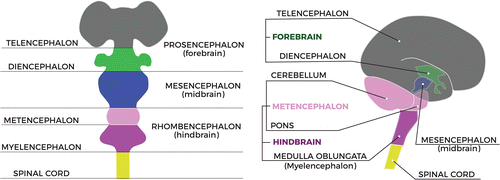
What are the major divisions of the brain and when do they develop
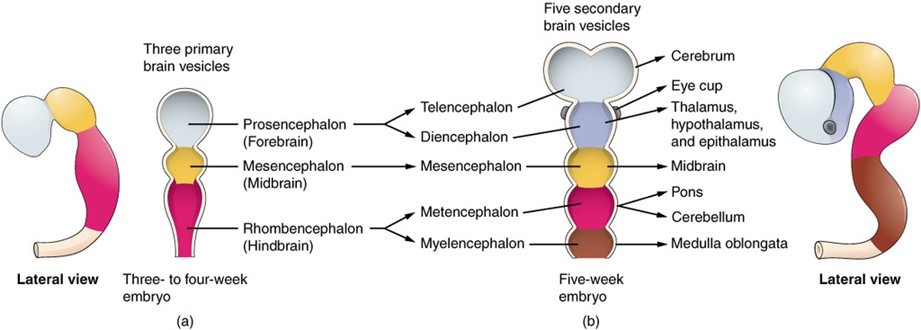
three major divisions appear at the end of the 4th wk
the prosencephalon (forebrain)
mesencephalon (midbrain)
and rhombencephalon (hindbrain)
During the 5th week, secondary swellings develop in the prosencephalon and rhombencephalon,
So now five: the Telencephalon & diencephalon (both from prosencephalon) mesencephalon,metencephalon & myelencephalon (both from rhombencephalon)
What are neuromeres
A longitudinal division of The early embryonic CNS into smaller segments as the brain develops its segments become indistinguishable but the division of the spinal cord persist throughout life
What are the 4 division that form in the neural tube
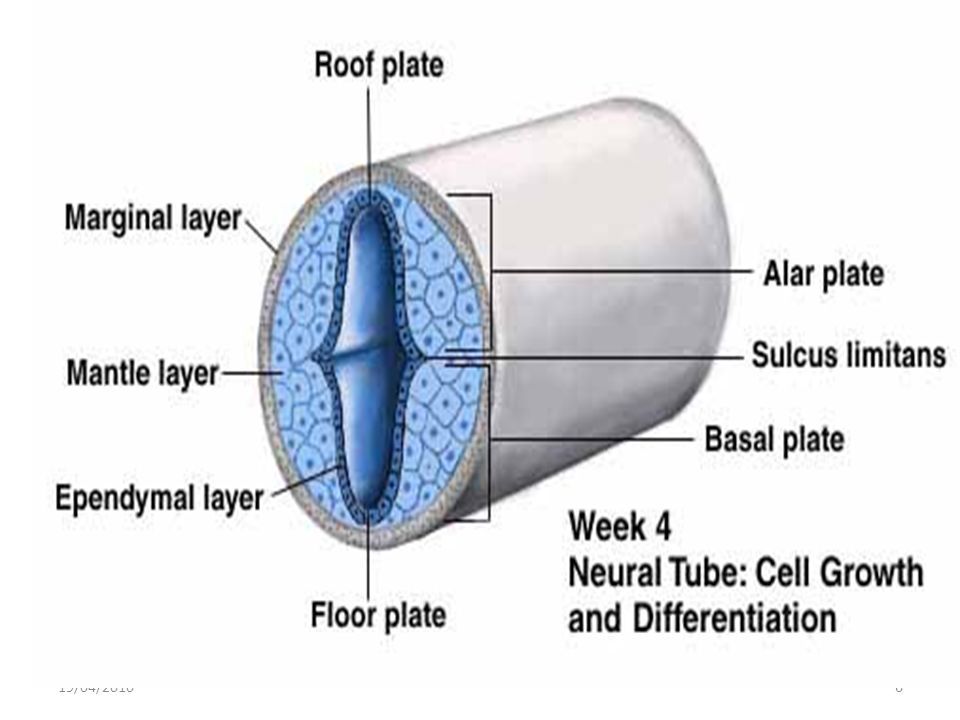
sulcus limitans -A longitudinal groove on in the inner side of each lateral
wall that separates:
the dorsal Alar plate fromventral the basal plate –
they acquire Afferent (sensory) and efferent (motor) connections respectively , running from the
rostral end of the mesencephalon to the caudal end of the spinal cord.
the left and plates become separated by a roof plate and floor plate
what connections are formed by the basal and alar plates
Some basal plate cells differentiate into motor neurons, with axons that grow out into the
developing muscles.
The growing axons of neurons of the sensory ganglia enter the alar plate.
What the 5 pts of the embryonic brain develop into
Mylencephlon = Medulla oblongata
Metencephalon = Pons and cerebellum
Mesencephalon = Midbrain, consisting of tectum and cerebral peduncles
Diencephalon = Thalamus, epithalamus, hypothalamus, and subthalamus
Telencephalon = Cerebral hemispheres, each containing olfactory system,
corpus striatum, cerebral cortex, and white matter
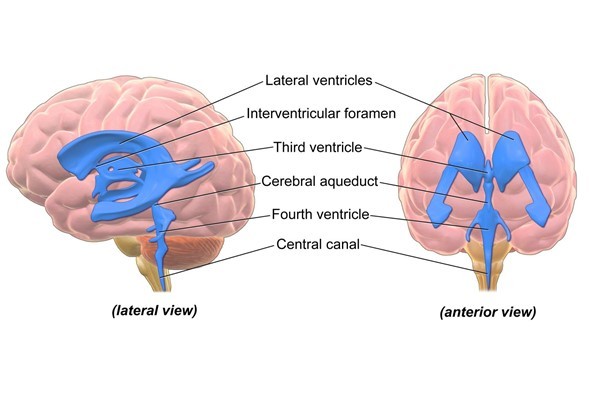
What develops from The lumen of the neural tube
It becomes the ventricular system and the neural canal
A lateral ventricle develops in each cerebral hemisphere.
The third ventricle is in the diencephalon,
the fourth ventricle bounded by the medulla, pons, and cerebellum.
The third and fourth ventricles are connected by a narrow channel, the cerebral aqueduct,
Through the midbrain.
The lumen also remains narrow in the caudal part of the medulla and throughout the
spinal cord, where it becomes the central canal.
Describe the Development of the Meninges
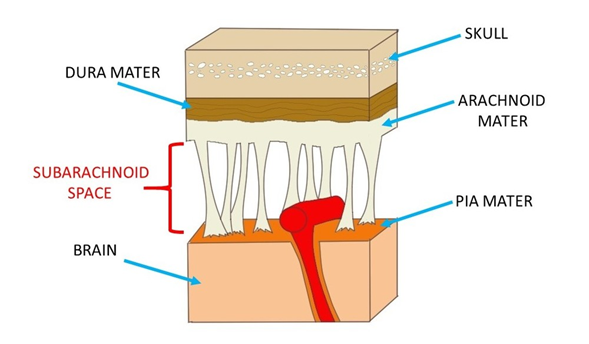
The membranous covering of the CNS appear as follows
- On the 4th week A primary (or primitive) meninx that is derived from the mesoderm appeas
- After 1 week fluid filled spaces appear in it
- Subsequent differentiation into 3 layers along the cranial cavity and spinal canal
- The Pia matter – closest to the nervous system
- The arachnoid matter
- The dura matter - outer layer closest to the bone
The subarachnoid space ,containng cerebrospinal fluid
(CSF), is between the inner two meningeal layers.
What are the 3 flexures in the neural tube where they from and why do they exist
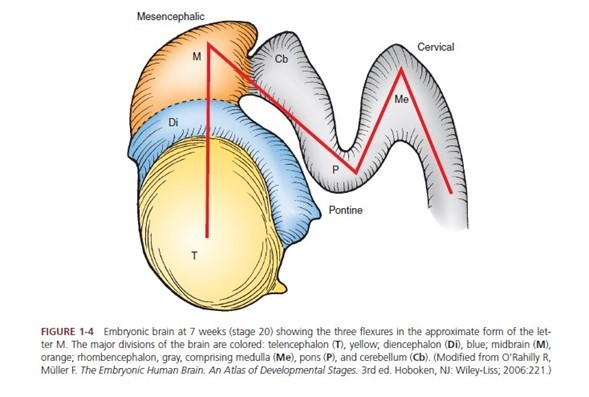
Flexures in the neural tube help to fit the the initially cylindrical brain in what will eventually
be a round head.
The first to form are
cervical flexure at the junction of the rhombencephalon with the spinal cord and the
mesencephalic flexure at the level of the midbrain.
Next The pontine flexure in the metencephalon.
These flexures in the brain ensure that the optical axes of the
eyes (which connect with the prosencephalon) are at right angles to the axis of the vertebral
column. necessary feature of the erect posture of humans.
contrasts with the posture of quadrupedal animals.
What is the difference between Ganglia and nuclei
ganglia are clusters of nerve cell bodies in the PNS whereas nuclei are clusters of nerve cell bodies in the CNS





