Polyclonal vs Monoclonal Antibody Definitions
- Polyclonal: product of many different B cell clones. Antibodies recognize different epitopes of same antigen
- Monoclonal: only 1 type of B cell products it, and antibodies are specific for only one epitope
What is avidity in terms of antibodies?
Combined strength of many different bonds between antibodies and antigens.
IgM has high avidity because it’s a pentamer with 10 binding sites, whereas IgG only has 2 binding sites and thus lower avidity
What are some good uses for immunodiffusion?
Detection of solule antigens or antibodies from body fluids
e.b. bacterial, viral antigens, transferrin, Ig classes
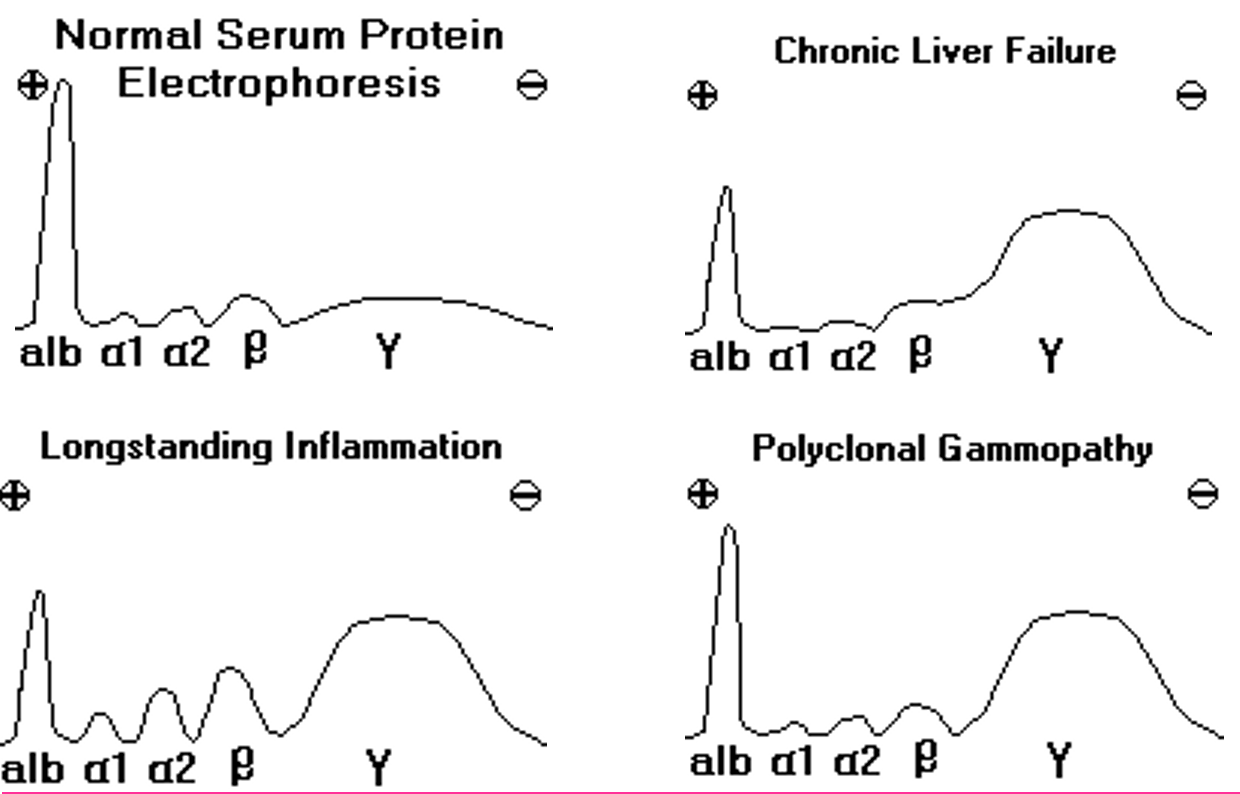
What are some things that can be detected by serum electrophoresis?
- Multiple myeloma: most important. Shows narrow M spike in the gamma range (monoclonal gammopathy)
- Chronic Liver Failure
- Chronic inflammation
- Polyclonal gammopathies: many things with inflammation like hepatitis, AIDS, RA, endocarditis etc show broad increases in the gamma range
Immuno electrophoresis can be used to help diagnose:
- Multiple myeloma
- Rheumatoid Arthritis
- Chronic Inflammation
Direct and indirect agglutation are used to test for:
Direct: ABO blood group, Widal test, typhoid fever
Indirect for both ABO and Rh (Rh does not produce direct response) - used in Coombs test
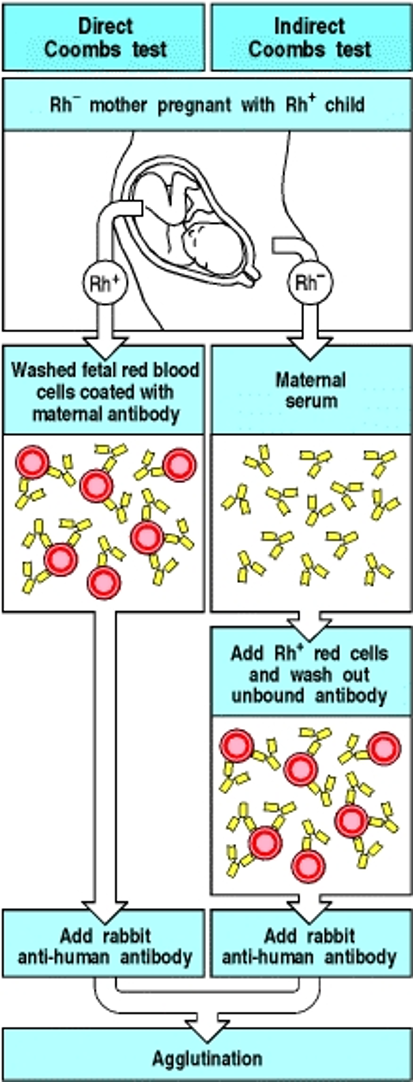
What is the direct and indirect Coombs test and what do they test for?
- Direct Coombs: Fetal red blood cells are coated to see if they’re Rh+ coated with maternal anti-Rh IgG. Just one step: add anti-human antibodies to see if they agglutinate
- Indirect Coombs: take maternal serum and test if it has anti-Rh antibodies by first adding Rh+ RBCs, then adding the anti-human antibodies to see if they agglutinate
What lab test is more commonly used for ABO blood groups besides the two-sided ABO test?
Micro-column Agglutination Test
Tube has antibodies against IgG, IgM, and C3d. Add patient blood and centrifuge.
Direct and/or indirect agglutination occurs.
What are some diagnostic uses of passive agglutination?
- Rheumatoid factor latex test: IgM antibodies that attack Fc receptor of IgG
- hCG latex test (pregnancy)
- CRP latex test: test for inflammation
How do we generate monoclonal antibodies in the lab?
Inject a mouse with antigen, wait for it to produce antibodies to that antigen, isolate the mouse’s B cells
Now fuse those B cells with an immortal myeloma cell
Get hybridoma cell that can produce those antibodies indefinitely
When doing immunohistochemistry, are the primary antibodies monoclonal or polyclonal?
What about the secondary antibodies?
Primary are monoclonal: only recognizes very specific antigen
Secondary are polyclonal: recognize many epitopes of the first Ab, are better able to give a strong signal
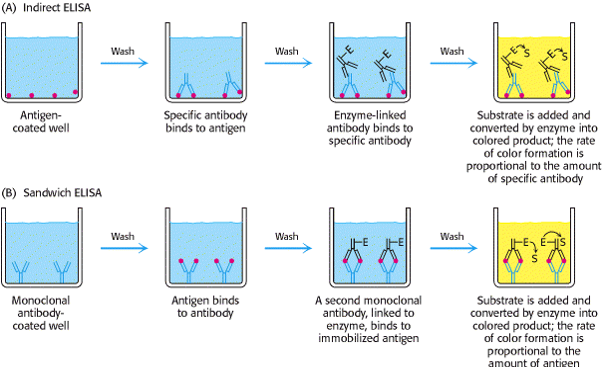
What is the difference in method between indirect ELISA and sandwhich ELISA?
Indirect ELISA: starts with antigen bound to the test container. Test to see if you have antibodies to that antigen in your sample. Add secondary antibodies that label with an enzyme -> color product.
Sandwhich ELISA: starts with antibodies bound to the test container. Captures any antigens you want to test. Then add secondary antibodies to form “sandwhich” and also have enzyme -> color product
How does ELISPOT work?
What is an example of something it could be used to diagnose?
ELISPOT is similar to Sandwich ELISA, but tests the products secreted by living cells. Has Ab against specific products of cells. Shows up as dark spots when colored enzyme added.
Example: test for latent TB by having living T-cells exposed to TB and seeing if they activate and begin secreting IFN gamma (ELISPOT has anti-IFN Abs).
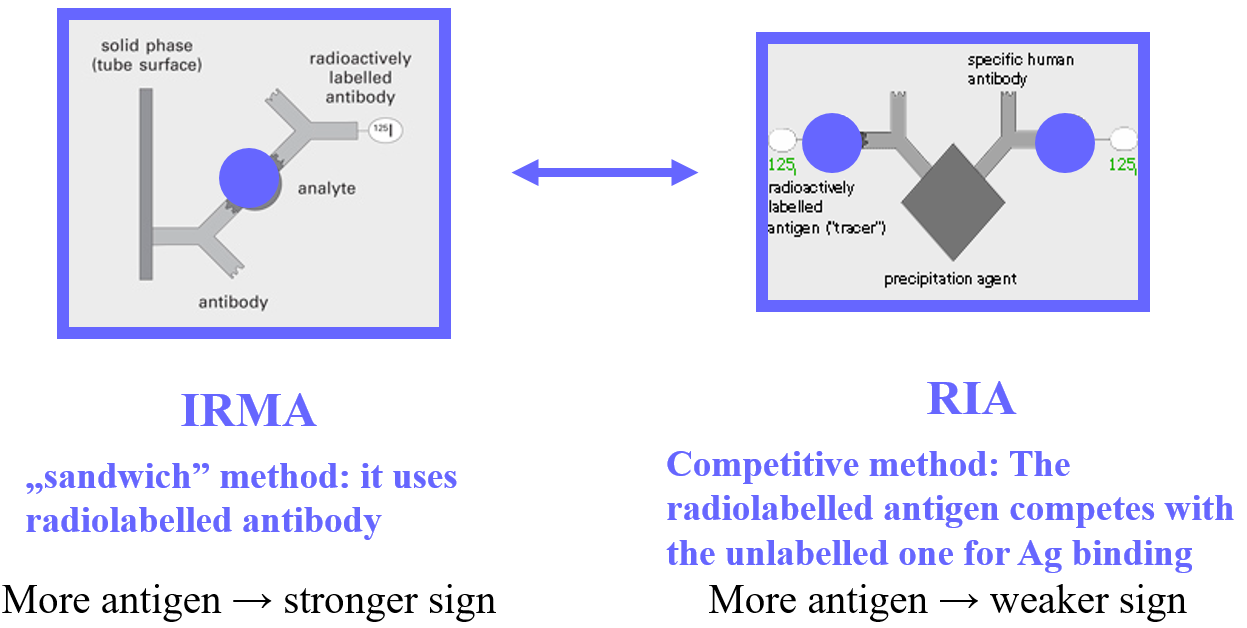
What is the difference between RIA and IRMA?
RIA: Radioimmuno Assay: Similar to Competitive ELISA, but with radioactive labeling instead of enzyme. Radiolabelled antigen competes for an unlabelled Ag binding site. More radiosignal means weaker competition (negative result)
IRMA: Immunoradiometric Assay: Similar to Sandwich ELISA. Stronger signal = more antigen
What is the advantage of confocal microscopy vs traditional light microscopy?
Confocal microscopy allows 3D imaging.
The light is focused on specific points and a laser-scanning microscope can read those with multiple images that combine to show the object in 3 dimensions
What type of specimens are immunofluorescence ideal for?
Sections / microscope slides with cells
IF uses immunohistochemistry (normally indirect but potentially also direct) to label antigens, light them up or color them to be visible with microscopy. For example, can identify B cell lymphoma with anti-CD20 Ab
How does Western Blot work?
- SDS PAGE: Take bio sample of cell lysate, separate the proteins from it with gel electrophoresis. Use SDS to neutralize their charges
- Blotting: Transfer to a blot/membrane to prevent the pattern from changing via diffusion
- Labeling: Use primary and secondary antibodies to label
How does a lateral flow test work?
- Get antibodies for the antigen you want to target, attach those antibodies to a colored latex bead (passive agglutination)
- On a strip, have one “control” antibody section that targets the antibodies themselves to see if your latex-Ab thing works.
- Also put your “test” antibody section that binds the Ag-Ab mix
- If you see both the “control” and “test” sections as colored, then you have a positive result on a working test
What can the lateral flow test be used for?
(many things, and this was an MCQ question on my midterm.. lot of things)
- H. pylori IgG - Rapid test
- Pregnancy test (hCG)
- Rotavirus
- Adenovirus
- Hemoglobin – Fecal occult blood
- Helicobacter pylori stool antigen
- Morphine (300 ng) Test
- E. Coli O antigen
- HIV
What (generally, like what types of things), can the following lab techniques measure:
- ELISA, RIA, IRMA, lateral flow
- ELISPOT
- Western Blot
- Immunocytochemistry
- ELISA, RIA, IRMA, lateral flow: soluble antigens from body fluids (urine, blood etc)
- ELISPOT: products of secretory cells
- Western Blot: soluble proteins from lysed cells
- Immunocytochemistry: cell/tissue antigens in situ
What are two absolute indications to use flow cytometry for routine clinical measurements?
- Hematological disorders: diagnosis of Leukemia and recurrence, multidrug resistance, minimal residual disease (MRD), monitoring bone marrow transplantation
- Immunodeficiencies: like AIDS
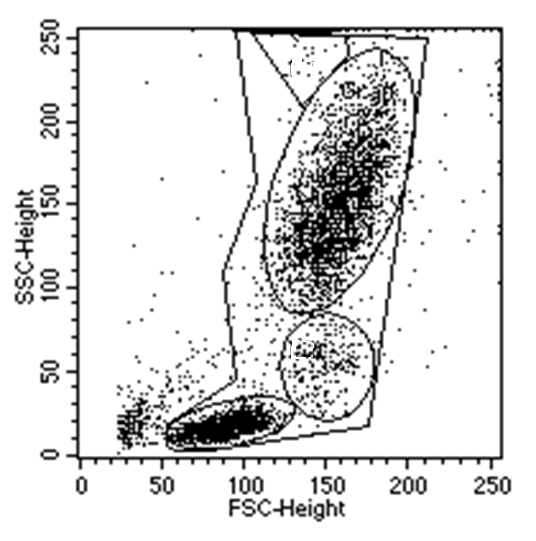
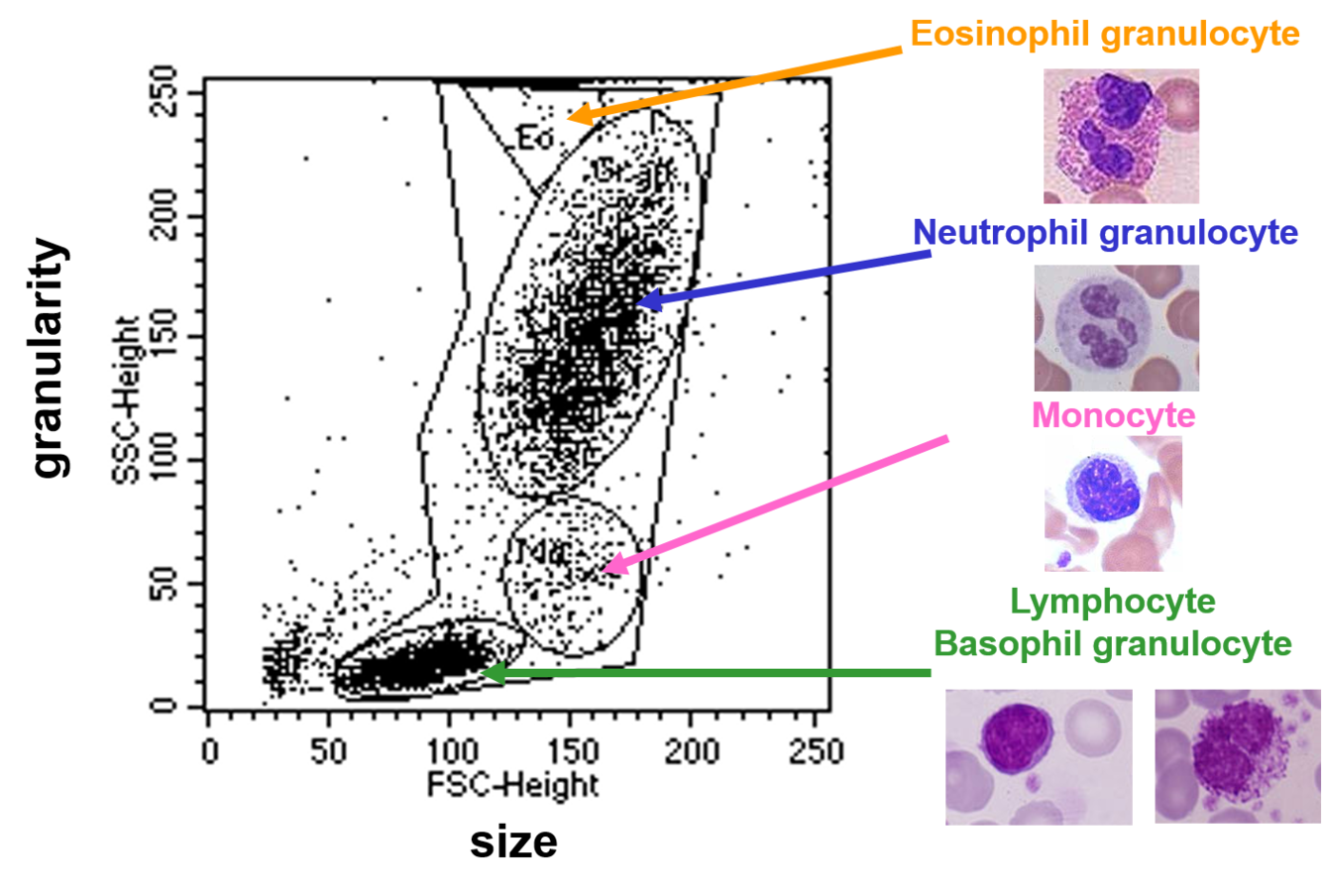
What are the 2 most important things about a cell that flow cytometry tells us?
(gonna list the 2 minor things on the answer card too but dont worry about it)
- Size: How big the cell is relatively. Comes out as forward scatter
- Granularity: deflects light, comes out as side scatter. Distinguishes granulocytes
(other two minor things: relative light intensity and time)
Scatter plot: try to identify which cells are where
Which CD markers are used in flow cytometry to identify:
NKT
NK
γδT
B
B1
NKT: CD3+ CD56+
NK: CD3-, CD56+
γδT: CD3+, γδTCR+, CD4 and 8 -
B: CD19
B1: CD5+



-
Lecture 1&2 Material (Dustin) - Basics & Innate Immunity71
-
Midterm I (Ben)35
-
Lecture 3 (Dustin) - Complement System and Acute Phase Reaction45
-
Lecture 4 (Dustin) - MHC Presentation36
-
Seminars 1/2 (Ben) - Intro + Ag/Ab Tests42
-
Lecture 7 (Dustin) - T cells41
-
Seminars 3/4 (Ben) - Labeled AB Tests + FCT29
-
Factors and receptors25
-
MCQs107
-
Molecules + What They Do (Ben)71
-
HS rxns, transplant, cell migration (Ben)39
-
Seminar 10 - Immunotherapies (Ben)27
-
Lecture 8: Mucosal Immunity (Ben)37
-
Week 7 - Immune Regulation (Ben)28
-
Seminar 9 - Vaccination (Ben)26
-
Extra Stuff for Competition28
-
Chinese Medicine (will remove later)84
-
Seminars - Some Basic First Few Weeks Stuff (Dustin)42



