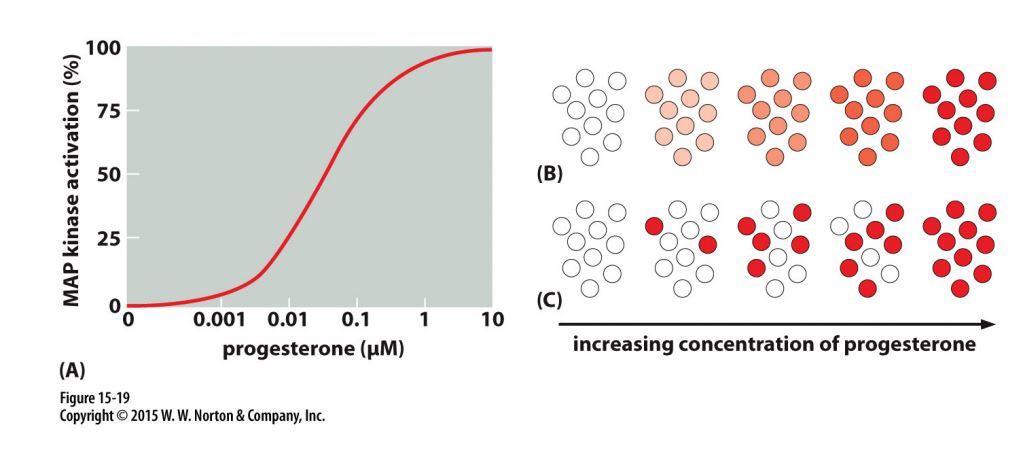
not all cells in a population behave identically!
when looking at a cellular response, it is the # of cells that are responding, not a gradual response of all cells
WHY: each cell has a different concentration of various proteins
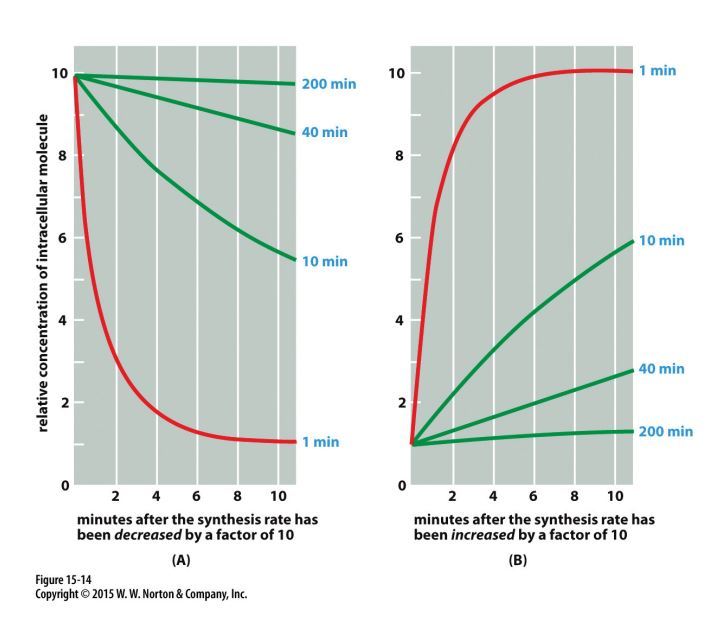
after signal is removed, what happens to the response rate?
response decreases at a rate that depends (in part) on the turnover rate of intracellular intermediates
red = rapid turnover (largest fluctuation in amount of molecule over time
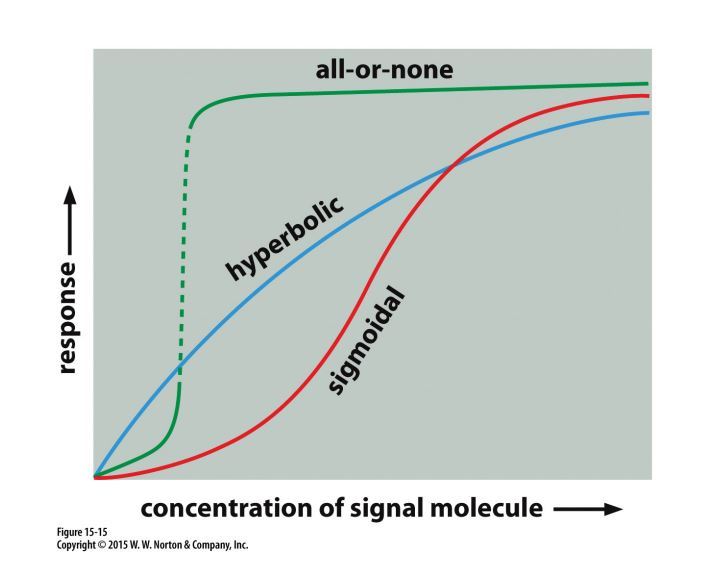
signal pathways impact response to a gradually increasing signal
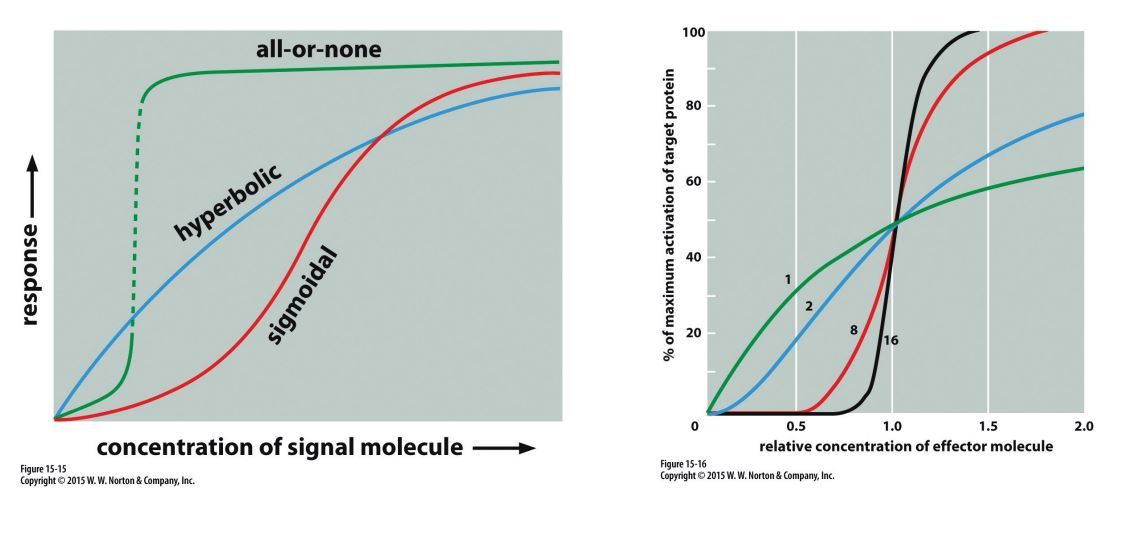
you may say smoothly graded or switchlike responses
hyperbolic: response increases gradually as concentration of extracellular signal molecule increases (reaches a plateau)
sigmoidal: signaling system reduces response at low signal conc and produces a steepr response at an intermediation conc
all-or-none: cell quickly switches between low and high response
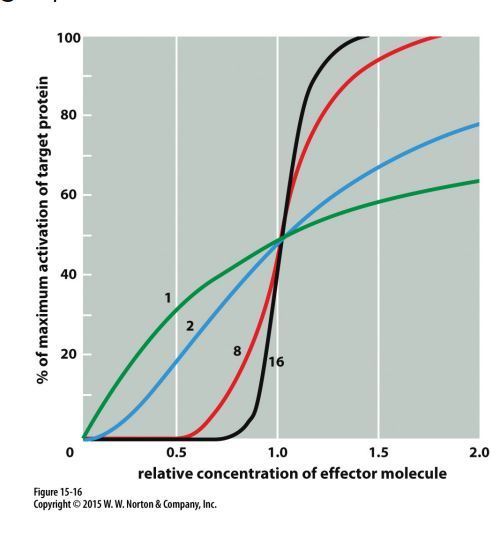
response varies with number of regulators that must bind simultaneously to target protein
activation curves for an allosteric protein as a function of effector molecule concentration
positive and negative feedback loops
a stimulus activates protein A, which in turn activates protein B which then acts to either increase or decrease the activity of A
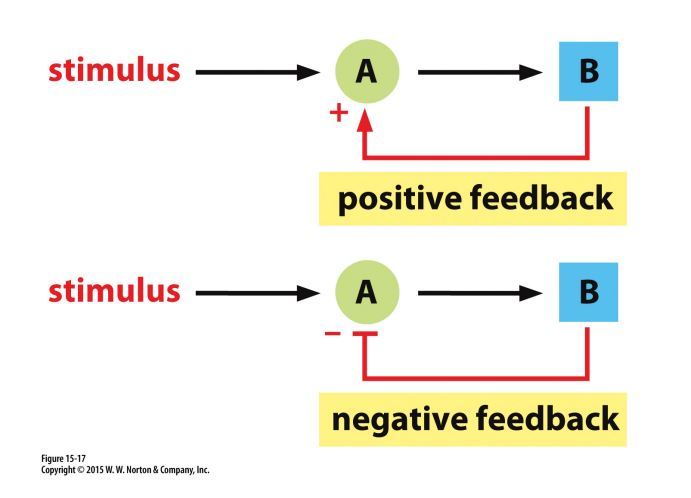
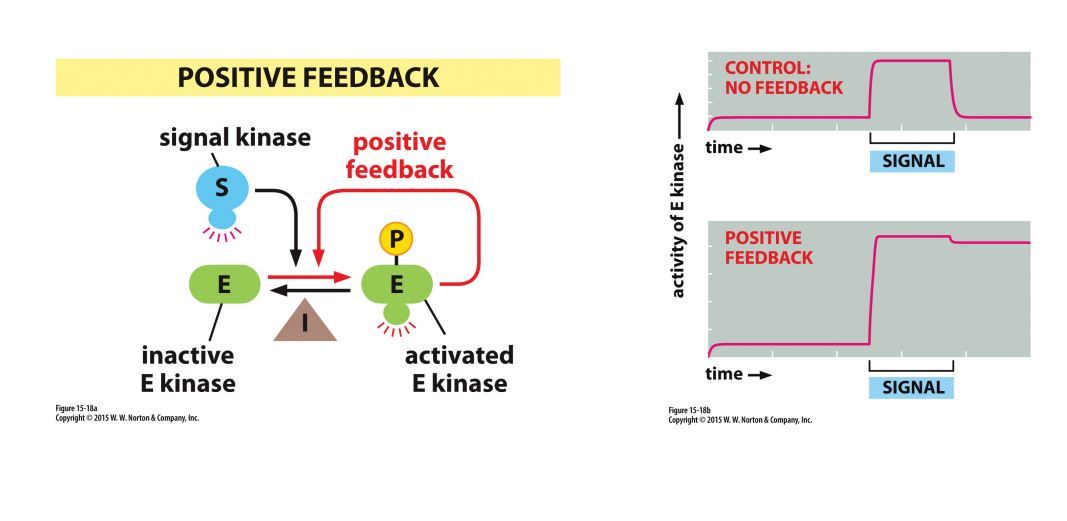
positive feedback loop example
- response can remain on even after initial signal is removed
- activated E kinase acts back to promote its own phosphorylation and activator
- basal activity of the I phosphatase dephosphorylates activated E at a steady, low rate
- even after stimulus is removed, stimulation by S kinase keeps system ON
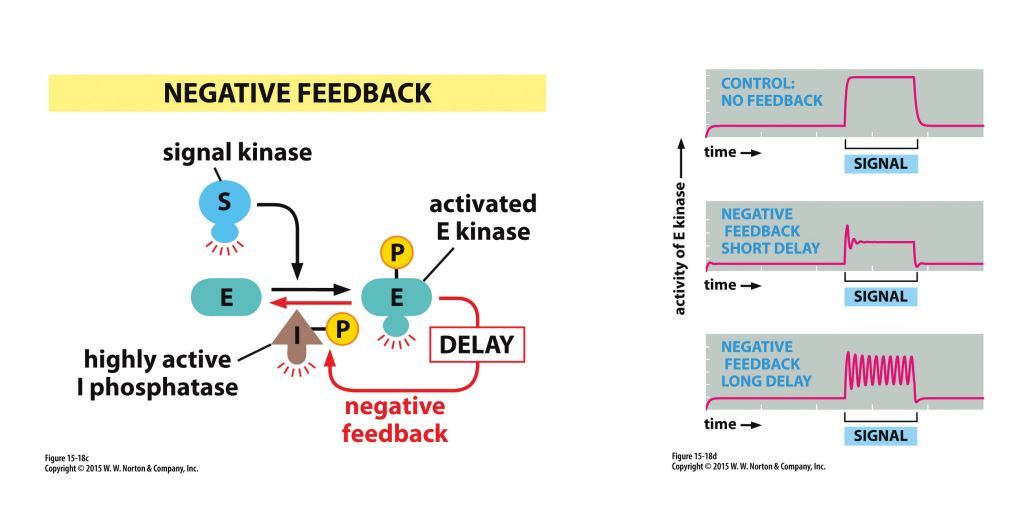
negative feedback loop
- response pattern depends on delay in negative feedback
1. activated E kinase phosphorylates and activates the I phosphatase, increasing the rate at which the phosphatase dephosphorylates and inactivates the phosphorylated E kinase
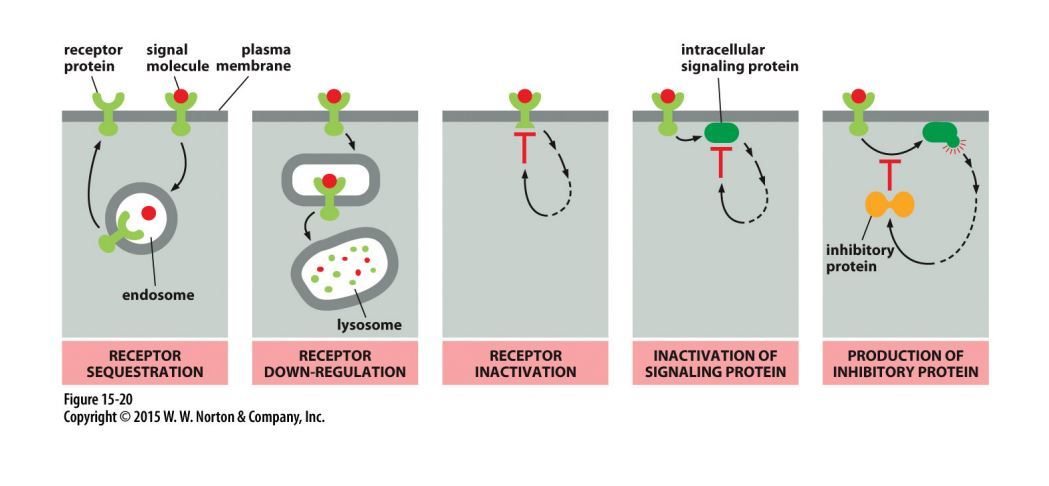
desensitization
- allows cells to detect a change in the signal concentration
- this allows cells to respond over a wide range of signal concentration
- cells aren’t responding to an absolute amount of signal, but changes in signal
- cells adapt to the signal
Target cell desensitization example!
*these mechanisms operate at level of the receptor and often involve phosphorylation or ubiquitylation of the receptor proteins
- receptor sequestration
- receptor down-regulation
- receptor inactivation
- inactivation of signaling protein
- production of inhibitory protein
G-protein-coupled receptor pathway
- signal molecular binds the receptor
- signal is relayed across plasma membrane to activate a G protein
- G protein activates downstream effectors
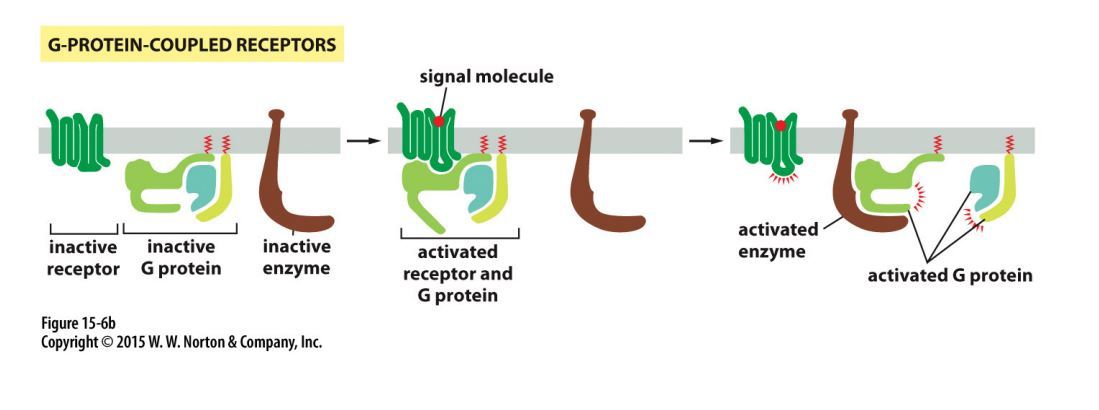
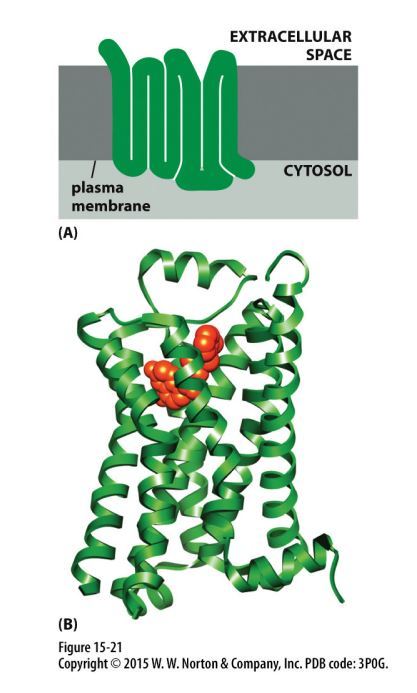
G-protein-coupled receptor facts
- GPCR does NOT have enzymatic activity itself :(
- GPCR are multipass transmembrane receptors
- 7 membrane-spanning domains
- binding of signal changes the way the helices interact with each other
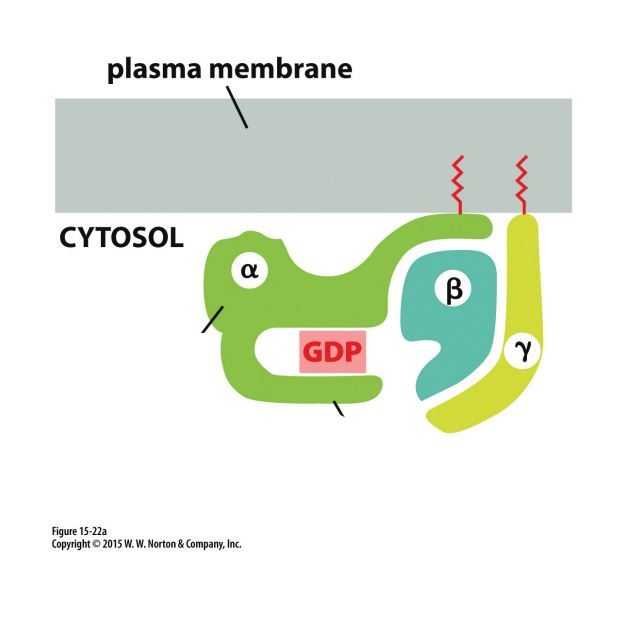
Hetero-trimeric G protein
- has 3 components: alpha, beta, gamma that exist as a complex
- alpha subunit binds GTP/GDP
- associates with the membrane
- alpha and gamma subunits have covalent attachments to lipids
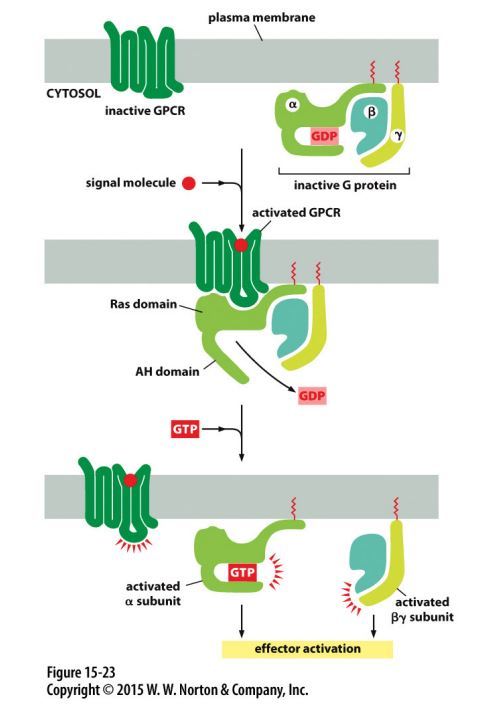
Activation of a G protein by an activated GPCR
- signal binds to receptor
- receptor binds to G protein
- this causes GDP to dissociate and then GTP can bind
- G protein is now activated, so alpha subunit is unbound from other subunits
- activated G protein subunits can now activate downstream effector proteins
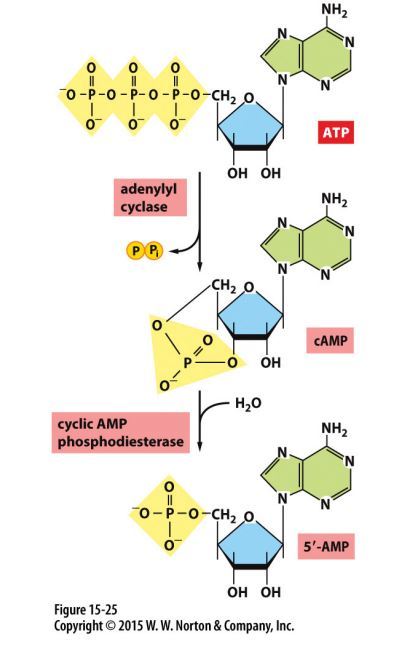
adenylyl cyclase
converts ATP to cAMP
activating adenylyl cyclase
active G protein alpha (Gs) often activates adenylyl cyclase
- adenylyl cyclase = ATP to cAMP
- other signals can activate a G protein that inhibits adenylyl cyclase (Gi)
- Balance between stimulation (through Gs) and inhibition (through Gi) of adenylyl cyclase that dictates how much cAMP this is in the cell
Gs
stimulates enzyme (adenylyl cyclase)
more cAMP
Gi
inhibits enzyme (adenylyl cyclase)
less cAMP
cholera toxin
modifies Gs
adds an ADP-ribose to Gs
In this form, Gs can’t hydrolyze GTP to GDP
Pertussis toxin
modifies Gi (pertussis = G<strong>i</strong>)
adds an ADP-ribose to Gi
In this form, Gi can’t interact with its receptor
cAMP is a common second messenger
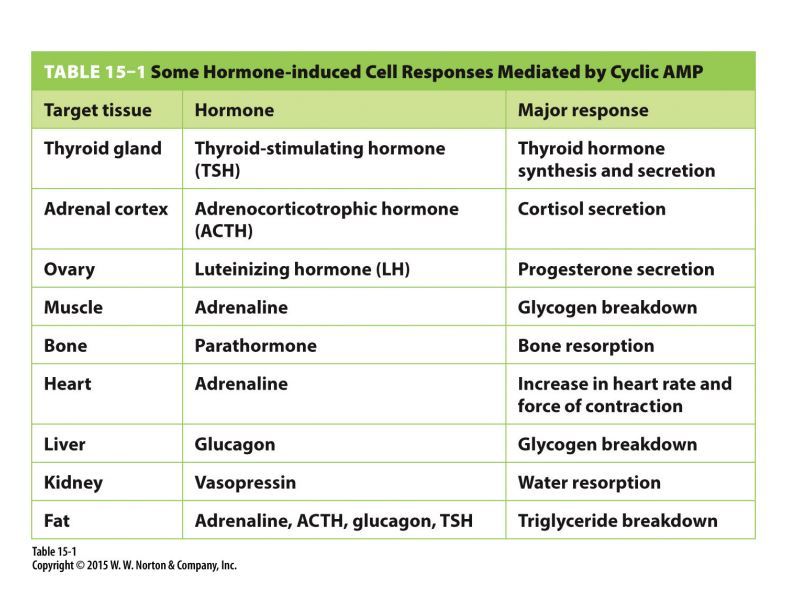
cAMP activates….
cAMP activates Protein Kinase A (PKA)
cAMP activation of PKA
- PKA phosphorylates serine/threonine residues
- in its inactive form, PKA is 4 subunits:
- 2 inactive catalytic subunits
- 2 regulatory subunits (each has 2 cAMP binding sites)
- When each regulatory subunit binds to 2 cAMP, the active catalytic subunits dissociate (due to a conformational change)
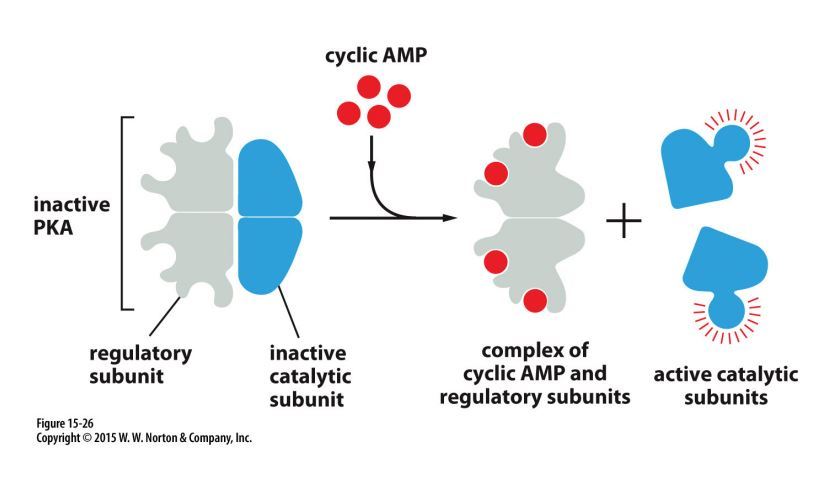
4 cAMPs lead to activation of PKA catalytic subunits
what type of response (think graph)?
sigmoidal!!
example of PKA activity and regulation
cardiac muscle!!
- PKA activity is kept low by phosphodiesterase
- cAMP levels rise in response to a signal, which activates PKA
- PKA activates phosphodiesterase to lower cAMP concentration



