3-1.1 Kinds of Airplane Operation
- Day and night operations
- VFR and IFR
- Flight in icing conditions
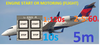
- The airplane is certified for ditching when the safety equipment specified by the applicable regulations is installed.
- The airplane is certified capable of RVSM operations
3-1.1 Kinds of Airplane Operation
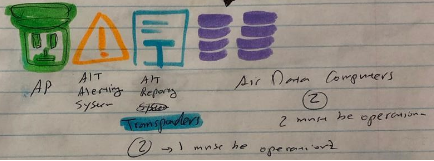
RVSM REQUIRED EQUIPMENT LIST
EQUIPMENT: REQUIREMENTS FOR RVSM
AUTOPILOT (1): MUST BE OPERATIONAL
ALTITUDE ALERTING SYSTEM: MUST BE OPERATIONAL ALTITUDE REPORTING TRANSPONDER (2): ONE (1) MUST BE OPERATIONAL
AIR DATA COMPUTERS (2) TWO : (2) MUST BE OPERATIONAL
Memory Item - Double Boxed
3-2 STRUCTURAL WEIGHT LIMITATIONS
CRJ700 Structural Weight Limitations
CRJ900 Structural Weight Limitations
CRJ550 Structural Weight Limitations
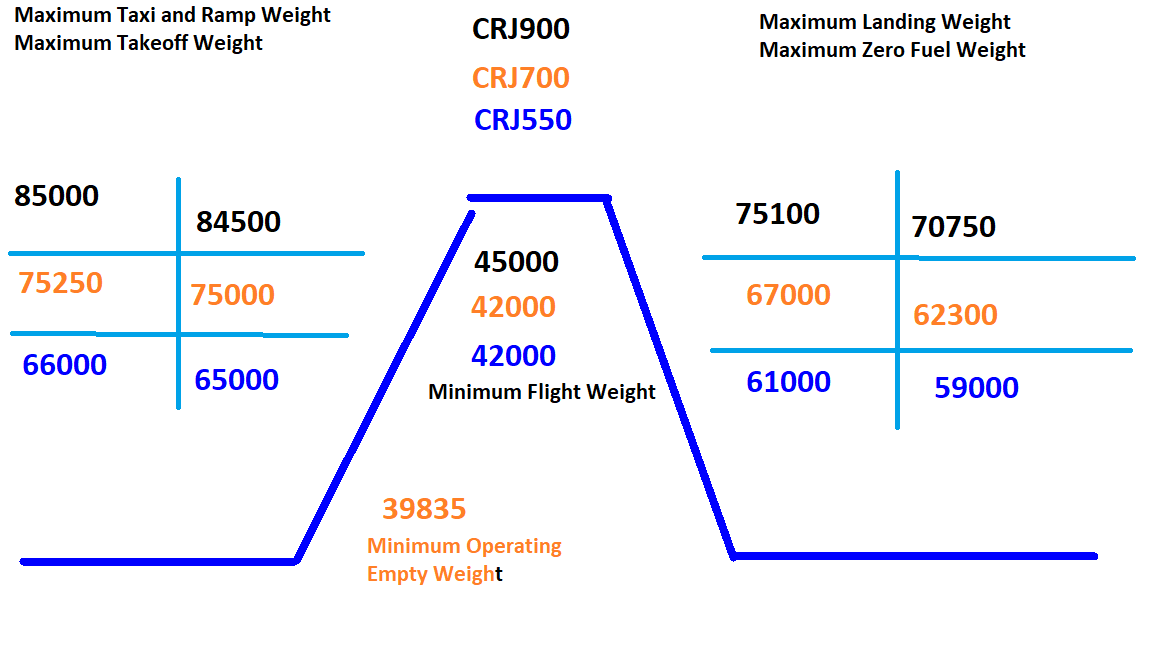
CRJ 900, 700, 550
Maximum Taxi and Ramp Weight 85,000 lbs==75250==66000
Maximum Takeoff Weight 84,500 lbs==75000===65000
Maximum Landing Weight 75,100 lbs==67000==61==
Maximum Zero Fuel Weight 70,750 lbs==62300==59000
Minimum Flight Weight 45,000 lbs==42000==42000
====================================
Minimum Operating Empty Weight 39,835 lbs (only crj700)
===================================
Note: The maximum takeoff weight (MTOW) and/or maximum landing weight (MLW) may be further limited due to performance consideration(s).
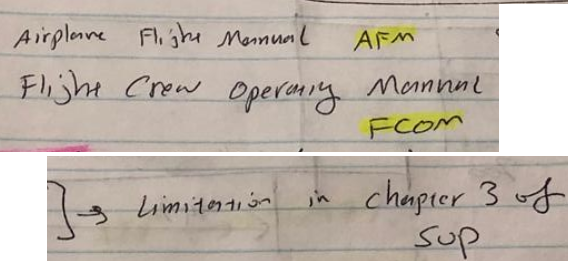
The information presented in this chapter (chapter 3 of sop - limitations) contains limitations that have been extracted from the
Aircraft Flight Manual (AFM) and
Flight Crew Operating Manual (FCOM).
The limitations in this chapter are not all inclusive.
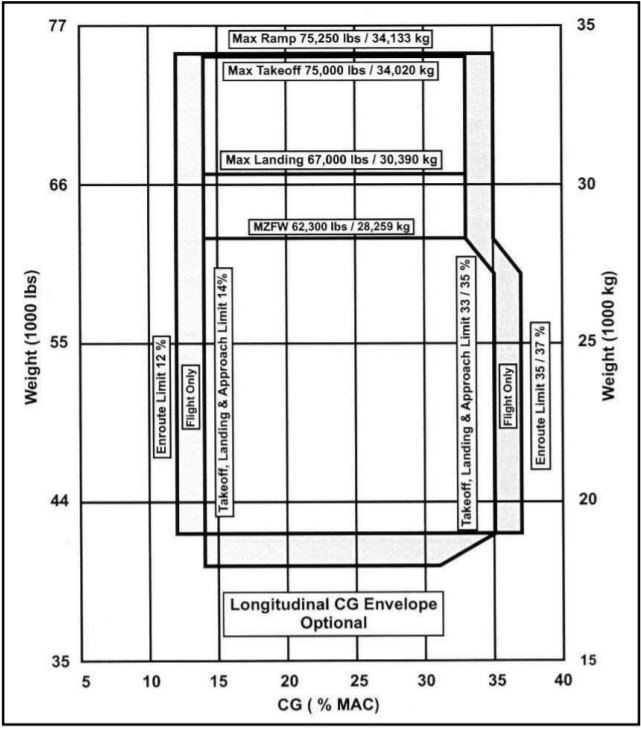
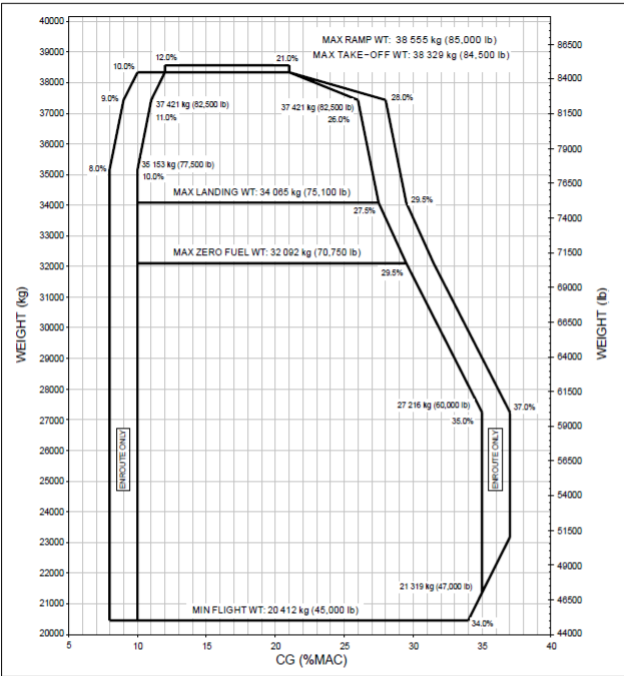
3-3.1 CRJ700 Center-of-Gravity Limits
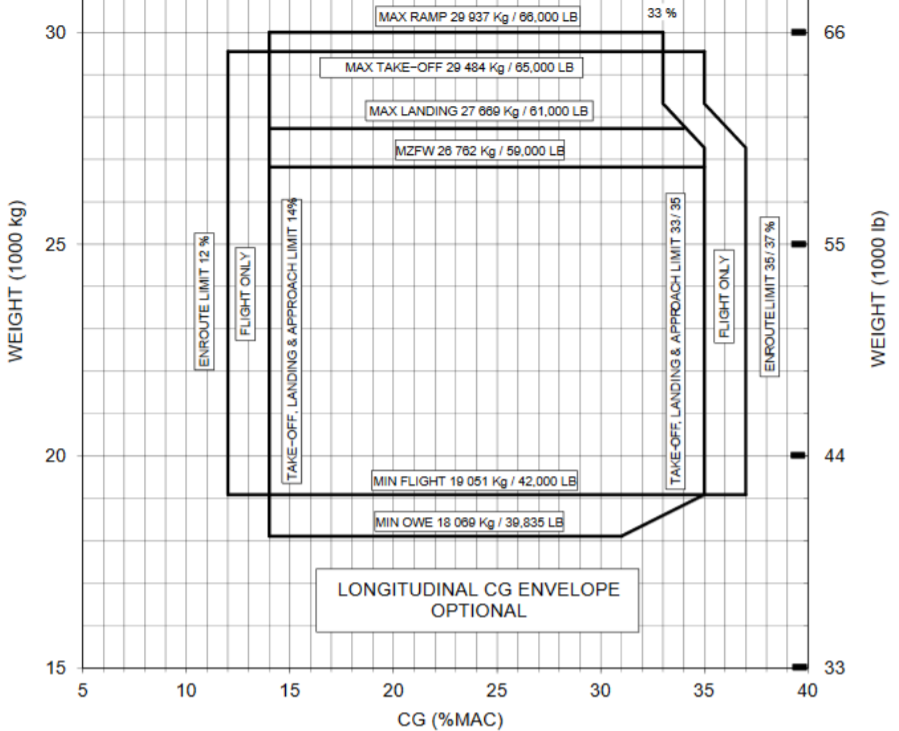
3-3.2 CRJ550 Center-of-Gravity Limits
3-3.3 CRJ900 Center-of-Gravity Limits
3-4 ALTITUDE AND TEMPERATURE OPERATING LIMITS
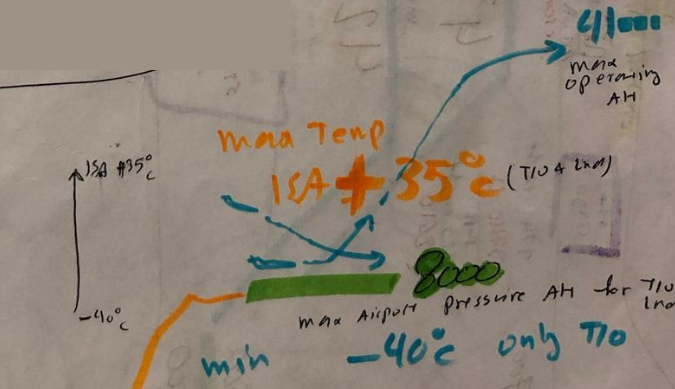
- Maximum airport pressure altitude for takeoff and landing
Maximum airport pressure altitude for takeoff and landing is 8,000’
3-4 ALTITUDE AND TEMPERATURE OPERATING LIMITS
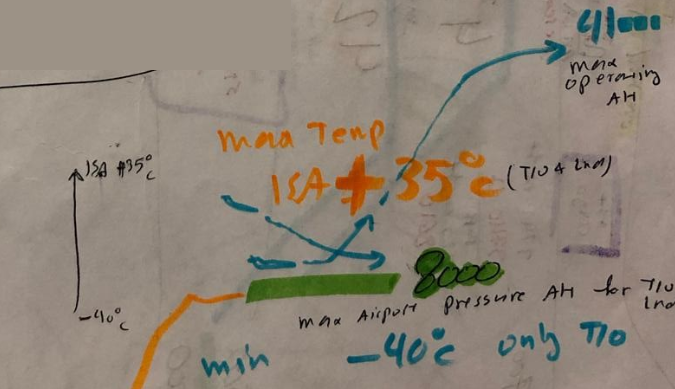
- Maximum operating altitude
Maximum operating altitude is 41,000’
3-4 ALTITUDE AND TEMPERATURE OPERATING LIMITS
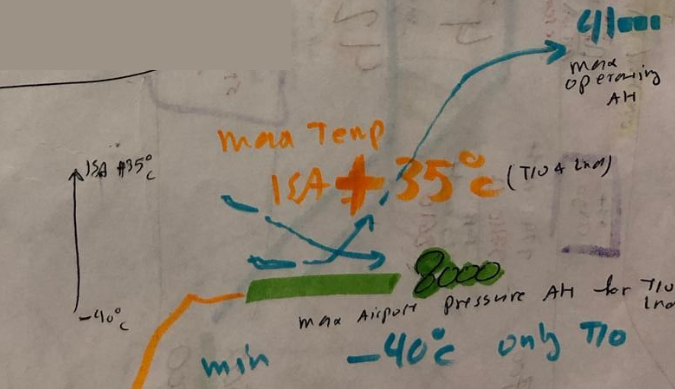
- The maximum ambient air temperature approved for takeoff and landing
The maximum ambient air temperature approved for takeoff and landing is ISA +35°C.
3-4 ALTITUDE AND TEMPERATURE OPERATING LIMITS
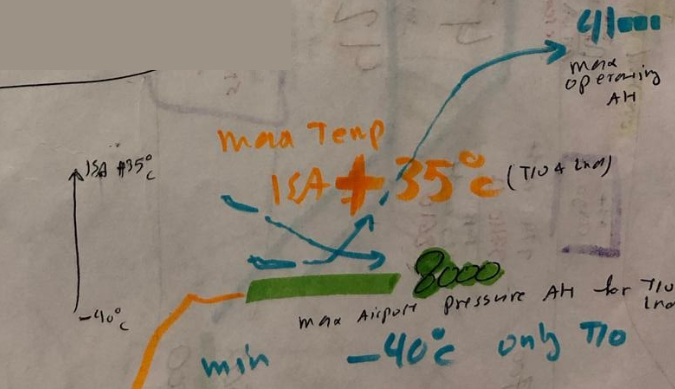
- The minimum ambient temperature approved for takeoff
The minimum ambient temperature approved for takeoff is -40°C (-40°F).
Memory Item - Double Boxed
3-5 OPERATION IN ICING CONDITIONS
3-5.1 Cowl Anti-Ice System
3-5.1.1 Ground Operations
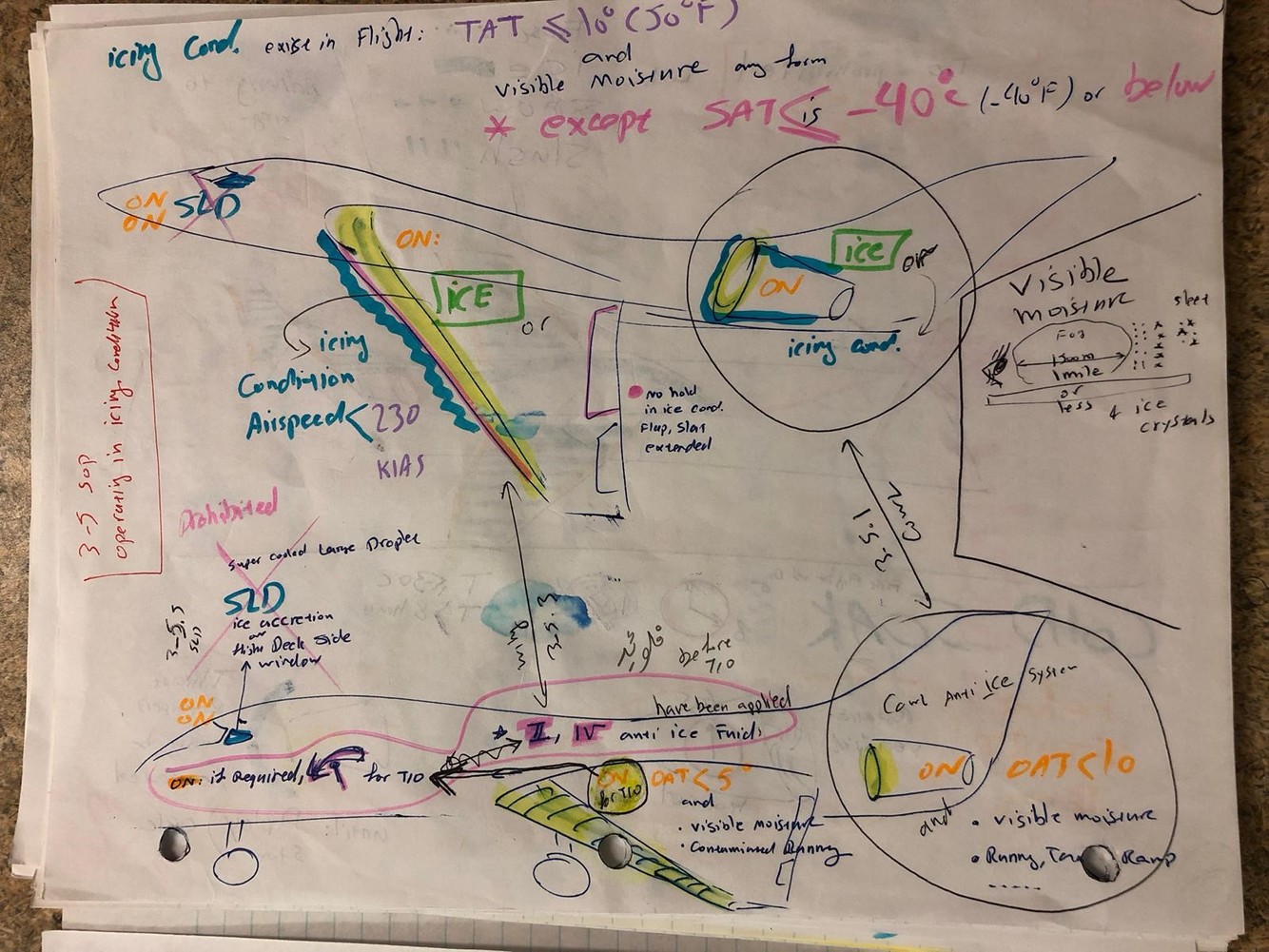
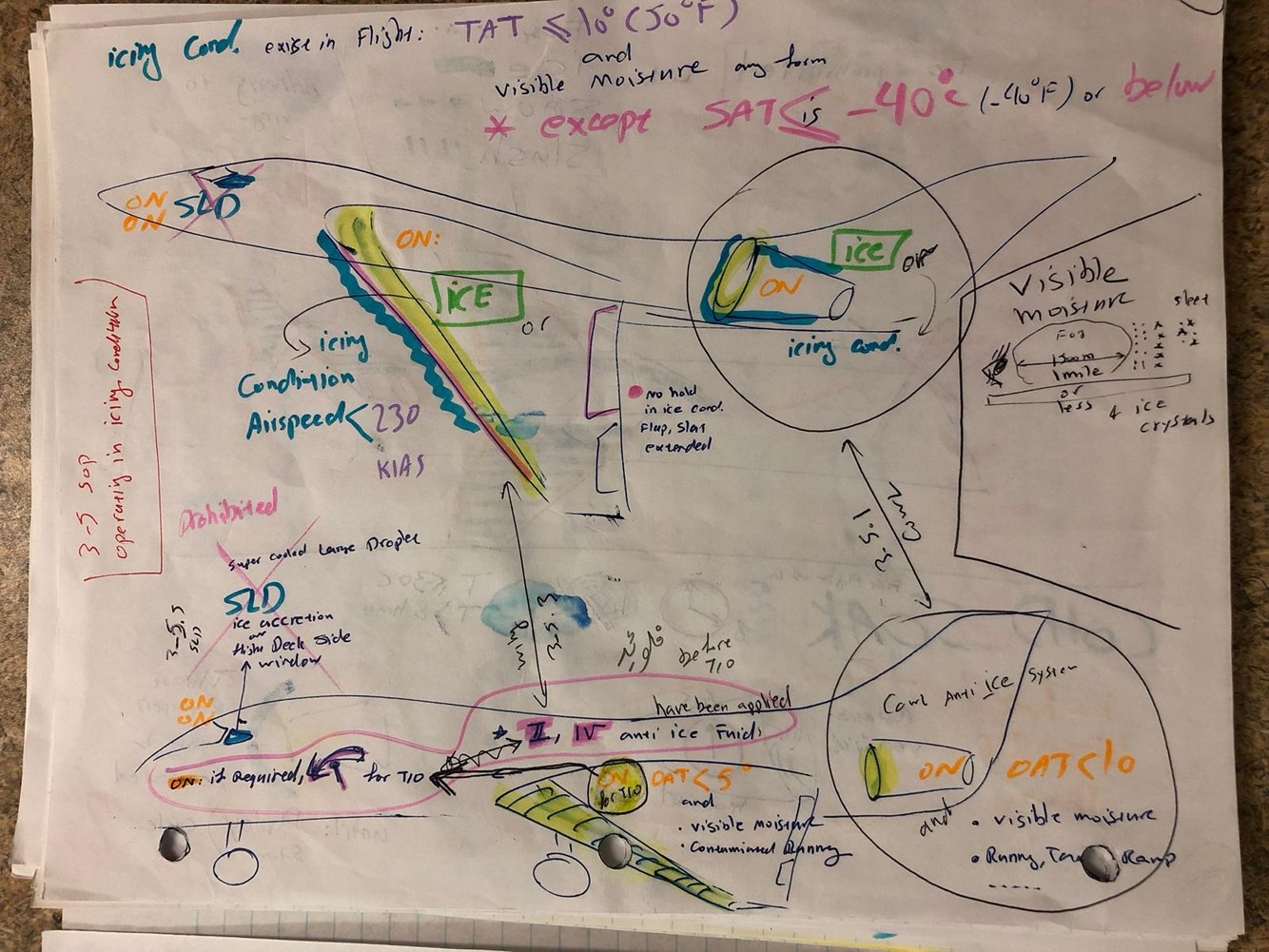
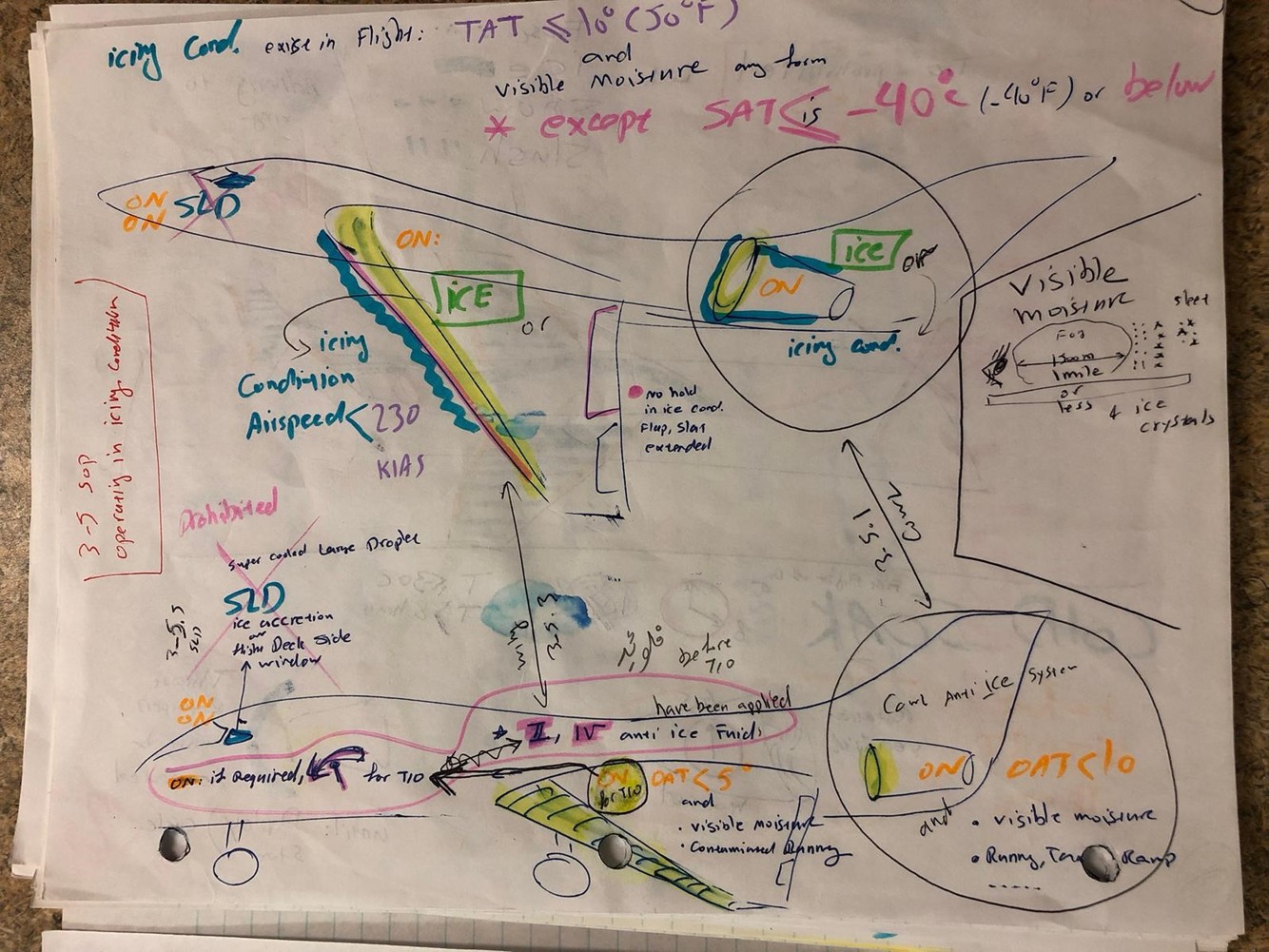
Cowl anti-ice system must be ON when the OAT is 10°C (50°F) or below:
- and visible moisture in any form is present (such as fog with visibility of 1,500 meters [1 mile] or less, rain, snow, sleet and ice crystals)
- when operating on runways, ramps or taxiways where surface snow, ice, standing water, or slush is present
Memory Item - Double Boxed
3-5 OPERATION IN ICING CONDITIONS
3-5.1 Cowl Anti-Ice System
3-5.1.3 Flight Operations
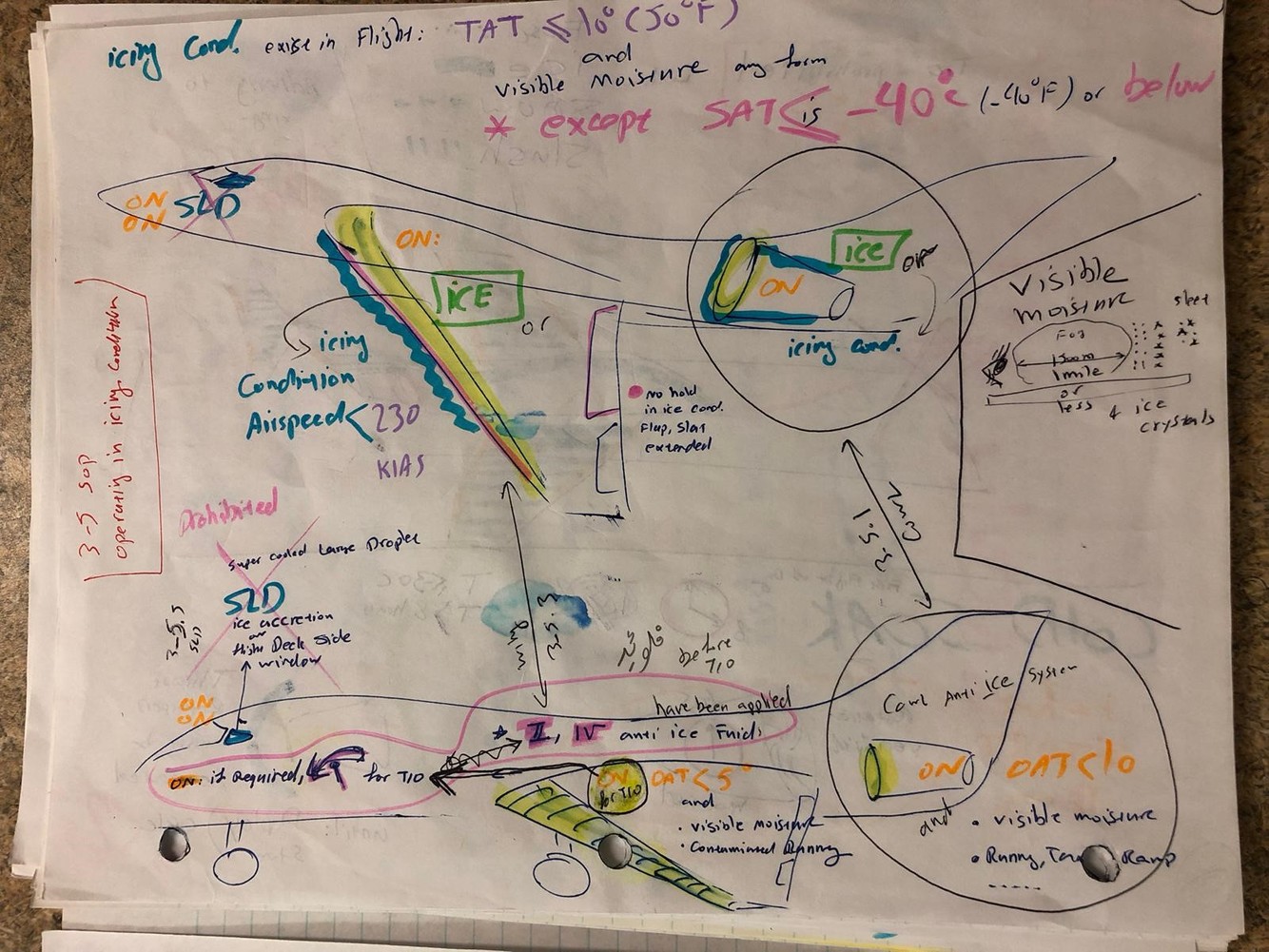
Icing conditions exist in-flight at a TAT of 10°C (50°F) or below, and visible moisture in any form is encountered (such as clouds, rain, snow, sleet or ice crystals), except when the SAT is -40°C (-40°F) or below.
The engine cowl anti-ice system must be ON when:
- in icing conditions, or
- ICE is annunciated by the ice detection system
Memory Item - Double Boxed
3-5 OPERATION IN ICING CONDITIONS
3-5.3 Wing Anti-Ice System
3-5.3.1 Ground Operations
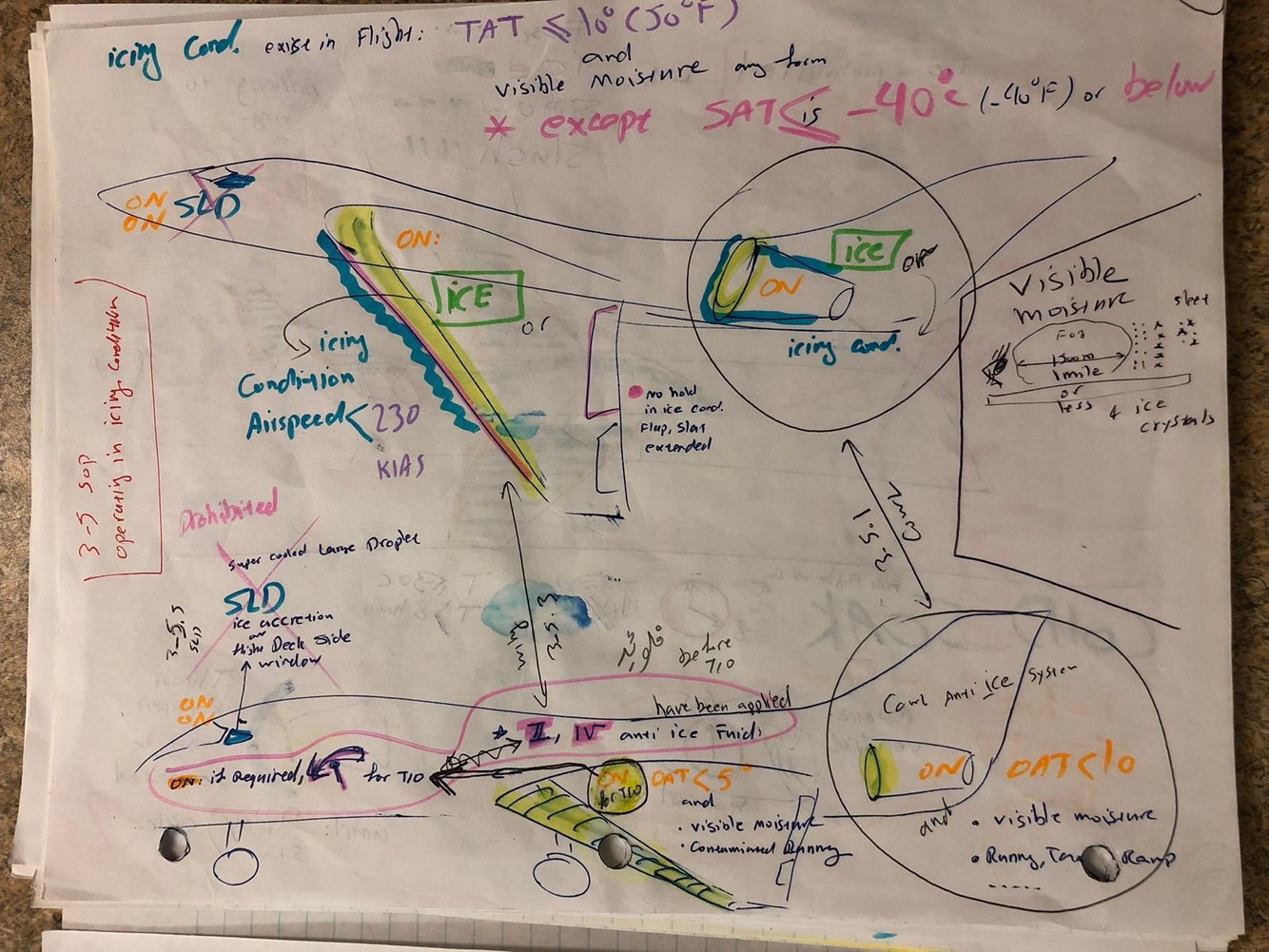
Wing anti-ice system must be ON for takeoff when the OAT is 5°C (41°F) or below and:
- visible moisture in any form is present (such as fog with visibility of 1,500 meters [1 mile] or less, rain ,snow, sleet and ice crystals)
- the runway is contaminated with surface snow, slush or standing water
When Type II or Type IV anti-icing fluids have been applied:
• wing anti-ice system must only be selected ON, if required, just prior to thrust increase for takeoff
Memory Item - Double Boxed
3-5 OPERATION IN ICING CONDITIONS
3-5.3 Wing Anti-Ice System
3-5.3.3 Flight Operations
Icing conditions exist in-flight at a TAT of 10°C (50°F) or below, and visible moisture in any form is encountered (such as clouds, rain, snow, sleet or ice crystals), except when the SAT is -40°C (-40°F) or below.
The wing anti-ice system must be ON when:
- ICE is annunciated by the ice detection system, or
- in icing conditions and the airspeed is less than 230 KIAS
NOTE Do not hold in icing conditions with Slats/Flaps extended.
Memory Item - Double Boxed
3-5 OPERATION IN ICING CONDITIONS
3-5.5 Supercooled Large Droplet Icing
Continued operation in areas where supercooled large droplet (SLD) icing conditions exist is prohibited.
SLD icing conditions are indicated by ice accretion on the flight deck side windows.
- wing and cowl anti-icing systems must be ON in SLD icing conditions
- leave icing conditions when side window icing occurs
Memory Item - Double Boxed
3-6 COLD WEATHER OPERATIONS
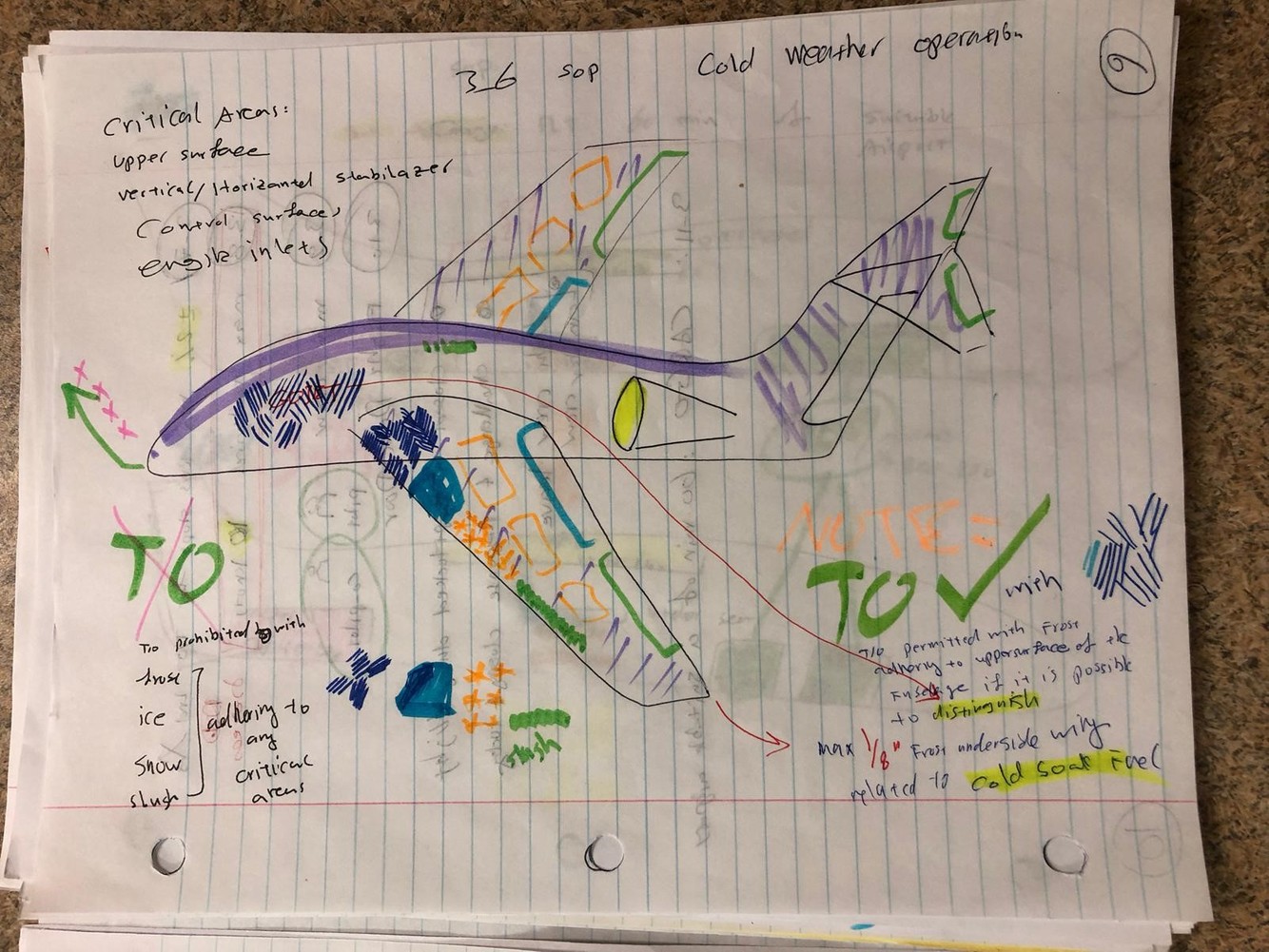
Take-off is prohibited with frost, ice, snow or slush adhering to any critical areas (wings, upper fuselage, horizontal stabilizer, vertical stabilizer, control surfaces, and engine inlets).
3-6 COLD WEATHER OPERATIONS
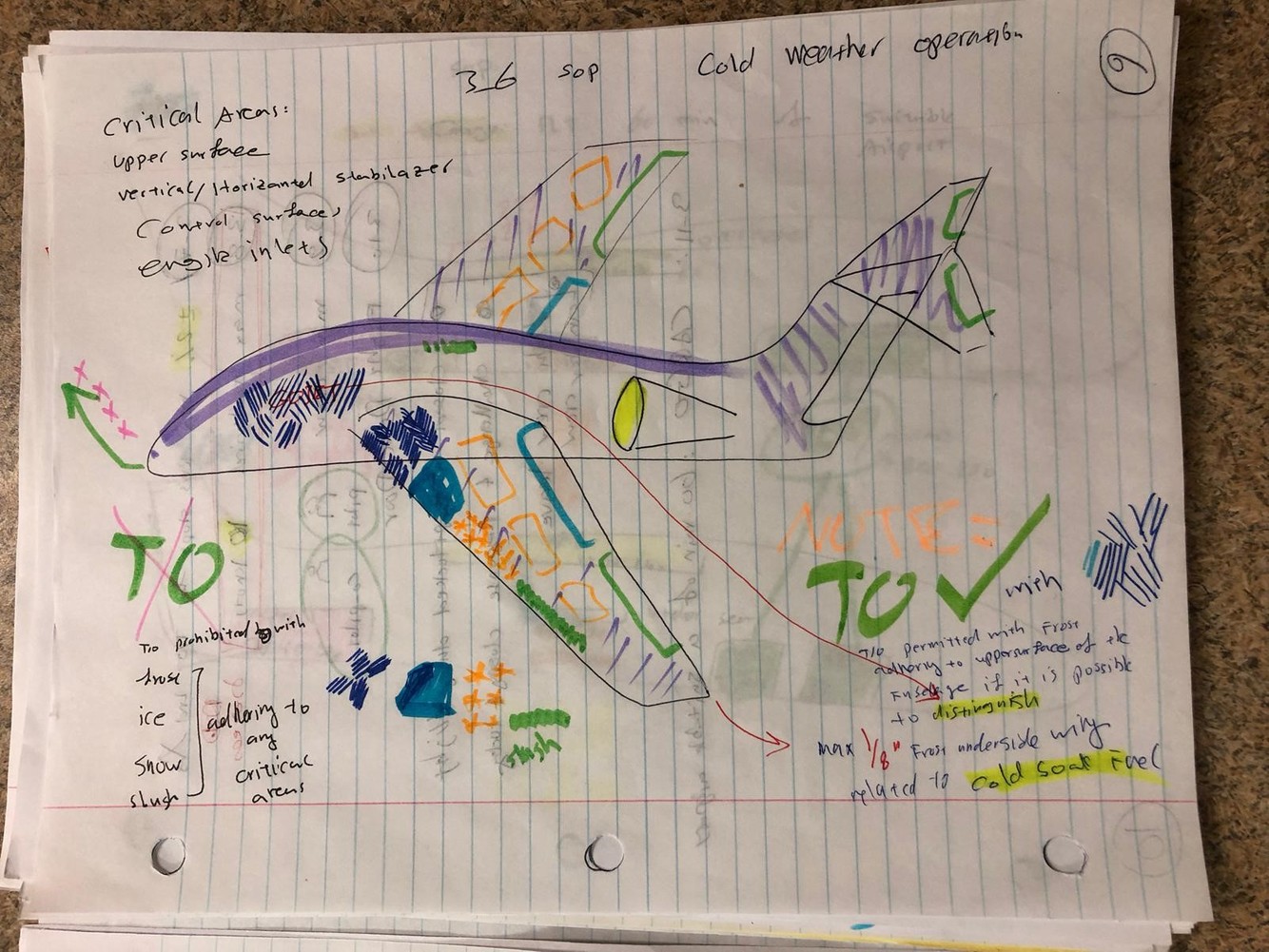
Takeoff is permitted with frost adhering to:
• The upper surface of the fuselage if it is possible to distinguish surface features. See WOP 2.13.1;
and/or
• Maximum 1/8 in (3.0 mm) layer of frost on the underside of the wing that is caused by cold soaked fuel.
Comprehensive procedures for operating in cold weather are provided in the WOP.
3-7 RUNWAY SLOPES
The maximum runway slopes approved for takeoff and landing are:
- +2% (uphill)
- -2% (downhill)
Memory Item - Double Boxed
3-8 TAILWIND CONDITIONS
The maximum tailwind component approved for takeoff and landing is ====== knots.
10 knots.
3-9 MINIMUM FLIGHT CREW
The minimum flight crew is
one (1) pilot and one (1) copilot.
3-10 FLIGHT DECK DOOR
- The flight deck door must be kept closed and locked at all times during flight except to permit access and egress in accordance with the approved procedures for opening, closing and locking the door.
- Any time the flight deck door is opened in-flight, a challenge and response closing and locking verification must be used to verify that the door is closed and locked.
- Any time one of the required flight crew leaves the flight deck another crew member must be present in the flight deck to ensure that the required crew member is not locked out of the flight deck.
3-11 CARGO
Flight must be within ==== minutes of a suitable airport, if cargo is carried in any ===========
Flight must be within 60 minutes of a suitable airport, if cargo is carried in any labeled cargo compartment.
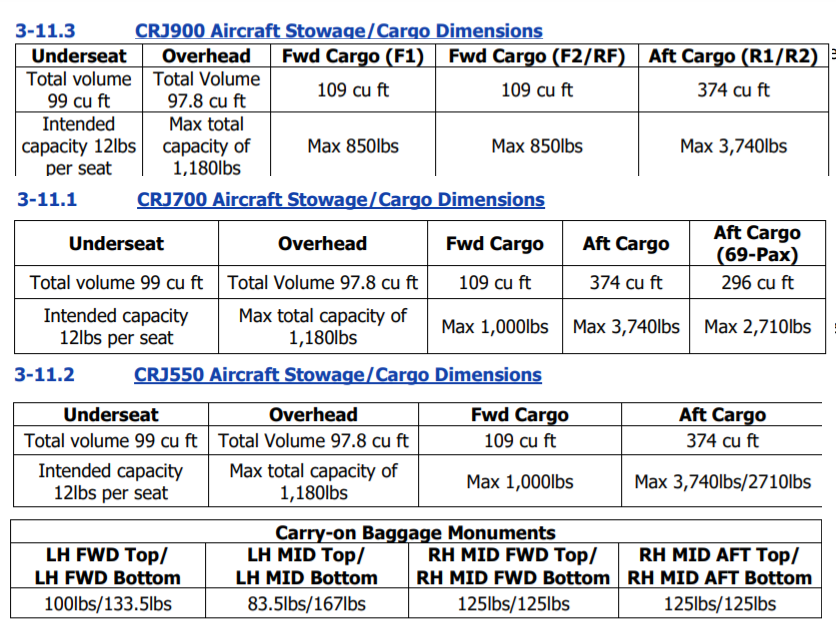
Aircraft Stowage/Cargo Dimensions
3-11 CARGO