Irritation Fibromas
Composed of
Etiology
Clinical features ;Color
Location
Treatment
- AKA – Fibroma, Traumatic Fibroma
- Composed of dense, scar-like, fibrous connective tissue
- Occurs as a result of chronic trauma
- Clinical Features: Exophytic lesion
- Usually less than a centimeter in diameter
- Color: lighter pink than surrounding mucosa,the surface can be white sometimes bc it’s rubbing and bumping into other oral structures (like teeth), so they get surface keratinization
- Locations: buccal mucosa, tongue, lips, gingiva
- Very common; totally benign soft lesion
- Treatment: You don’t have to remove them, but the surgical Tx = to excise them bc pts will stop biting them and they’ll heal and stop the irritation
What is this clinical finding?
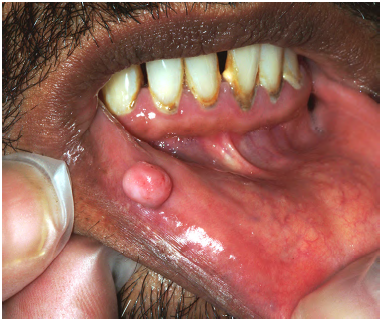
Irritation Fibromas
What is this clinical finding?
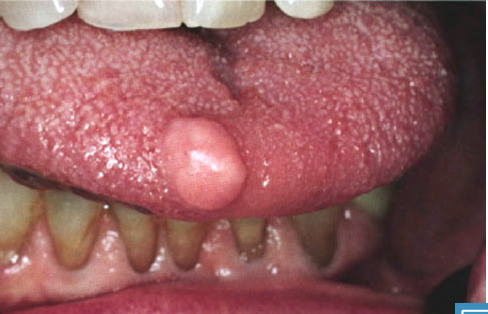
Irritation Fibromas
What is this clinical finding?
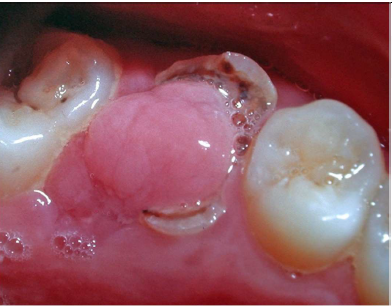
Chronic Hyperplastic Pulpitis (pulp polyp)
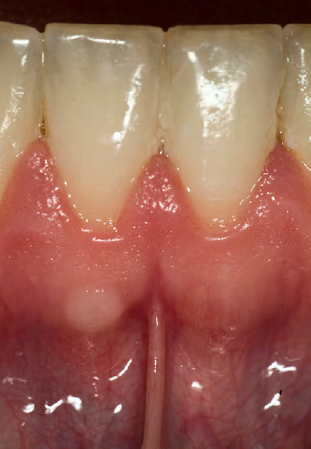
Giant Cell Fibroma
Chronic Hyperplastic Pulpitis
What is it?
Location?
Age?
Clinical Appearance?
Treatment?
• AKA: pulp polyp
• An e_xcessive proliferation of chronically inflamed dental pulp tissue_ – granulation tissue/ fibrous tissue with inflammatory cells (like a little fibroma that
occurs from pulp tissue) ( benign soft tissue leasion)
• Location:
• Teeth with large, open carious lesions
• Primary or permanent molars
• Age: Children & young adults
• Clinical Appearance: A red or pink nodule of soft tissue protruding from the
pulp chamber and fills the entire cavity of the tooth
• Treatment: RCT or extraction of tooth
Giant Cell Fibroma
- Very small form of fibrous tumour that show giant cells
- Age: relatively rare in paediatric patients.
- Clinically it is presented as a painless, sessile, or pedunculated growth which is usually confused with other fibrous lesions like irritation fibromas or Retrocuspid papilla
- Location: Largely occur on lower gingivae and on palate\
What are these clinical findings (what is the name of the syndrome or complex?)
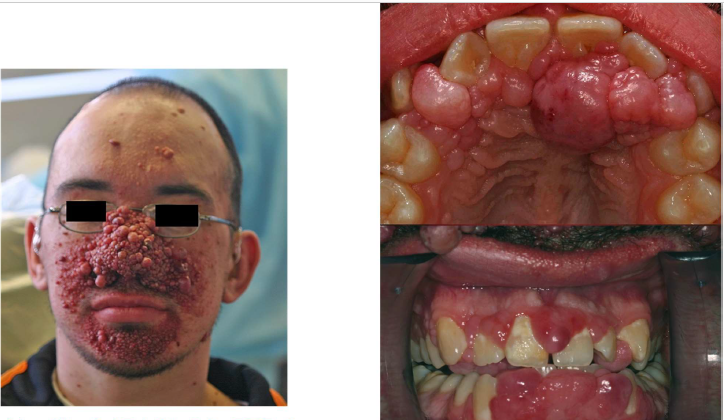
Tuberous sclerosis complex
we see A lot of gingival enlargement – is this overgrowth from disease or from seizure medication? Multi organ system involvement
What is this clinical finding?
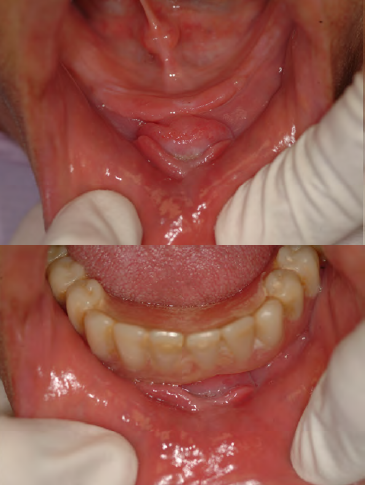
Epulis Fissuratum
Cowden Syndrome
- (multiple hamartoma and neoplasia syndrome)
- • Autosomal dominant disorder affecting multiple organ systems
- • Caused by mutations in the phosphatase and tensin homolog gene (PTEN, a tumor suppressor gene)
- • Oral and perioral findings include
- *multiple papules on the lips and gingivae,**
- papillomatosis (benign fibromatosis) of the buccal, palatal, faucial, and oropharyngeal
- mucosae often producing a “cobblestone” effect, and the tongue may also present as pebbly or fissured.
- • Multiple papillomatous nodules (histologically inverted follicular keratoses or
- trichilemmomas) are often present on the perioral, periorbital, and perinasal skin, the pinnae of the ears, and neck.
- • These nodules are often accompanied by lipomas, hemangiomas, neuromas, vitiligo, café au lait spots, and acromelanosis .
- • A variety of neoplastic changes occur in the organs exhibiting hamartomatous lesions,with an increased rate of breast and thyroid carcinoma and gastrointestinal malignancy.
- Squamous cell carcinoma of the tongue and basal cell tumors of the perioral skin have also been reported.
- Incredibly rare ( board loves it)
What is this clinical finding?
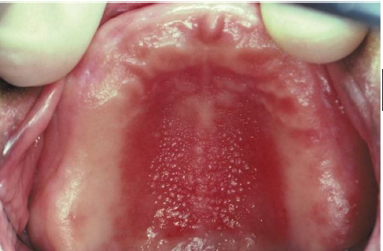
Inflammatory Papillary Hyperplasia of the Palate
What is these clinical findings? (what is the name of the syndrome or complex?)
Cowden Syndrome
Very rare!
Tuberous sclerosis complex
• is an inherited disorder caused by mutations in the tuberous sclerosis complex (TSC1 or TSC2) genes
• Characterized by seizures and mental retardation associated with hamartomatous glial proliferations and neuronal deformity in the central nervous system.
• Fine wart-like lesions (adenoma sebaceum) occur in a butterfly distribution over the cheeks and forehead, and histologically similar lesions (vascular fibromas) have been described intraorally.
• Characteristic hypoplastic enamel defects (pitted enamel hypoplasia)
occur in 40 to 100% of those affected.
• Rhabdomyoma of the heart and other hamartomas of the kidney,
Epulis Fissuratum
AKA
Cause
Location
Clinical presentation
Composed of
Treatment
• AKA: denture-induced fibrous hyperplasia, fibrous inflammatory hyperplasia
• Cause: ill-fitting denture
• Location: vestibule (maxilla or mandible), along the
denture border
•Clinical presentation: Arranged in elongated folds of tissue into which the
denture flange fits; • Surface ulceration within the folds is common
• Composed of dense fibrous connective tissue
• Treatment: surgical excision (scalpel vs CO2 laser -laser is better)
and reline then remake of denture
What is the clinical finding?
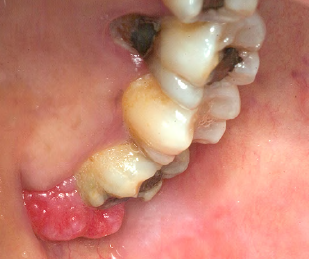
Pyogenic Granuloma
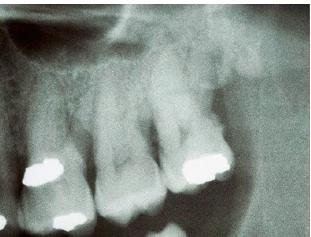
We can see the corresponding radiograph;
-although the radiograph suggests generalized bone loss, there is a lot of calculus on
the distal of #16 > it makes sense that this is a pyogenic granuloma
What is this clinical finding?
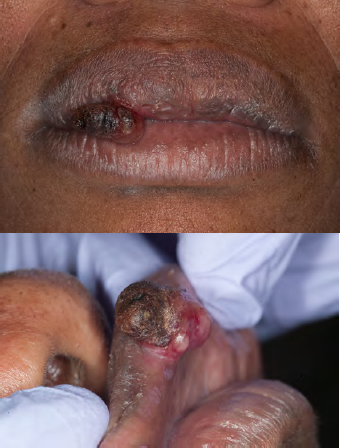
Pyogenic Granuloma:
Pyogenic Granuloma
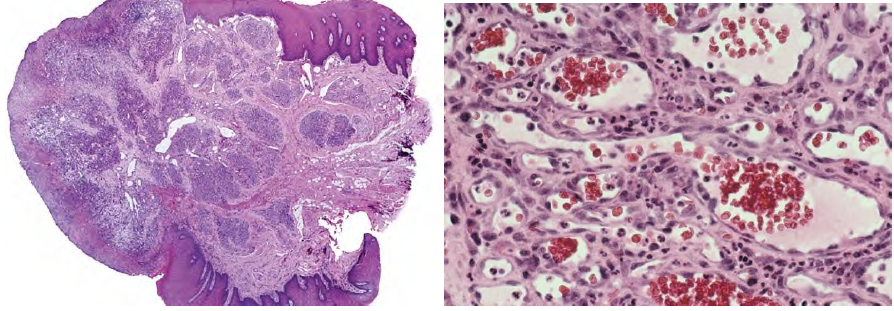
Histology
They are filled with blood vessels so they’re very very rich
in vascularization > they tend to bleed easily
What is this clinical finding?
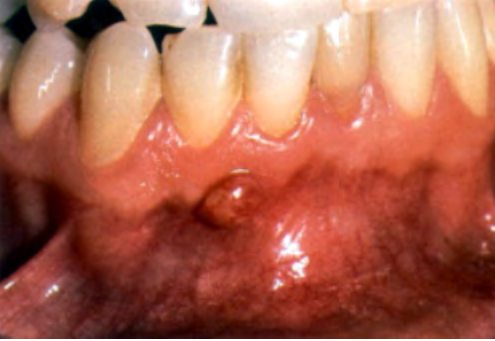
A parulis
It is not a pyogenic granuloma
A parulis is a proliferation of granulation tissue at the opening of a sinus tract
When the infection breaks through the alveolar bone and presents itself,
it will sometimes cause this proliferation of granulation tissue
Inflammatory Papillary Hyperplasia of the Palate
Majority occur with what disease?
Associated with what?
Clinical appearance
Treatment
- Majority occur with denture stomatitis
- Associated with a removable full or partial denture or orthodontic
- appliance (Something you see in patients who wear denture all the time, don’t take it out, chronic denture wear)
- Clinical Appearance: Palatal vault is covered by multiple erythematous papillary projections (fibrous connective tissue surfaced by epithelium) –(papillary but no papilla, instead it’s bumpy and bosselated)
- Granular or cobblestone appearance
- Erythema is usually due to superinfection with candida
- Treatment:Treat underlying candidiasis, fix denture. These bumps can be removed, take electrosurgery loop, and scrape off the bumps – heals well
What is this clinical finding?
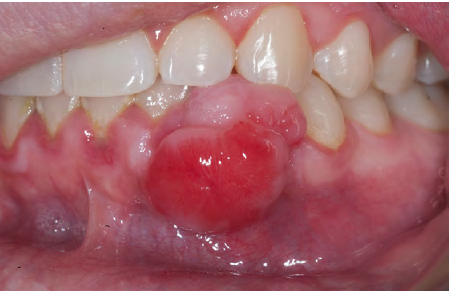
Peripheral Ossifying or Cementifying Fibroma
Lesion in the image is pedunculated – put a periodontal probe on normal gingiva and glide along underneath it, there’s a stalk
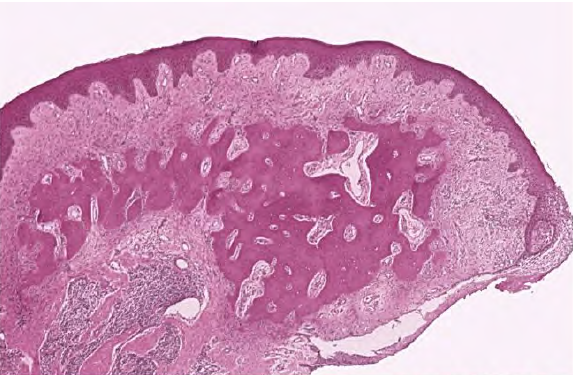
Peripheral Ossifying Fibroma
Histology
- When sessile, when removing it, take scalpel blade and just cut into it
- If has a little bone or cementum formation inside it, you can feel the bone with the scalpel
What is this clinical finding?
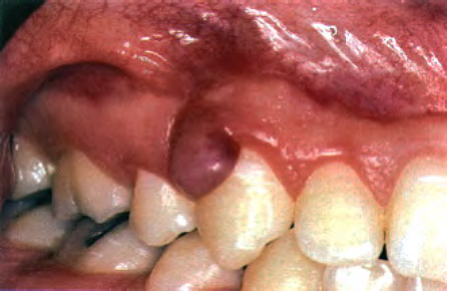
Peripheral Giant Cell Granuloma
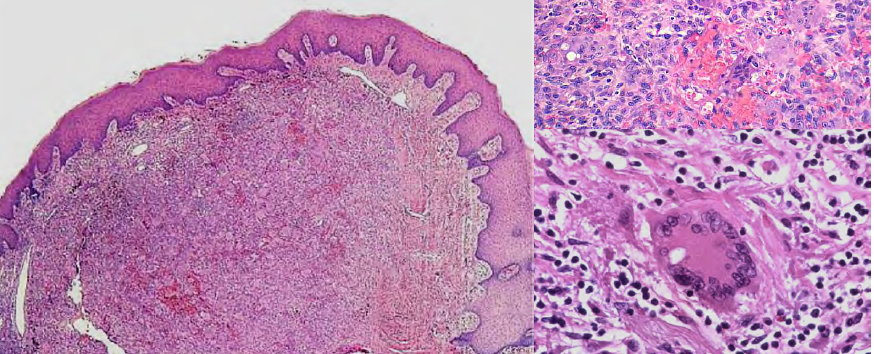
Peripheral Giant Cell Granuloma
Histology
Giant cells inside the lesion
What are the 3P
or 4P?
• Pyogenic granuloma/pregnancy tumor
• Peripheral ossifying**_or_**cementifying fibroma
• Peripheral giant cell granuloma
• Peripheral fibroma (4P)
Memorize these well!
All benign soft tissue lesions


-
Non Odontogenic Cysts45
-
Pseudocysts53
-
Soft Tissue Cysts of the Neck45
-
HTC (COMBINED)623
-
Oral Manifestations of Systemic Disease194
-
Malignant Non –Odontogenic Tumors of the Jaw Bones80
-
Benign Odontogenic Tumors COPY132
-
Soft Tissue Cysts of the Neck COPY35
-
Pseudocysts COPY44
-
Odontogenic Cysts154
-
Non Odontogenic Cysts COPY37
-
Infectious diseaes Kumar265
-
Infectious diseaes Kumar COPY326
-
all1361
-
More diseaess88
-
Images, etiologies, and treatments of most diseases1100
-
Immunological diseases Kumar60
-
Images, etiologies, and treatments of most diseases COPY1166
-
Images, etiologies, and treatments (random order)1166
-
Smoking Cessations Kerr!26
-
Differential diagnosis ( kumar's review and Neviel Book)101
-
STC496
-
More diseaess-Kerr, Dry mouth100



