What is the primary objective of SWITCH 2?
confirm superiority of Tresiba+OADs vs. glargine+OADs in terms of rates of severe or blood glucose-confirmed symptomatic hypoglycemia during the maintenance period (weeks 16 to 32).
The primary objective of SWITCH 2 was to confirm __________________ of Tresiba+OADs vs. glargine+OADs in terms of rates of severe or blood glucose-confirmed symptomatic hypoglycemia during the maintenance period (weeks 16 to 32).
superiority
In SWITCH 2, what type(s) of hypoglycemia was primarily being studied?
rates of severe OR blood glucose-confirmed symptomatic hypoglycemia during the maintenance period (weeks 16 to 32). NOTE: nocturnal hypo was a secondary objective.
A1c ________________ was a prerequisite in both treatment periods of SWITCH 1 & 2.
noninferiority
The secondary objective of SWITCH 2 was to confirm the superiority of Tresiba+OADs vs. glargine+OADs in terms of 1._____________ or 2.___________________ hypoglycemia and percent of patients experiencing at least 3._____ episode of 4._______________ hypoglycemia in the maintenance period (weeks 16 to 32).
- severe
- blood glucose-confirmed symptomatic nocturnal
- one
- severe
How many patients participated in SWITCH 2?
721 adult patients
What type of clinical trial was SWITCH 1 & 2?
double-blind, cross-over, treat-to-target multicenter clinical trial
What type of diabetes did patients in SWITCH 2 have?
Type 2
True or False: patients enrolled in SWITCH had to be at increased risk for hypoglycemia with at least one risk factor for hypoglycemia.
True
In order to be eligible for SWITCH, patients had to have at least 1 of the 5 risk factors for increased risk of hypoglycemia. What are the 5 risk factors?
- one or more severe hypoglycemic episodes within the past year
- moderate chronic renal failure
- hypoglycemic symptom unawareness
- diabetes for at least 15 years (SWITCH 1) or exposed to insulin for at least 5 years (SWITCH 2)
- and/or an episode of hypoglycemia within the past 12 weeks (per ADA definition, BG<70 mg/dL)
How were patients randomized in SWITCH 2?
1:1 to either Tresiba or glargine and 1:1 to administer basal insulin in the morning or evening
Describe the crossover study design of both SWITCH 1 & 2.
Patients were randomized 1:1 to either Tresiba or glargine for a 16-week titration period followed by a 16-week maintenance period. Patients then crossed over to the other basal insulin and did a 16-week titration period followed by a 16-week maintenance period.
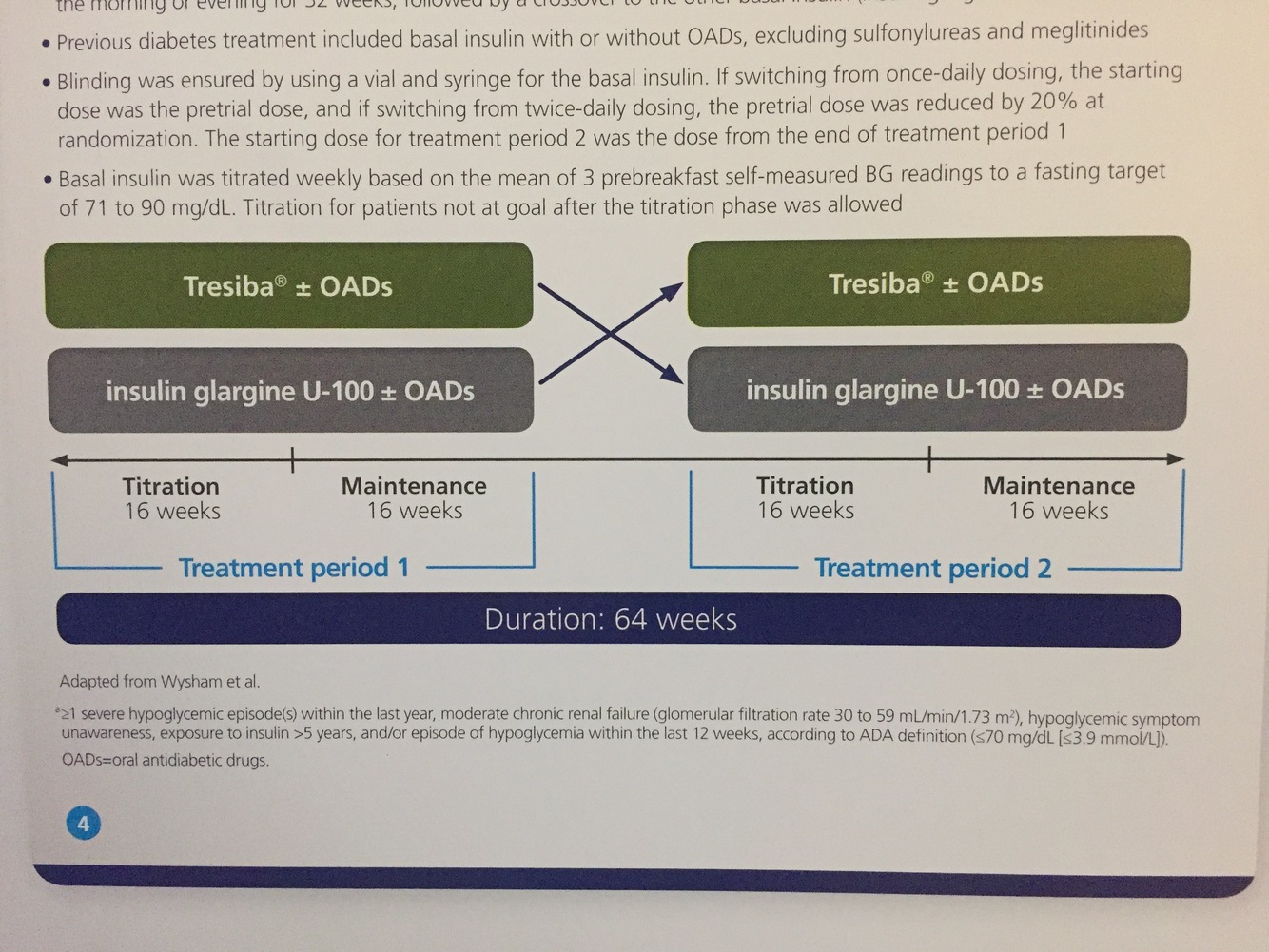
In both SWITCH 1 & 2, what formulation of Tresiba and glargine was used?
U-100
How was the basal insulin administered in both SWITCH 1 & 2? Why was this method used?
- Vial and syringe
- So that both researchers and patients would be blinded to which insulin they were using
Patients were titrated to a fasting plasma glucose (FPG) goal of _______ mg/dL.
71 to 90
In both SWITCH 1 & 2, how was BG-confirmed symptomatic hypoglycemia defined?
BG <56 mg/dL, with symptoms consistent with hypoglycemia
In both SWITCH 1 & 2, how was nocturnal hypoglycemia defined?
any hypoglycemic episode occurring between 12:01am and 5:59am
In both SWITCH 1 & 2, how was severe hypoglycemia defined?
a hypoglycemic episode requiring assistance of another person to actively administer carbohydrate, glucagon, or other resuscitative measures
There were 2 secondary objectives in SWITCH 2? What are they?
- Confirm superiority in terms of rates of severe or blood glucose-confirmed symptomatic nocturnal hypo in the maintenance period
- Confirm superiority in terms of percent of patients experiencing at least 1 episode of severe hypo in the maintenance period
Why was the primary objective of SWITCH 1 to show noninferiority while the objective of SWITCH 2 was to demonstrate superiority?
Patients in SWITCH 1 had type 1 diabetes and were taking both basal and bolus insulin. It is expected that the mealtime insulin could impact the overall risk of hypoglycemia. So SWITCH 1 was designed to demonstrate no increased risk (noninferiority) in hypo, while SWITCH 2 sought to demonstrate less risk (superiority) of hypo.
In SWITCH 2, patients currently on these oral antidiabetic drugs (OADs) were excluded from the study. Why?
- sulfonylureas and meglitinides
- these OADs can increase the risk of hypo; by excluding patients currently on these medications, researchers could more properly assess the hypoglycemic effect of the study insulins
What was the total length in weeks of both SWITCH 1 & 2?
64 weeks
In SWITCH 2, how were starting basal insulin doses determined in treatment period 1?
- If the patient was switching from a once daily dosing regimen, the patient was switched at a 1:1 ratio
- If the patient was switching from a twice daily regimen, the pretrial dose was reduced by 20% at randomization
How long was the titration phase of each treatment period in both SWITCH 1 & 2?
16 weeks





