brain stem
“motor function”
- sensory pathways from body -> brainstem -> cerebral cortex
- some facial and neck muscles connect directly to brain stem
cerebromedullospinal disconnection: “locked-in” syndrome
- stroke to their brain stem
- result - no descending signals from brain and could have no ascending signals from body (paralyzed)
- motor imagery, thinking about doing an activity excites neurons and diagnostic of locked-in syndrome
basal ganglia: direct pathway
- allows production of movement
- glutamate neurotransmitter excites, GABA inhibits
Structures:
- striatum
- globus pallidus (internal and external)
- substantia nigra (reticulata and compacta)
- subthalamic nucleus (STN)
Direct Pathway
nigrostriatal pathway: dopamine release pathway that facilitates activity in the direct pathway
cortex excites striatium
striatum inhibits substantia nigra reticulata + globus pallidus internal
substantia nigra reticulata and globus pallidus internal inhibit thalamas
thalamus is dis-inhibited and excites cortex for movement
basal ganglia: indirect pathway
cortex -> no need for movement
cortex excites striatum to inhibit globus pallidus external
globus pallidus inhibits subthalamic nucleus
subthalamus nucleus is then dis-inhibited and excites the substantia nigra reticulata and globus pallidus internal
substantia nigra reticulata and globus pallidus internal inhibit the thalamus to prevent movement
cerebellum
important role in postural control, motor movement, movement timing and motor learning
cerebellar atrophy and dysmetria
Individual with cerebellar atrophy with ataxia gait (poor walking straight), very poor coordination and muscle control
Individual with dysmetria overshooting when doing nose to finger movement
Hypometric: undershoot movements
Hypermetric: overshoot movements
individuals with cerebellum lesion vs healthy
motor learning
- Drawing a mirrored picture
- Healthy individual draws poorly at first 10 tries, but 41-50 tries the person draws better
- Individual with cerebellum lesion draws same at 1-10 and 41-50 tries, demonstrates importance of cerebellum and motor learning.
movement timing
- Individuals throw tennis balls at wall with bullseye
- Healthy controls had consistent throws
- Cerebellar patients were not accurate and inconsistent since they couldn’t release the ball properly at the right time
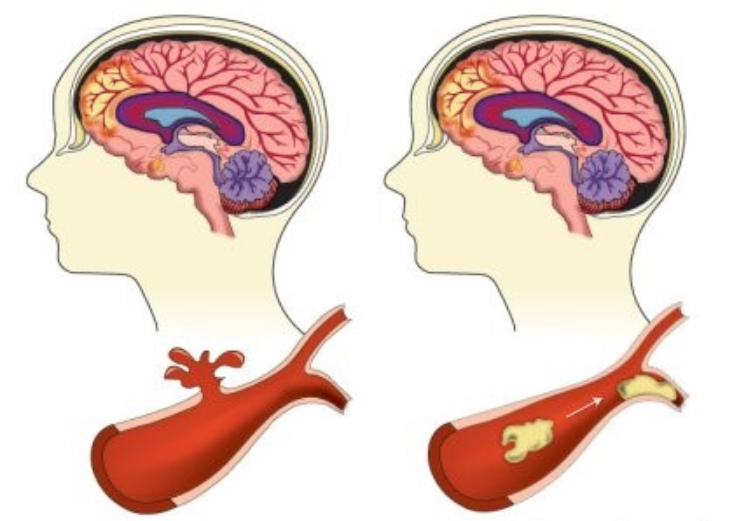
Hemmorrhagic stroke and Ischemic stroke
Hemmorrhagic stroke
- an artery bursts in the brain
- artery in brain might have a bulge and leak
- blood is very toxic to neurons and will die
Ischemic stroke
- stroke from a blockage of arteries to the brain, close off blood flow to the brain
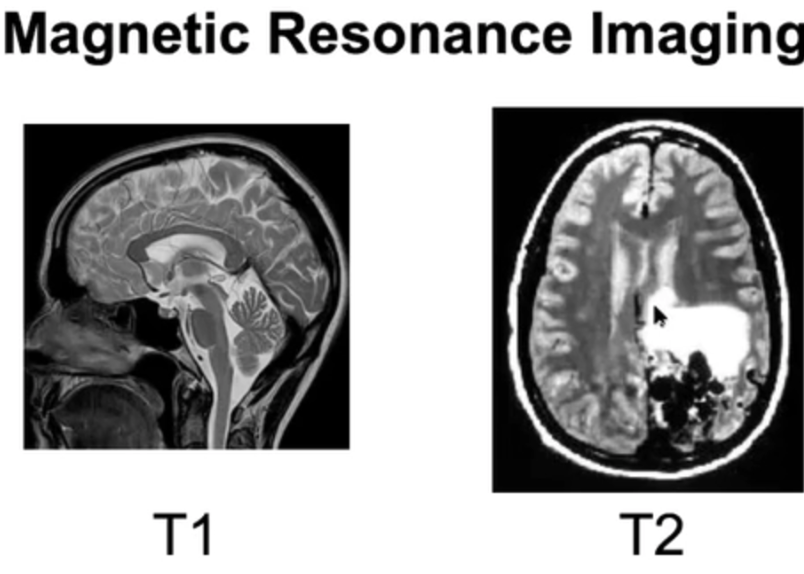
Magnetic Resonance Imaging (MRI)
T1 - fat appears bright (myelin)
T2 - water appears bright, representing cerebral spinal fluid, after a stroke the neurons and glial cells in the area die and gets filled with cerebral spinal fluid

-
Sport Related Concussions12
-
History of Movement Neuroscience5
-
Central Nervous System6
-
Occipital, temporal and parietal lobes9
-
Frontal lobe8
-
Subcortical structures9
-
The primary motor cortex (M1)8
-
Neuroplasticity2
-
Supplementary motor area (SMA) and premotor cortex (PM)5
-
Cerebral asymmetries8
-
Spinal cord architecture and descending motor pathways10
-
Motor units and muscle fiber types10
-
Oculomotor control and executive function4
-
The scientific method2
-
Motor Skill Classification4
-
Temporal Measures5
-
Accuracy, kinematics and EMG7
-
measurement in the movement neuroscience5



