What is sutainability?
Sustainable means not running out.
We usually use it to talk about using less coal so it doesn’t run out
Or less oil
Or fewer trees
To do this there are a number of headings to consider often called the 4 ‘R’s (you may see 3, 5 , 6 or more ‘R’s but for the exam there are 4)
- Reduce
- Reuse
- Recycle
- Recover
There are other cards on each one of these.
Here are some videos to explain further
Video 1 - sing along now!
…and here is a collection of fantastic TED talks on the subject - maybe a bit beyond what might be asked on the exam but very interesting - watch a few.
The 4 ‘R’s
REDUCE
In designing and making we should be aiming to reduce certain aspects to improve the sustainability of our products
- reduce the amount of material we use - can we redesign the packaging to use less material - less waste is thrown away or rethink the layout of parts on a sheet of wood so less waste bits go in the bin
- reduce the amount of energy used to manufacture the product - insulating the factory would mean less is wasted or using more efficient machines that waste less energy
- reduce the amount of energy the product uses - ‘low energy’ light bulbs waste less energy than previous types or auto-turn off features would waste less energy
The 4 ‘R’s
REUSE
Can we make our company or it’s products more sustainable by reusing them or certain parts of them.
- many phone companies don’t supply chargers - it is far better to reuse the one you have probably already got
- can some of the parts in our product be reused elsewhere e.g. batteries taken out of one product and used in another
- don’t use plastic bags - make use of resuable ‘bags for life’
- try to get more use out of old phones by donating them to charities who will reuse them elesewhere in the world
The 4 ‘R’s
RECOVER
Recover is all about recovering energy from waste.
If you ran a company making woodentables you would probablt spend a lot of money buying wood.
You would cut it to size and glue it together to make a table which you could sell.
The left over bits of wood you might throw out.
BUT…. these bits of wood contain energy and you have already paid for it so you could put it into the furnace in the factory which would heat the factory and save you money but also would mean less electricity would be needed so less coal is used up (sustainability) and less polution from the power station and more little animals would get to live ….well, you get the idea.
The 4 ‘R’s
RECYCLE
For peole that make things this could have two aspects
- Recycle the materials and products we make and use
- Use recycled materials in our products
By recycling the materials used in products that are no longer needed we can reduce the need for new materials - some metals are very difficult to get involving huge mines in far off countries but could be melted and made into new products
Here is a video but please ignore the incorrect pronunciation of aluminium
In Britain shops that sell electrical equipment now have to operate under the government’s Waste Electrical and Electronic Equipment recyling scheme (WEEE) - if you buy a new washing machine they are supposed to take the old one away and send it to a recycling facility rather than just throw it away.
We are getting considerably better at recycling materials so they can be used again, particularly plastics. At one time recycled palstics were fairly poor quality and not used much in high quality products but this has now changed and considerably more can be reused in this way.
Watch this video and listen to THAT song again!

Renewable sources of energy
WIND ENERGY
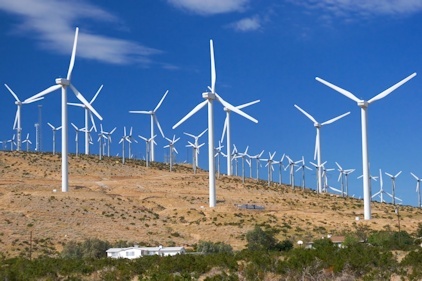
Usually uses a turbine (like a windmill) which has a set of blades that turn in the wind, which turn a generator which makes electricity.
Two main areas of use
- individually - either large ones ina field on their own or even smaller ones mounted to the roof of a house
- in ‘wind farms’ large collections of turbines, sometimes out at sea
Some advantages
- Energy is free once turbine has been purchased and installed (some maintenance and repair is needed)
- Wind will never run out like coal or oil will
- Create no pollution in electricity production e.g. greenhouse gases (you might discuss noise or visual polution though)
- Land underneath can still be used - often combined with solar panels in suitable countries
- Could provide an energy source for very remote locations not on the national grid (islands)
Some disadvantages
- The wind does not always blow and can get weaker or stronger - the output is variable and unreliable
- Not always liked by people nearby - ruins the view, noisy, might hurt birds
- Often need to be placed in quite difficult to get to places - hills, sea etc
- Can’t supply enough of our energy needs on their own
- They use lots of energy whilst being made and transported to where they are going to be used
Here is a videoof some advantages and disadvantages
Development of wind turbines is progressing rapidly.
Here is a website that lists some recent developments - read some so you can say in an exam “for example…”
Renewable sources of energy
SOLAR ENERGY
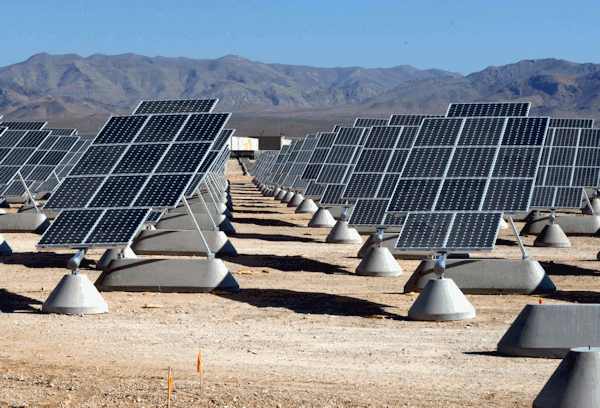
Solar energy means converting light from the sun into electricity using ‘photo-voltaic cells’
These can be large scale with huge numbers of solar panels on hills or in desert areas
or, small scale using panels on peoples houses
or, very small scale such a solar panels on calculators
Prices recently have come down enormously (thanks China) and more and more uses - lights on traffic signs, phone chargers for campers, compulsory on new buildings in some cities in California and uses growing every day.
Some advantages
- Once installed the energy is free
- It produces no pollution in use - no greenhouse gases or other dangerous products
- Solar energy will last for a very, very long time
- Can be used in very remote locations and where other energy has problems such as in the third world or disaster zones
Some disadvantages
- The sun doesn’t shine at night! (but lots of work going on to develop better storage batteries - not there yet though)
- Panels are expensive to make (but getting better) and expensive to install
- The energy is unreliable (cloudy days reduces output) and so solar can’t be the only form of energy we use
- Large areas of land are needed
poss
https://www.youtube.com/watch?v=HtKtFc-oIzE
Renewable sources of energy
BIOMASS
Biomass is turning plants into fuel.
There are many examples and this is not new - we have been burning wood from trees to keep warm for thousands of years.
More recently though there have been some major advances such as turning wood into small pellets which are injected into a furnace at high speed and burn very hot and very quickly and very efficiently - almost no smoke or ash.
One form you should know about is turning biomass into diesel for cars and trucks.
Many crops can be used but oil rich plants such as rapeseed (th palnts that turn the fields yellow in spring) and sunflowers are common.
This process is already happening and diesel sold at garages probably contains a proportion of ‘biodiesel’.
Pros: far more renewable than oil-based fuels, can use waste products (although be careful - you will find examples using chip shop oil but there just aren’t enough chip shops to keep the country in biodiesel), growing the plants captures carbon from the atmosphere
Cons: using biodiesel in a truck puts most of the carbon back into the atmsophere, have to set aside land to grow crops for biodiesel - now not available for food (the price of pasta has gone up a lot in recent years as farmers in Italy move from wheat for pasta to biofuel crops)
Climate change
IMPACT OF INDUSTRIALISATION
Industrialisation has changed countires, societies and the world.
We perhaps led the way with our industrial revolution that meant pollution and poor air quality.
We might have improved things (a bit) but other countries that are only recently become fully industrialised such as China, Brazil etc have significant issues with pollution and no doubt other countries will follow.
As they are bigger than the UK, their effect on the planet is significantly worse.
The major effect is global warming which results in rising temperatues, rising sea levels, changing climates etc.
Countries have a responsibility to ensure they do what they can to reduce this effect but not all countries seem as keen to do so.
Various meetings and agreements have taken place such as the one in Kyoye in Japan and the most recent one (January 2016) in Paris where countries agreed to work together to reduce the temperature growth of the world.
Climate change
KYOTO PROTOCOL
The Kyoto protocol was agreed in 1997 in Kyoto, Japan.
Countries agreed to reduce their greenhouse gas emissions by 2012
Some never agreed (USA), some pulled out (Canada) but most didn’t meet their targets
A second stage was launched (Doha agreement) but again countries pulled out and failed to meet targets.




