What is synaptic plasticity?
- ability of the brain to re-organise and/or create new neural pathways
- new neural pathways are adaptations to what the brains needs
The images labelled 1-4 in the image below is a good way to visualise synaptic plasticity, why?
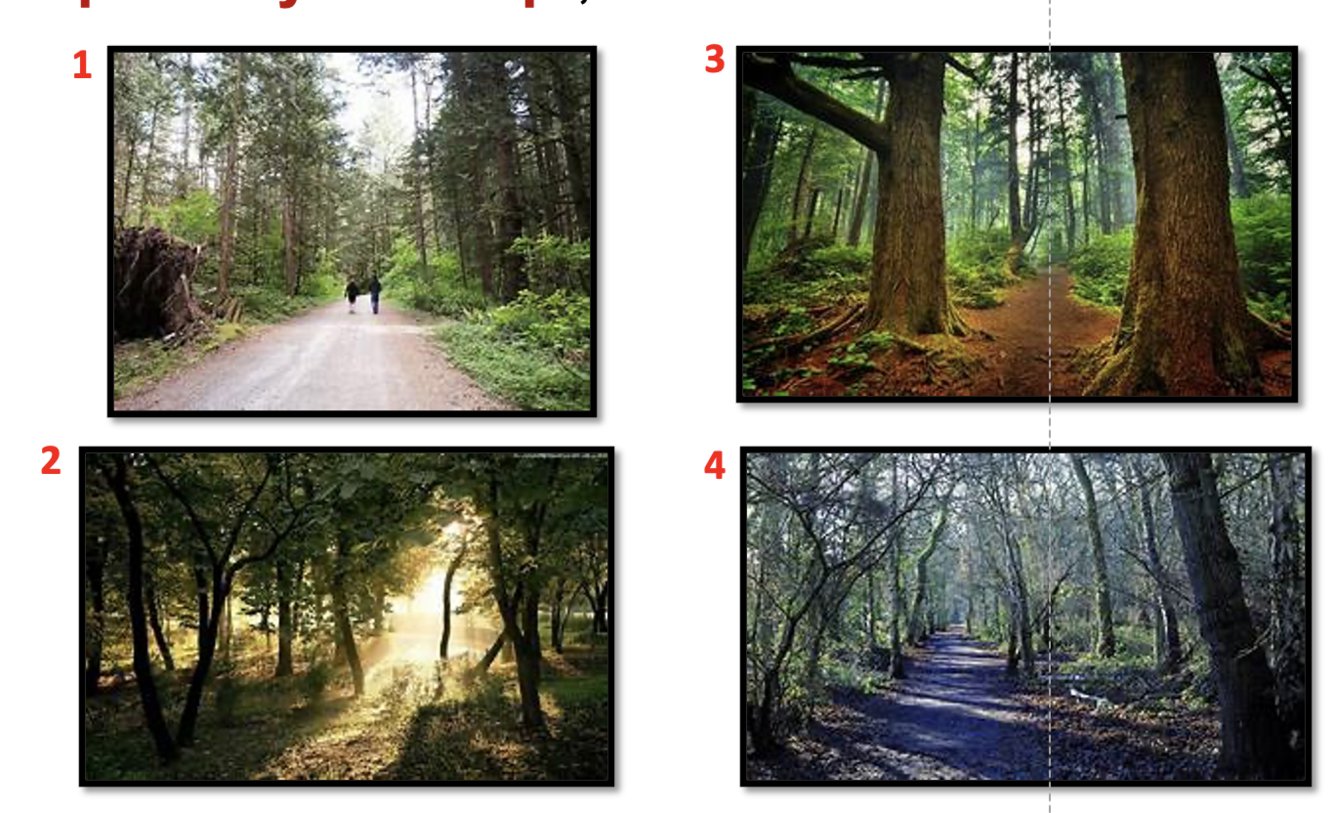
- image 1 - current neuronal pathways
- image 2 - a potential new neuronal path has developed
- image 3 and 4 - more and more use of the new path are used and the new pathway becomes embedded
Trauma can lead to adaptive synaptic plasticity and result in changes in synaptic connectivity. What will this then go on to affect?
- behaviour
- emotions
- sensory
- co-ordination
- behaviour
What is Hebbs rule? (think hypertrophy and atrophy)
- if you don’t use it you will lose it
- synapses not used can be removed as not needed
- persistence/repetition is required to induce lasting cellular changes and add to its stability
What is Hebbs cell assembly hypothesis?
- cells are reciprocally interconnected
- activation of the interconnected cell for long enough would provide consolidation
- these activated reciprocal connections will be more effective and neurons that fire together are wired together
- future activations requires only a small activation, but still capable of causing the whole cell to become active
What are the 2 key rules of synaptic modification, that also rhyme?
1 - neurons that fire together are wired together
2 - neurons that fire out of sync lose their link
When we consider Hebbs rule, do synaptic modifications always get stronger?
- no they can become weaker if not used
- neurons that fire out of sync lose their link
When we look at rules of synaptic modification, are all individual stimulations sufficient to create an excitatory post synaptic potential?
- sometimes, but sometimes insufficient
- synaptic integration MUST be positive and larger than threshold
When we look at rules of synaptic modification, if the signal to cell A and cell B fire in isolation or together what could be the possible outcomes, in relation to excitatory post synaptic potential (EPSP)?
- A alone - may or may not provide EPSP
- B alone - may or may not provide EPSP
- A+B together - more likely to cause EPSP than A or B alone
When we look at rules of synaptic modification, if the signal to cell A and cell B fire together repeatably these synapse will be strengthened, what can this cause to cells A and B firing in isolation or together, in relation to excitatory post synaptic potential (EPSP)?
- A alone = may cause EPSP in A and B
- B alone = may cause EPSP in A and B
- essentially the strength of A+B together has trained A and B so that if either is excited they can activate the other (neurons that fire together are wired together)
What is the connectome?
- complete description of the structural connectivity (the physical wiring, i.e. nerves) of an organism’s nervous system.
Long term potentiation (LTP) (think long term weight training for synapses) is one of the key mechanisms underlying synaptic strengthening. What is LTP?
- a process involving persistent high frequency stimulation that strengthens synapses
- persistent strengthening leads to a long-lasting increase in signal transmission between neurons
Synaptic plasticity and long term potentiation have been heavily linked with what 2 processes that make us human and allow us to develop that are inherently linked. The 2 key parts of the brain involved are the hippocampus and cerebral cortex. What are these 2 processes?
- emotion and learning
- memory and pain
- memory and addiction
- memory and learning
- memory and learning
Synaptic plasticity and long term potentiation have been heavily linked with learning and memory. How can long term changes be measured in humans that can confirm plasticity?
- increased IQ
- better memory
- modified gene expression and peptide turnover
- modified expression of EMG
- modified gene expression and peptide turnover
What is a tetanic stimulus?
- low frequency sequence of individual stimulation of a neuron
- low frequency sequence stimulation of multiple neurons
- high frequency stimulation of a neuron
- high frequency sequence stimulation of multiple neurons
- high frequency stimulation of a neuron
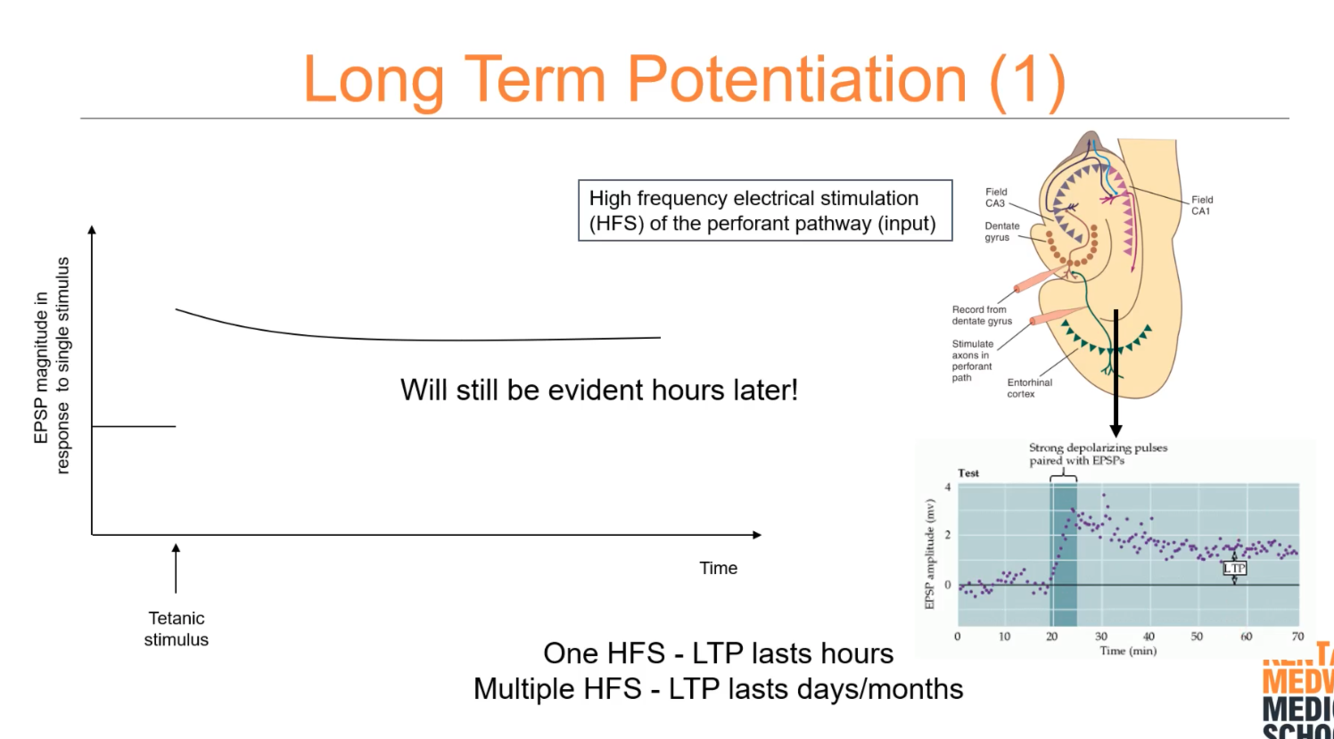
A tetanic stimulus is a high-frequency stimulation (HFS) of an individual neuron. How long can one and multiple HFS last for?
- one = seconds to minutes, multiple = minutes to hours
- one = hours, multiple = days
- one = days, multiple = days to months
- one = weeks, multiple = months to years
- one = days, multiple = days to months
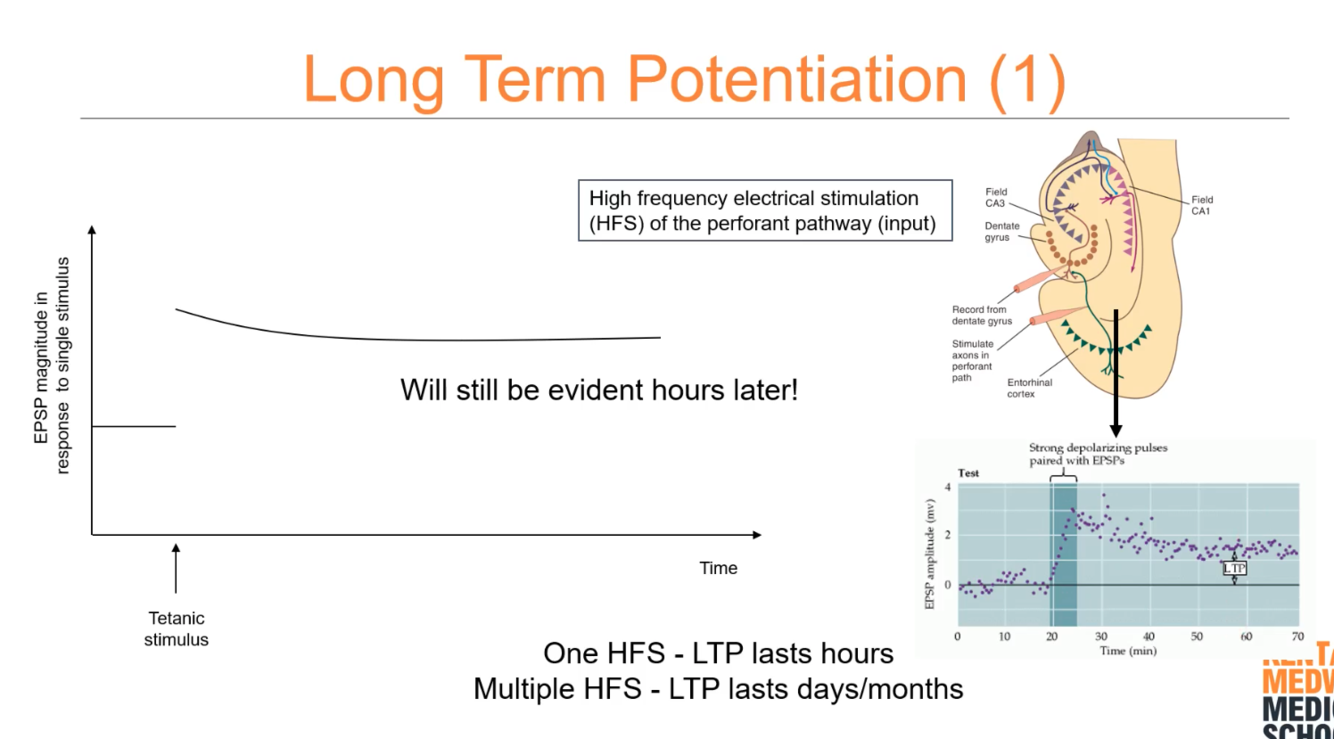
In an inactive cell, what is the activation pathway of the ionotropic ligand gated glutamate receptors AMPA and NMDA?
Inactive cell (resting membrane potential)
- glutamate binds to AMPA receptor, creating an excitatory postsynaptic potential (EPSP)
- NMDA receptor remains blocked by Mg2+ ion
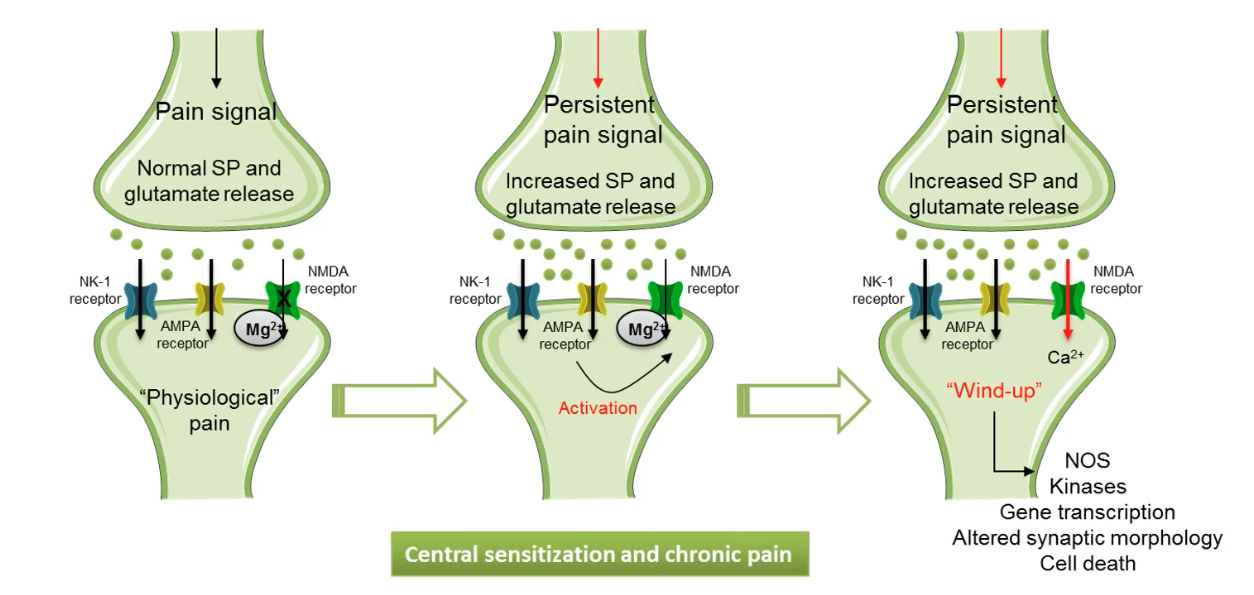
Once the ionotropic ligand gated AMPA receptor has caused depolarisation through binding with glutamate, what is the activation pathway of the glutamate receptor NMDA?
- AMPA receptor activated by glutamate causing depolarisation
- glutamate and glycine bind to NMDA receptor
- Mg2+ blockage of NMDA is removed
- Na+ passes through AMPA and NMDA channels causing depolarisation
- Ca2+ passes through NMDA receptor causing depolarisation
What is a key cation that is involved in the glutamate pathway, that is able to pass through NMDA receptors in the ‘wind up’ phase following continued and strengthening of glutamate binding with AMPA receptors that ultimately will remove the Mg2+ blockage on the NMDA receptor has been suggested to be involved in learning and memory?
- Na+
- K+
- Mg+
- Ca2+
4 . Ca2+
Once Ca2+ enters the cell through the NMDA receptor during ‘wind up’ (neuronal responses to repetitive electrical stimulation), what are the 2 key secondary messengers that become activated in the glutamate pathway? (think Gaq GPCR)
- protein kinase C
- calcium calmodulin-dependent protein kinase II (CaMKII)
Once Ca2+ enters the cell through the NMDA receptor during ‘wind up’ (neuronal responses to repetitive electrical stimulation), the Gaq intracellular pathway begins with increased levels of secondary messengers protein kinase C (PKc) and Calcium calmodulin-dependent protein kinase II (CaMKII). These 2 key secondary messengers PKc and CaMKII are then able to perform 2 key functions in relation to AMPA receptors, what are these?
Note:
- kinases remove phosphate from high energy yielding molecule and add phosphate to another molecule and is called phosphorylation (on/off switch for intracellular proteins)
1 - phosphorylates existing AMPA receptors, increasing effectiveness
2 - stimulates insertion of new AMPA receptors into the membrane
INCREASED AMPA RECEPTOR EFFICACY AND NUMBER OF AMPA RECEPTORS CAUSES FURTHER EXCITATORY POST SYNAPTIC POTENTIAL
What does autocatalytic activity mean?
- a molecule that once it becomes activated becomes free from Ca2+ and can continue phosphorylation alone
Calcium calmodulin-dependent protein kinase II (CaMKII) has autocatalytic activity, which means that once it has been phosphorylated by Ca2+ it becomes constitutively active (no longer needs Ca2+). What 2 things can this do to glutamate AMPA receptors and excitability of neurons?
1 - maintain phosphorylation of AMPA receptors even after depolarisation has ended
2 - molecular switch that is able to maintain excitability of neurons for minutes or hours, essentially a form of long term potentiation
What does molecular switch mean?
- ability of a molecule able to turn other molecules on or off
- a molecules that shares similarity to another molecule
- molecule that can be reversibly shifted between two or more stable states
- molecule that cannot be turned off once activated
- molecule that can be reversibly shifted between two or more stable states
- Calcium calmodulin-dependent protein kinase II (CaMKII) is inactive, but once Ca2+ causes CaMKII to become phosphorylated it is switched on regardless of Ca2+
- demonstration of how CaMKII can switch between 2 stable states


-
Neural Tissue57
-
Physiology of Neurons21
-
Chemistry and Physiology of the Synapse28
-
Synaptic Transmission32
-
The Skull and Cranial Cavity62
-
Chemicals in the brain37
-
Chemicals in the brain part 248
-
Describing the brain79
-
CPCP2 Lectures65
-
Topography of the Brain87
-
Global Brain Activity45
-
Basic Principles of Memory33
-
Anatomy of Memory and Emotion56
-
The ventricular system and circulation of cerebrospinal fluid48
-
Synaptic Plasticity39
-
Plasticity and regeneration54
-
Face, Temporal, and Infratemporal Fossa65
-
Introduction to Neuropathology90
-
Cognitive impairment and confused states89
-
Introduction to demyelinating disorders69
-
Structure and Function of the Spinal Cord99
-
Physiology of the Spinal Cord63
-
Imaging the Brain & Spinal Cord24
-
ORAL CAVITY and NECK89
-
Autonomic Nervous System63
-
Analgesics and Sedative drugs67
-
Consciousness40
-
Physiology of Pain75
-
Anaesthetic Drugs31
-
The Psychiatric History and Mental state Examination31
-
Ear and Auditory Pathway65
-
The cerebellum and motor learning54
-
Physiology of chronic stress35
-
Parkinson’s disease and drug therapy of basal ganglia disorders56
-
Physiology of Balance, Taste and Smell78
-
Physiology of Hearing42
-
Personality, development & attachment39
-
Neuropsychology of memory42
-
Motor Learning and neurological Syndromes70
-
Neurobiology and neurochemistry of reward and addictive behaviours51
-
Physiology of sleep51
-
Epilepsy - aetiology and management54
-
Introduction to Stroke74
-
Clinical features of anxiety and stress-related disorders54
-
Anxiety disorders: Neurobiology, neurochemistry and treatment38
-
THE EYE AND THE VISUAL PATHWAYS67
-
Physiology of vision47
-
Neurobiology and clinical features of psychosis41
-
Treatment of psychosis and psychotic disorders53
-
Neurobiology and clinical features of affective (mood) disorders62
-
Treatment of affective disorders48
-
Applied Anatomy46
-
The Association Cortices and Complex Brain Functions41



