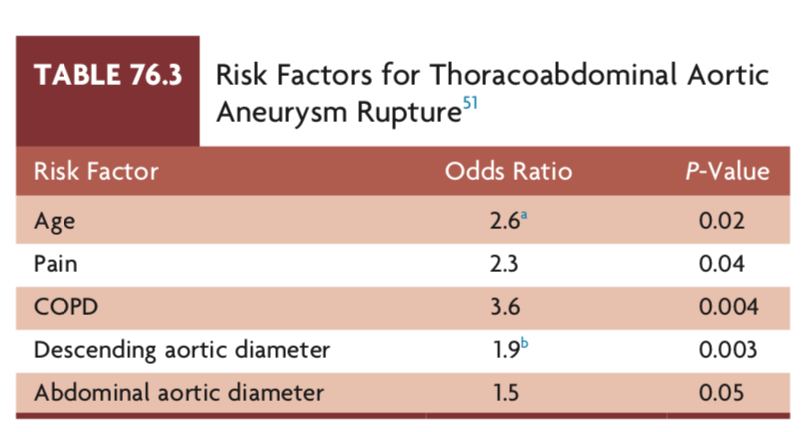
Name 5 risk factors that are associated with TAAA rupture
- Age
- Pain
- COPD
- Descending aortic diameter
- Abdominal aortic diameter
Name 2 differences in the composition of the aortic wall as you progress from the ascending aorta to the iliac bifurcation
- Ascending aorta has greater concentration of elastin (therefore more compliant)
- Media becomes thinner from proximal to distal aorta
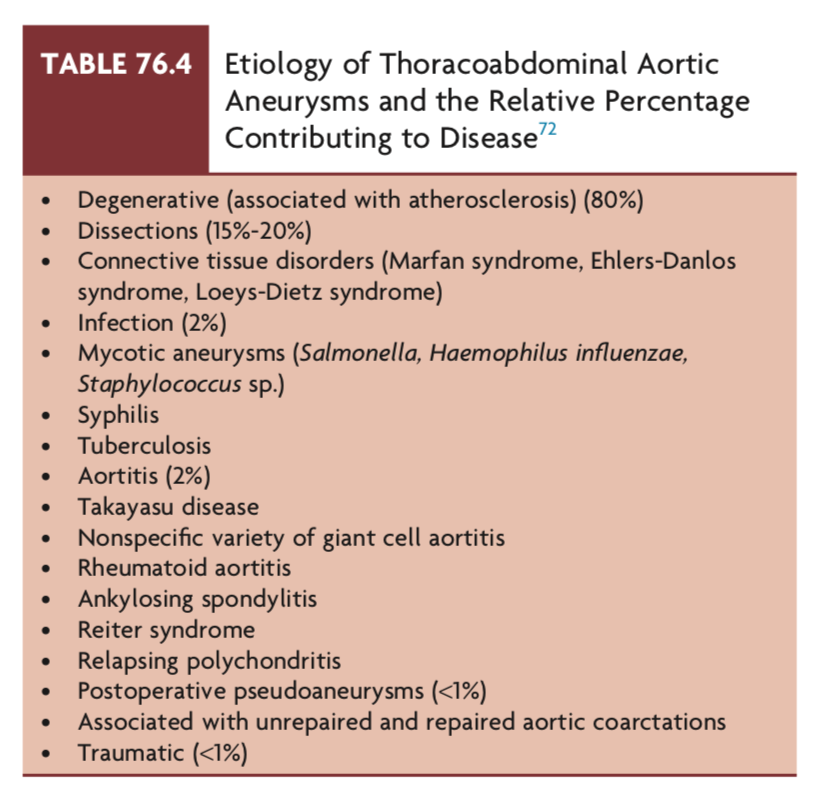
Name 5 causes for TAAA from most frequent to least.
- Degenerative/atherosclerotic 80%
- Dissections 15-20%
- Infection 2%
- Connective tissue disorders (Loeys Dietz, Marfans, EDIV)
- Vasculitis: takayasu, giant cell, rheumatoid
What percentage of TAAA are type 4?
< 25%
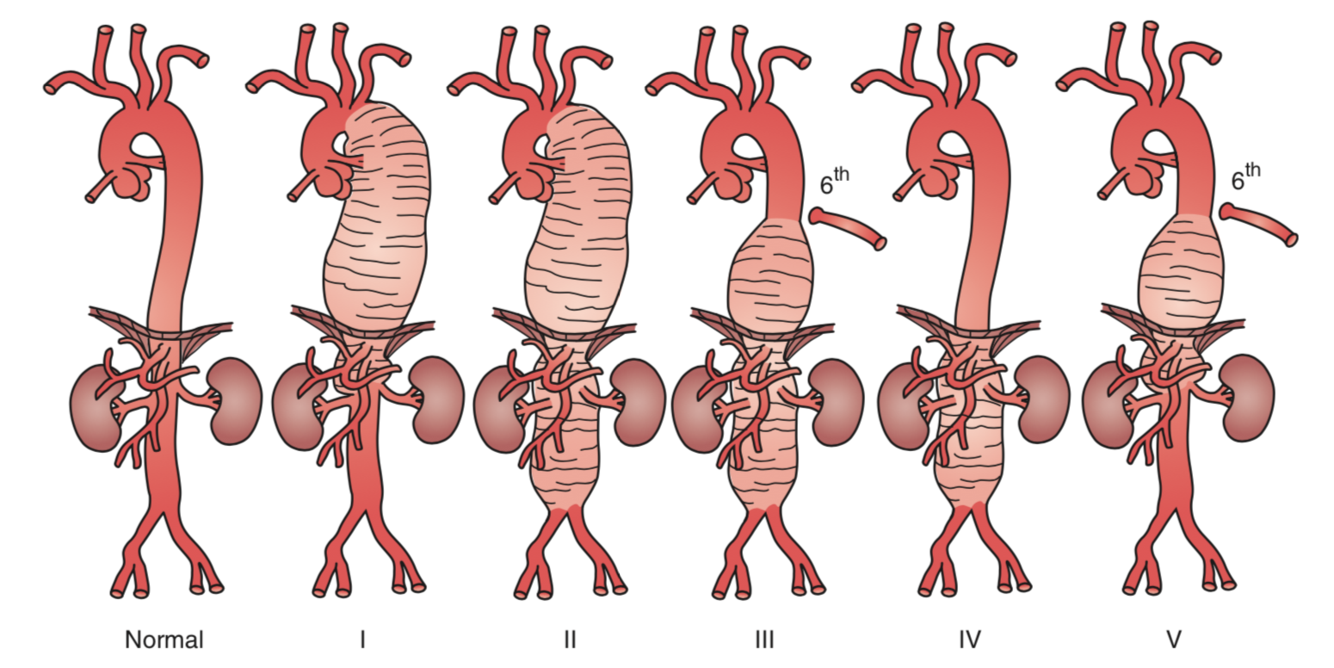
What percentage of TAAA are type 3?
< 25%
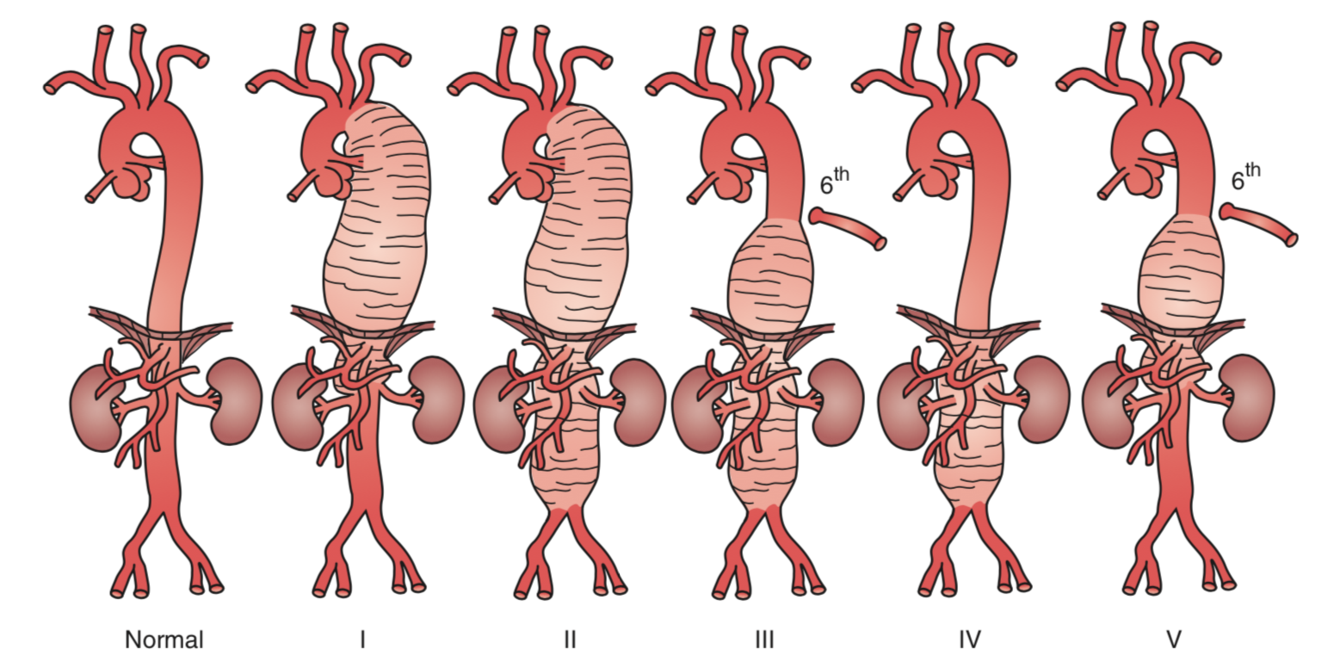
What percentage of TAAA are type 2?
30%
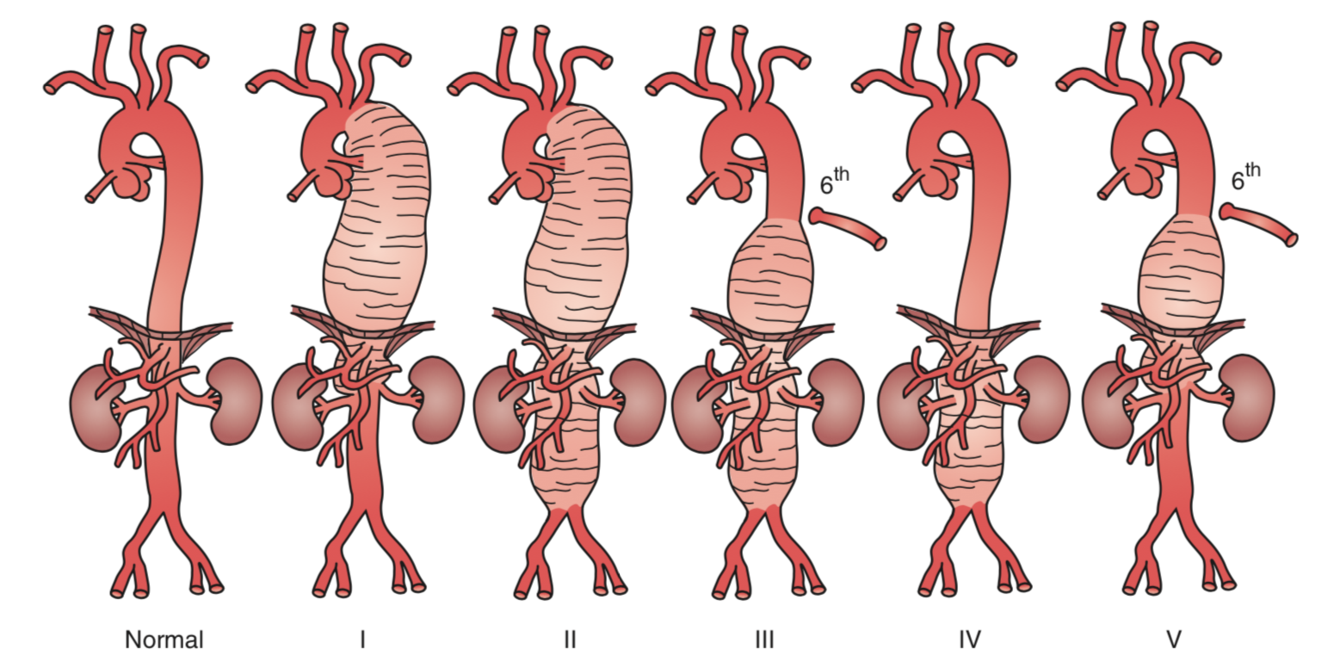
What percentage of TAAA are type 1?
25%
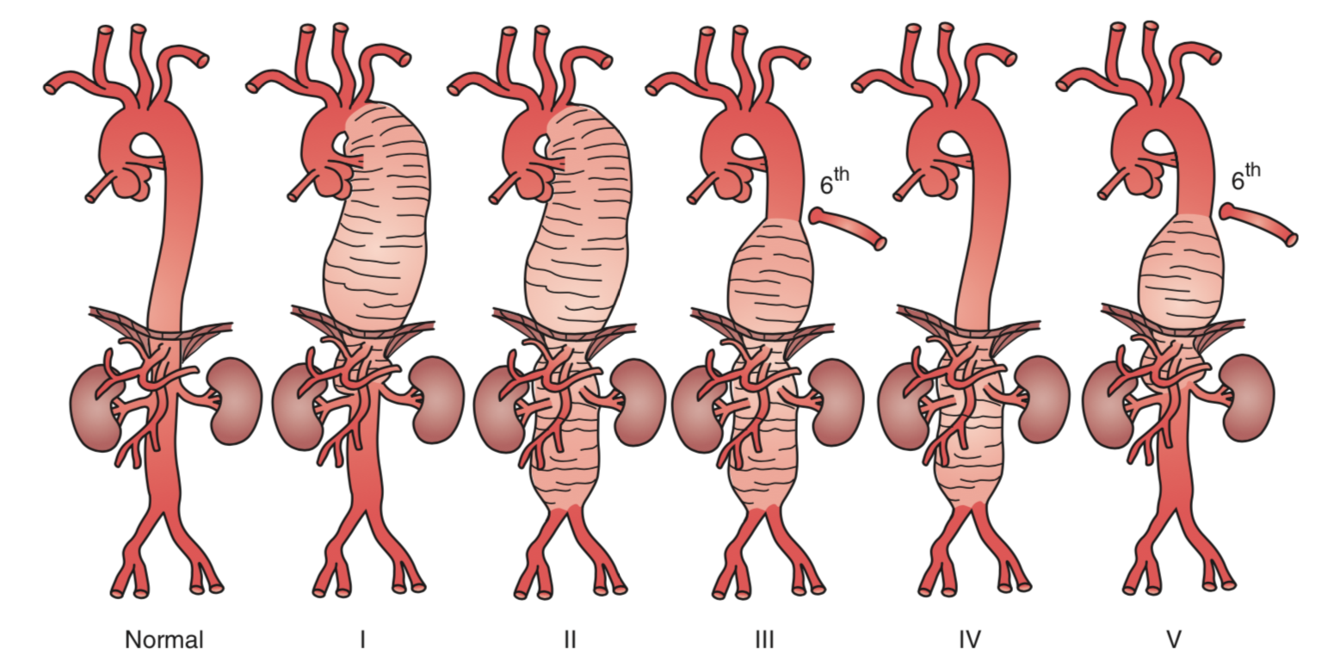
What is a Type 4 TAAA?
Confined to abdo aorta, including visceral and renal arteries
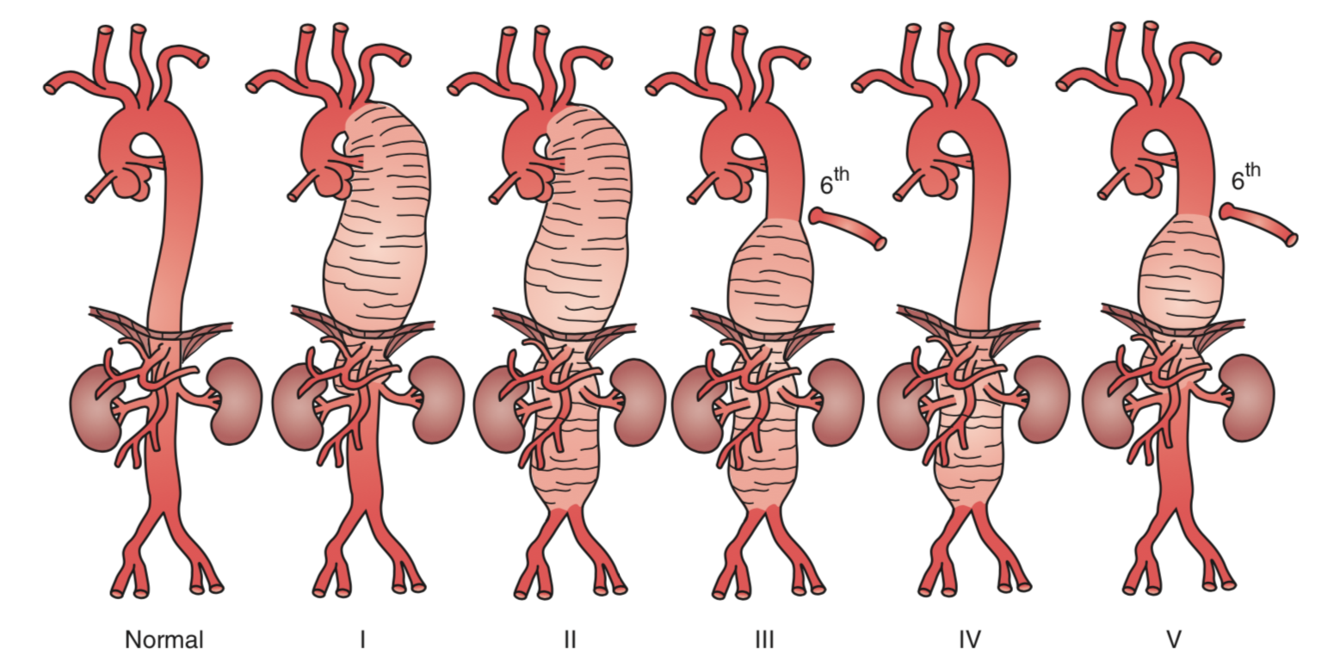
What is a Type 3 TAAA?
Involves variable lengths of the descending thoracic and abdo aorta
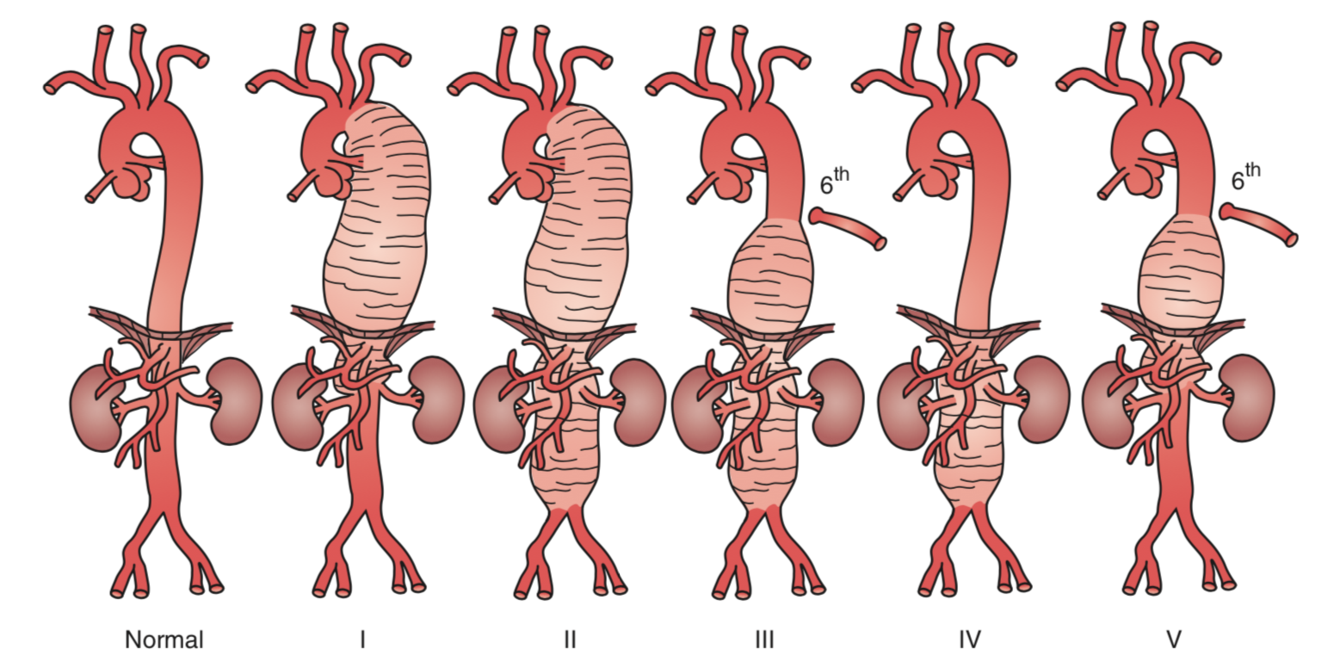
What is a Type 2 TAAA?
Involves entire descending thoracic aorta and most of the abdominal aorta
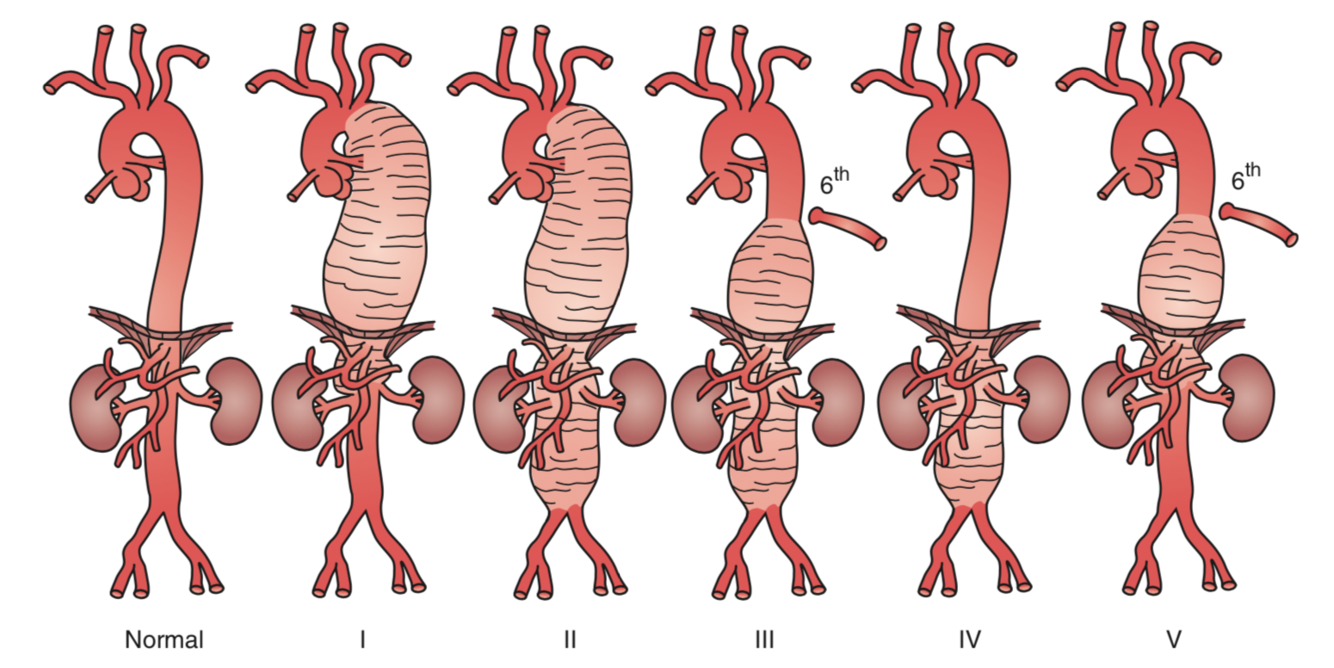
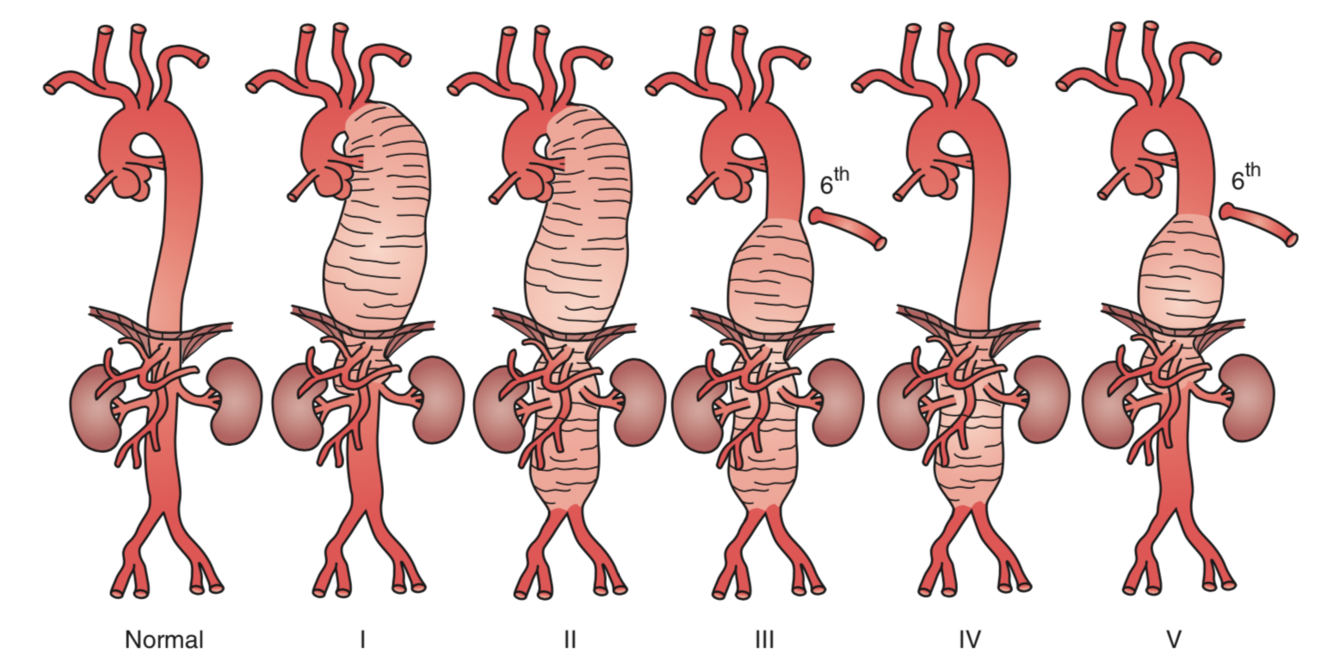
What is a Type 1 TAAA?
Involves entire descending thoracic aorta
What percentage of TAAAs also have an AAA?
20-30%
Name 4 chest xray findings in keeping with TAAA?
- Widened mediastinum
- Dilated aortic knob
- Tracheal deviation
- Left main stem bronchus displacement
Inadequate to definitively exclude TAAA
What is the threshold size for repair of TAAA?
> 6 cm.
Maybe more or less.
More: Type 1 - 3 because of spinal cord ischemia
Less: Symptomatic, connective tissue disease, Type 4.
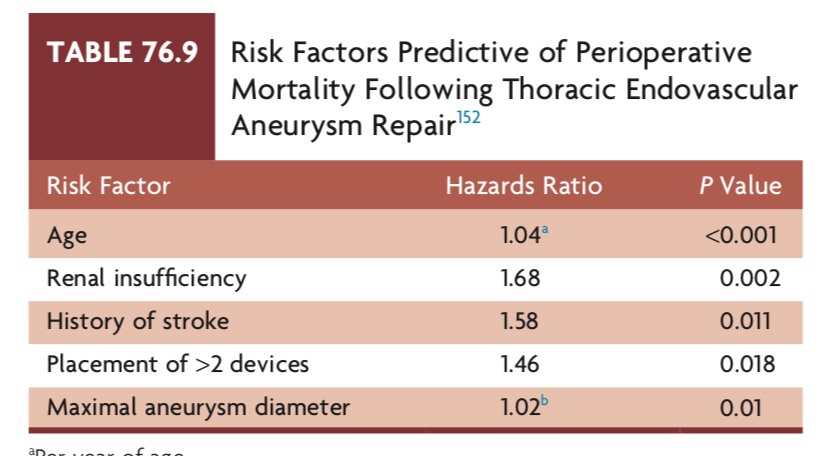
Name 5 risk factors predictive of periop mortality following TEVAR
- Age
- Renal insufficiency
- History of stroke
- Placement of > 2 devices
- Maximal aortic diameter
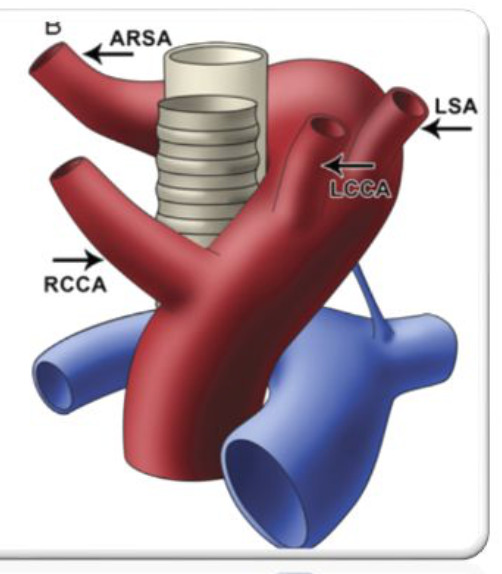
How do you treat an aberrant right subclavian artery?
Hybrid approach:
- Embolize side branches off the aberrant subclavian pre-op
- R CCA to distal R SCA bypass with ligation of RSCA prox to vertebral artery
- Stent the abnormal descending thoracic aorta
- Often to achieve proximal seal may need to cover L SCA so it may need a left carotid subclavian bypass/transposition as well.
How do Gore C-tag TEVARs prevent the “wind sock” effect?
Deploys from middle of the graft
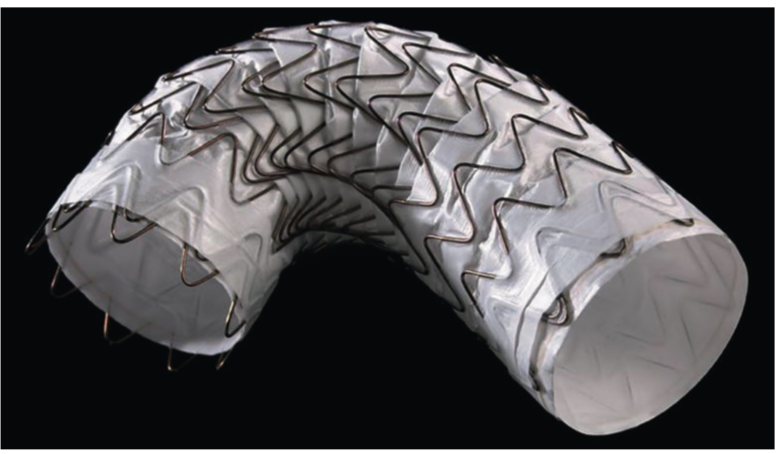
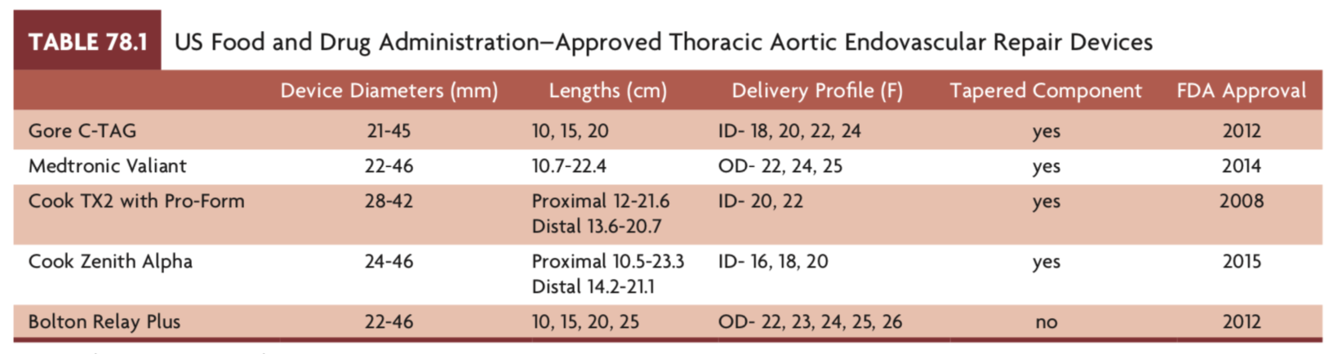
What is the lowest profile TEVAR?
Cook Alpha (16F)
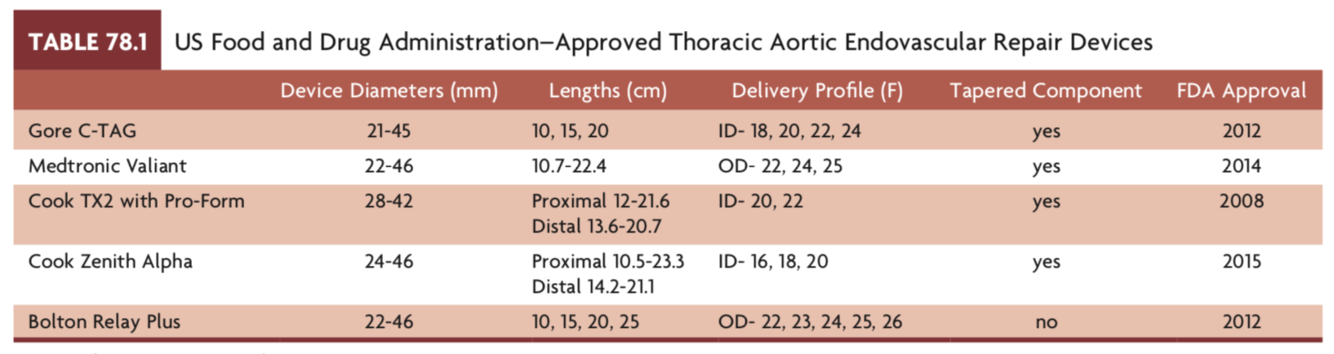
What device diameters are available for TEVARs?
21 (Gore) to 46 mm (Medtronic, Bolton Relay, Cook Alpha)
How does coverage of the left subclavian impact spinal cord ischemia (via which vessels?)
Provides blood flow through the internal mammary and anterior intercostal branches.
What percentage of people are left vertebral artery dominant (therefore at higher risk of stroke if LSCA covered during TEVAR)
60%
What are 8 indications for left subclavian revascularization during TEVAR?
- Dominant left vertebral artery
- LIMA to coronary artery bypass
- Left arm hemodialysis access
- Aberrant right SCA
- Hypoplastic or absent right vertebral artery
- Termination of left vertebral artery in PICA
- Occluded internal iliac arteries
- Anamolous origin of left vertebral artery from the arch.
How do you tunnel a carotid carotid bypass for debranching for TEVAR?
Retroesophageal
What are the theoretical advantages of a hybrid TAAA repair (ie debranching visceral vessels)
Avoids thoracoabdominal incision (can be midline), cutting through diaphragm or clamping aorta. Most appropriate indication is COPD but with enough CV reserve to withstand the open debranching.



-
EVAR84
-
Exposures20
-
Thoracic Outlet36
-
Carotid Disease126
-
Aortic Trauma, Dissections, Ulcers45
-
Upper Extremity35
-
Basic Science/Embryology/Histology49
-
Access85
-
Open AAA18
-
Lower Extremity231
-
Grafts50
-
Miscellaneous: FMD, other aneurysms, AV malformation, peds, tumours198
-
Venous & Lymphatic259
-
Mesenteric & Renal disease73
-
Medical therapy, bleed, clot141
-
Surgical Principals/Instruments15
-
Trauma83
-
Post-op Complications54
-
Diabetes9
-
Past Exams57
-
Trials and Research Methods6
-
Atherosclerosis Risk Factors29
-
TAA & Thoracic Dissection47
-
Anatomy16
-
Trials and Guidelines8



