Homodont
One type of tooth (many non-mammals)
Heterodont
different types of teeth (many mammals)
T/F: molars are only found in adults
True
Baby animals do not have molars
T/F: both baby and adult animals may have premolars
True
Both babies and adults have premolars
Which bones are mammal teeth found in?
- Incisive bones
- Maxilla
- Mandible
Diphyodont
has baby and adult teeth
Hypsodont
high crowns e.g. horses
Brachydont
low crowns (relative to the overall tooth) e.g. dogs
Role of incisors
- Nibbling
- Grooming
- Cutting
Role of canines
- Grasping
- Fighting/defence
- Stabbing
- Toxin injections (some shrews/voles)
Roles of premolars and molars
- Crushing
- Shearing
- Gripping
- Grinding
Diastema
Gap between incisors and cheek teeth; typically found in herbivores
Describe jaw action in carnivores
- Move jaw sideways to engage teeth
- Pterygoideus muscles
- The muscles to move jaw sideways don’t need to be strong because the food is put in the right place before biting down
- Close jaw to shear/crush
- Masseter and temporalis musles
- These muscles need to be very strong
Describe jaw action in omnivores
Combined crush/grind action
Describe jaw action in herbivores
- Opposite to carnivores:
- Jaw is closed first around herbage (masseter)
- Then jaw is moved sideways whilst being held closed
- This allows the grinding of plant material to break down cells
- Pterygoideus muscles are large as they are working under load, equalled by masseter muscles
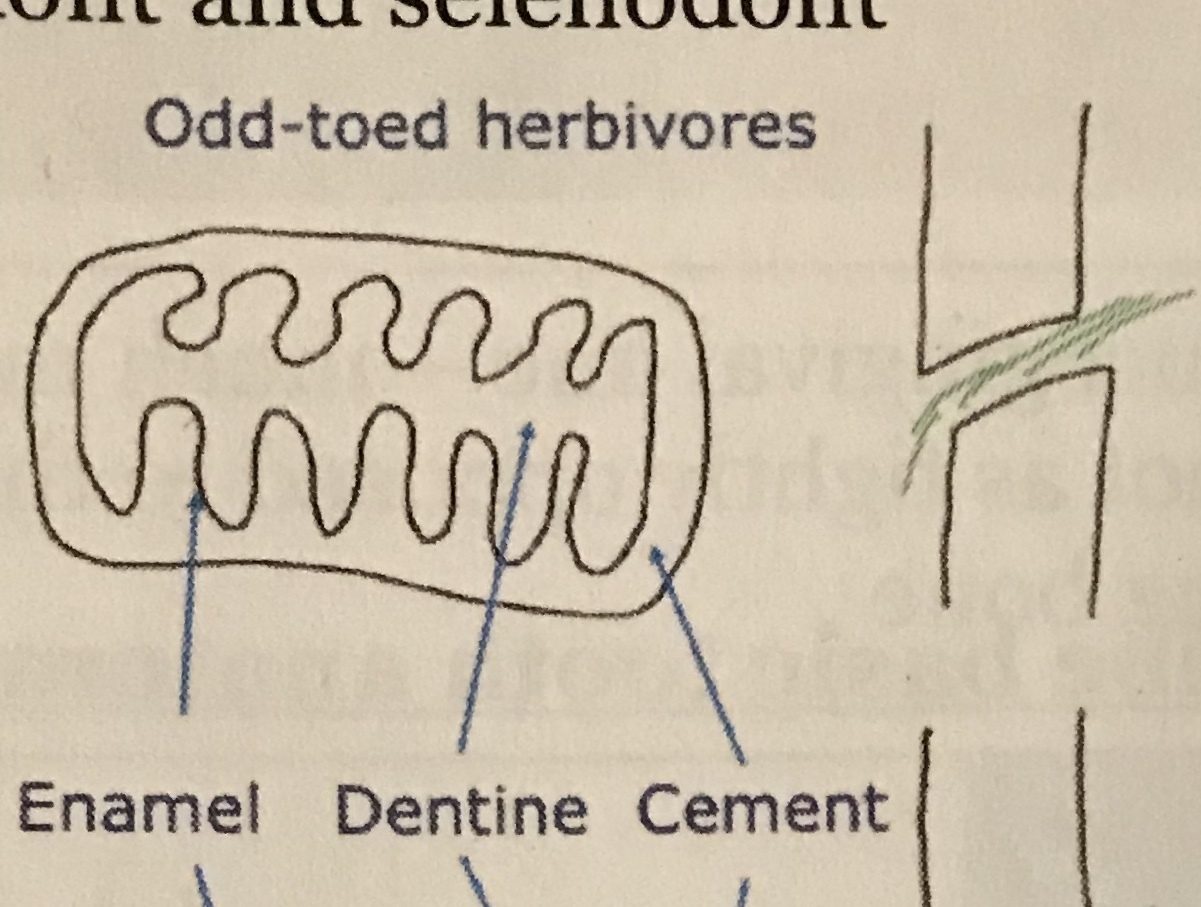
Lophodont
Structure of teeth in odd-toed herbivores
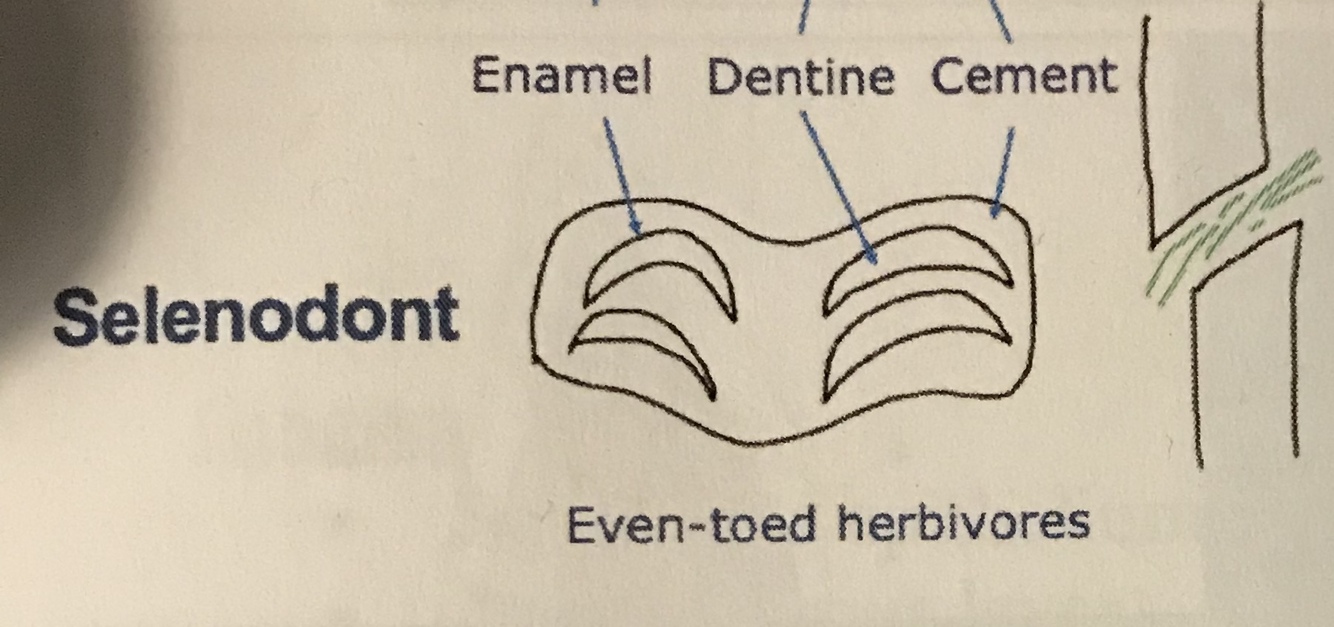
Selenodont
Structure of teeth in even-toed herbivores
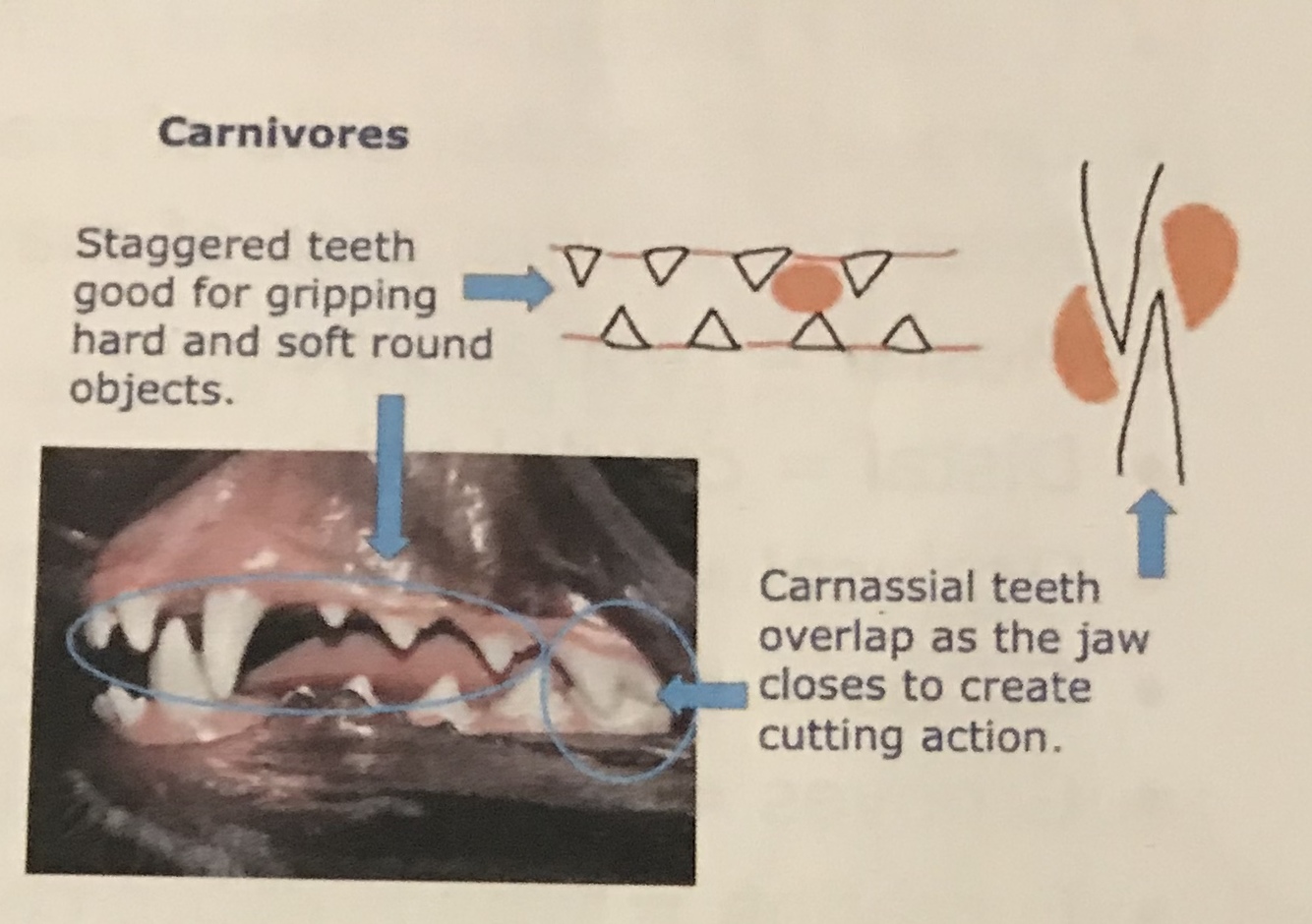
Describe secodont arrangement of teeth
- e.g. carnivores
- Staggered teeth good for gripping hard and soft round objects
- Carnassial teeth overlap as the jaw closes to create cutting/scissor action
Where is enamel in herbivore teeth?
- Enamel is inside the tooth, covered by cement.
1
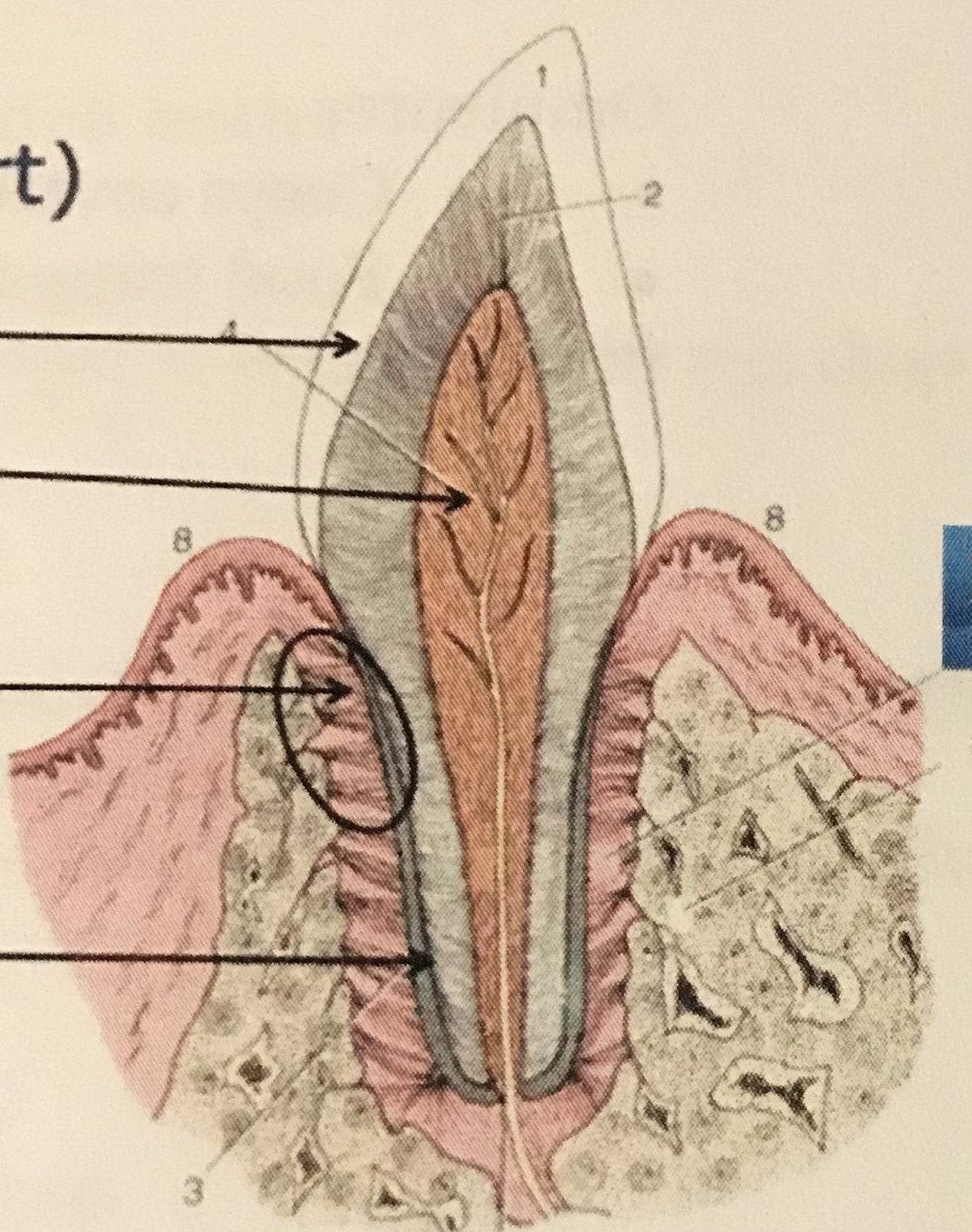
Crown: visible (supragingival) region of the tooth. Consists of smooth, hard enamel and hard dentine.
2
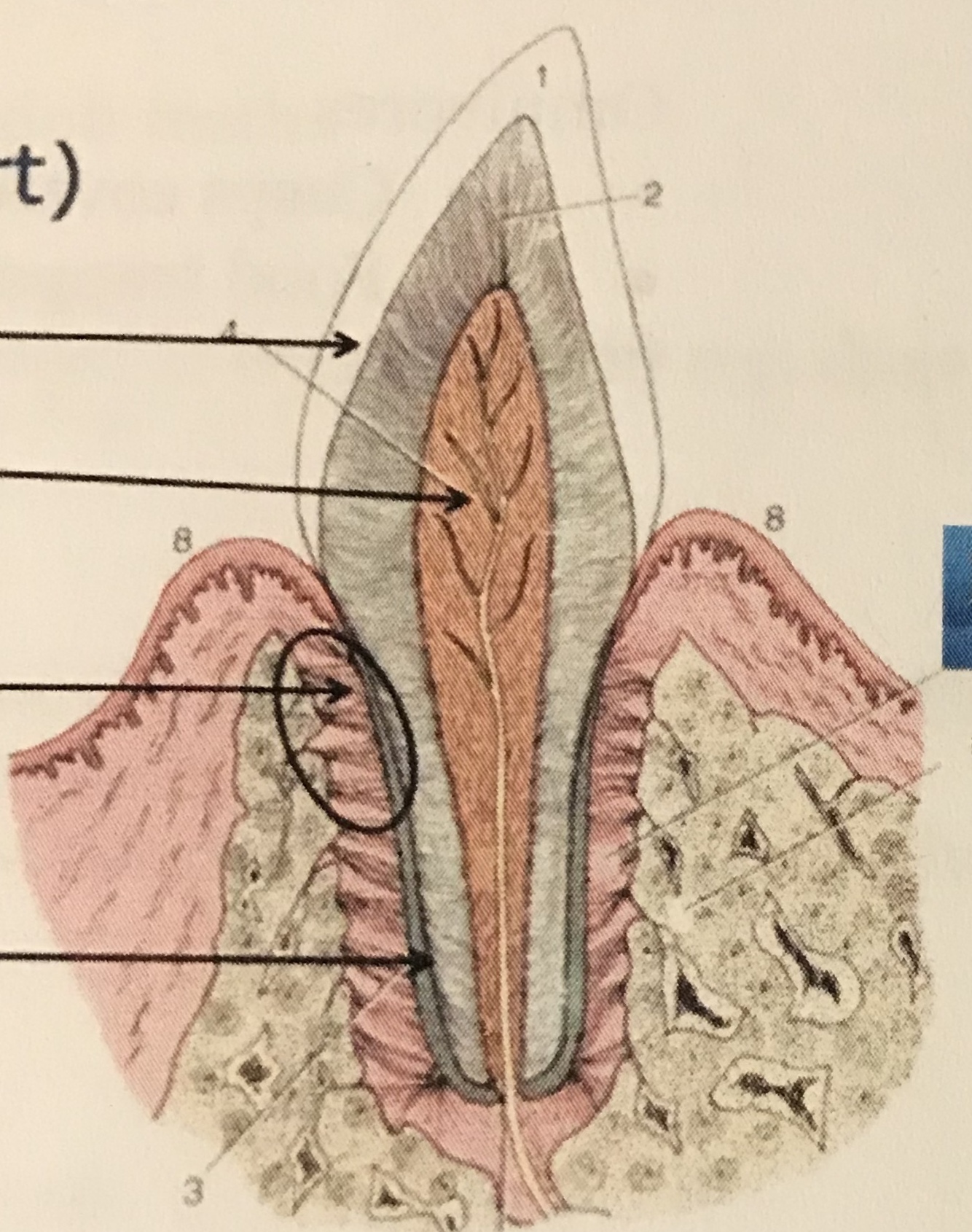
Enamel
- Hardest known biological substance outside of limpets
- Acellular once formed so cannot be repaired if damaged
- Mostly made of hydroxyapetite
- Dissolves in acid e.g. coca cola
Dentine
living tissue within the pulp cavity. Contains odontoblasts with processes in dentinal tubules.
Primary dentine
most of dentine, formed as the tooth grows.
Mineralised collagen
Secondary dentine
Grows slowly
Formed after tooth eruption
Makes the pulp cavity smaller


-
Teeth57
-
Oral microbiology41
-
Oral cavity and oesophagus27
-
Anatomy of the abdomen26
-
Anatomy and function of the rumen and stomach51
-
Anatomy and function of the stomach0
-
Anatomy and function of the liver65
-
Anatomy and function of the intestines0
-
Pathogenic mechanisms5
-
Nutrition0
-
Biochemistry0
-
Avian abdominal anatomy8
-
Ketosis9
-
Johne's Disease22
-
Oral Tolerance18
-
Digestion And Absorption4



