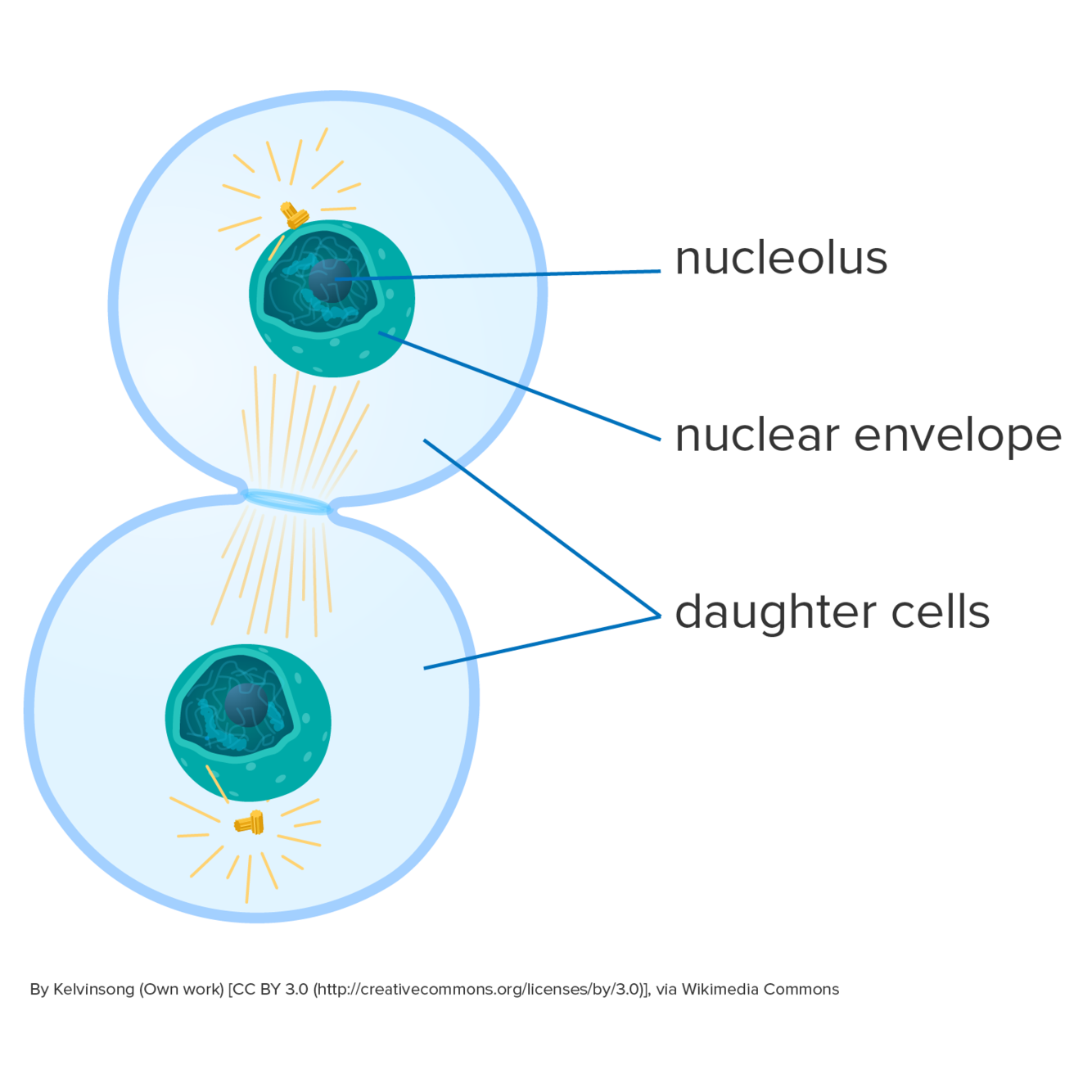
Name the two types of eukaryotic cell division.
- mitosis
- meiosis
Mitosis produces somatic cells that are identical to the parent, while meiosis produces germ cells with only half of the parental genetic material.
Explain the difference between a haploid and a diploid cell.
- Haploid cells have only one full set of chromosomes. In humans, the only haploid cells are germ cells (sperm and eggs) produced by meiosis.
- Diploid cells have two distinct sets of chromosomes. In humans, all somatic cells are diploid and are produced by mitosis.
What is the difference between germ cells and somatic cells?
- Germ cells, including sperm and ova, are haploid and participate in reproduction. They are formed via meiosis.
- Somatic cells are diploid and include the rest of the cells in the body. Somatic cells only undergo mitosis.
What features distinguish homologous chromosomes from sister chromatids?
- Homologous chromosomes can be genetically different; each homologous chromosome has the same loci, but can have different genes than its partner. Homologous chromosomes separate during meiosis I.
- Sister chromatids are genetically identical, as they result from the replication of a single chromosome. Sister chromatids separate during meiosis II and mitosis.
Name the microtubule-based structure that separates chromosomes during cell division.
The spindle apparatus

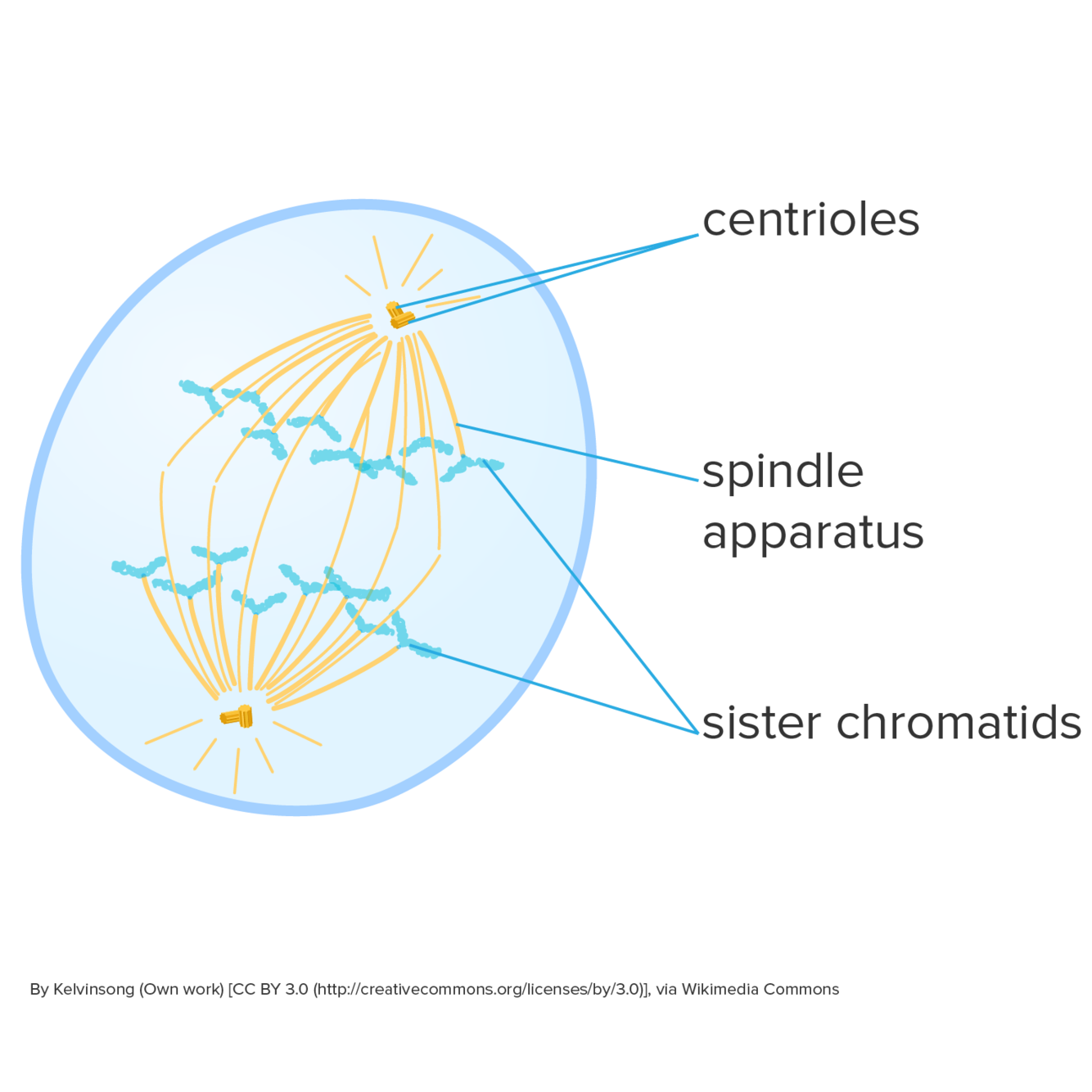
Spindle fibers radiate from the centrosome, which contains centrioles, and bind at the kinetochore region of the centromere.
Describe the role of the centrioles during cell division.
They are cylinder-shaped microtubular structures, generally found in pairs as part of the centrosome, which act to organize the spindle apparatus along which the chromosomes align.
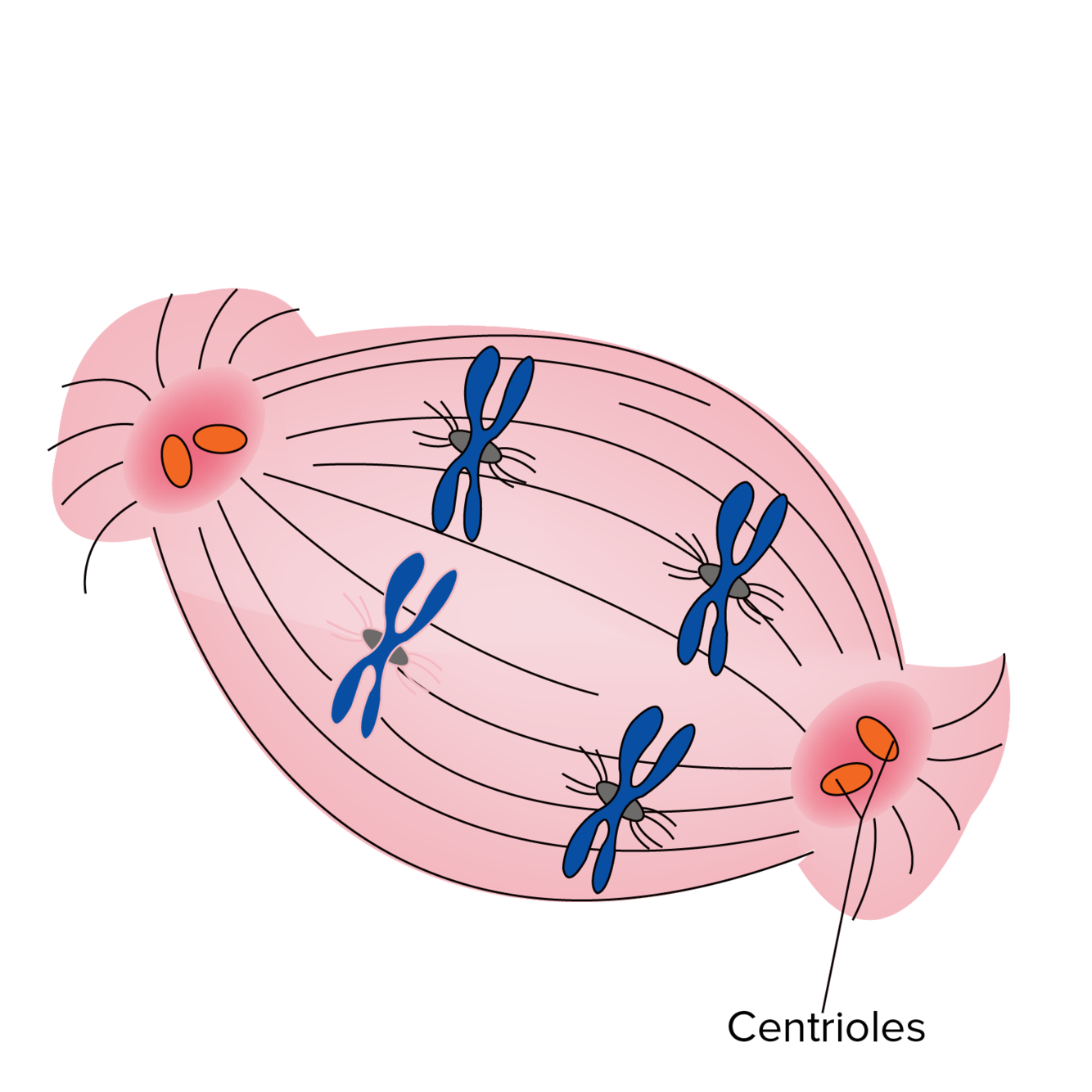
Describe the role of the centromere during cell division.
At the centromere, sister chromatids attach in pairs. This region also contains the kinetochore, which binds to a spindle fiber and allows the chromatids to be pulled to opposite poles of the cell.
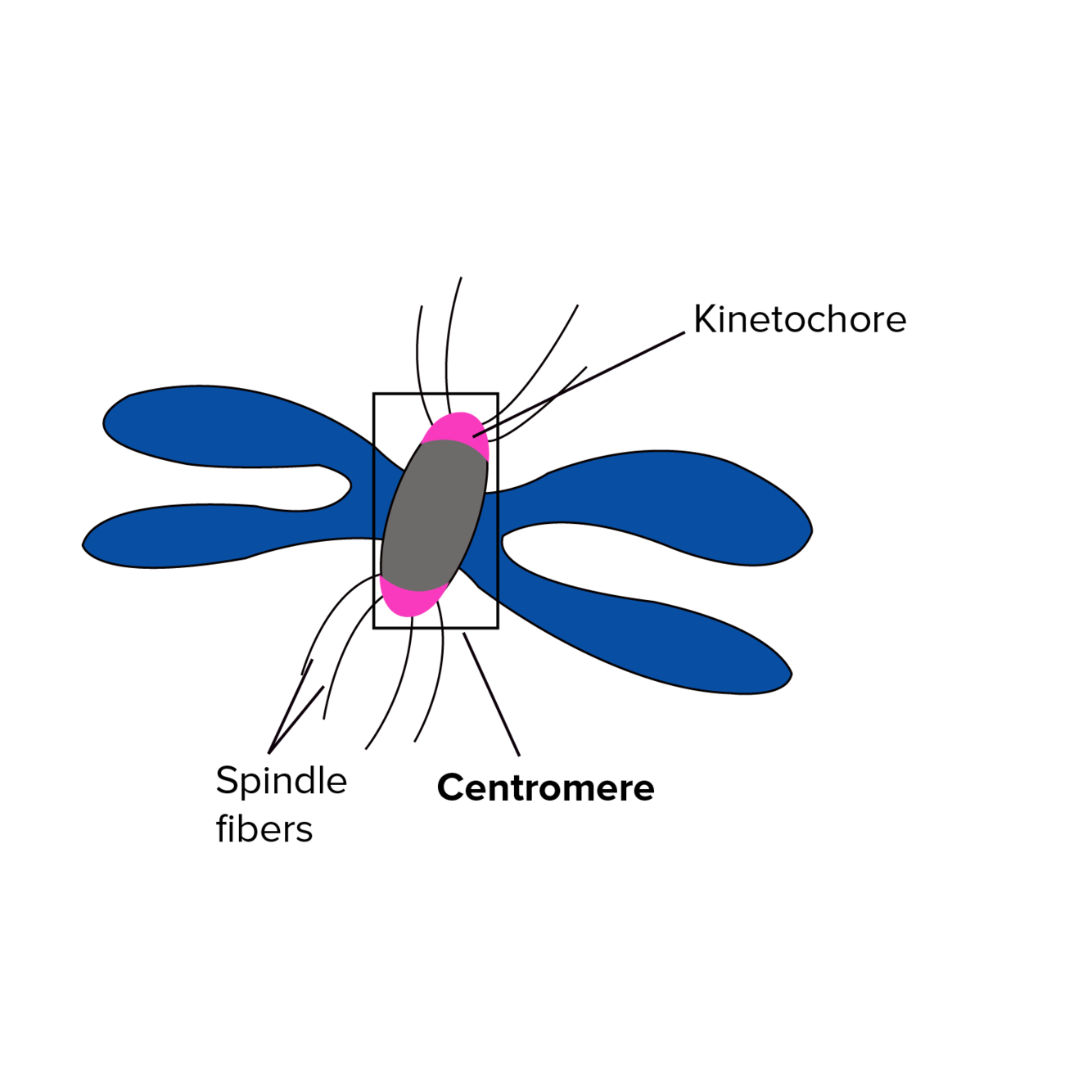
The centromere is the location on the chromosome that appears “pinched.”
Describe the role of the kinetochore during cell division.
It is a complex arrangement of various proteins that forms on the centromere. Here, spindle fibers bind, allowing sister chromatids to be separated to opposite poles of the cell.

Which type of cytoskeletal fiber is associated with MTOCs?
Microtubules are anchored at MTOCs, or microtubule-organizing centers. The fibers attach to the MTOC at one end and radiate toward other parts of the cell.

Centrosomes are a specific type of MTOC involved in cell division. Spindle fibers attach to the centrosomes, each of which is composed of two tubulin-based centrioles.
Label the following structures on the diagram below: centrosome, centriole, spindle fiber, aster.


Name the four phases of the cell cycle.
- G1
- S (synthesis)
- G2
- M (mitosis)

An additional phase is G0, in which the cell is not immediately preparing for cell division. G0 can be either temporary or permanent.
Which phases of the cell cycle are part of interphase?
- G1
- S
- G2
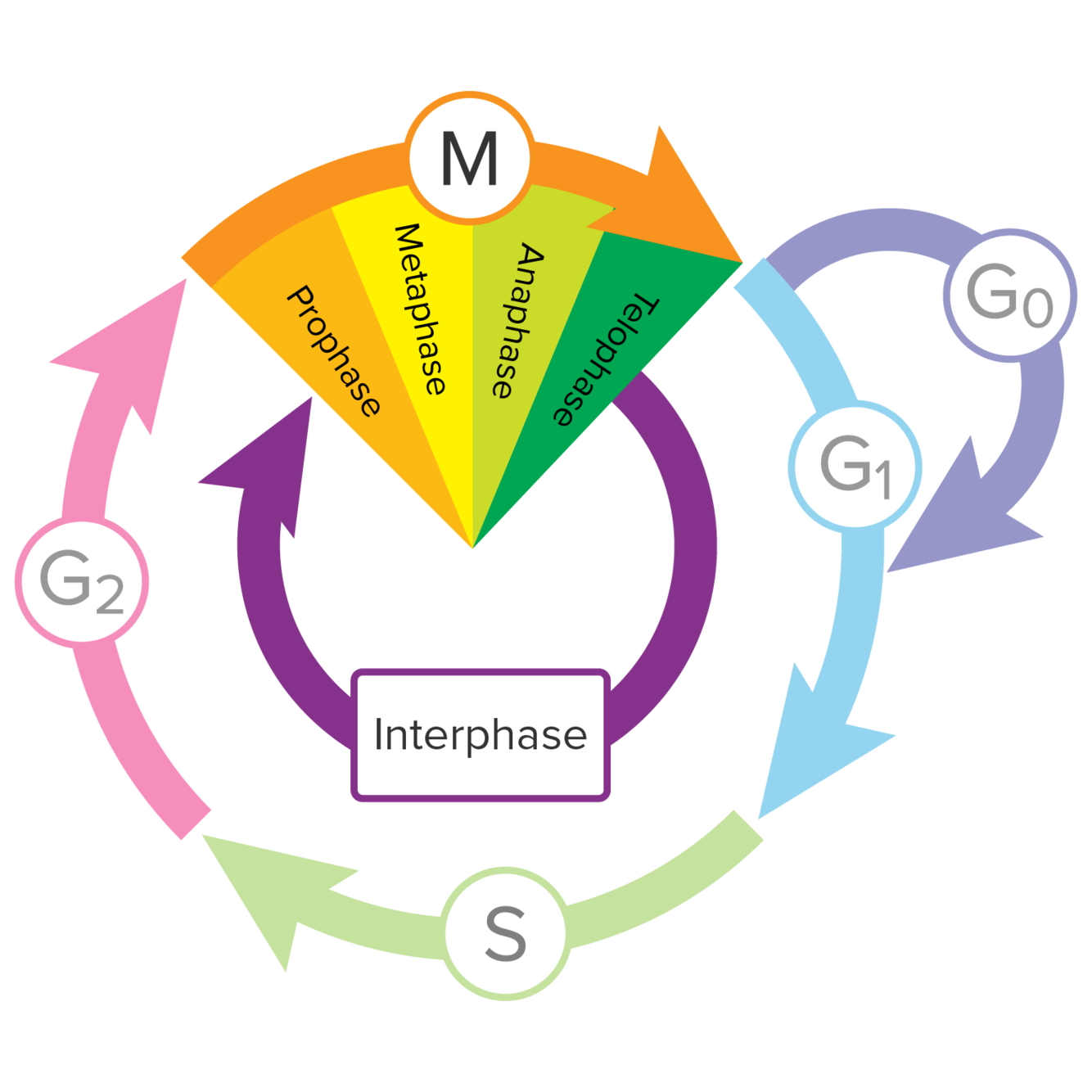
In these phases, the cell grows, replicates its DNA, and prepares for mitosis.
The M phase (mitosis itself) is not a part of interphase. G0 is generally thought to be distinct when it is permanent (as in neurons, which do not divide), but that is unlikely to be tested on the AP Biology exam.
What process most notably occurs in the cell during S phase?
DNA replication
More specifically, the S, or “synthesis,” phase of the cell cycle involves replication of all chromosomes to form identical copies. Together, a chromosome and its copy are termed “sister chromatids.”
What processes most notably occur during the G1 and G2 phases of the cell cycle?
The G1 and G2 phases are marked by growth and the synthesis of proteins, including enzymes.
These phases help the cell prepare for cell division, or mitosis (the M phase).
What does the cell assess at the G1 checkpoint?
The DNA, to ensure that it is in proper condition to be replicated.

The G1 checkpoint is also known as the G1/S checkpoint or the restriction checkpoint.
Passage through this checkpoint is required to enter the S phase of the cell cycle.
What does the cell assess at the G2 checkpoint?
It makes sure that sufficient cell growth has occurred and that the DNA was replicated properly.

The G2 checkpoint is also known as the G2/M checkpoint.
Passage through this checkpoint is required to enter the M phase of the cell cycle.
What is the significance of the G0 phase?
It is a stage of prolonged inactivity. In this phase, the cell is not preparing for mitosis.
Mature neurons and cardiac muscle are in a permanent G0 phase, since they do not undergo mitosis.
During which phase of the cell cycle would DNA helicase be especially active?
DNA helicase, as well as the other enzymes involved in DNA replication, would be most active during the S phase.
In the S (synthesis) phase, DNA is replicated to prepare for cell division.
Which two types of molecules determine when a cell will enter the next phase of the cell cycle?
- cyclins
- cyclin-dependent kinases
Cyclins are proteins that change in concentration depending on a cell’s location in the cell cycle. These proteins can bind to cyclin-dependent kinases (Cdks), which are enzymes that phosphorylate other proteins. The behavior of cyclins and Cdks is key in the regulation of the cell cycle.
List the four phases of mitosis in the order that they occur in a dividing cell.
- prophase
- metaphase
- anaphase
- telophase and cytokinesis
What cellular events characterize prophase?
- Loose chromatin condenses into visible chromosomes.
- The nuclear membrane disintegrates.
- The nucleolus disappears.
- The centrioles and spindle apparatus form.

What cellular events characterize metaphase?
- At this point, spindle fibers are bound to the kinetochore of each chromosome.
- The chromosomes line up along the center of the cell, a region called the metaphase plate.
What cellular events characterize anaphase?
- Sister chromatids are cleaved apart.
- Spindle fibers shorten, causing each sister chromatid to move to the opposite pole as its partner.
What cellular events characterize telophase?
- The cell elongates.
- Each daughter nucleus forms a new nuclear membrane and nucleolus.
- The chromosomes start to become less condensed.