Describe arterial vs venous thrombosis
Arterial thrombosis
Mostly result from atheroma rupture (causing MI, stroke)
Platelet-rich “white” thrombosis
Block downstream arteries
Venous thrombosis
Result from stasis or a hypercoagulant state (DVT)
Platelet-poor, “red” thrombus
May move to lungs
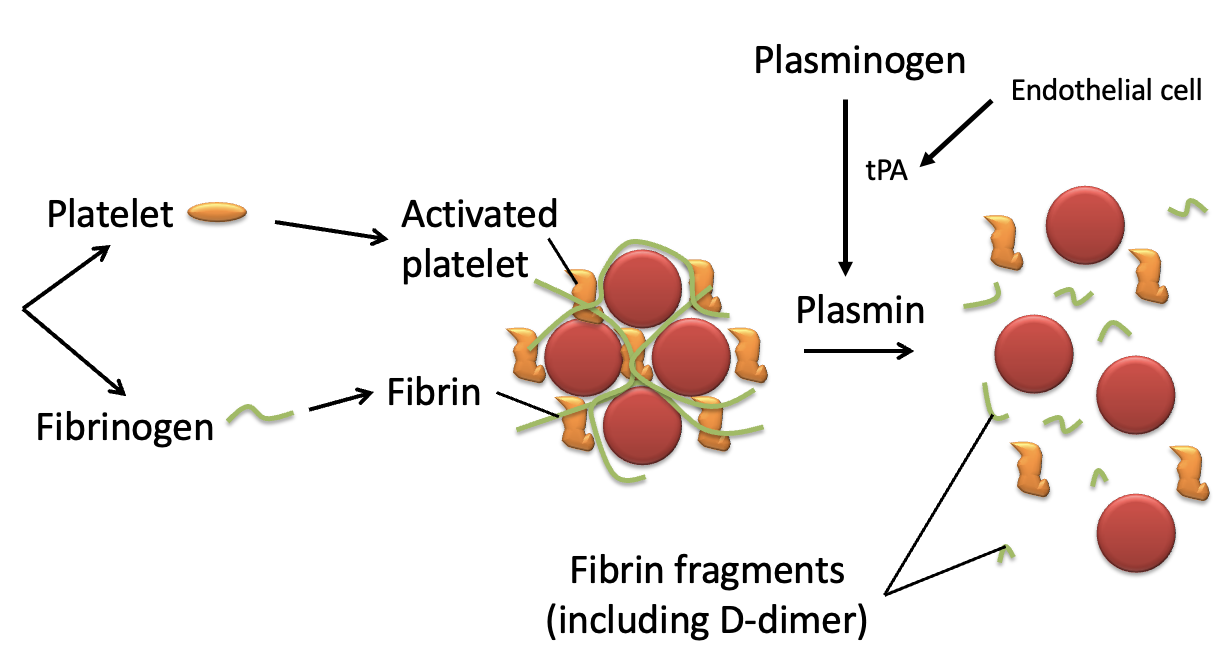
Draw a diagram to briefly explain coagulation and fibrinolysis
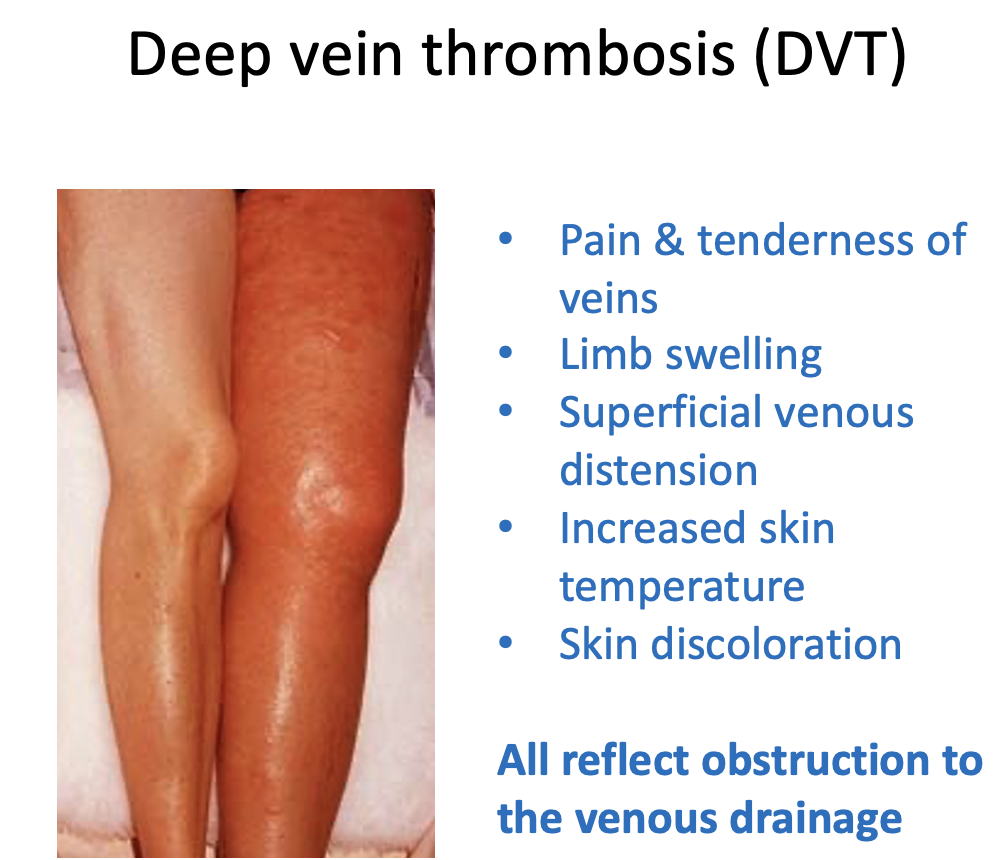
What does a DVT look like?
Describe the involvement of valves in DVT
Blood forms circular eddy currents and collect around valves. This increases the risk of stasis and of the blood beginning to clot
So valves are a common site of thrombosis
What is Virchow’s Triad?
Development of a venous thrombus depends on:
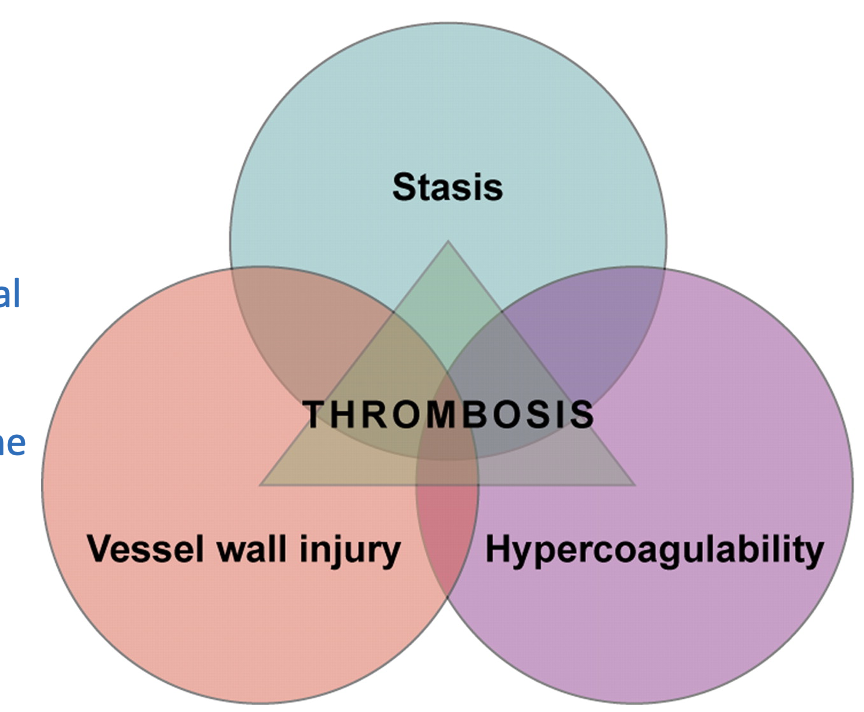
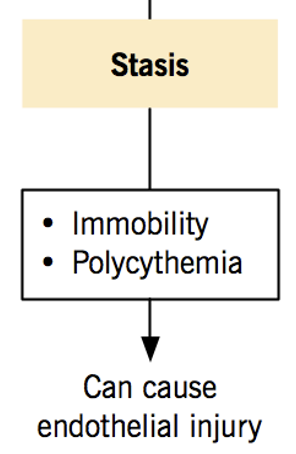
What is meant by stasis and what its caused by? (a risk factor for thrombosis)
Stasis is caused by:
- Prolonged immobility e.g. surgery, travel
- Stroke, cardiac failure
- Dehydration
- Hyperviscosity
- Polycythaemia
- Stasis can also cause endothelial damage
What is meant by hypercoagulability (risk factor for thrombosis)?
Hypercoagulability is caused by decreased fibrinolytic factors or anticoagulant proteins/activity:
Protein C and S deficiencies, so factor V cant be inhibited
Factor V Leiden mutation (resistance to the anticoagulant complex)
It is also caused by increased coagulation factors and platelets: eg malignancy increases clotting factors like tissue factor, FXa, thrombin
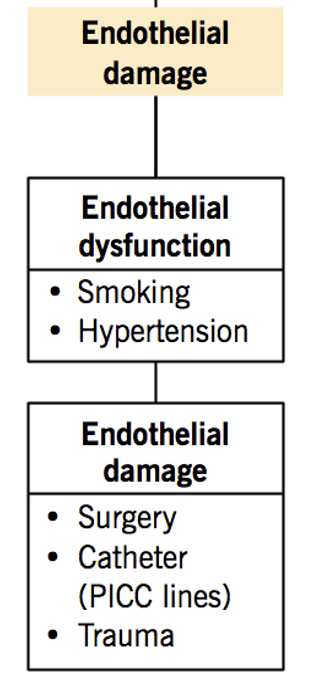
What is meant by endothelial damage as a risk factor for thrombosis?
Damage to the endothelial surface will induce platelet activation and the coagulation pathway which can lead to thrombosis
How can venous thrombosis impact the lungs?
In small venous thrombous can break from the clot, travel into pulmonary circulation, but it can be asymptomatic
In large venous thrombous, it can cause rapid death bc of obstruction to the circulatory system
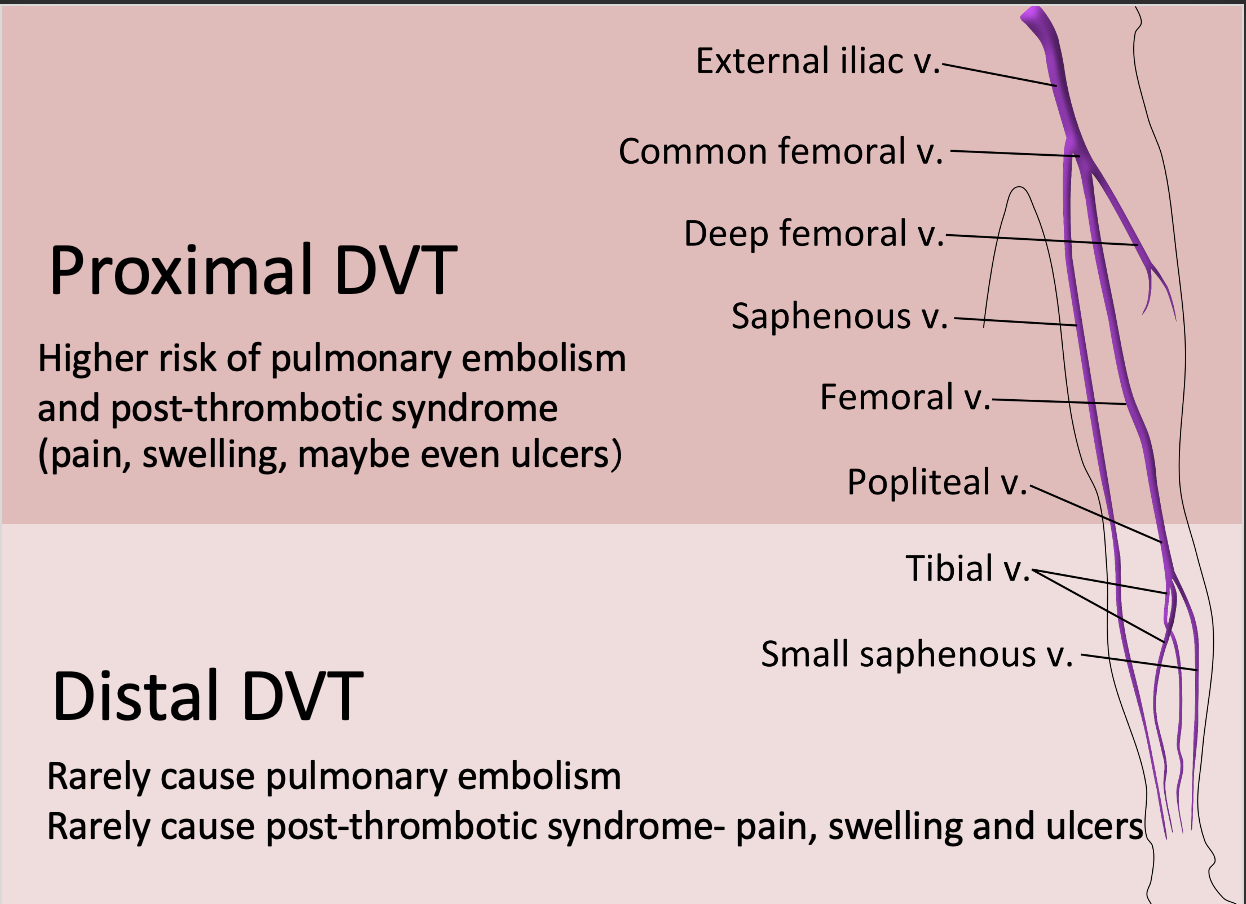
What is the difference between proximal and distal DVT
What is post thrombotic syndrome?
- •Chronic complication, results from venous hypertension
- •Reduces calf muscle perfusion
- •Increases tissue permeability
- •Risk increases with obesity and age
- •Pain, swelling, oedema, redness
- •Thickening of skin
- •Ulcers in 5-10%
Describe the treatment of VTE
If the patient is cardiovascularly stable with acute VTE:
- •Must initiate anticoagulation
- •Immediate anticoagulant effect: heparin then warfarin/DOAC or immediate DOAC
If the patient has circulatory collapse due to PE:
- Must initiate thrombolysis
- Alteplase (tissue plasminogen activator)
- Streptokinase
- Followed by heparin and warfarin or other to prevent recurrence
What investigations would you do pre treatment in the investigation of thrombosis?
- Clotting screen
- Prothrombin time (INR), Partial thromboplastin and thrombin time
- Full blood count
- Urea and electrolytes- usually part of routine screen, to know creatinine clearance
- Liver function tests if clinical suspicion of liver disease

-
Respiratory System: Pulmonary Ventilation14
-
Respiratory System: Mechanics of Breathing25
-
Respiratory System: Gas Exchange13
-
Respiratory System: 02 and C02 Transport18
-
Respiratory System: Respiratory Disease23
-
Respiratory System: Integrated Ventilation Control27
-
Development of the Heart0
-
Red Blood Cell Survival20
-
CVS: Action Potentials and Cardiac Cycle18
-
CVS: Preload, Afterload14
-
CVS: Contractility16
-
CVS: Arrhythmia18
-
CVS: Heart Failure13
-
Arteries, Arterioles, Veins14
-
Thrombosis13
-
CVS: Types of Capillaries12
-
CVS: Fluid Movement and Oedema13
-
The Lymphatic system17
-
CVS: Vascular Tone and Smooth Muscle14
-
CVS: Vascular Tone and Endothelium15
-
CVS: Angina and Acute Coronary Syndrome17
-
CVS: Atheroma and Infarction10
-
Lipid Synthesis and Degradation15
-
Lipid Transport14
-
Histology of the Kidney19
-
Renal BF, GFR7
-
Renal: Plasma Clearance16
-
Renal: Tubular Structure and Function12
-
Renal: Acid Base Disorders12
-
Renal: Renal Disease22
-
Renal: Drugs of the Kidney18
-
Renal: Micturition and Incontinence17
-
Renal: Salt and Water Balance15
-
Renal: Potassium Balance18
-
Structure and function of the Human Genome29
-
Structural Chromosomal Abnormalities12
-
Detecting Chromosomal Abnormalities23
-
DNA Sequencing and Disease Causation25
-
Inherited Cancer18
-
Cancer Genomes18
-
The Future of Genomics4



