tissues
structurally similar cells (and products) Specialized function
4 types of tissue
- muscle
- nervous
- connective
- Epithelium/epithelial
All organs have at least ?#_____ tissues
2 tissues most major organs have all 4 kinds
Muscle cells are made of elongated cells called _____ that contain _______ (contraction structures) which are made out of __________
Muscle cells are made of elongated cells called (fibers) that contain (myofibrils) contraction structures which are made out of (myofilaments)
elongated muscle cells can be called
fibers
myofibrils
-in muscle tissue -protein rich contraction structures -made out of myofilaments
myofilaments
-thin thread like protein filaments
Muscle cell pieces/names (general)
- nuclei – well defined
- cell membrane = sarcolemma
- cytoplasm = sarcoplasm
- smooth endoplasmic reticulum = sarcoplasmic reticulum
cytoplasm in muscle cells
sarcoplasm= Muscle name for cytoplasm
cell membrane in muscle cells
cell membrane = sarcolemma
smooth endoplasmic reticulum in muscle cells
smooth endoplasmic reticulum = sarcoplasmic reticulum
Do muscle cells duplicate?
- muscle cells can enlarge but don’t proliferate after birth
- “what you have is what you get”
- limited cell-cycling mitosis
When muscles do work _______ is generated
When muscles do work (heat) is generated
Muscle tissue functions
- ability to contract(shorten) / elongate(lengthen) to move bone or organ
- body support/ maintenance of posture (standing and sitting, offsetting gravity)
- body shape/form
- heat produced when contracted
SOUND ATTACHED
Muscle Tissue Classifications:
Functionally
Structurally
3 types based on structure/function
Muscle Tissue Classification:
Functionally - voluntary / involuntary
Structurally- striated / non-striated
3 types based on structure/function:
- skeletal
- cardiac
- smooth
voluntary vs. involuntary muscle tissue
Voluntary muscle tissue: controlled by will Ex. moving my arm to pick something up
Involuntary muscle tissue: not under conscious control Ex. cardiac muscle, smooth muscle (intestinal peristalsis - rhythmic contraction of the esophagus, intestines, stomach)
Striated muscle tissue vs. non-striated
striated – cross-stripping contractile protein (ridges)
non-striated – unstriped (no ridges)
(seen microscopically)
On the basis of structure / function
Muscle tissue is broken into these 3 types
- skeletal
- cardiac
- smooth
Skeletal muscle cells
- shape/size
- parts
- 1mm to 40 mm in length
- multiple nuclei under sarcolemma around periferal border
Skeletal muscle tissue
Skeletal muscle tissue:
voluntary
striated (actin/myosin stripes)
bundles of cells attach to the skeleton (muscle organs)
these cells have multiple nuclei under sarcolemma (cell membrane)
Cross striations of:
- light bands – isotropic bands – I bands
- darker bands – anisotropic bands – A bands
contractions – rapid and forceful (kicking)
SOUND ATTACHED
Skeletal muscle cells
voluntary?
Striated?
- voluntary
- striated (actin/myosin stripes)
Cross striations (width, not length)
- -light bands – isotropic bands – I bands
- -darker bands – anisotropic bands – A bands
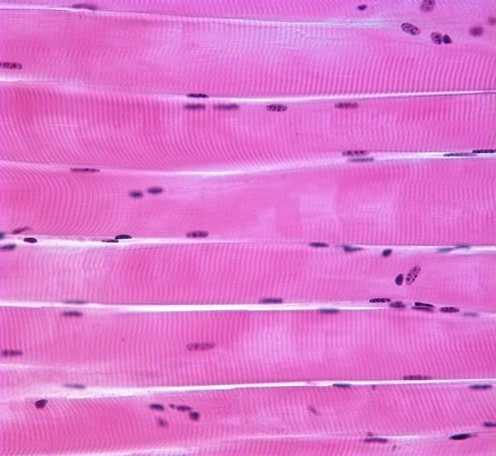
Skeletal muscle tissue:
- long/elongated muscle fibers
- ridges (vertical lines) are cross striations
light I bands (which is short for isotropic bands), darker A bands (which is short for anisotropic bands).
•black jellybean looking things the are multiple nucleus structures (peripherally located)
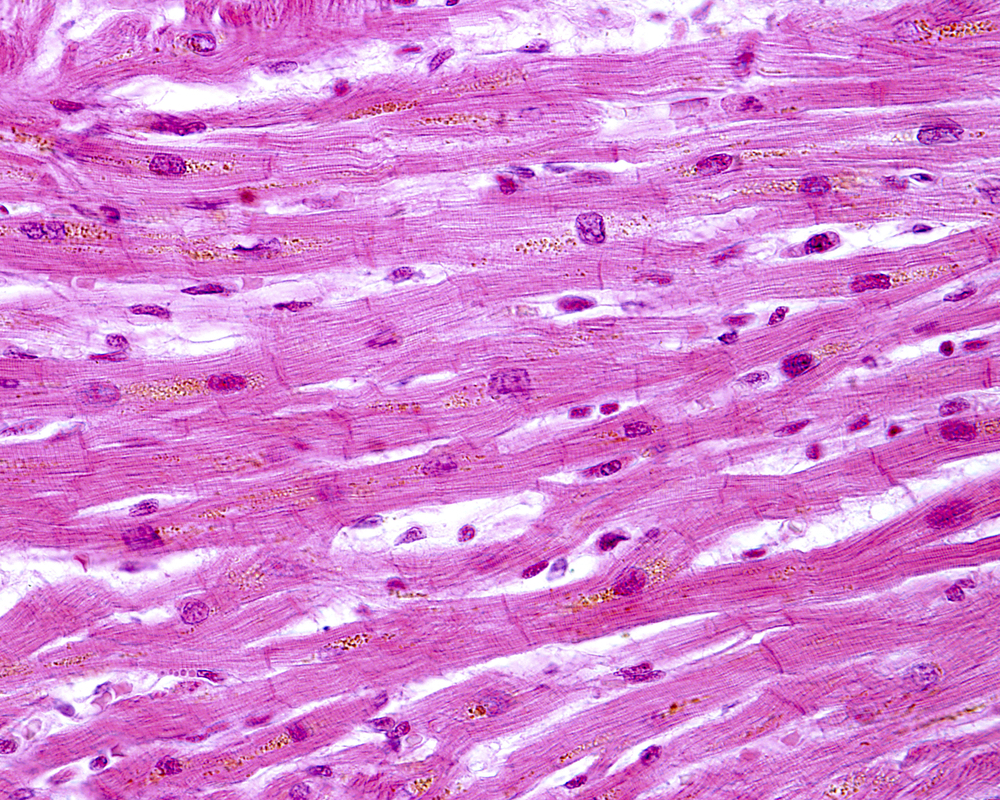
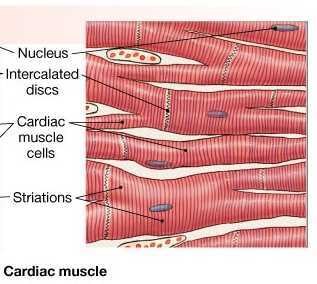
Cardiac muscle:
- Looks like bacon strips
- Has long fibers
- 1 nucleus in fibers
- see spacing – branching phenomenon
- intercalated disc (cells head to head or overlap)
SOUND ATTACHED
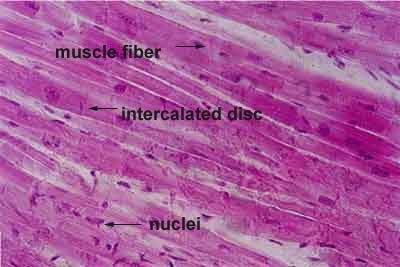
Cardiac muscle
involuntary
elongated cells
single nucleus
striations (harder to see)
fibers overlap/branch – form cellular networks
intercalated discs – electoral currents can move to spread contraction through the heart
contractions – strong and rhythmic
synchronous - working together at same time