Active Listening
receiver confirms they are listening, rephrases what the speaker said, expresses agreement or disagreement, and asks for clarification if necessary
- manage communications
- monitor stakeholder engagement
Affinity Diagramming
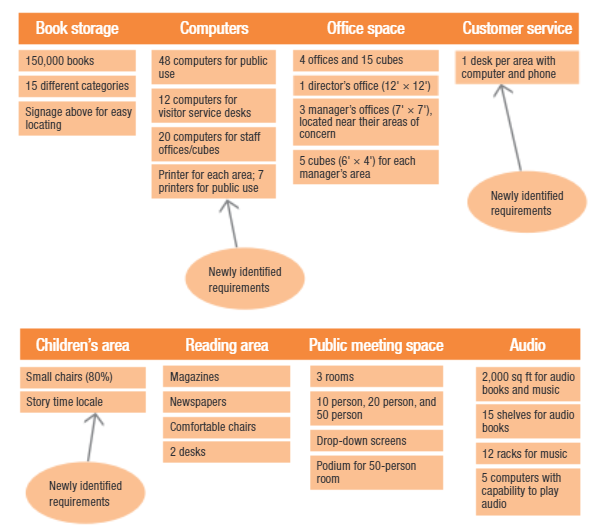
- collect requirements: ideas gathered from other requirement gathering techniques are grouped by common scope area or requirements type – business needs, stakeholder requirements, solution requirements, transition requirements, project requirements, quality requirements, and/or technical requirements
- manage quality
Alternatives Analysis
comparing options given constraints
- monitor and control project work
- perform integrated change control
- plan scope management
- estimate activity durations: when estimated schedule does not fit constraints, determine how to make it fit based on choices
- estimate project costs
- manage quality
- estimate activity resources: if resources you want are not available, you might need to look at alternatives in order to avoid a project delay OR you might need to determine which resources are more cost-effective
- acquire resources
- control resources
- plan risk responses
- monitor stakeholder engagement
Alternatives Generation
sets of actions, strategies or portfolio of different individual elements that exhaust all possible approaches to a particular situation
- define scope: generate choices for vendors, materials, and systems
Analagous (Top-Down) Estimating
- uses expert judgement and historical information, such as similar completed projects, to predict the future
- pros
- faster
- cheaper
- activities do not need to be identified
- cons
- less accurate and reliable
- reflects a limited amount of information
- estimate is only as good as the data provided
- requires considerable experience
- does not take into account differences between current and past projects
- estimate activity durations
- estimate project costs
- estimate activity resources
Assumptions Analysis
identify and analyze assumptions made on the project and assess whether or not those assumptions are valid to identify risks
- identify risks: assumptions can become risks
- plan stakeholder engagement
Attribute Sampling
a form of statistical sampling that simply identifies whether or not there is a defect
- control quality
Audit
- validate scope
- manage quality: document best practices used, record variances, recommend best practices, implement best practices, document quality audit in lessons learned
- control quality: confirm that product conforms to requirements and is fit for use
- monitor risks: was money spent on implementing risk responses worth the cost?
- control procurements
Benchmarking
- collect requirements: compare product or project requirements to others in the industry
- plan quality: measuring one item against another and how does that most accurately and precisely deliver quality; can also compare projects for earned value management
- plan stakeholder engagement
Bidder Conferences
- conduct procurements
Bottom-Up Estimating
- estimate how long or how much each work package takes or costs;
- pros
- more accurate and most reliable form of estimating
- gains buy-in from team more easily
- cons
- takes time and money to use this technique
- team might have tendency to pad estimates unless they understand the concept of reserves
- requires that the project be very well-defined
- estimate activity durations
- estimate project costs: creates definitive estimate
- estimate activity resources
Brainstorming
- project charter: gather data
- identify stakeholders: key experts, known stakeholders, and team members to determine who has been left off the list
- develop project management plan
- gather requirements: build on each others’ ideas, particularly when there are people with different perspectives
- plan quality
- identify risks
- identify stakeholders
Brainwriting
question given in advance so participants have time to write out ideas
- identify stakeholders
Business Analysis
define, manage, and control requirements; PMs partner with business analysts to identify problems, define business needs, recommend viable solutions, elicit, document, and manage stakeholder requirements, and facilitate successful implementation
Cause-and-Effect Chart (Fishbone Diagram OR Ishikawa Diagram)
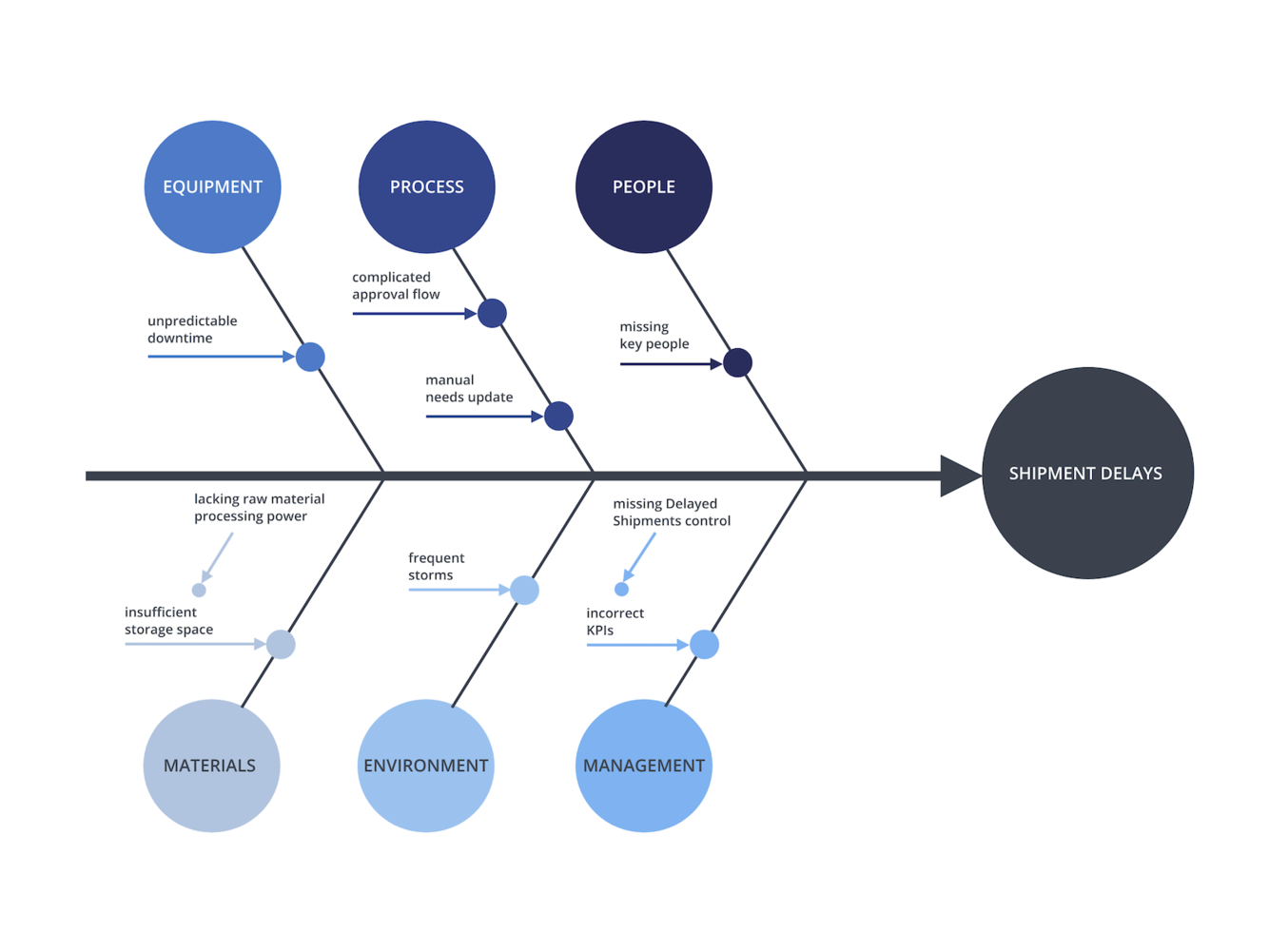
shows the relationship between variables within a process and how those causal factors might contribute to poor quality; confirm policies and procedures are being followed and metrics are being used correctly and are adequate to achieve acceptable quality; looks like a fishbone because the causes of the error are nodes coming off a straight line that leads to the effect (error)
- manage quality
- control quality
Checklists
ensures routine work is done the same way each time
- develop project management plan
- manage quality
Checksheets (Tally Sheets)
type of checklist that can be used to keep track of data, such as quality problems uncovered, and document the frequency with which a particular defect occurs; can be used to tally up errors in quality control
- control quality
- identify risks
Claims Administration
- during the procurement process, a claim is an assertion that the buyer did something that has hurt the seller and the seller is now asking for compensation
- seller initiated change requests
- claims are usually addressed through the contract change control system
- best way to settle them is through negotiation or specified dispute-resolution process in the contract
- can happen when contract is canceled
- control procurements
Communications Technology
- develop team
- plan communications management
- manage communications
Configuration Management System
part of the PMIS that contains the organization’s standard processes, procedures, forms, and reports for tracking and controlling project documentation; when scope changes, you need the configuration management system
- perform integrated change control
Conflict Management
collaboration is the ideal approach to conflict management, which means both parties reach agreement; should avoid using forcing, compromising, or withdrawing/avoiding styles of conflict management; might need to escalate the conflict if it’s outside of your authority; if the conflict is petty, you might use smoothing to downplay the issue
- develop team
- manage team
- manage communications
- manage stakeholder engagement
Constraint Analysis
determine the level of risk posed by schedule or budget limitations
Control Chart
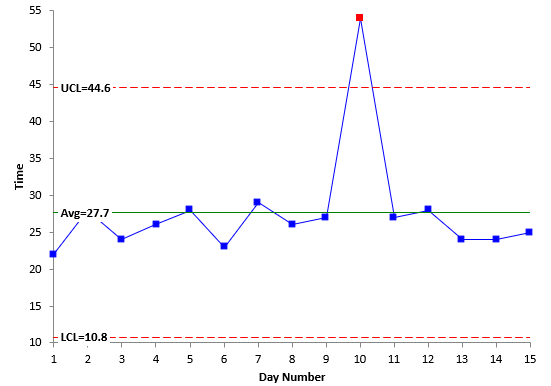
line chart that plots specifications vs. actual quality; specifications are set by customer; usually used where there is a repititive process; there’s an upper control limit and lower control limit; the specifications show what is an acceptable level of variance; the greater the sigma, the fewer the errors there are
Cost Aggregation
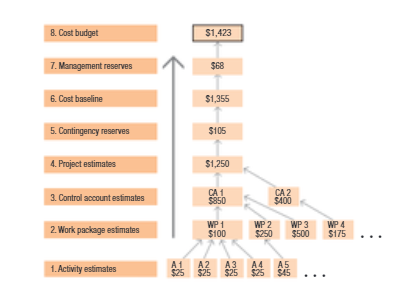
working from bottom up, activity cost estimates are rolled up to work package cost estimates that are rolled up to control account costs and finally to project costs
- determine budget