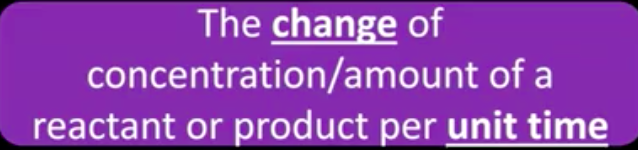
What is the rate of reaction?
What are the different ways to measure the rate of reaction experimentally?
- Measuring change in electrical conductivity (if there is a change in the number of ions)
- Amount of mass lost (for when a gas is produced)
- Volume of gas produced with a gas syringe (whena. gas is produced)
- Change in pH (when there’s a change in H+)
- Titration (taking aliquots(small samples) )
- Colourimeter (Use calibration curve to know which %absorbance corresponds to a specific concentration)
How do you measure the rate of reaction with titrations?
Small samples (aliquots) are taken from the reaction mixture at specific time interval.
Before titration aliquotes are quenched to try and stop the reaction. This is done by dilution, cooling it down and even using a quenching agent.
Then titrations are carried out to find the concentration at certain times.
What is the rate equation?

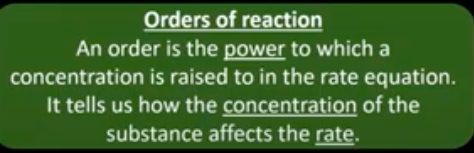
Wha is the order of reaction?
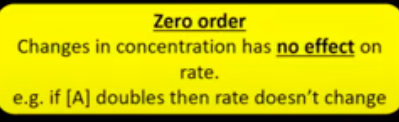
What does it means if a reactant is zero order with respect to a reaction?
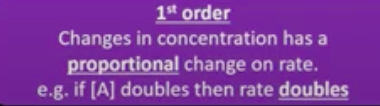
What does it means if a reactant is first order with respect to a reaction?
What does it means if a reactant is second order with respect to a reaction?
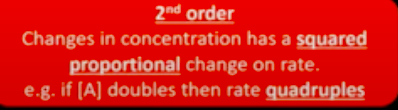
How is the order of a reactant determined?
From experimental data only.
Does K depend on temperature?
Yes. The higher the temperature, the bigger K is.

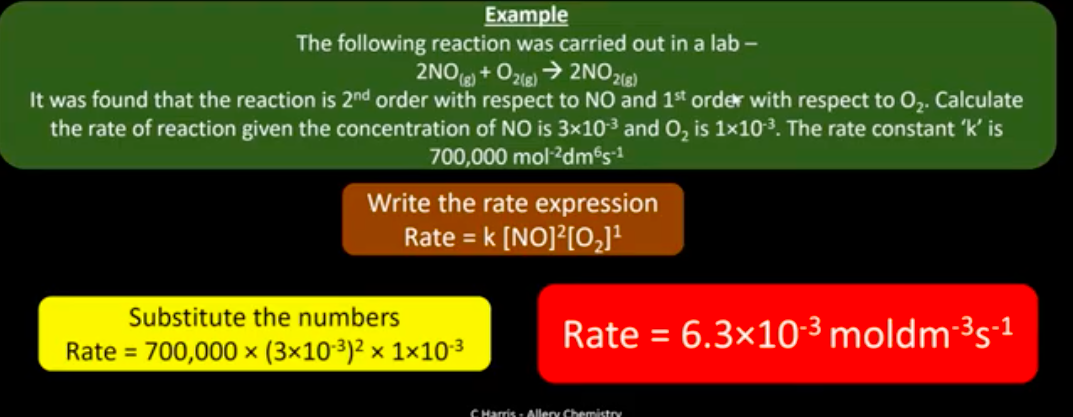

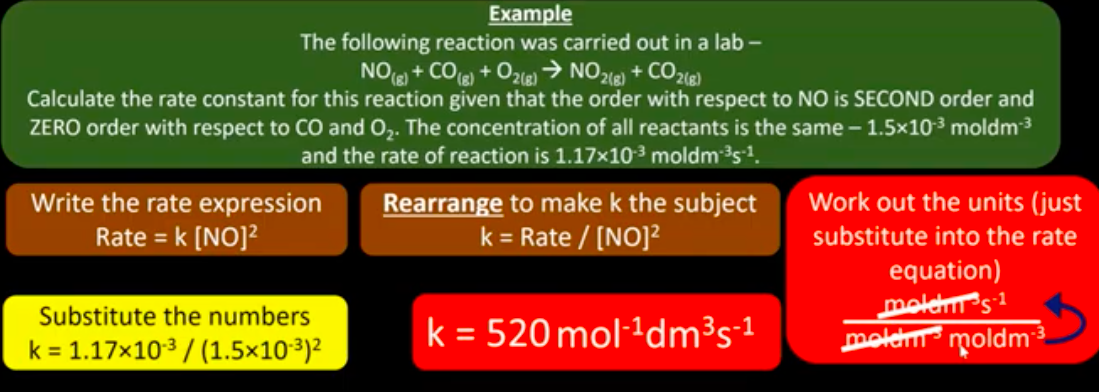
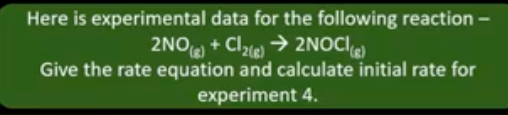
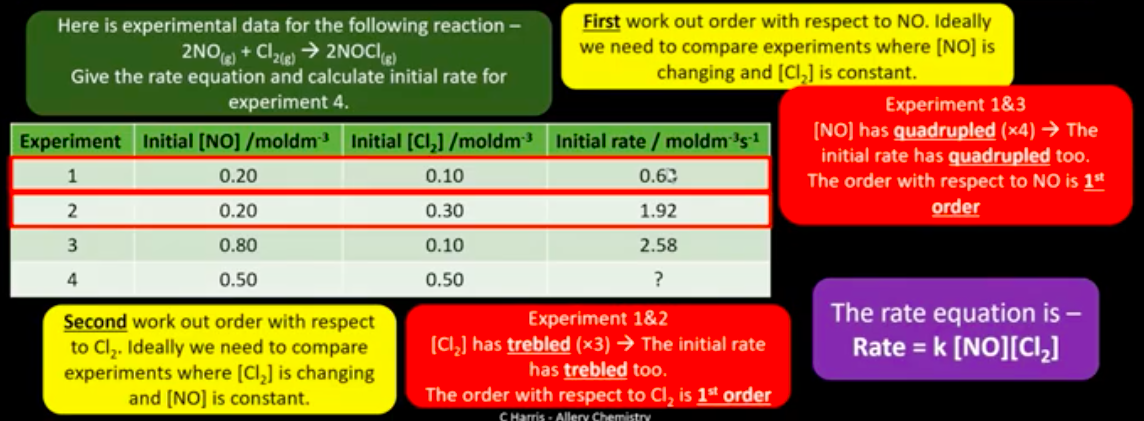
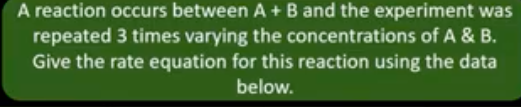
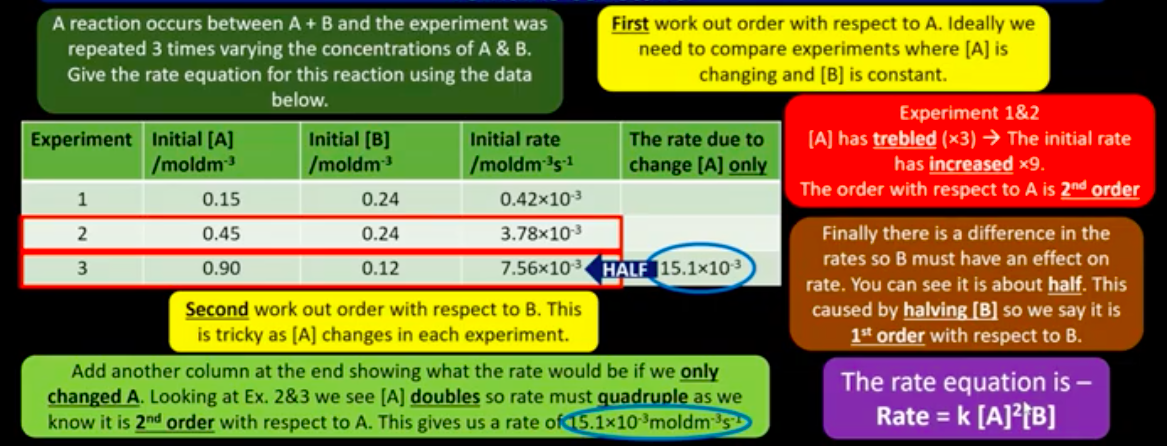
How is the rate equation determined experimentally for a reaction?
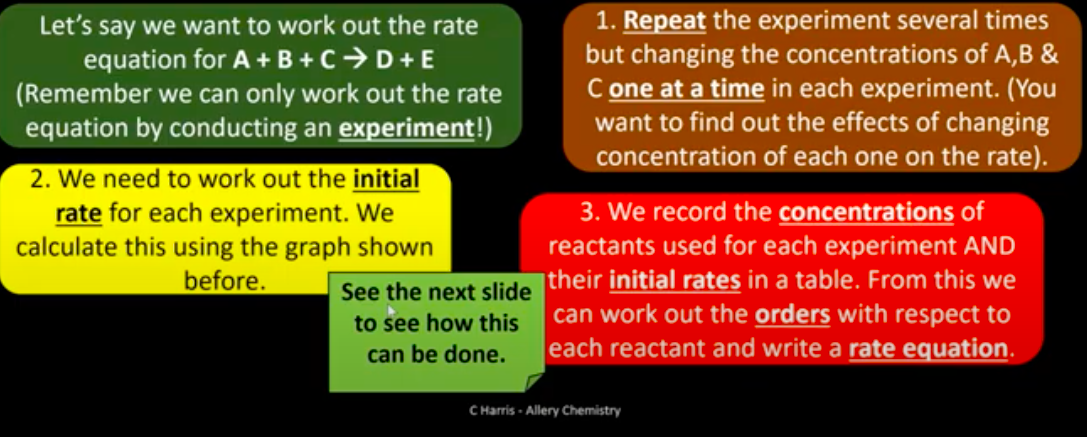
What 3 assumptions are made when finding the initial rate of a clock reaction?
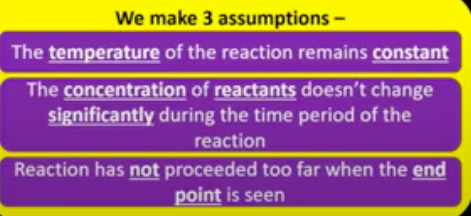
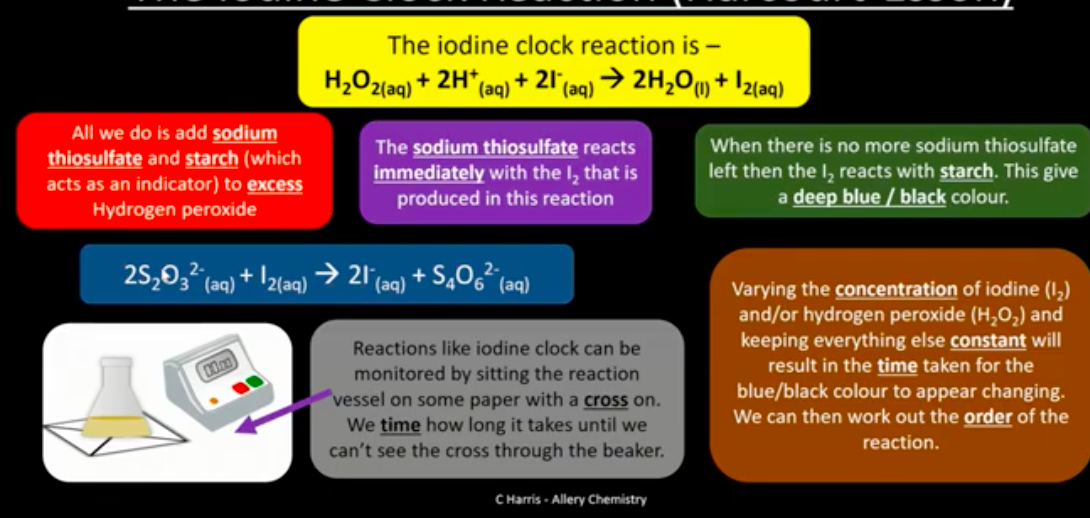
How does the iodine clock reaction work?
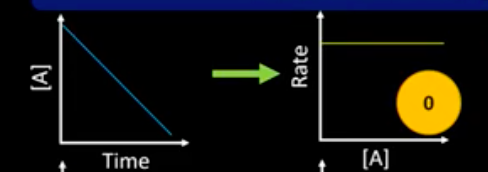
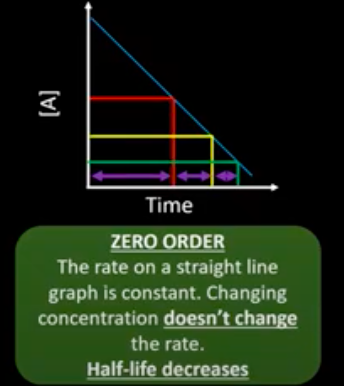
What are the concentration-time and rate-conc graph for a 0 order reactant?
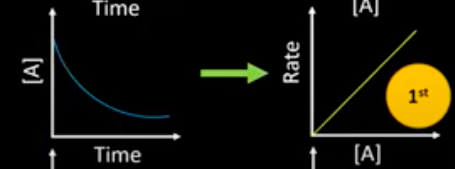
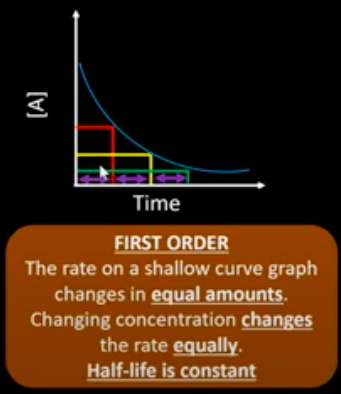
What are the concentration-time and rate-conc graph for a 1 order reactant?
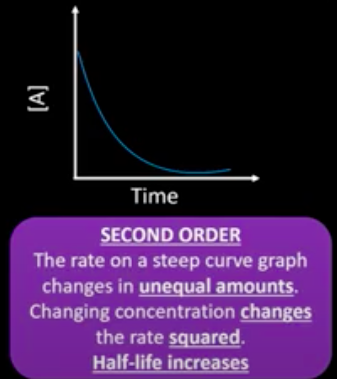
What are the concentration-time and rate-conc graph for a 2 order reactant?
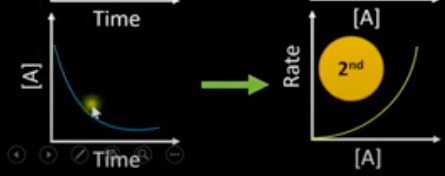
What is the half life of a reactant?
The time it takes for half of the reactant to be used up.
What happens to the half life of a zero order reactant?
What happens to the half life of a first order reactant?
What happens to the half life of a second order reactant?



-
TOPIC 1 - Atomic structure and the Periodic Table43
-
TOPIC 2 - Chemical bonding and structure62
-
TOPIC 3 - Redox I19
-
TOPIC 4 - Inorganic chemistry and the Periodic Table80
-
TOPIC 5 - Formulae, equations and amounts of substance22
-
TOPIC 6 - Organic chemistry I121
-
TOPIC 7 - Modern analytical techniques I1
-
TOPIC 8 - Energetics I20
-
TOPIC 9 - Kinetics I27
-
TOPIC 10 - Equilibrium I16
-
TOPIC 11 - Equilibrium II12
-
TOPIC 12 - Acid-base equilibria61
-
TOPIC 13 - Energetics II47
-
TOPIC 14 - Redox II23
-
TOPIC 15 - Transition metals88
-
TOPIC 16 - Kinetics II38
-
TOPIC 17 - Organic chemistry II50
-
TOPIC 18 - Organic chemistry III131
-
TOPIC 19 - Modern analytical techniques II15



