Memory- encoding, storage, retrieval
topics
- controlled attention- working memory
- vertical and horizontal organisation
- working memory
- types of long-term memory
- memory errors
- conceptual knowledge
where does controlled attention happen?
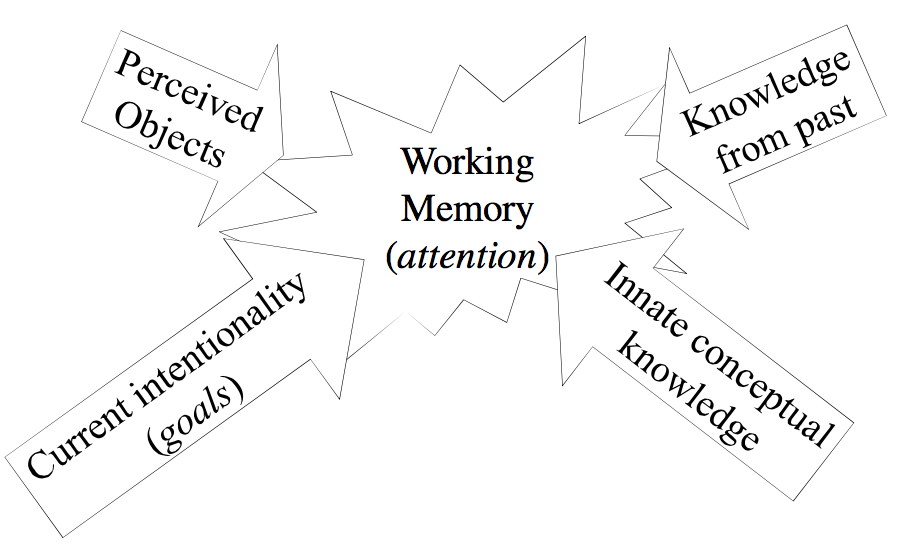
attention = maintaining information in working memory
working memory holds:
- percieved objects
- knowledge from past
- current intentionality (goals)
- innate conceptual knowledge
Vertical and horizontal organisation
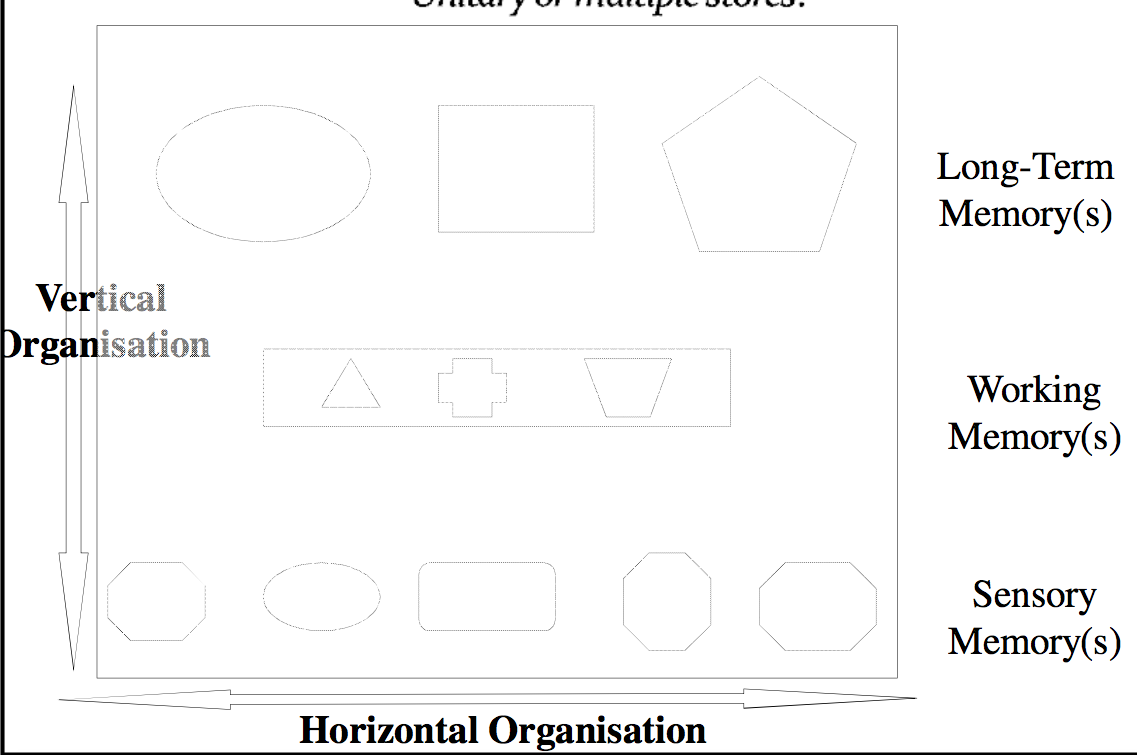
vertical and horizontal organisation
functional (behaviourism)
structural (cognitivism)
- horizontally and vertically involves competence-based domains
- horizontally produces knowledge-based domains
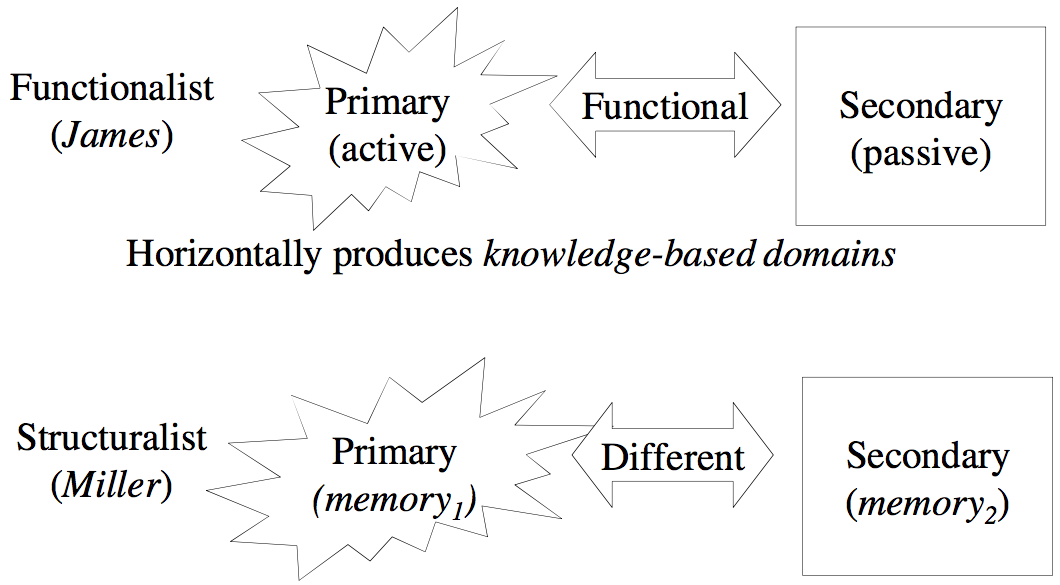
Vertical, structuralist account
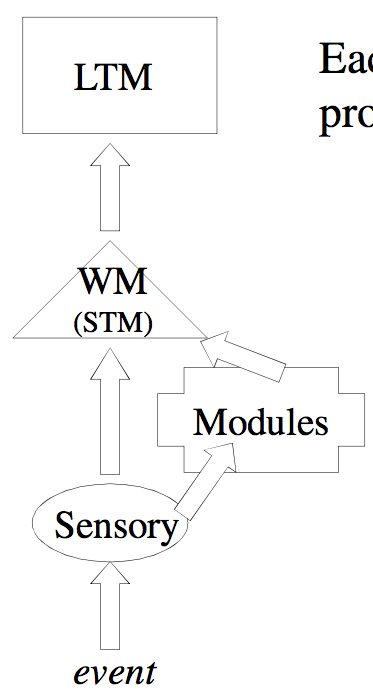
modal model
working memory
Each memory is defined by its won set of processes (competence)
In WM:
- limited capacity and attention is critical
- repetetive (rote) rehearsal for maintanence
- elaborative rehearsal (chunking, transfer to LTM)
- code determined by task & rehearsal
- loss
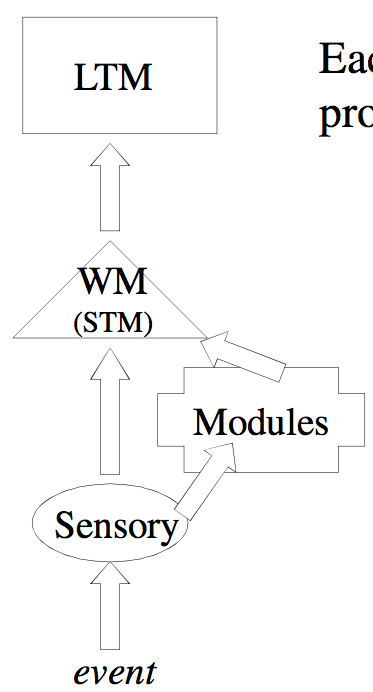
Vertical, structuralist account- modal model
memory loss
- decay or interference?
- proactive interference (info beforehand impacts target)
- retroactive interference (info after impacts on target)
interference effects determined by competing code (e.g. reduce retroactive interference on a verbal task by following it with a nonverbal task)
Vertical, structuralist account
Long-term memory
- if information is not transferred, or otherwise registered in LTM, it is lost
- code- determined at time of transfer, usually conceptual
Vertical, functionalist account
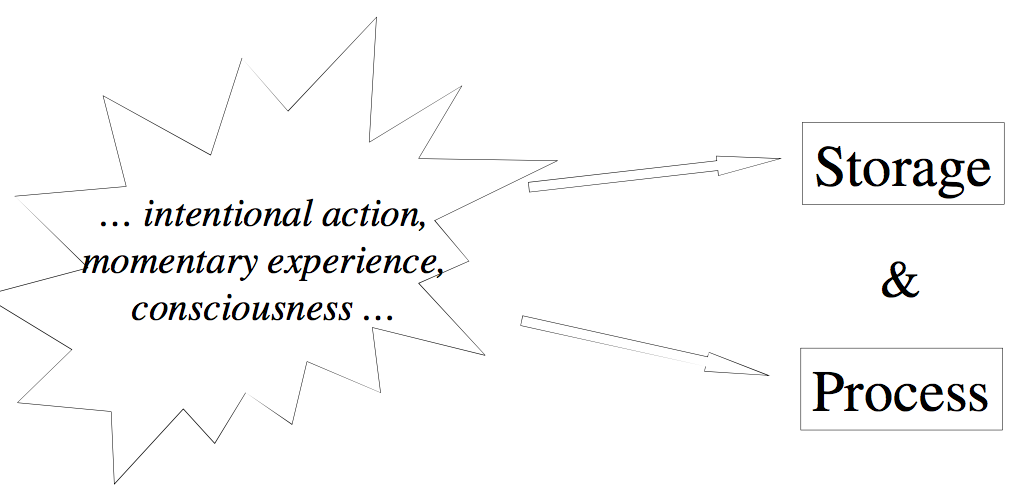
levels of processing theory
one memory with common processes
- focus is on what is done to info in the course of processing (dont worry about stages)
- levels of processing theory (see pic, each is a different level of processing)
- self-relevence
- semantic
- phonemical
- structural

Evidence for levels of processing theory
(vertical organisation, functionalist account)
evidence:
- capacity limits (e.g., 7+/-2), coincides with functional theory of finite energy available
- time-based retrieval effects (e.g. recall curve) coincides with functional theory that the longer the time, more processing and interference from neighbours
- duration, coincides with funcitonal theory of competing sets of activation emerge over time
- discrete and systematic breakdown (e.g amnesia), coincides with functional theory of attempts being made to lesion a neural network
distinctive and organised encoding leads to successful retrieval; the role of elaborative rehearsal
Working memory
past measures reflect the assumption of unitary
measures of passive span (storage only) WM
passive span = storage only
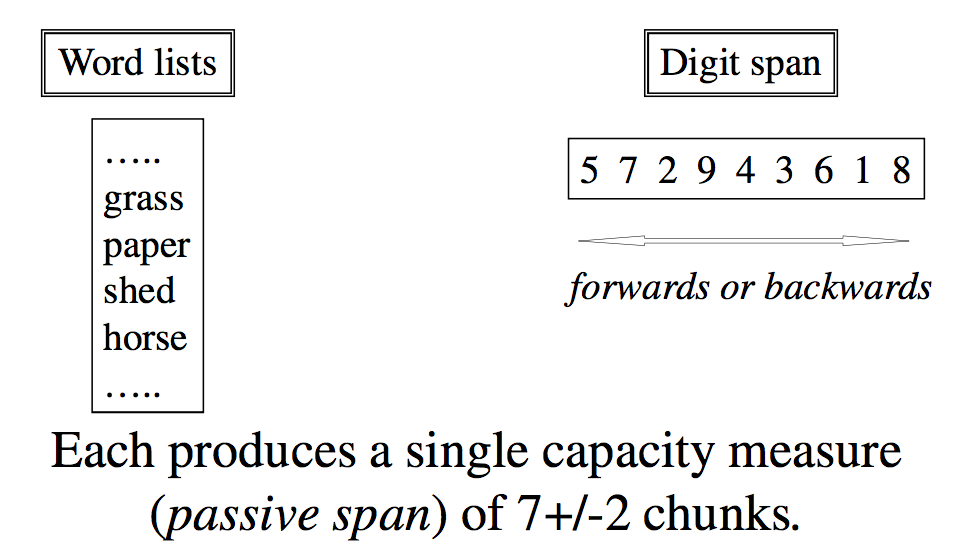
mnemonists can hold more information, but same number of chunks
measure of active span WM
active span = process and storage
- Daneman and carpenter reading span task (see pic)
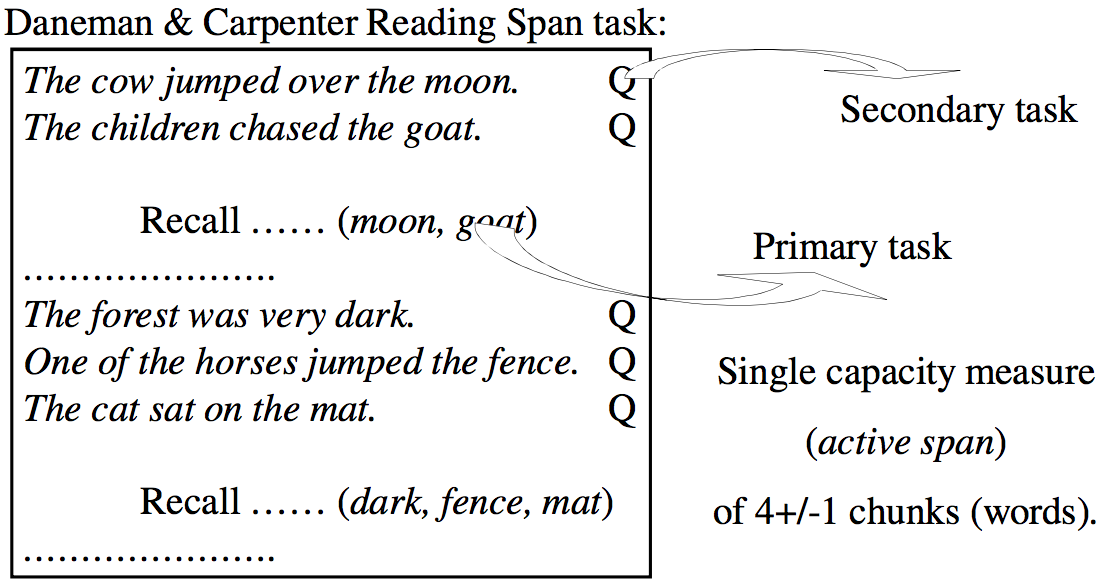
Measures of active span (storage and process) plus more than one measure
- Engle & Tuholski Enumeration task
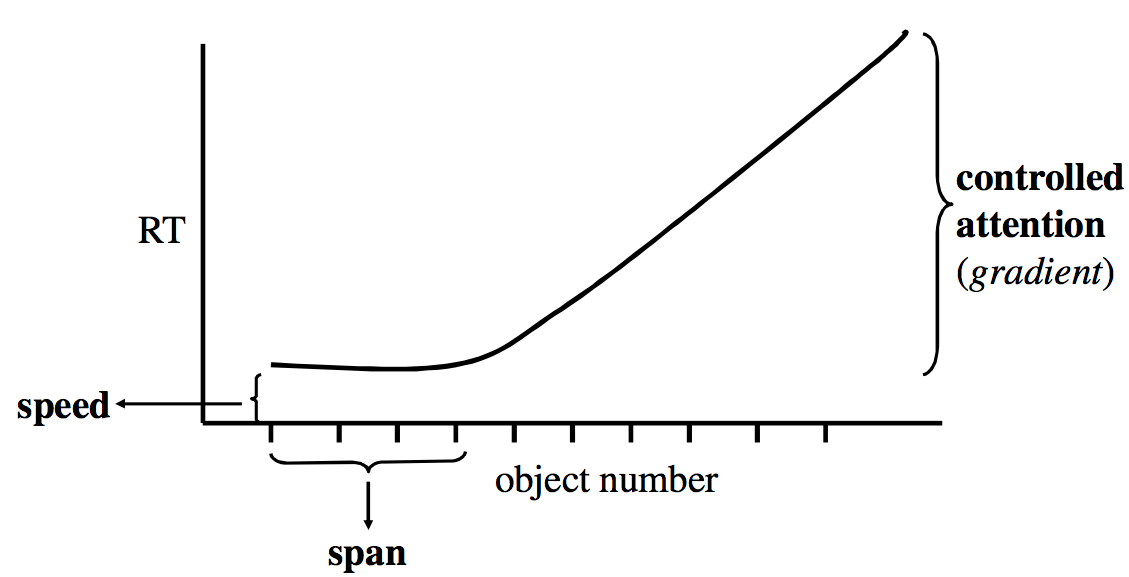
cognitive inhibition
ability to focus on one thing at the expense of others
Flanker task
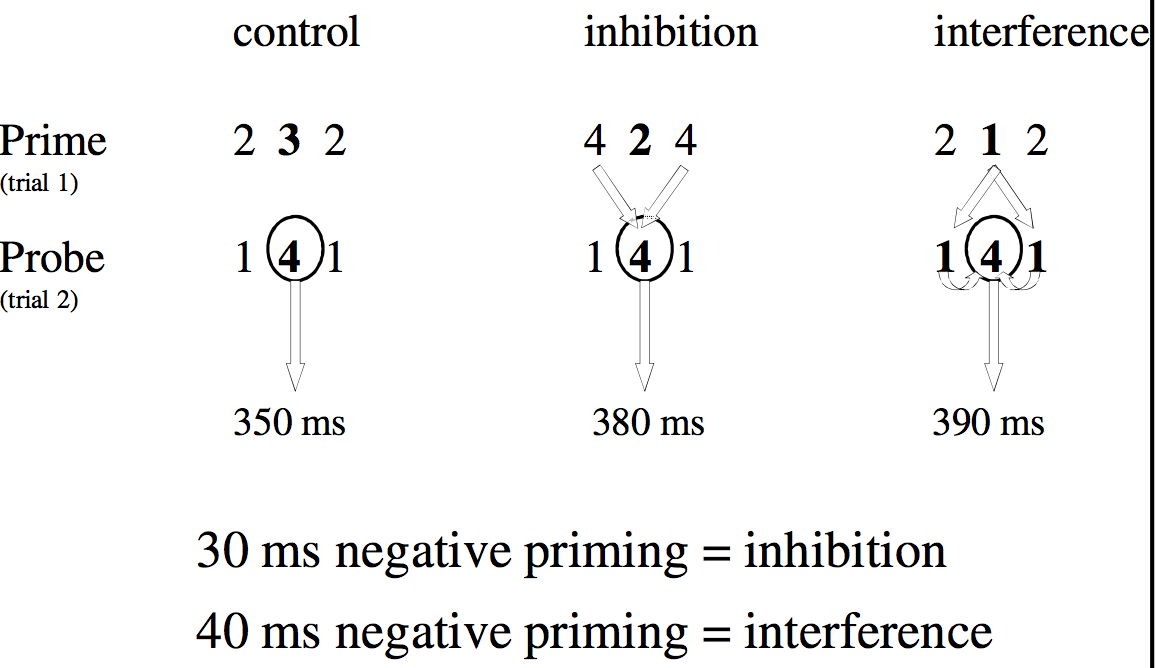
Properties of working memory
- speed
- span
- controlled attention
- cognitive inhibition
- long-term working memory (past experience can influence working memory/ what infro can get into WM)
Non-unitary approaches of WM
Structuralist model
consists of:
- central executive
- phonological loop
- episodic buffer
- other sub-systems
- visuo-spatial sketchpad
- visual
- spatial
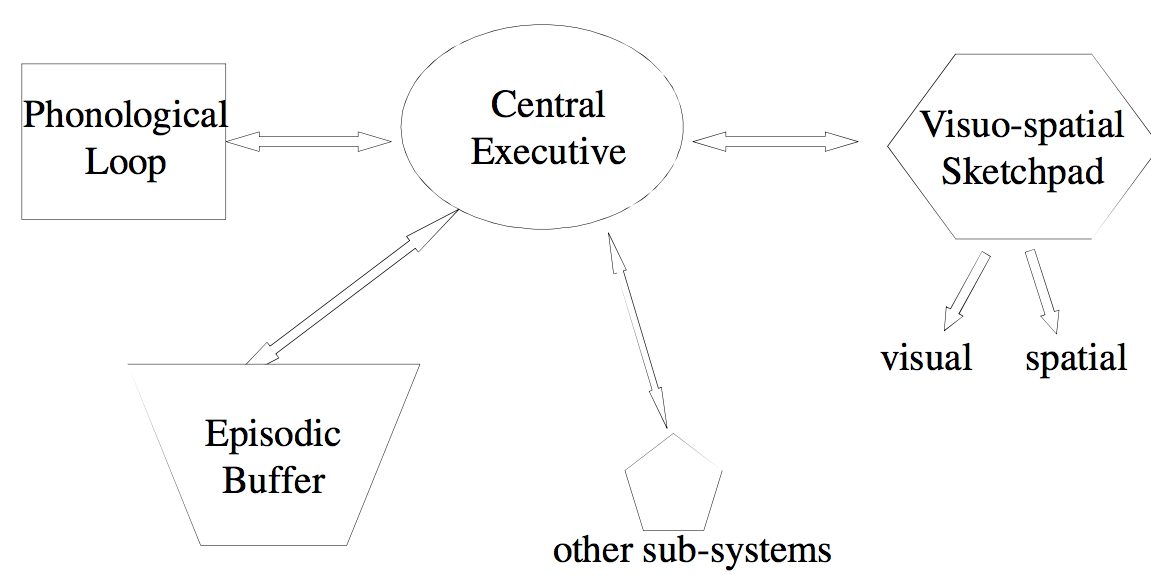
central executive of WM
- structuralist (cognitivist) model
- non-unitary model
- cognitive inhibition
- focused (controlled) attention
- updating/ monitering during acts of reasoning
- coordination in dual tasks
would appear to be complex
phonolgical (articulatory) loop of WM
properties
- structuralist model/ non-unitary
properties include:
- phonolgical similarity effect (similar things interfere with each other)
- unnattended speech effect (vocal tract vs. non-vocal tract)
- word length effect (span size determined by articulation time, 2.5 seconds)
- articulatory suppression (negates phonological effects for visual input)
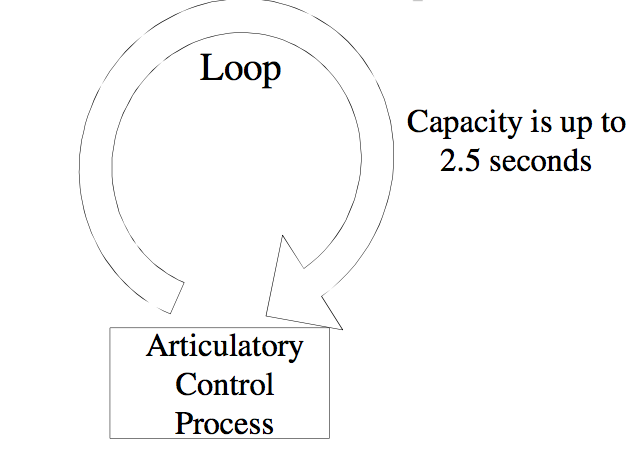
visual-spatial skecthpad
episodic buffer
(WM)
- structuralist account, non-unitary
visual-spatial sketchpad
- storage and manipulation of visual patterns
- navigating our way through space
episodic buffer
- integrates info from many different sources; creating scenes/ episodes
- capable fo dealing with different codes
retrieval from LTM (episodic)
- memory for events that are spatially or temporally marked
- more the encoding context is recreated at retrieval, the more syccesful will be retrieval (encoding specificity theory)
two memory systems
episodic memory:
- encoding specificity principle (focus on content)
- transfer appropriate processing (focus on process)
- state dependent learning and memory (critical context is the psychological and physical context)
semantic memory
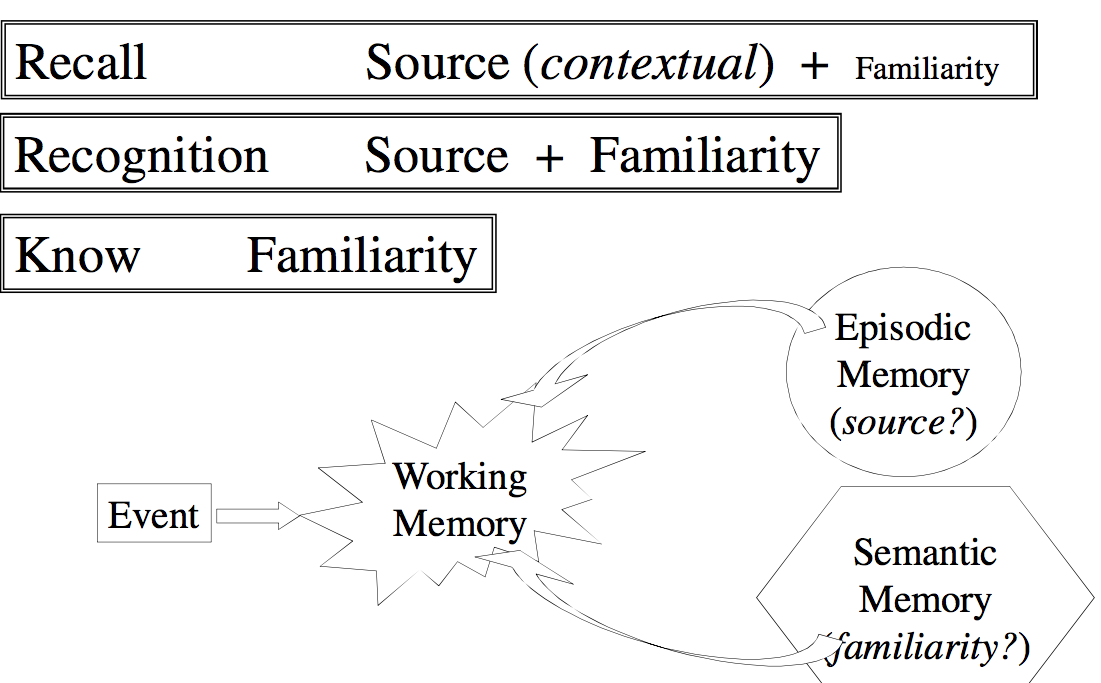
measures of explicit memory (declarative information)
familiarity involves semantic and episodic but mainly episodic
- recall (source + familiarity)
- recognition (source + familiarity)
- know (familiarity)
implicit memory
measure
structure
implicit memory, structurally different type of memory?
- different retrieval profile
- different developmental profile
- anterograde amnesia
- may underlie skill acquisition, implicating procedural memories (the mor eyou elaborate on info the easier it is to retrieve)






