Anterior and posterior Relations of hip joint
Hip joint is a synovial ball and socket joint between the acetabulum of the pelvis and the head of the femur. The acetabular labrum (made of fibrocartilage) is attached to the peripheral edge of the acetabulum. There is a deep depression on the head of the femur for the attachment of the ligament of the head of the femur (ligamentum teres)
What is the function of the labrum
Joint capsule is attached around labrum and passes literally like a sleeve, to attach to the neck of the femur and then the capsule fibres turn back to attach to around the head of the femur. They hold down the arteries that run up from distal to proximal to supply most of the head of the femur.
Ligaments that reinforce joint capsule
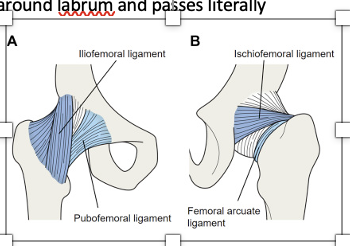
Strongest ligament that reinforces hip capsule
iliofemoral (prevents hyperextension)
Is joint capsule tight in extension or flexion
In general, the hip joint capsule is tight in extension and more relaxed in flexion.
What are the hip flexors and their nerve and blood supply
- Muscles = Iliopsoas
- Femoral nerve
- Ilioplumbar branch of internal iliac artery
Hip Extensors
- Gluteus maximus, Hamstrings
- Inferior gluteal nerve
- Deep femoral artery (hamstrings)
- Inferior gluteal and superior gluteal artery (gluteus maximus)
Hip adductors
- Medial thigh muscle = adductor magnus/longus/brevis
- Obturator nerve
- Longus – profunda femoris artery/deep femoral artery + obturator artery
- Magnus – deep femoral artery branches
- brevis – deep femoral artery
Hip Abductors
- Gluteus medius/minimus, TFL, Obturator internus, gemelli, piriformis
- Superior gluteal nerve
- Gluts – superior gluteal artery
- TFL – latera; circumflex femoral artery
- Gemelli – inferior gluteal
- Piriformis – superior gluteal, inferior gluteal, gemellar branches of internal pudendal artery
Hip internal rotators
- Gluteus Minimus, medius, TFL
- Superior gluteal nerve
- Glut s- superior gluteal artery
- TFL – Lateral cirmflex femorla artery
Hip External rotators
- Gluteus maximus, Piriformis, obturator internis, gemelli
- Superior gluteal nerve
- Gluteus max – superior gluteal artery
- Piriformis – superior/inferior gluteal, gemellar branches internal pudendal
- Gemelli. Ifneiro gluteal artery
Which direction of hip dislocation is the most common and why?
Posterior because anterior ligaments are stronger
Which structure at risk following hip dislocation
Nerve injury – sciatic nerve is most commonly affected
In what position is affected limb likely to be in posteiror hip dislocation
Flexion, adduction and internal rotation with shortening of the leg.
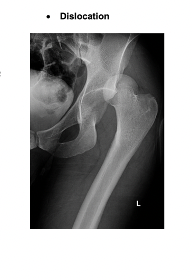
WHat is this?
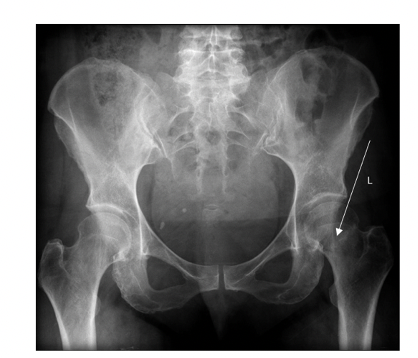
Fracture of the neck of the femur
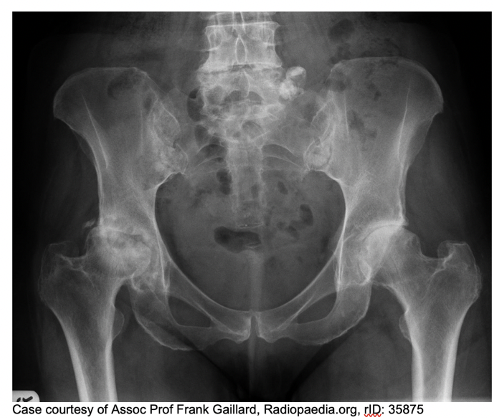
What does this show
OA of the hip
What main factors stabilise the hip joint
- Acetabulum – deep to prevent slipping
- Acetabular labrum - increase depth. Long articular surface for stability
- Iliofemoral, pubofemoral, ischiofemoral ligament very strong and thickened joint capsule and spiral orientation so tighter when joint extended
- Anteiror ligsments stronger so medial flexors fewer and weaker and vise versa
What is Trendelenburg’s test
= Place their hands on your outstretched hands (for stability) and ask them to stand on the leg your examining, lifting the contralateral leg off the ground for 30 seconds. Feel for drop in pelvis on contralateral side.
Trendelenburg’s sign
Contralateral side (normal side) will sag down/ indicates weakness sin hip abductor muscles (gluteus Medius and gluteus minimums)
What is a common complication of fracture of the neck.. How do you treat fractured femoral head? How do you treat the complication
Post op complications are pain, bleeding, length llength discrepancies and potential NV damage. Long term complications – joint dislocation, aseptic loosening, peri-prosthetic fracture and deep infection/prosthethic joint infection.
What can be done for an arthritic hip
= Initial management – Adequate pain control to ensure ongoing mobility and QoL. Lifestyle mods including weight loss, regular exercise and smoking cessation. Physiotherapy to slow disease progression.
= Long term management – if conservative don’t work them surgical intervention. Hip replacement (total or hemiarthroplasty). Common post-op complications including TE disease, bleeding, dislocation, infection, loosening of prosthesis and leg length discrepancy.
= Surgical approaches : Posterior approach, anterolateral approach, anterior approach.
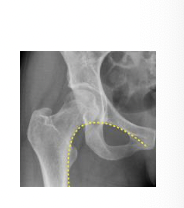
Shenton’s line:
Imaginary curved line along inferior border of superior pubic ramus. Should eb continuous and smooth
NV supply of the hip
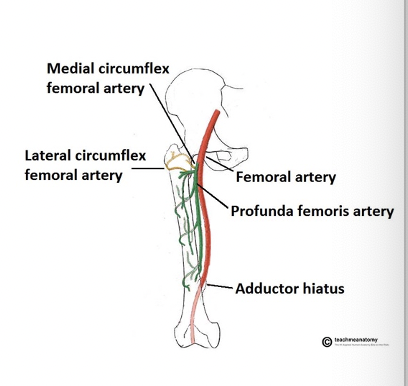
- Medial + lateral circumflex femoral arteries (branches of profunda femoris artery-deep femoral artery). Anastomose at base femoral neck to form ring where smaller branches arise.
- Medial circumflex femoral artery – majority and damage to this can result in avascular necrosis of femoral head.
- Artery to head of femur + superior/inferior gluteal arteries = provide additional supply.
- Sciatic, femoral and obturator nerves (also innervate knee hence referred pain either way)
2 Types dislocaiton of the hips
- COngenital - DDH when acetabulum shallow because of failure to develop properly in utero
- Acquired dislocation - relatively uncommon and usually from trauma or complication of total hip replacement or hemiarthroplasty. Posterior (msot common) vs anterior.



