what is inflammation
active response of tissues to injury that can be beneficial & protective or exaggerated and harmful
- its a local response that occurs at site of injury but can cause systemic consequences
what does inflammation response consist of?
immune response, coagulation cascade and regeneration/repair processes
what is the purpose of inflammation
protect the body following injury which is accomplised by various processes
- includes elimination of injurious stimula like bacteria, chemicals or irritants
- containment of the damage (formation of an abscess), removal of necrotic cells and stimulation of repair and regeneration
what are examples of inflammation that does more harm then good?
allergic reactions, autoimmune responses, cytokine storms, and other responses that result in pain, tissue damage or even death
if experiencing local/acute inflammation during an infection what symtoms will you have? what can happen if left untreated
my present with fever, anorexia and lethargy
- if left untreated, chronic inflammation can results leading to fibrosis and scarring
- damage that can result from inflammation is dependent on the site that it targets
- impaired vision, restricted movement, ischemia, seizures, arrhythmias and intestinal strictures are all potential effects of unchecked inflammation
when comes to inflammation what questions should you ask yourself
- is goal to manage the inflammation or manage the initiating cause that resulted in inflammation
- is harm arising from the intial insult or from an exaggerated inflamatory reaction to it
- should we suppress it
under what circumstances would you NOT want to suppress the immune system?
- do not want to suppress if an infection is present
- in constrast allergens are usually harmless (its the inflammatory reaction that does damage so want anti-inflammatory therapy if allergen cant be identified or eliminated.
5 cardinal signs of inflammation
rubor (redness), calor (heat), tumor (swelling), dolor (pain) and functio laesa (loss of function)
whata are the three major changes that occur during inflammation
- blood vessels dilate
- blood vessels become leaky -> fluid and proteins migrate into tissue (edema)
- WBC enter inflamed tissue
*following inflamamtion either scarring or regeneration occurs
mediators inf inflammation
- can exit pre-formed isnide cells (Histamine involved in local ummune response)
- can be synthesized at tsite of inflammation (eicosanoids which are signalling molecules involved in flammation)
*redundancy exists during inflammation - several mediatoes will trigger the same inflammatory process (imp for treatment bc these same mediators must be inhibited in order to inhibit inflammation)
what are the two most important classes of pro-inflammatory mediators
- prostaglandins and leukotrienes
^family of eicosanoid inflammatory mediates (recall eicosanoids are inflammatory mediators that are synthesized @ site of inflammation)
- the most effective anti-inflammatory drugs usually inhibit these mediatoes
describe the synthesis of inflammatory mediators
- there are various steps invovled in producing chemical mediators of inflammation
1st involves a stimulus that will result in phospholipid release
ex of stimulu: hormones, immunoglobulins, microbial products, lectins, phagocytosis, physical trauma, thrombin
2nd. enzyme phospholipase which hydrolyzes phospholipids will be activated - specifically phospholipase A2 that cleaves fatty acid @ site that releases arachidonic acid is produced
- when cyclooxygenase (COX) and lipoxygenase (LOX) become activated, prostaglandins and leukotrienes are synthesized respectively.
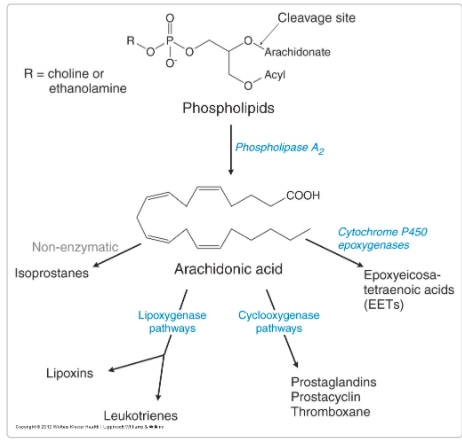
what is the role of arachidonic acid in synthesis of inflammatory mediators
serves as a precursor in the production o eicosanoids that play a role in inflammation
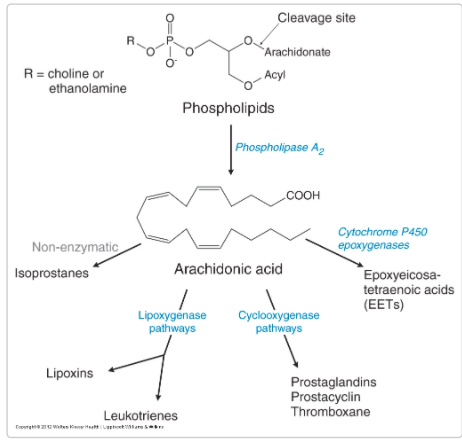
overview of arachidonic acid pathways
Phospholipase A2 acts on the phospholipids phosphatidylcholine (PC), phosphatidylethanolamine (PE) and phosphatidylinositol (PI) to release arachidonic acid
- unesterified arachidonic aid is then used as a substrate for cyclooxygenase, lipoxygenase, and epoxygenase pathways
- the cyclooxygenase pathways produce prostaglandins, prostacyclin and thromboxane
- the lipoxygenase pathways produce leukotrienes and lipoxins
overview of the cyclooxygenase pathway
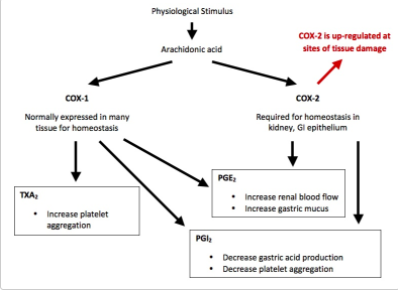
Two cyclooxygenase isoforms, denoted COX-1 and COX-2, metabolize arachidonic acid to prostaglandin H2 (PGH2) which is a common substrate for thromboxane A2 (TXA2), prostacyclin (PGI2) and prostaglandin E2 (PGE2)
- COX-1 is expressed in many tissues and therefore responsibel for maintaining homeostasis
- COX-2 is also required for homeostatis but is usually expressed in the kidney and gastrointestinal epithelium
what does TXA2, PGE2 and PGI2 do?
- when TXA2 is produced by paltelets it stimualtes aggregation
- stimulation of PGE2 increases renal blood flow and gastric mucus production
- PGI2 decreases gastric acid production and platelet aggregation
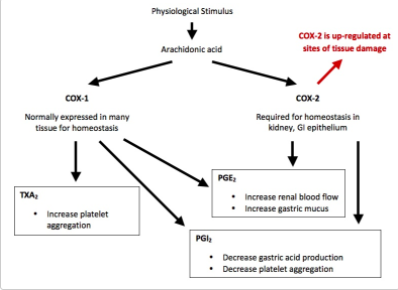
what happens upon an inflammatory stimulus (heat, mechanical/chemical damage or an infectious agent)
- arachidonic acid will be produced and converted to COX-2 from PGH2
- additionally the constitutive role in the kidney and gastrointestinal epithelium, COX-2 will be induced in cells at the site of insult
- wil cause elevated local prostaglandin levels at site of innjury
- inflammation will result due to the dilation of blood vessels, WBC recruitment and edema
decribe structure of prostaglandins
- large family of structually similar ocmoounds that each has potent and specific biological actions
- all share chemical structure called a prostanoid consisting of a 20-carbon carboxylic acid characterized by a cyclopentane ring and a 15-hydroxyl group.
what are the main prostanoids assocaited with inflammation?
- PGE2 and PGI2
- involved with sensitizing pain receptors along with bradykinin, rpodcuing fever with the help of IL-1 and IL-6, vasodilating blood vessels which results in redness and increasing vascular permeability with histamine which will cause swelling
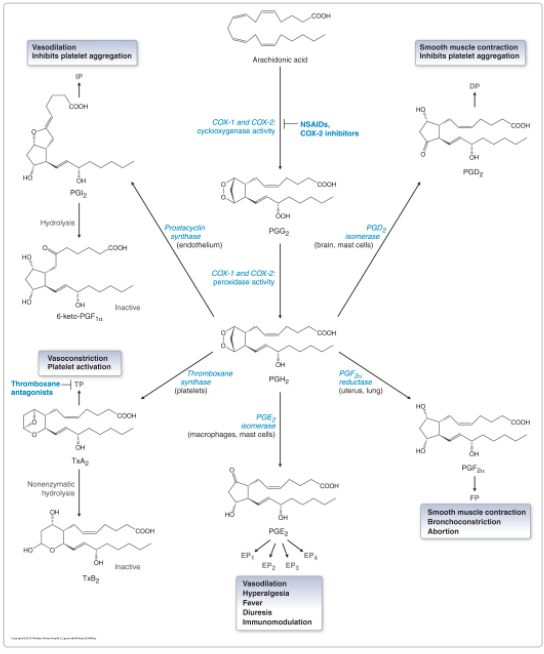
what determines the tissues in which of the various PGH2 derives products are biosynthesized?
- tissue specific enzyme expression
what are NSAIDs and COX-2 inhibitors
- most importnat classes of drugs that modulate prostaglandin production
* thromboxane antagonists and PGE2 synthase inhibitors are promising pharmacologic strategies that are currently in development
describe the lipoxygenase pathway
- other major fate of arachidonic acid (beside the cylcooxygenase)
- leads to formation of leukotrienes
- lipoxygenases are enzymes that catalyze the insertion of molecular oxygen into arachidonic acid
- three lipoxygenases: 5-lipoxygenase (5-LOX), 12-lipoxygenase (12-LOX) and 15-lipoxygenase (15-LOX) are the major LOX isoforms found in humans
- the immediate products of lipoxygenase rxns are ydroperoxyeicosatetraenoic acids (HPETEs) which can be further reduced
ex: 5-HPETE is formed by 5-LOX and is the direct precursor to leukotriene A4 (LTA4) which itself is the precursor to all other leukotrienes.
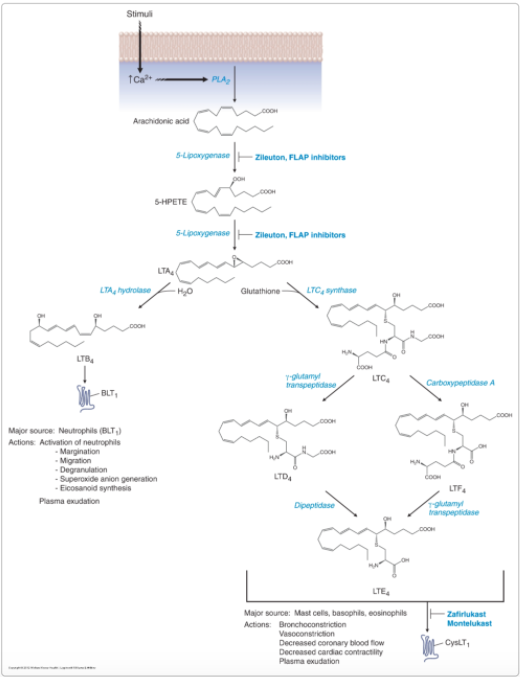
what do Zileuton and 5-lipoxygenase activating protein (FLAP) inhibtors do
prevent the conversion of arachidonic acid to 5-HPETE and LTA4
- Zileuton ahs been used in chronic mangement of asthma

-
unit 1: hypothalamic anterior pituitary hormones24
-
pharmacologic term and concept review20
-
unit 01: Adrenal axis39
-
Unit 01: Thyroid gland33
-
Unit 02: Hypothalamic pituitary gonadal axis110
-
Unit 03: Pancreas & diabetes mellitus37
-
Unit 03: Growth Hormone19
-
Unit 04: Inflammation25
-
Unit 04: treatment of Inflammation20
-
unit 1: drugs9
-
Unit 04: Glucocorticoids20
-
Unit 05 Blood disorders: Hemorrhagic disease24
-
Unit 05: Thromboembolic Disease29
-
Unit 05: Hyperlipidemia20
-
Unit 05: Anemia15
-
Unit 06: antibacterial drug therapy and beta lactams45
-
Aminoglycosides16
-
Drugs: aminoglycosides26
-
Tetracyclins21
-
Unit 8: Sulfonamides, Fluoroquinolones, Macrolides, Chloramphenicol31
-
Unit 09: antifungals46
-
Unit 09 drugs35
-
unit 09: antivirals39
-
Unit 09 Cancer background28
-
Unit 09: Cancer drugs64
-
Drugs used in treatment of Pancreatic infestation21
-
parasitic infetation: microscopic30



