What are the (2) common, and typically transient Bradyarrhythmias of Acute Inferior Wall Myocardial Infarction?
- Sinus Bradycardia
- Atrioventricular (AV) Block
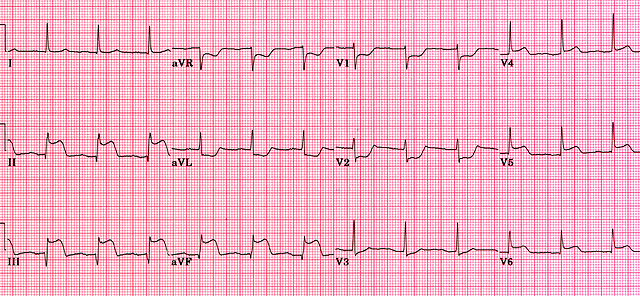
Patients with Acute Inferior Wall Myocardial Infarction who have Persistent Symptomatic Bradyarrhythmias (Sinus Bradycardia or Symptomatic AV Block), AFTER being given I.V. Atropine, should be Treated with what Next Step in Management?
Temporary Cardiac Pacing
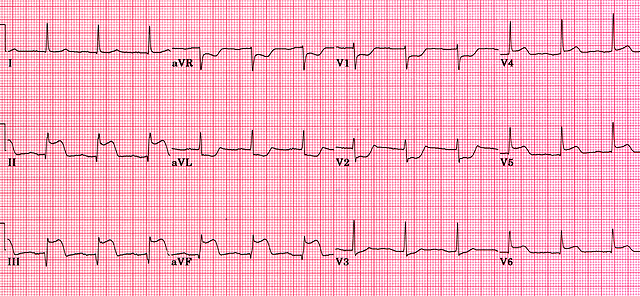
Patients with Acute Inferior Wall Myocardial Infarction who have Symptomatic Bradyarrhythmias (Sinus Bradycardia or Symptomatic AV Block) should receive Initial Treatment with what?
Atropine (I.V.)
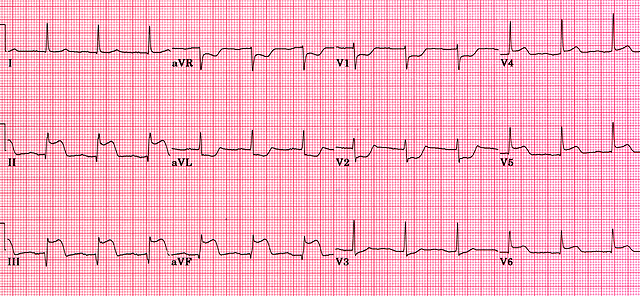
What are (4) Signs/Symptoms of Symptomatic Bradyarrhythmias?
- Hypotension
- Dizziness
- Heart Failure
- Syncope
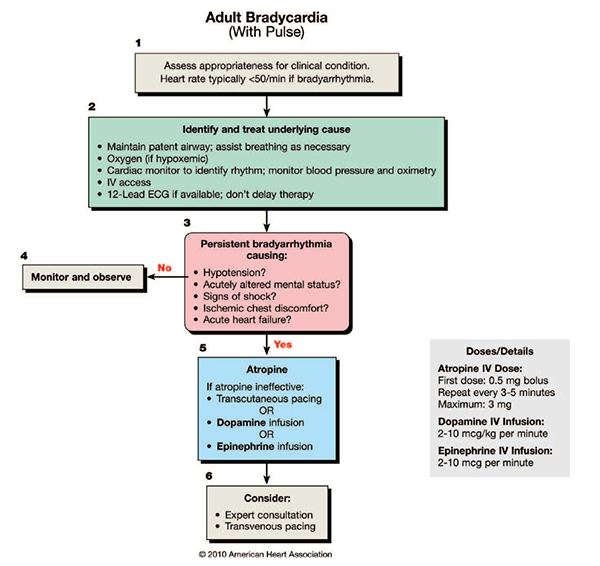
Infants born to Mothers with Diabetes and Poor Glycemic Control During Pregnancy are at Increased Risk for what Heart Defect?
Transient Hypertrophic Cardiomyopathy with a Thickened Intraventricular Septum.
What is the Thickened Intraventricular Septum caused by in infants with Transient Hypertrophic Cardiomyopathy?
Excess Glycogen deposition in fetal myocardium
What are the (3) Atypical Anginal Symptoms in Elderly patients (> 80yo) other than chest pain?
- Shortness of Breath
- Lightheadedness
- Fatigue
What Initial Evaluation should patients with suspected Stable Coronary Artery Disease (CAD) undergo?
Noninvasive Stress Testing
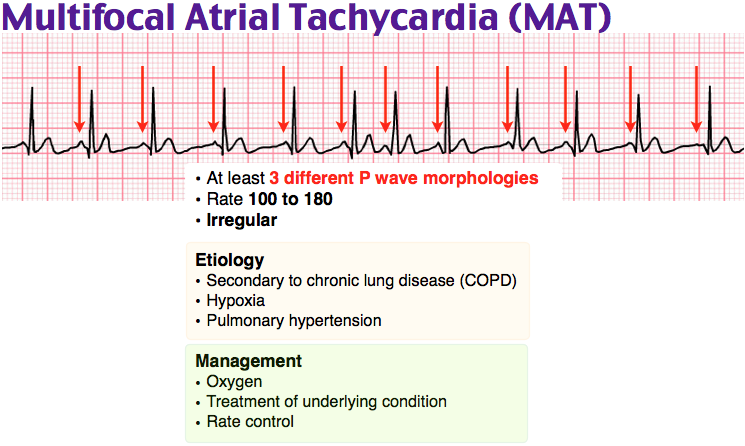
What are (3) Causes of Multifocal Atrial Tachycardia (MAT)?
- Exacerbation of Pulmonary Disease (eg, COPD)
- Electrolyte Disturbance (eg, Hypokalemia)
- Catecholamine Surge (eg, Sepsis)
Matt, Gatorade, Fire
What are (2) Clinical Findings in a patient with Multifocal Atrial Tachycardia (MAT)?
- Asymptomatic (typically)
- Rapid, Irregular pulse
What is the Best Treatment for a patient with Multifocal Atrial Tachycardia (MAT)?
Correct the Underlying Cause (eg, COPD, Hypokalemia)
What is the Treatment for a patient with Persistent Multifocal Atrial Tachycardia (MAT)?
AV Nodal Blockade (eg, Verapamil)
Multifocal Atrial Tachycardia (MAT) is Most Common in which Demographic?
Patient Age > 70yo
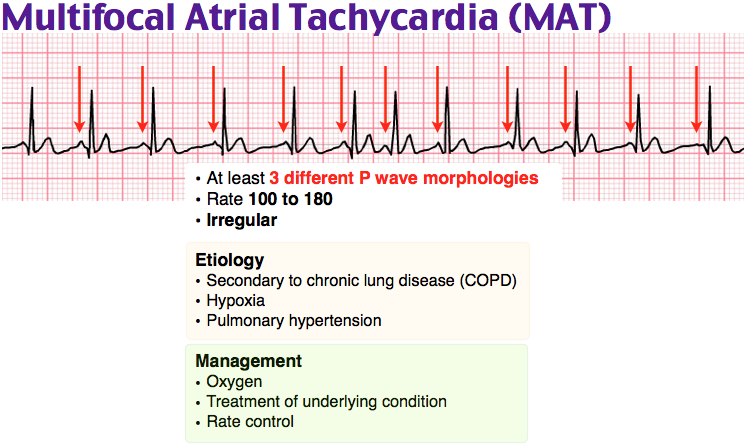
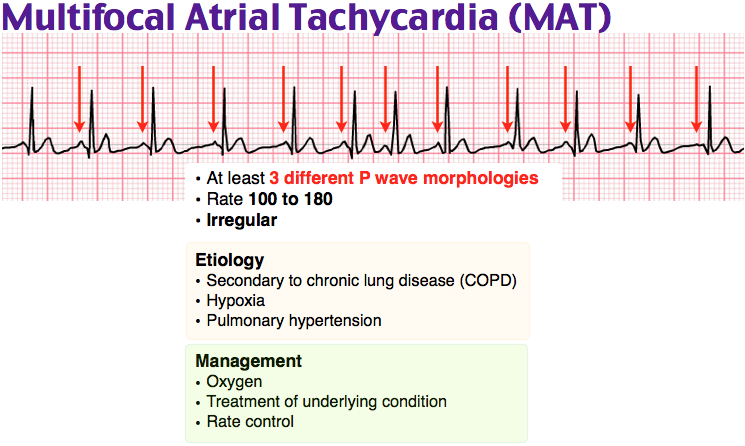
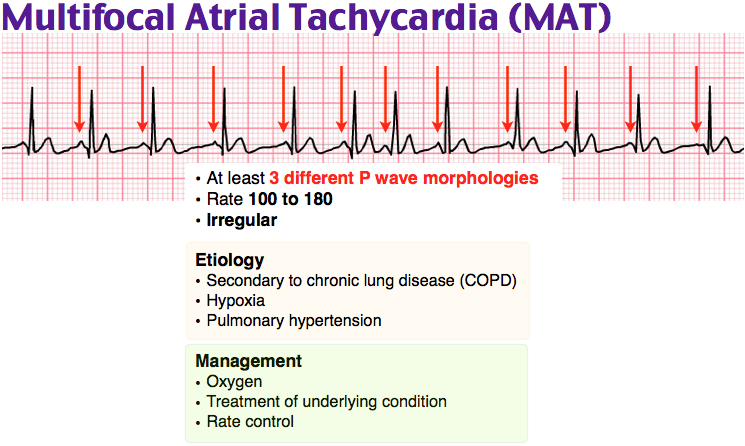
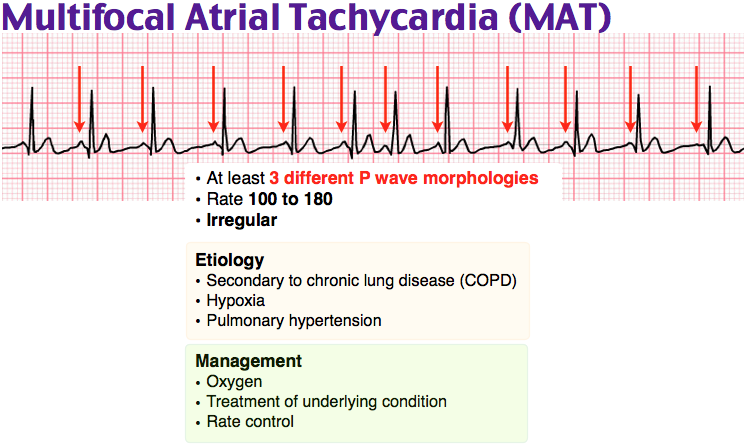
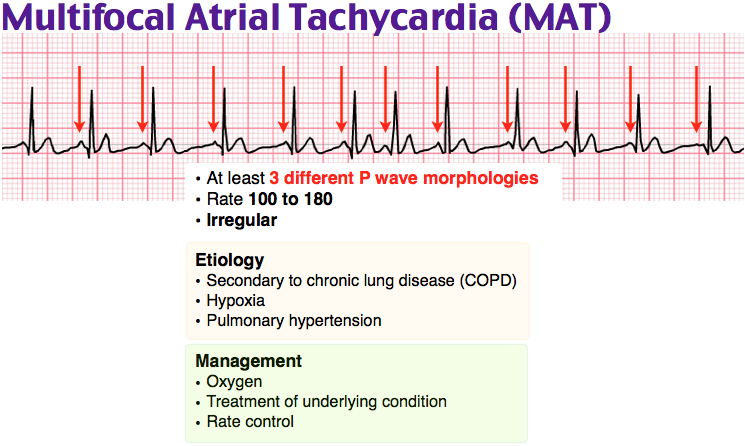
What are (3) ECG Findings that Confirm a Diagnosis of Multifocal Atrial Tachycardia (MAT)?
- P-waves of At Least 3 different morphologies
- Irregular R-R Intervals
- Atrial Rate > 100/min
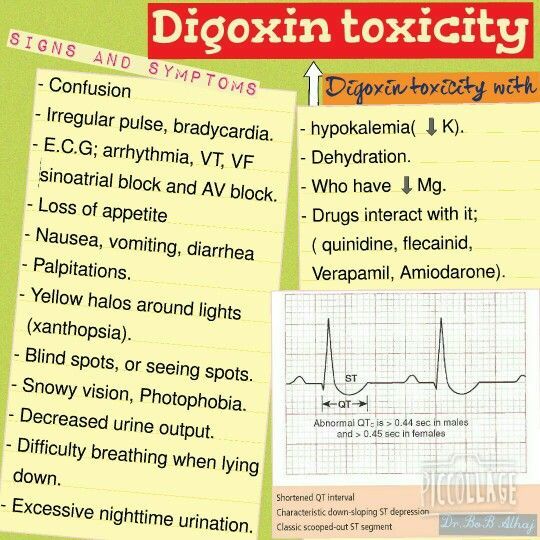
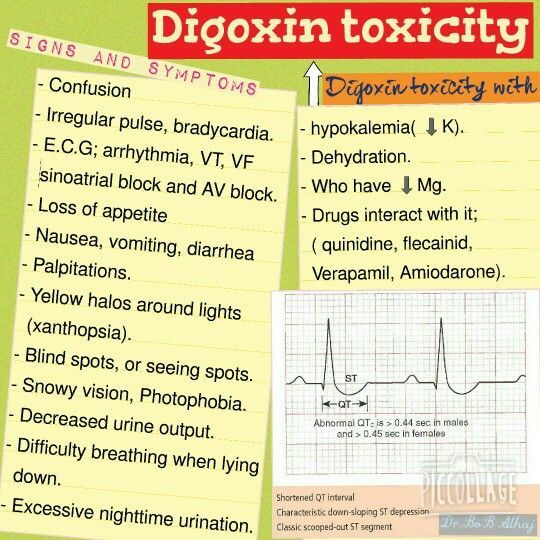
What are (6) Signs/Symptoms typically Characteristic of Digoxin Toxicity?
- Nausea/Vomiting
- Anorexia
- Fatigue
- Confusion
- Visual Disturbances
- Cardiac Abnormalities
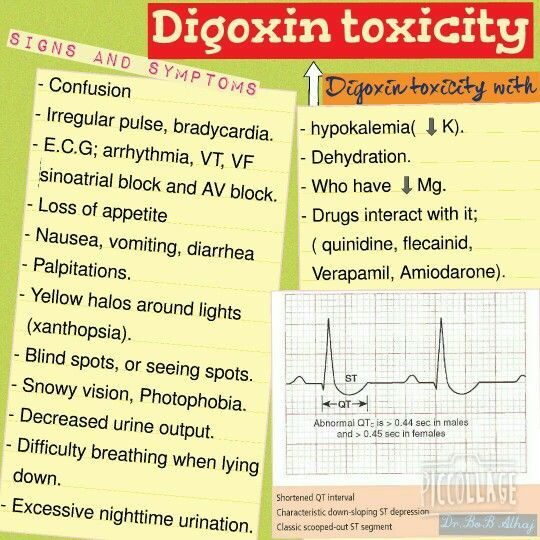
What are (4) Medications that, when given to a patient on Digoxin, can Cause Digoxin Toxicity?
- Verapamil - Calcium channel blocker and antihypertensive drug
- Quinidine - Antiarrhythmic and anti-parasitic (eg, anti-malarial)
- Amiodarone - Antiarrhythmic (eg, Tx for A-Fib, A-Flutter, SVT, Cardiac Arrest)
- Spironolactone - Diuretic (eg, Tx for HTN, Fluid Retention, Hyperaldosteronemia)
What is the Mechanism of Action (MOA) for Digoxin Toxicity?
Verapamil, Quinidine, Amiodarone, or Spironolactone INHIBITS Renal Tubular Secretion of Digoxin (resulting in almost 70% - 100% increase in Serum Digoxin Levels)
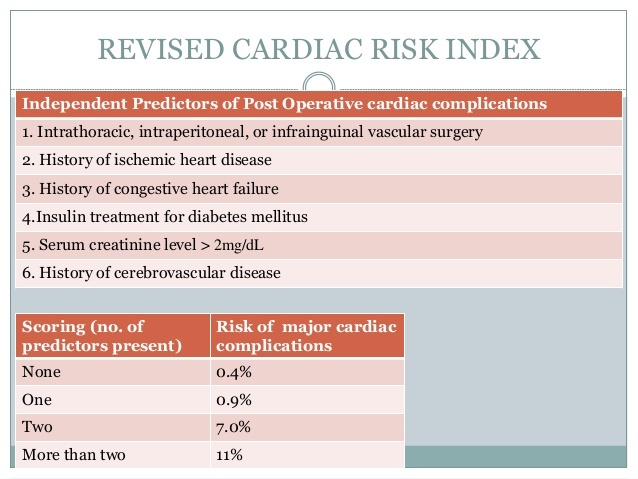
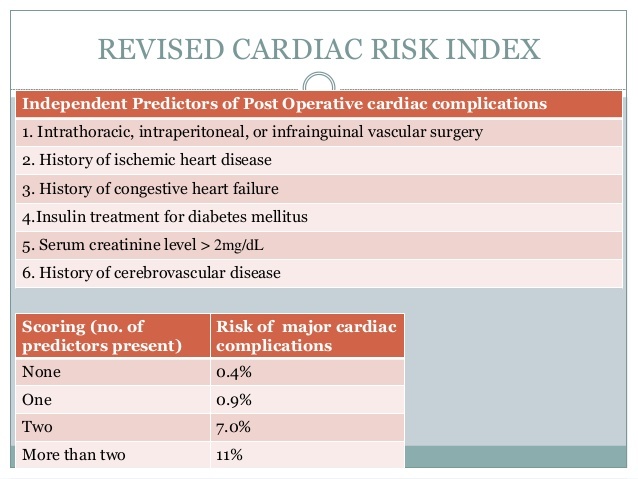
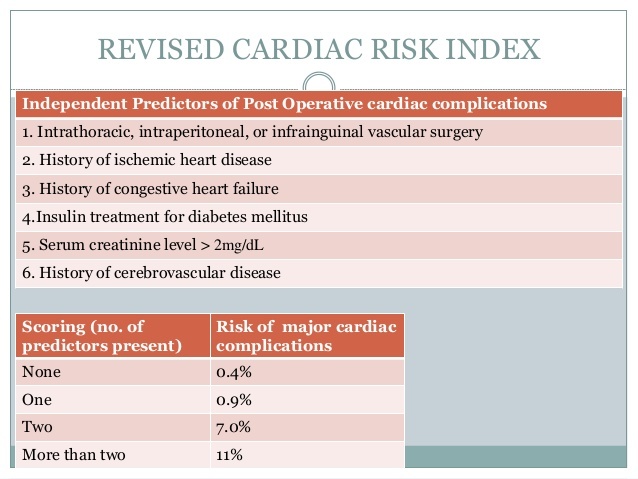
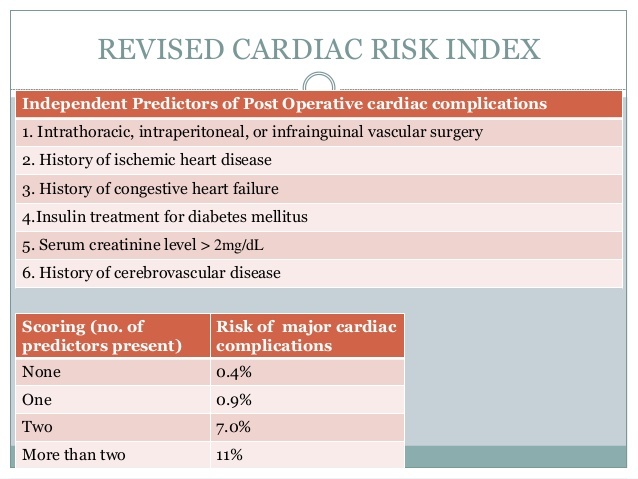
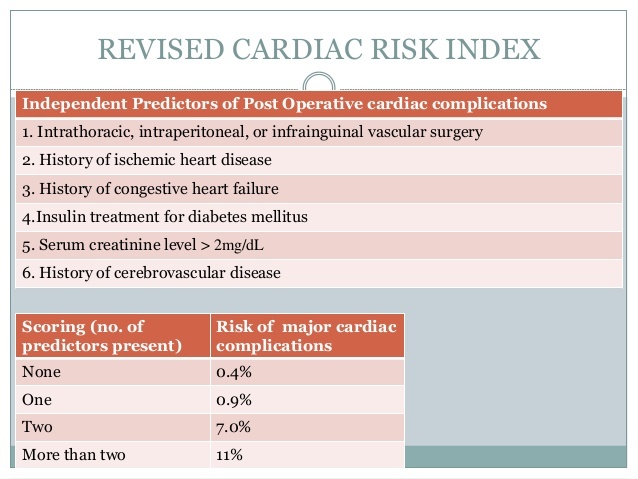
What are (6) Clinical Risk Factors used in the Revised Cardiac Risk Index (RCRI) to Help Predict Major Complications with NONcardiac Surgery?
- High-Risk Surgery (eg, Vascular)
- History of Ischemic Heart Disease
- Heart Failure
- History of Stroke
- Diabetes Mellitus TREATED with Insulin
- Preoperative Creatinine >2 mg/dL
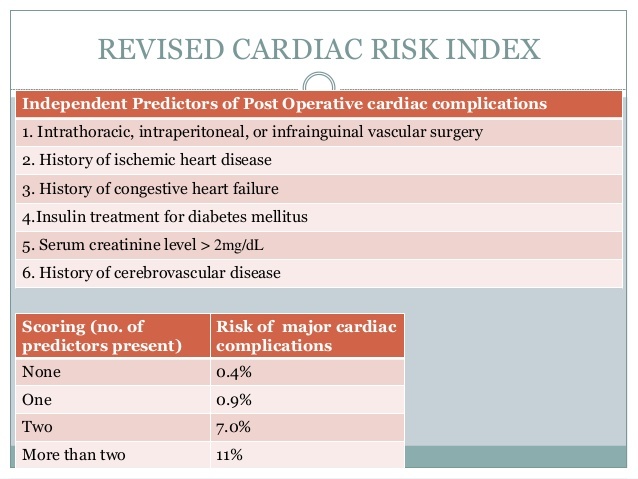
What are the (4) Risk Factor Levels used in the Revised Cardiac Risk Index (RCRI) to Help Predict Major Complications with NONcardiac Surgery?
- Low-Risk = 0 Clinical Risk Factors (0.4% risk)
- Low-Risk = 1 Clinical Risk Factor (1.0% risk)
- Moderate-Risk = 2 Clinical Risk Factors (2.4% risk)
- High-Risk = 3+ Clinical Risk Factors (5.4% risk)
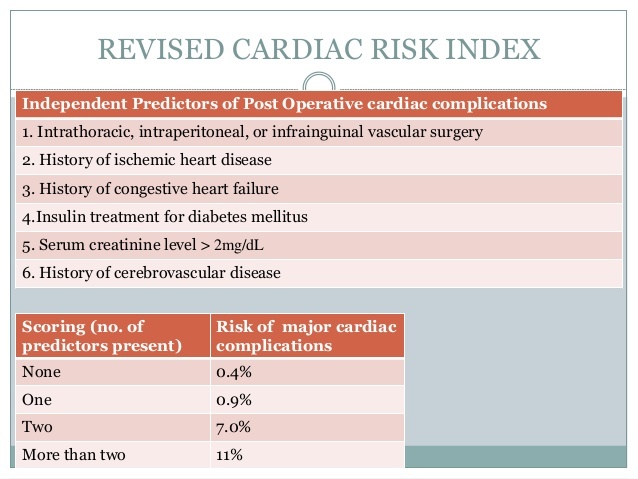
What are the (3) Major Complications that the Revised Cardiac Risk Index (RCRI) Helps Predict in patients Preparing to Undergo NONcardiac Surgery?
- Cardiac Death
- Nonfatal Cardiac Arrest
- Nonfatal Myocardial Infarction
What are (3) Parts to take into account during the Clinical Risk Assessment for a potential Perioperative Cardiac Event in a patient scheduled to undergo Elective NONcardiac Surgery?
- Type of Elective NONcardiac Surgery
- Patient Comorbidities
- Patient Functional Status
What are (2) Types of Surgeries considered High-Risk (>5%) for Major Cardiac Complications (eg, cardiac death, nonfatal cardiac arrest, nonfatal MI) in a patient Preparing to Undergo NONcardiac Surgery?
- Aortic or other Major Vascular surgery (eg, AAA Repair)
- Peripheral Vascular surgery
What are (5) Types of Surgeries considered Intermediate-Risk (1 - 5%) for Major Cardiac Complications (eg, cardiac death, nonfatal cardiac arrest, nonfatal MI) in a patient Preparing to Undergo NONcardiac Surgery?
- Carotid Endarterectomy
- Head & Neck surgery
- Intraperitoneal & Intrathoracic surgery
- Orthopedic surgery
- Prostate surgery
What are (4) Types of Surgeries considered Low-Risk (<1%) for Major Cardiac Complications (eg, cardiac death, nonfatal cardiac arrest, nonfatal MI) in a patient Preparing to Undergo NONcardiac Surgery?
- Ambulatory or Superficial procedures
- Endoscopic procedures
- Cataract surgery
- Breast surgery



-
UWorld63
-
1. MTB Step 3 - Ischemic Heart Disease / CAD18
-
2. MTB Step 3 - Acute Coronary Syndrome (ACS)34
-
3. MTB Step 3 - Chronic Angina5
-
4. MTB Step 3 - Lipid Management8
-
5. MTB Step 3 - Congestive Heart Failure (CHF)38
-
6.1 MTB Step 3 - Valvular Heart Disease (Murmurs)33
-
6.2 MTB Step 3 - Valvular Heart Disease (Aortic Stenosis)10
-
6.3 MTB Step 3 - Valvular Heart Disease (Aortic Regurgitation)8
-
6.4 MTB Step 3 - Valvular Heart Disease (Mitral Stenosis)9
-
6.5 MTB Step 3 - Valvular Heart Disease (Mitral Regurgitation)8
-
6.6 MTB Step 3 - Valvular Heart Disease (VSD & ASD)10
-
7. MTB Step 3 - Cardiomyopathy17
-
8. MTB Step 3 - Pericardial Disease17
-
9. MTB Step 3 - Aortic Disease5
-
10. MTB Step 3 - Peripheral Arterial Disease (PAD)4
-
11.1 MTB Step 3 - Arrhythmias (A-Fib & A-Flutter)22
-
11.2 MTB Step 3 - Arrhythmias (MAT, SVT, & WPW)14
-
11.3 MTB Step 3 - Arrhythmias (V-Tach & V-Fib)10
-
12. MTB Step 3 - Syncope Evaluation12
-
13. MTB Step 3 - ECGs11
-
CCS - Complete Heart Block (trauma)6



