the electromagnetic spectrum
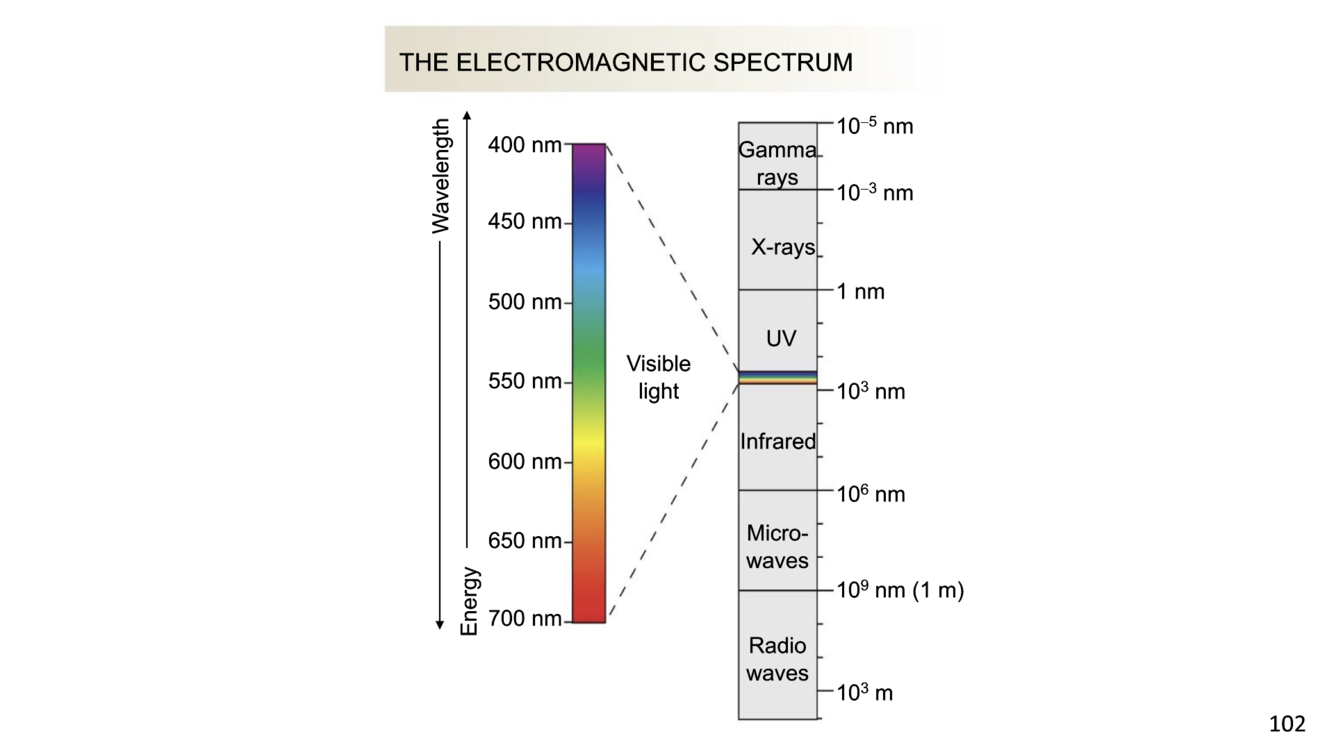
eye (gross anatomy)
pupil: “hole” in the center
iris: the colour of the eye, regulates size of pupil
sclera: the white of your eye (majority of eye)
conjunctiva: inside of eyelid
extraocular muscles: moves eye (6 muscles for each eye)
optic nerve: carries signal to brain
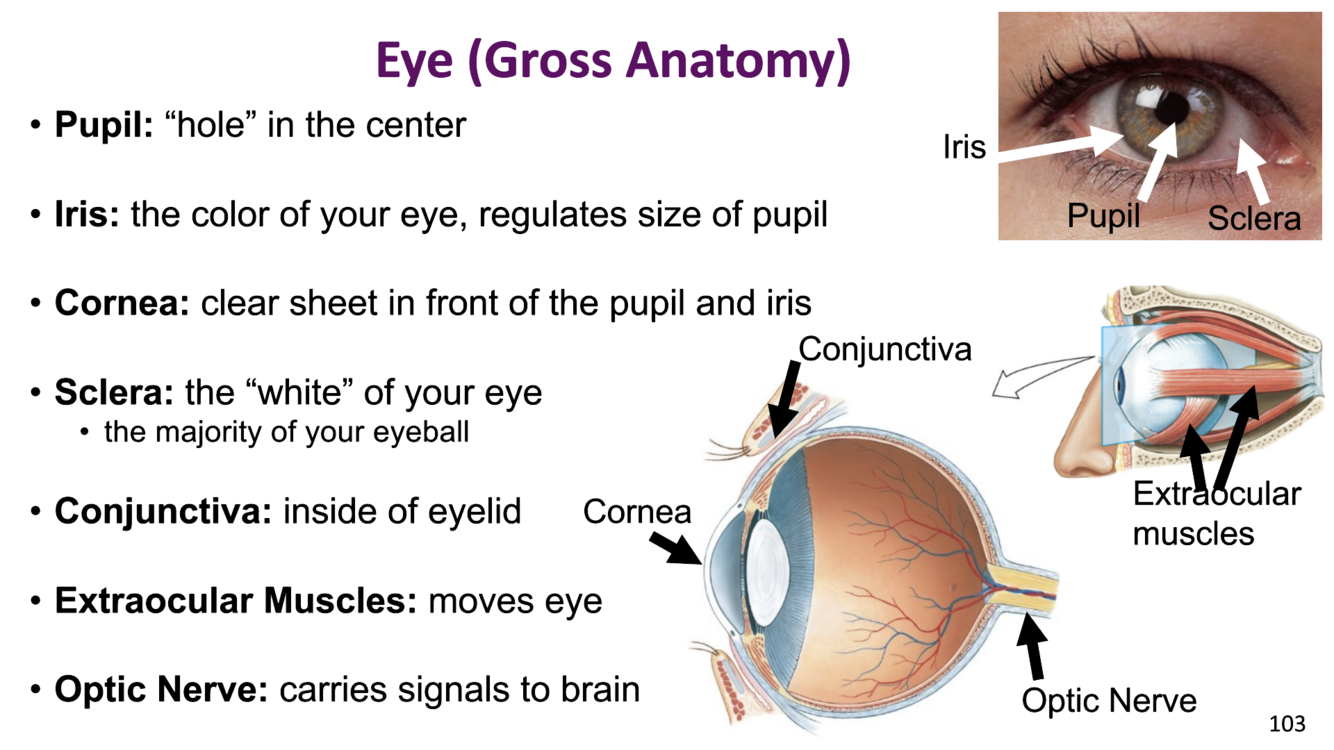
rear wall of the eye (fundus)
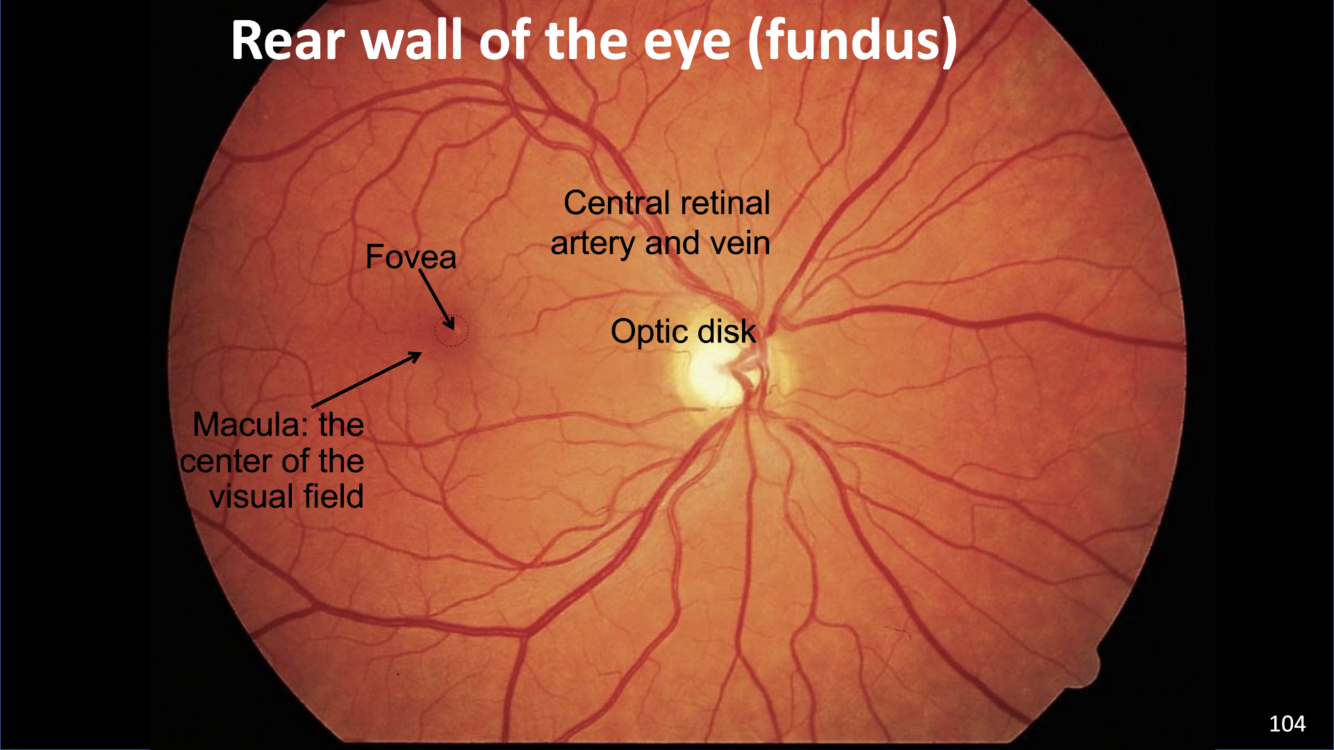
retinal processing
- depolarization of Bipolar cell releases neurotransmitters which initiate action potentials on Ganlion cell
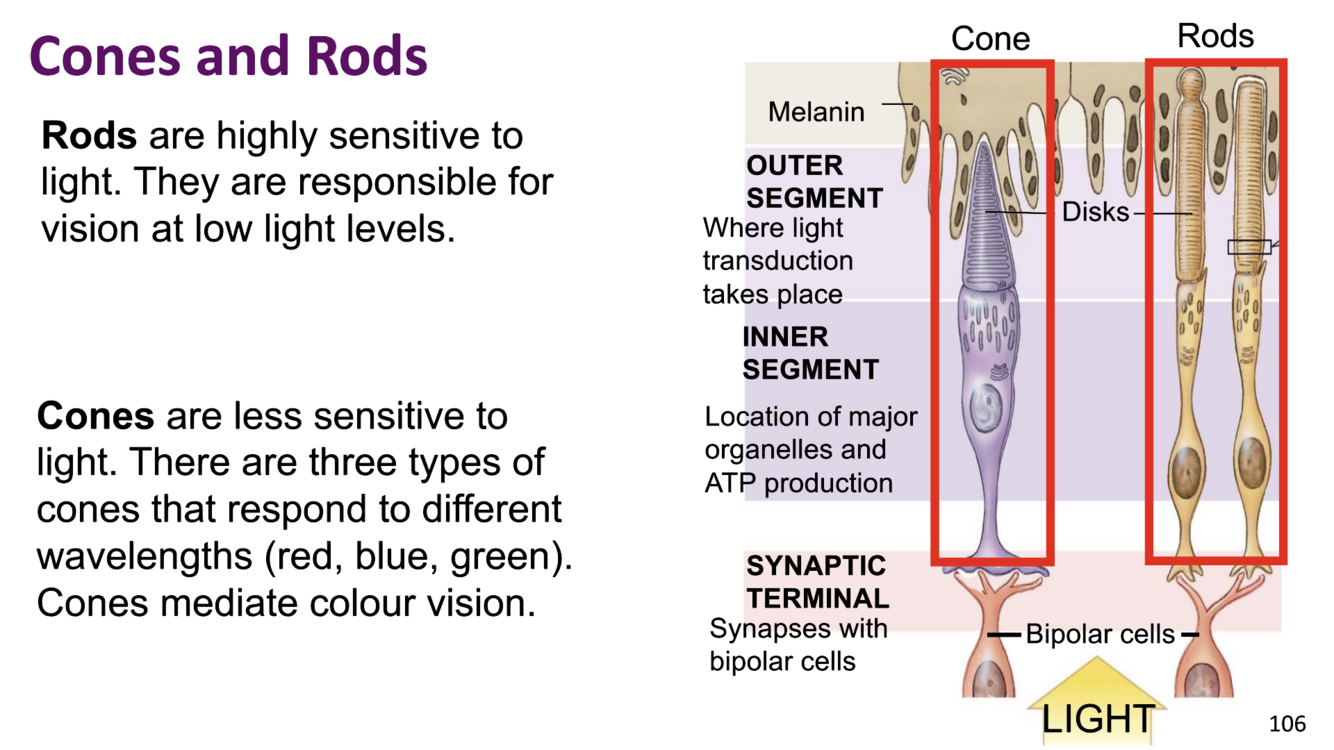
cones and rods
rods are highly sensitive to light. they are responsible for vision at low light levels
cones are less sensitive to light. there are three types of cones that respond to different wavelengths (red, blue, green). cones mediate colour visions
outer segment where light transduction takes place
inner segment location of major organelles and ATP production
synaptic terminal synapes with bipolar cells
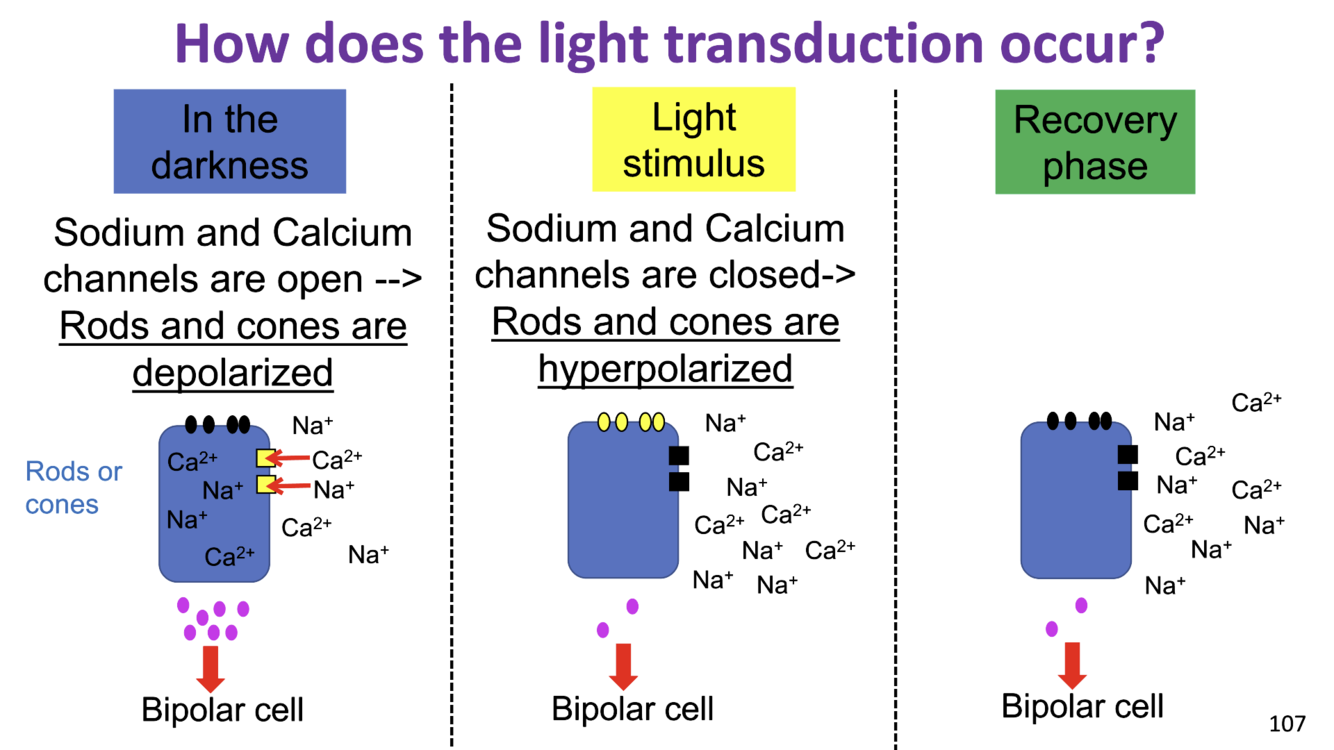
how does light transduction occur?
in darkness sodium and calcium channels are open -> rods and cones are depolarized
light stimulus sodium and calcium channels are closed -> rods and cones are hyperpolarized
recovery phase
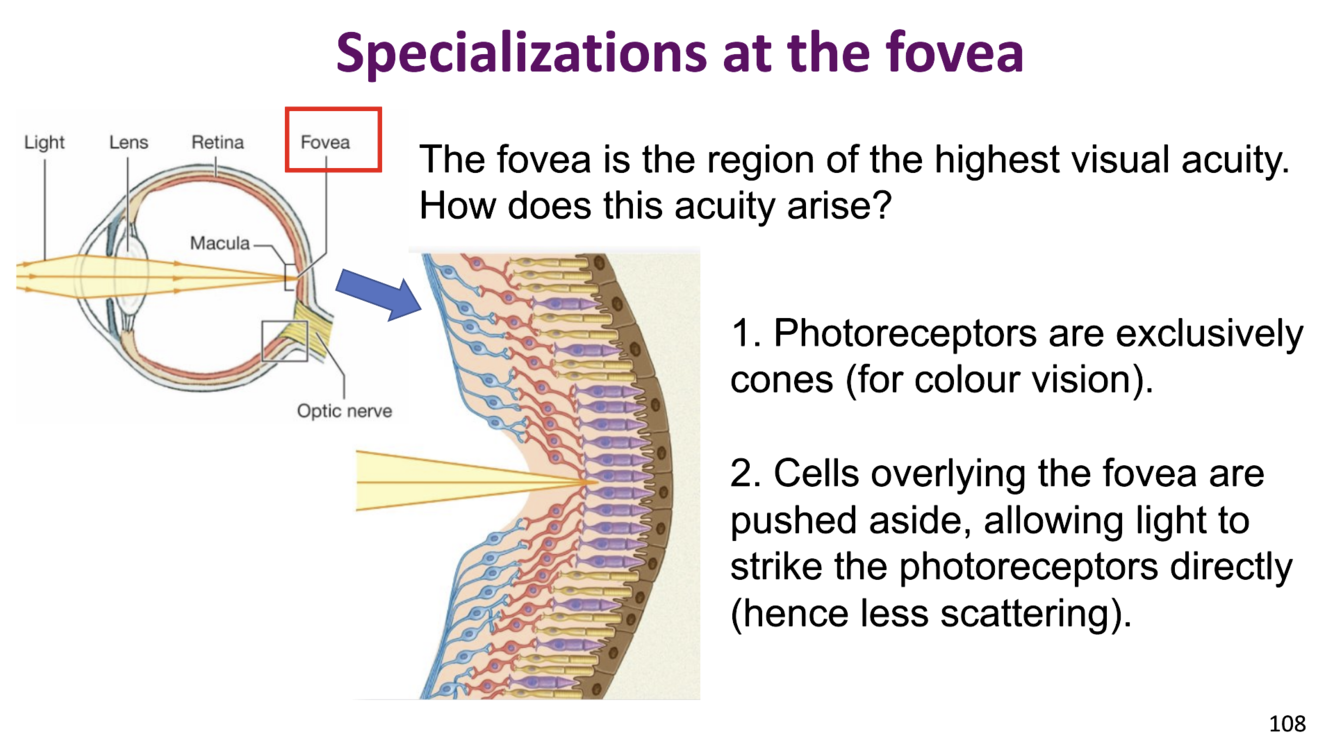
specializations at the fovea
- the fovea is the region of the highest visual acuity
1) photoreceptors are exclusively cones (for colour vision)
2) cells overlying the fovea are pushed aside, allowing light to strike the photoreceptors directly (hence less scattering)
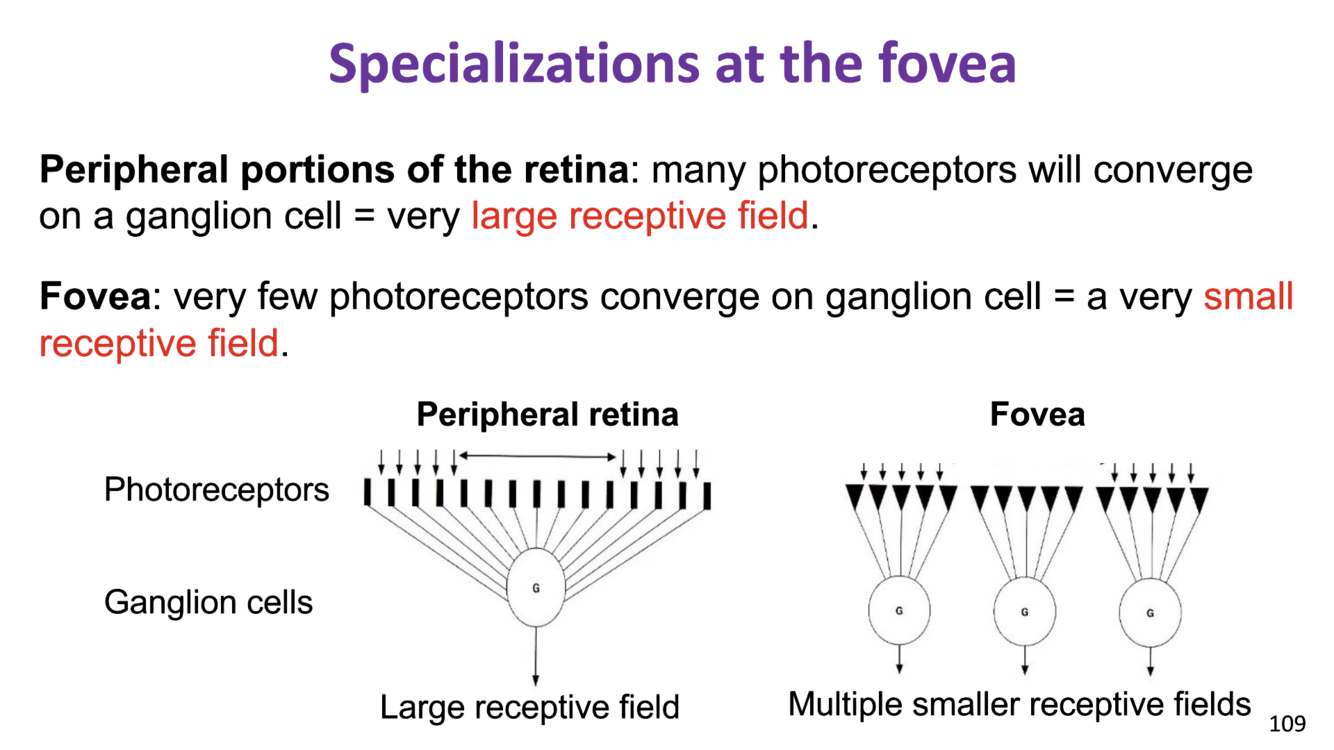
specializations at the fovea
peripheral portions of the retina: many photoreceptors will converge on a ganglion cell = very large receptive field
- more receptive field = ganglion cell more responsive to light
fovea: very few photoreceptors converge on ganglion cell = a very small receptive field
eye movements
Saccades: rapid, jerky eye movements that quickly move the line of sight (e.g., to scan a face or to read)
Smooth pursuit: smooth eye movement that keeps the image of a moving object of interest on the fovea (e.g., a flying bird)
Vestibulo-ocular reflex: stabilizes the eye during a head movement. Uses sensory input from the semi-circular canals
Vergence: used when the object of interest is approaching or moving away
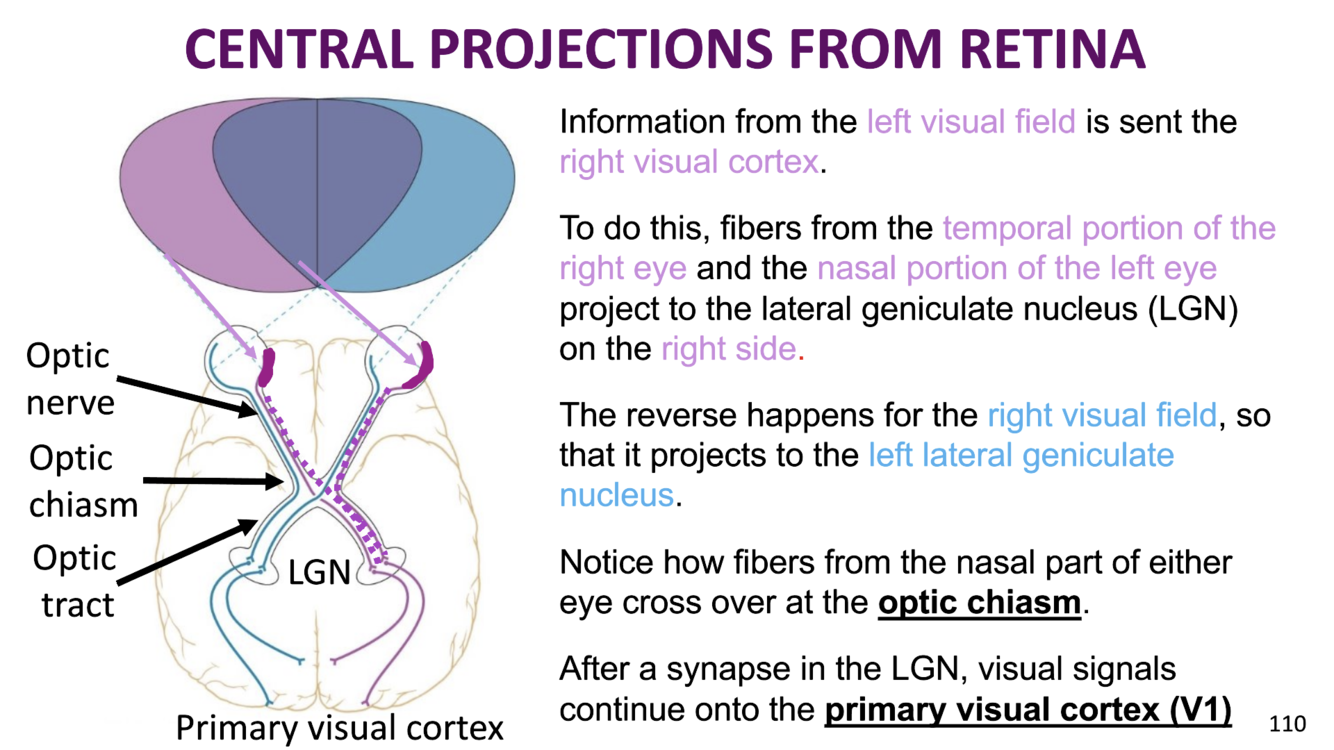
central projections from retina
- information from the left visual field is sent to the right visual cortex
- fibers from the temporal portion of the right eye and the nasal portion of the left eye project to the lateral geniculate nucleus (LGN) on the right side
- the reverse happens for the right visual field, so that it projects to the left lateral geniculate nucleus
- notice how fibers from the nasal part of either eye cross over at the optic chiasm
- after a synapse in the LGN, visual signals continues onto the primary visual cortex (V1)
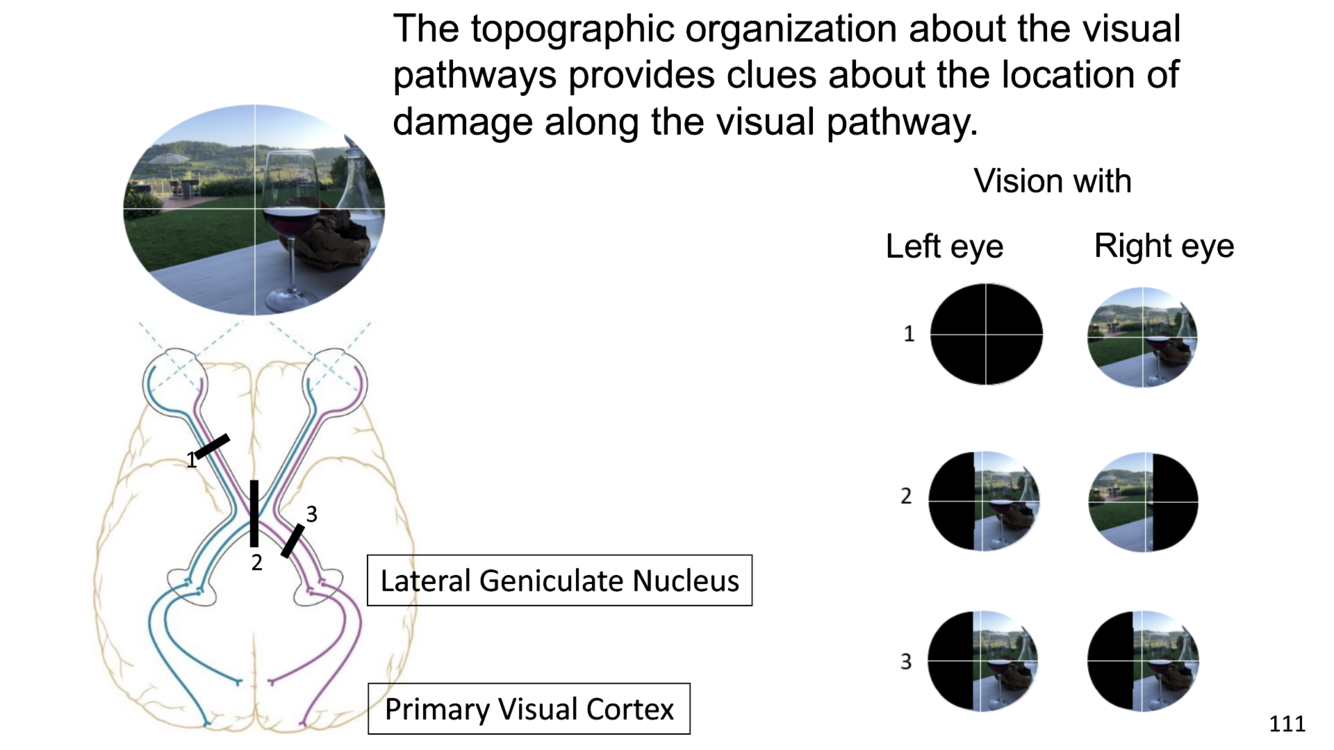
topographic organization
- the topographic organization about the visual pathways provides clues about the location of damage along the visual pathway
1, 2, 3 - cuts off nerve
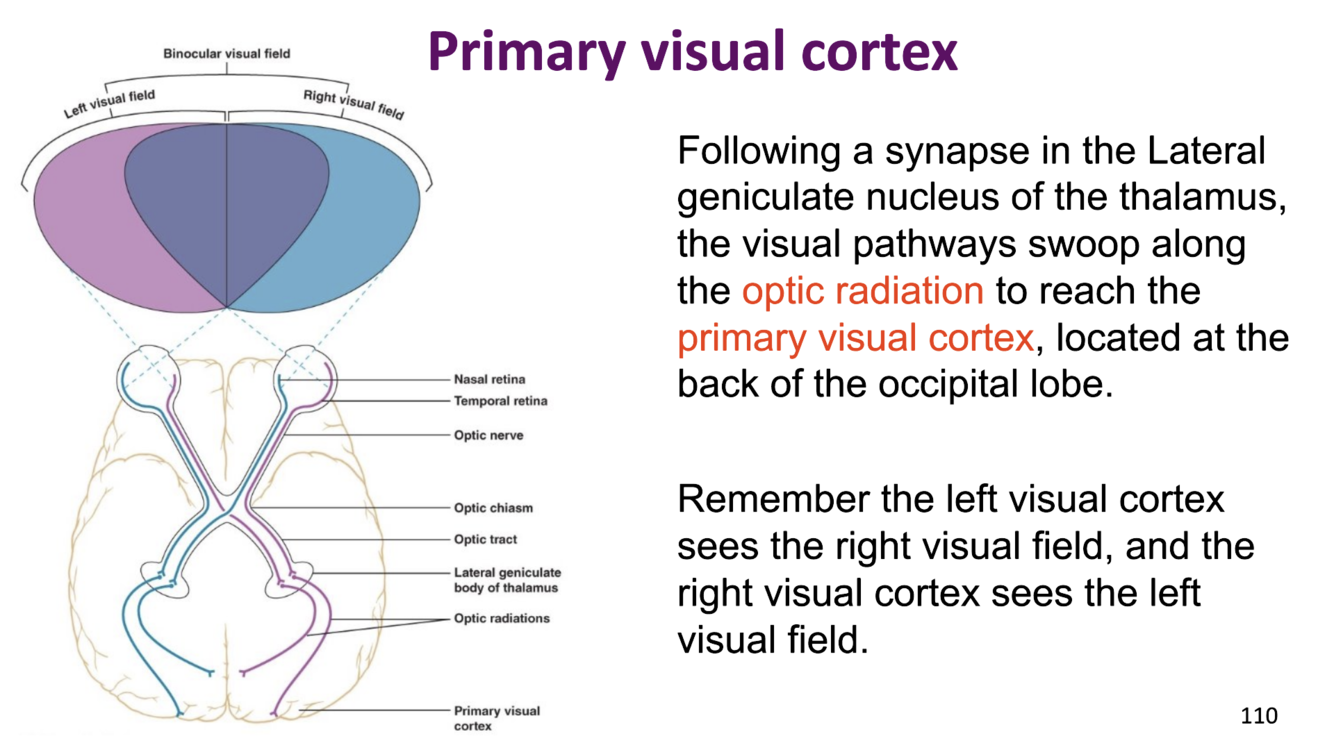
primary visual cortex
- following a synapse in the laternal geniculate nucleus of the thalamus, the visual pathways swoop along the optic radiation to reach the primary visual cortex, located at the back of the occipital lobe
- the left visual cortex sees the right visual field and the right visual field sees the left visual field
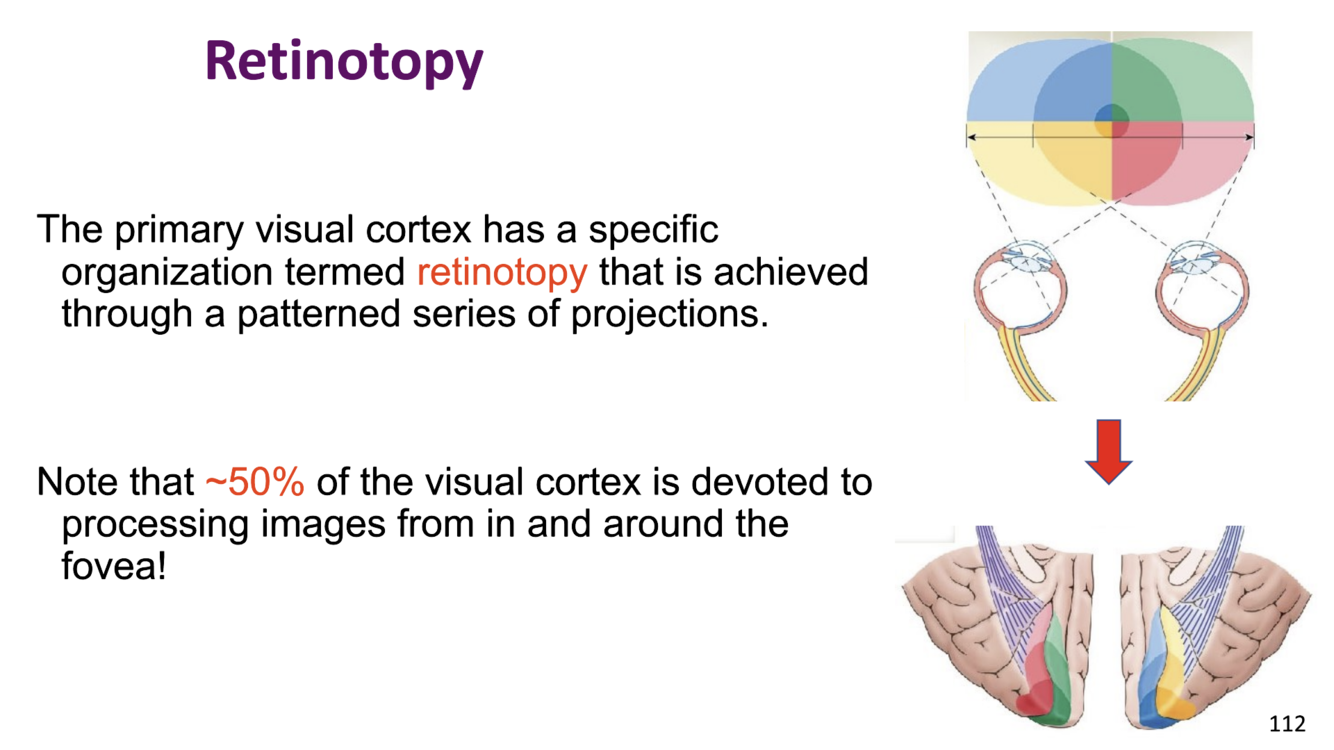
retinotopy
- the primary visual cortex has a specific organization termed retinotopy that is achieved through a patterned series of projections
- ~50% of the visual cortex is devoted to processing images from in and around the fovea

-
Homeostasis and Body Fluid Compartments10
-
How a Cell Interacts with its Environment14
-
Osmosis, Tonicity and the Resting Membrane Potential15
-
Action Potential30
-
Propagation of the Action Potential and the Chemical Synapse13
-
Endocrinology13
-
The Anterior Pituitary and Thyroid Gland22
-
Adrenal Glands and Pancreas14
-
Nervous System20
-
Somatic Senses20
-
Vision13
-
Hearing16
-
Motor Control30
-
Autonomic Nervous System (ANS)22
-
Muscle Physiology29
-
Cardiovascular Physiology66
-
Renal Physiology56
-
Respiratory Physiology47
-
Digestive Physiology72
-
reproductive system70



