Empiricism
- General learning system.
- Experience shapes our skills and knowledge
- Blank page
Nativism
- Hardwire to handle a certain type of information
- Ex) Language, math,…
- Certain aspects of mental life are a core part of being human and they are present from the beginning
Nature vs Nurture
- How much influence do differences in environment have on development?
- How do genetics and environment work together during development?
Age related Changes
On average, at different ages children will have certain skills. On the other hand, this varies a lot!
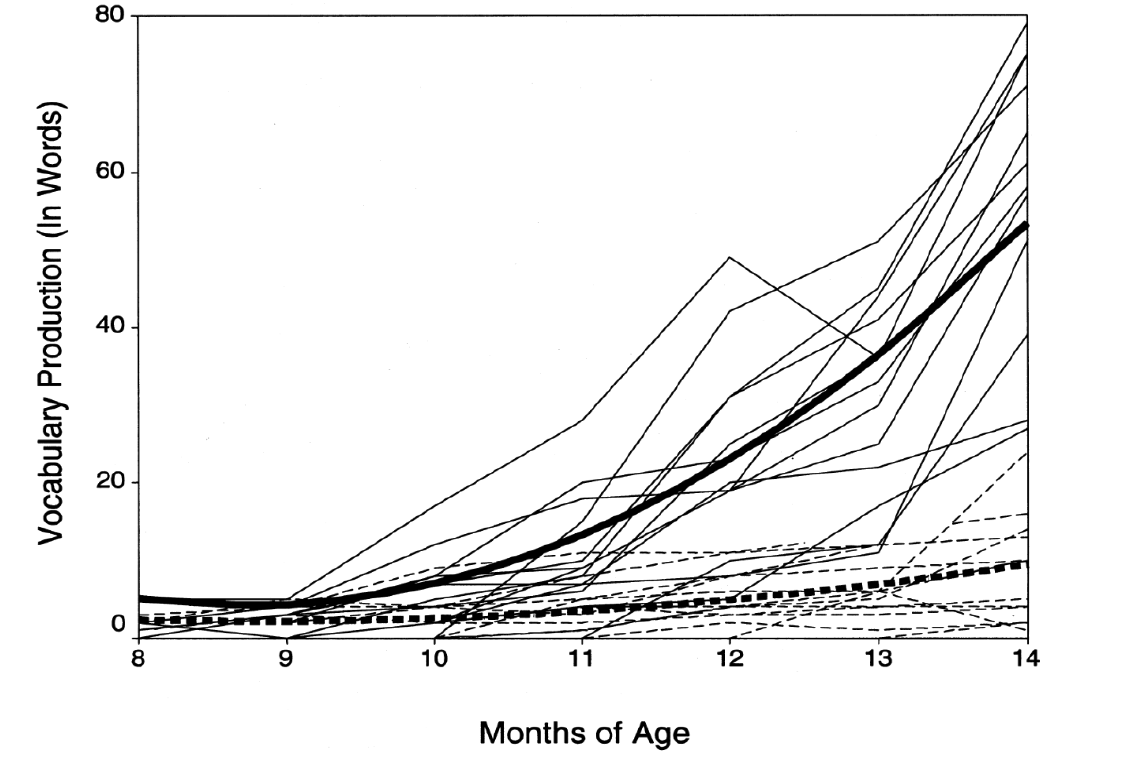
Continuous or Discontinuous Development
Continuity:
- Quantitative change
- Development is incremental and gradual
Discontinuity:
- Qualitative Change
- A new structure or process emerges that was not there before
Development in Different Domains is Interconnected
Example:
- Physical development affects motor development and motor development impacts language development.
Children are Active Architects of their own Development
Babies shape their behaviour from people around them
Development and Relationships
- Conflict resolution
- Perspective-taking
- Language
- Mathematics
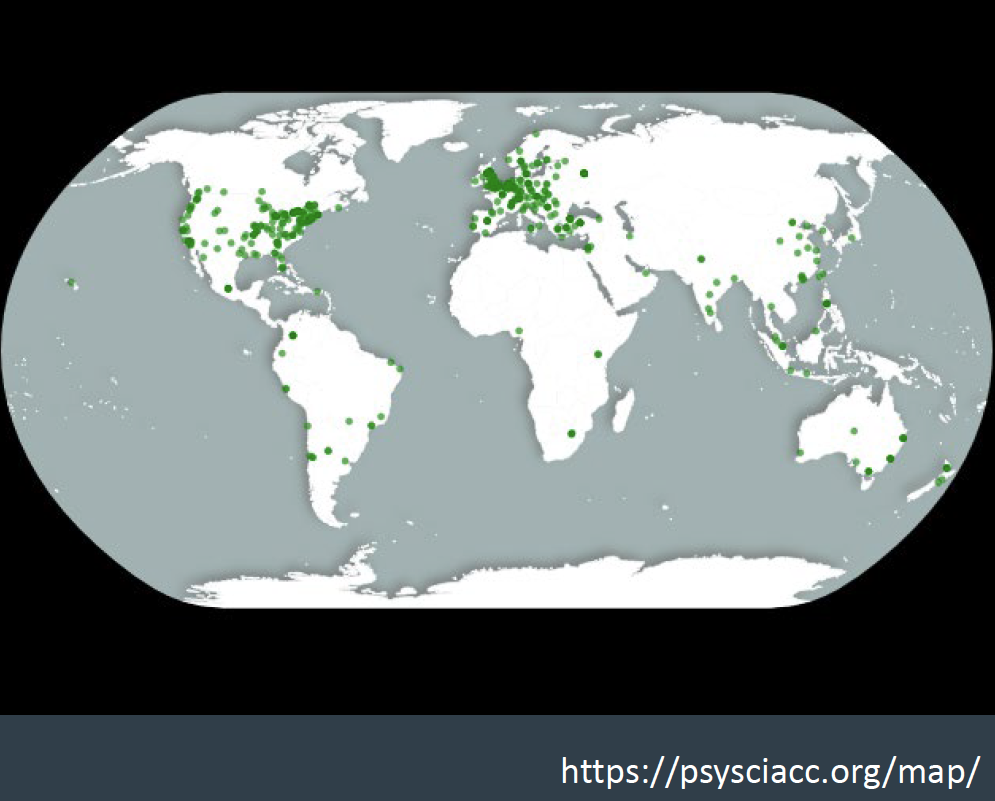
Samples in Developmental Psychology are WEIRD
- White
- Educated
- Industrialised
- Rich
- Democratic
The Science of Child Development should Inform Practice and Policy
- How to teach (teaching how to read)
- Corporal punishment in schools
- Availability of remote learning during (COVID-19)
Acuity
The sharpness of the clarity of the vision.
Ability to perceive contrast that represents lines and shadows.
A 20/20 vision means that you can see at 20 feet what a healthy person can see at 20 feet.
20/25 vision means that you can see at 20 feet what a healthy person can see at 25 feet.
How do we test acuity for babies?
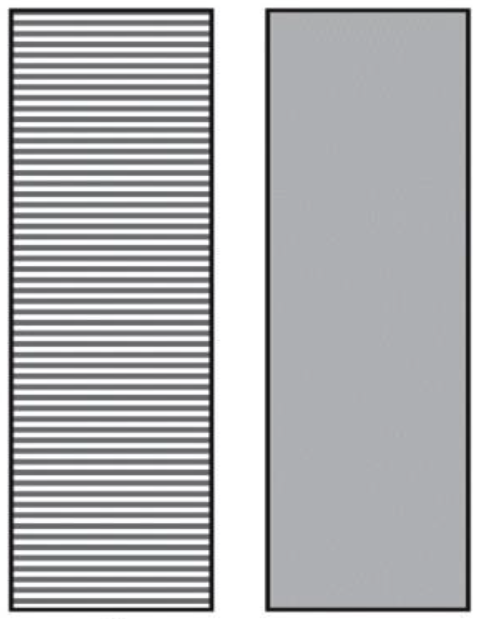
Since babies cannot tells us which letters that are seeing, they are shown tripes of different width. If the eyes of the baby move from side to side, this means that they can perceive the stripes. On the other hand, if their vision is not good enough, they would only see a dark rectangle an thus their eyes wouldn’t move.
Some other tests are:
- Preferential looking
- Habituation Paradigm
- Optokinetic Nystagmus
- Visual Evoked Potential
Preferential Looking
When babies are presented with two stimuli, we observe if they prefer to look at one rather than the other.
For example, when presented with these images. The babies would put more attention to one of them if they are able to see the stripes. If they are not able to see the stripes, then both images look the same to them and would act bored or distracted.
Name some challenges faced while testing preferential looking
- Controlled setting:
- The investigator has to hide behind a panel so that they don’t give away some indication to the baby.
- The mother holding the baby cannot see the stimuli presented to the baby. Again, this is done so that she cannot influence the baby’s reaction
- Stimuli:
- The stimuli can’t differ in any way other than the width of the stripes.
Habituation
Let the baby look at the same image for a long time. Once the baby is bored, change the image for the one with stripes. If the baby can see the stripes, its attention will be directed to the new image. Otherwise, it will just see it as the first image.
Optokinetic Nystagmus
The eyes track the stripes until it disappears and the eyes go back to the middle.
If the acuity of the baby is good, then its eyes will move. Otherwise, it will be only perceived as a grey image.
Visual Evoked Potential
This test measures brain activity. If the acuity is good, then the brain activity will be higher when the baby see the stripes.
True or False
Babies prefer to look at faces
True!
True or False
Babies in the womb prefer to look at faces.
True, an experiment was done where the researchers would flash 3 light dots on the mothers belly. When these three dots matched the features of a face, the reaction of the fetus was recorded through 4D ultrasound. The reaction observed was the number of head-turning.
This experiment was done during the third trimester of the pregnancy.
This shows that this preference came without experience.
REID ET AL. 2017
Recognition of faces as adults
Adults can recognise 1000 faces. Notice that we can still recognise faces even when some features change (hairstyle, beard, glasses, etc.)
This ability to recognise faces is not acquired until sometime in adolescence.
Explain one experiment where it was shown that adults were better at recognising faces
In an experiment where participants were asked to learn new faces and then recognise them, adults where much better at not making mistakes than the 11-year olds.
There are two skills that are developing, which are they?
- Featural Processing
- Configural processing
Featural Processing
Processing the shape of individual features.
Configural Processing
Processing the distance between two features.
We most often rely on configural processing.





