what are waves
Waves are vibrations that transfer energy from place to place without matter
(solid, liquid or gas) being transferred.
how do some waves need to travel
Some waves must travel through a substance others do not.
what is the substance a wave travels through called
- The substance is known as the medium and it can be solid, liquid or gas.
what waves travel through substances
- Sound waves and seismic waves must travel through a medium, and it is the
medium that vibrates as the waves travel through.
what waves don’t need to travel through substances
- Visible light, infrared rays, microwaves and other types of electromagnetic
radiation are examples of waves that do not need a medium to travel through.
how does electromagnetic radiation travel, and what does it transfer
Electromagnetic radiation travels as waves and transfers energy from one place to
another. All electromagnetic waves can travel through a vacuum, and they all
travel at the same speed in a vacuum.
what is the electromagnetic spectrum
The electromagnetic spectrum is a continuous range of wavelengths. The types of
radiation that occur in different parts of the spectrum have different uses and
dangers, which depend on their wavelength and frequency.
what are transverse waves
Transverse waves
In transverse waves, the oscillations (vibrations) are at right angles to the
direction of travel and energy transfer
Light and other types of electromagnetic radiation are transverse waves. All
where can transverse waves travel that longitudinal can not
types of electromagnetic waves travel at the same speed through a vacuum,
such as through space.
what is another example of transverse waves
Water waves and S waves (a type of seismic wave) are also transverse waves.
what are longitudinal waves
Longitudinal waves
In longitudinal waves, the oscillations are along the same direction as the
direction of travel and energy transfer.
what are some examples of longitudinal waves
Sound waves and waves in a stretched spring are longitudinal waves. P waves
can you think of another example of a longitudinal wave
(relatively fast moving longitudinal seismic waves that travel through liquids
and solids) are also longitudinal waves.
what do longitudinal waves show
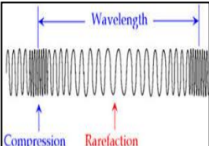
Longitudinal waves show area of compression and rarefaction.
where are the areas of compression and rarefaction on a spring
In the picture, the areas of compression are where the parts of the spring are close together, while the areas of rarefaction are where they are far apart.