trauma epidemiology
- Leading cause of death in the first 4 decades
- 150,000 deaths annually in the US
- Permanent disability 3 times the mortality rate
- Trauma related dollar costs exceed $400 billion annually
Trimodal death distribution
- First peak instantly (brain, heart, large vessel injury)
- Second peak minutes to hours
- Third peak days to weeks (sepsis, MSOF)
ATLS focuses on the second peak…..Deaths from:
- TBI, Epidurals, Subdurals, IPH…
- Basilar skull fractures, orbital fractures, NEO complex injury…
- Penetrating neck injuries…
- Spinal cord syndromes…
- Cardiac tamponade, tension pneumothorax, massive hemothorax, esophageal injury, diaphragmatic herniation, flail chest, sucking chest wounds, pulmonary contusion, tracheobronchial injuries, penetrating heart injury, aortic arch injuries …
- Liver laceration, splenic ruptures, pancreatico-duodenal injuries, retroperitoneal injuries
- Bladder rupture, renal contusion, renal laceration, urethral injury…
- Pelvic fractures, femur fractures, humerus fractures…
tension pneumo thorax
lung completely collapses. That lung presses against the good lung and the heart
Concepts of ATLS
- Treat the greatest threat to life first
- The lack of a definitive diagnosis should never impede the application of an indicated treatment
- A detailed history is not essential to begin the evaluation
- “ABCDE” approach
flail chest
multiple ribs by each other that are compromised and the lung doesn’t expand correctly. Pt. has paradoxical chest movement
The trauma system includes:
- EMS: goal to stabilize and get them to the hospital
- emergency Physicians/NP’s/Nurses
- trauma surgery team
- *Best is Trauma Center level 1*: all the time have a special group of people who are trained to help
Trauma roles
- Trauma captain: person running the show, either physician or APNP who specializes in trauma
- Interventionalists
- Nurses
- Recorder
prepping for trauma pt. to arrive
- warm the room to 99 degrees
- have foleys, ngs, intubation, iv supplies, EKG 12 lead, call ct and have them on standby, get portable xray ready, pharmacy on standby, bloodbank, lab
nurses roles in trauma
- nurse on the left: ABCDE assessment, 12 lead ekg, vital signs, foley insertion (unless trauma to genital area, or bladder is ruptured)
- nurse on the right: IV access, start admin of fluids, blood draws, assessment of the extremities and the trunk (determine if chest tube is needed: decreased breath sounds one or both sides, tracheal deviation, crepitus or subq emphysema, hypoxia)
primary survey
Patients are assessed and treatment priorities established based on their injuries, vital signs, and injury mechanisms
ABCDEs of trauma care
A Airway and c-spine protection
B Breathing and ventilation
C Circulation with hemorrhage control
D Disability/Neurologic status
E Exposure/Environmental control
How do we evaluate survey
Airway should be assessed for patency
- Is the patient able to communicate verbally?
- Inspect for any foreign bodies
- Examine for stridor, hoarseness, gurgling, pooled secrecretions or blood
Assume c-spine injury in patients with multisystem trauma
- C-spine clearance is both clinical and radiographic
- C-collar should remain in place until patient can cooperate with clinical exam
pg 214 (maxillary traumas)
maxiallry trauma worst ones
Lefort injuries (1-3) 2&3 are the worst. Sputum will be blood tinged, facial swelling, CSF through the nose, tachypnea/tachycardia
airway interventions
- Supplemental oxygen
- Suction (can increase swelling and secretions, though)
- Chin lift/jaw thrust (bridge to intubation)
- Oral/nasal airways (if you think there is trauma in that area)
Definitive airways
- RSI (rapid sequence intubation) for agitated patients with c-spine immobilization
- ETI for comatose patients (GCS<8)
once et tube is in place do what?
- ascultate and look for co2 (yellow yes)
- get an xray
What can we look for clinically to assess a patient’s ‘breathing’ status?
*Airway patency alone does not ensure adequate ventilation
*Inspect, palpate, and auscultate
- Deviated trachea, crepitus, flail chest, sucking chest wound, absence of breath sounds, decreased, or diminished, in and out wheezing (or lost all together)
*CXR to evaluate lung fields
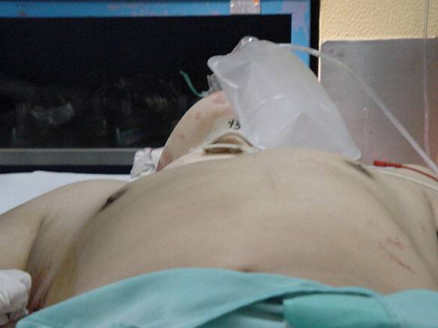
flail chest, 2 or more ribs broken in a row, pain, most likely intubate and manage the pain. Now movement toward surgical intervention to stabilize the ribs
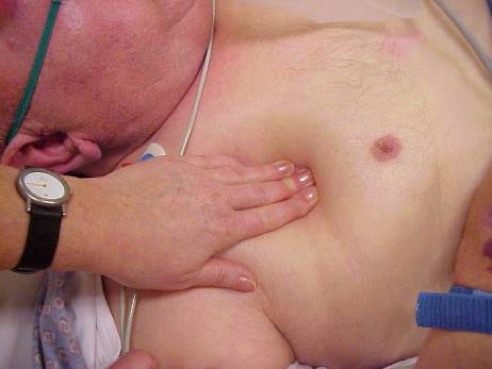
subcutaneous emphysema: been some type of trama that has allowed air to get into subq tissue, like pneumo. Would need a chest tube
breathing interventions
- Ventilate with 100% oxygen
- Needle decompression if tension pneumothorax suspected: only if severe, then insert chest tube after
- Chest tubes for pneumothorax / hemothorax
- Occlusive dressing to sucking chest wound
- If intubated, evaluate ETT position
type of chest tube?
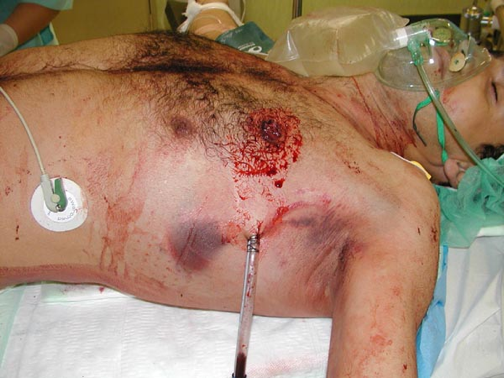
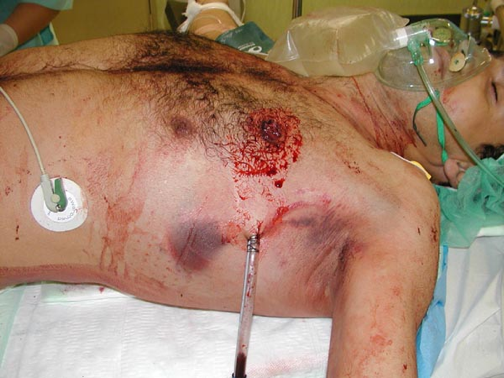
- more lateral, at 5th intercostal space: for fluid (draining blood)
- for pneumo, it’s the 2nd intercostal space, anterior
what’s going on, what do we need to do?
- lung field on right is wiped out
- heart is being pushed over
- trachea is deviated
- TENSION PNEUMOTHORAX
- Needle decompression needed with this as well as subsequent chest tube placement
- You will find trachae deviated away from pneumothorax, tachypnea, tachycardia, cardiac output decreased, narrowed pulse pressure, crepitus
which way will the trachae deviate with a pneumothorax
away from the pneumothorax
circulation
*Hemorrhagic shock should be assumed in any hypotensive trauma patient
*Rapid assessment of hemodynamic status
- Level of consciousness
- Skin color
- Pulses in four extremities
- Blood pressure and pulse pressure
if you can’t get a bp manually, what do you do?
palpatory pressure. Inflate the cuff until you get radial pulse return



-
Week 1: CC environment15
-
Week 1: Nurse at Therapeutic Instrument12
-
Week 1: Care of Critical Patient32
-
Week 2: Individuals with Thought Disorders53
-
Week 2: Disorders of Ventilation72
-
Week 3: Endocrine/Metabolism49
-
Week 4: Kidney injury, renal failure55
-
Week 5: Cerebral dysfunction80
-
Test 2 review questions from lecture27
-
Week 5: Alterations in Cerebral Function58
-
Wee 5: Nursing Management of Seizures14
-
Week 5 Simulation: Nursing Management of DKA12
-
Week 6: Organ Transplant45
-
Week 6: Cerebral Alterations Part 243
-
Week 7: Spinal Cord Trauma57
-
Week 7: Herniated Disk and Spinal Cord Tumors25
-
Week 7 Hemodynamics146
-
Week 8: Cardiac Emergencies and Life Saving Interventions: Part 156
-
Week 8: Cardiac Emergencies.. Part 259
-
Book Review Questions: Test 221
-
Week 3 Dissociative Disorders Psychophysiological Disorders54
-
Week 9: Cardiac III61
-
Exam 2 review sheet230
-
Week 10: Burn Patient Management87
-
Week 10: Acute Pericarditis and Rheumatic Heart Disease19
-
Week 10: Psych40
-
Week 11: Multiple trauma47
-
Week 11: Acute Pain45
-
Week 11: Hematology82
-
Week 13: Acute GI dysfunction65
-
Week 13: Complementary and alternative therapies34
-
Week 13: Acute Hepatic Dysfunction59
-
Week 12: Organ Recipient13
-
Week 15: Impaired Immunity77



