What is a virus?
Intracellular obligate parasite
- unable to replicate outside of a host cell
- Unable to make own proteins
- Depends on the cell machinery for replication and protein production
- Are NOT living
- must be able to infect a host to survive
- Viral components are assembled - do not replicate by division
How do viruses enter cells?
Via host cell receptors
Viral genes expressed how?
using viral and/or host-encoded functions
What do viral proteins do?
- modify host cell functions to ensure viral replication
- Assemble into caspids that protect viral genomes
How do viruses propagate?
Viral proteins modify host cell functions to ensure viral replication and assemble into capsids that protect viral genomes and then the virus is released to infect new cells.
Range of viral infections?
Demonstrates viral tropism (viruses are found infected certain parts of the body because those tissues have receptors to allow viral entry)
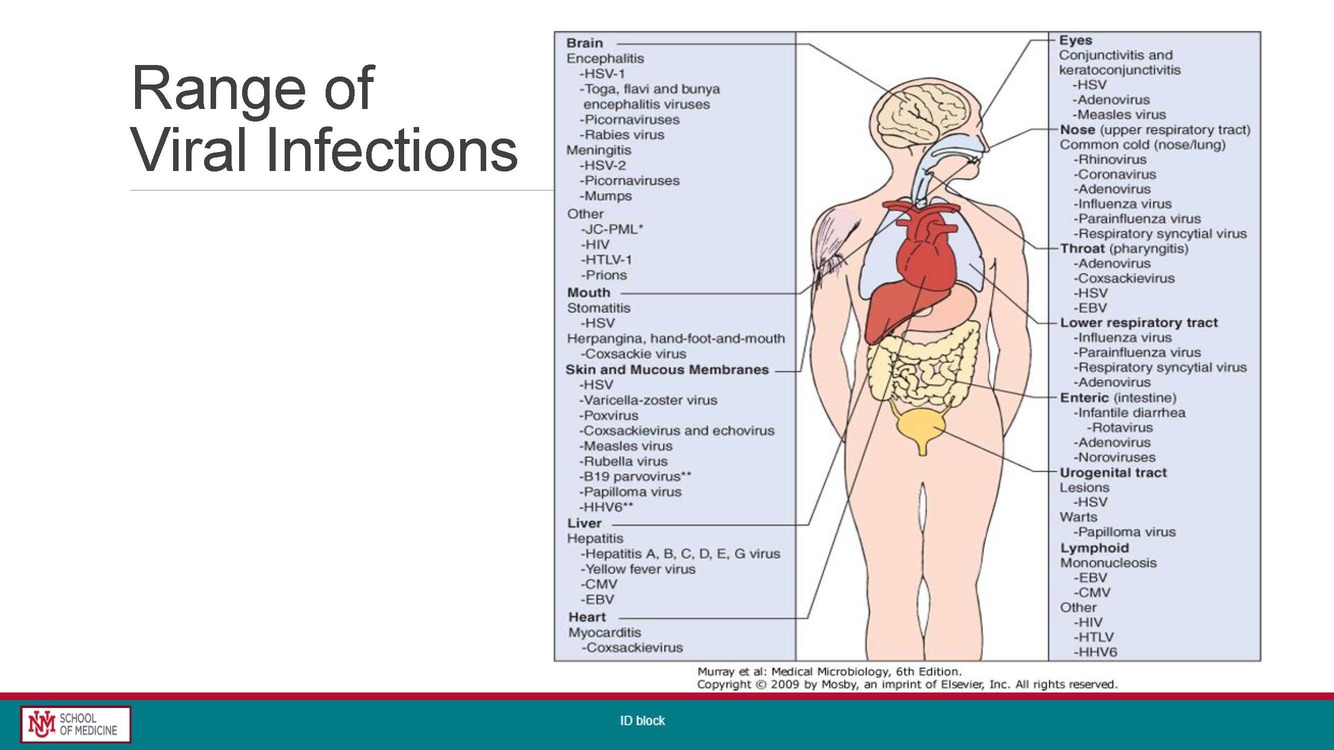
Describe viral entry into the skin
require a breach of the physical integrity of the skin barrier and employs vectors
Describe viral entry into the conjunctiva and other mucous membranes
rather exposed site and relatively unprotected
Describe viral entry into the respiratory tract
possess sophisticated immune defense mechanisms which viruses must overcome
Describe viral entry into the Gastrointestinal Tract
gastric acid, bile salts, etc. provide a difficult environment so viruses would need to be adapted to infect and spread in this hostile environment
Describe viral entry into the genitourinary tract
relatively less hostile than the GI tract but is less frequently exposed to extraneous viruses
Factors affecting viral tissue tropism
- Correct attachment protein to bind to a receptor on the cell surface to gain entry
- Appropriate cellular machinery present within the host cell to allow the virus to replicate
- Are dividing cells with high enough levels of dNTPs for viral DNA synthesis
- A way to exit the host cell to spread the infection
Describe the steps of a typical viral infection
- Primary replication
- Systemic spread
- Secondary replication
Describe the primary replication step of a viral infection
- the place of primary replication where the virus replicated after gaining initial entry into the host cell
- This frequently determines whether the infection will be localized at the site of entry or spread to become a systemic infection
Describe the systemic spread step of a viral infection
Apart from direct cell-to-cell contact, the virus may spread via the bloodstream and the CNS
Describe the Secondary Replication step of a viral infection
Secondary replication takes place at susceptible tissues/organs following systemic spread
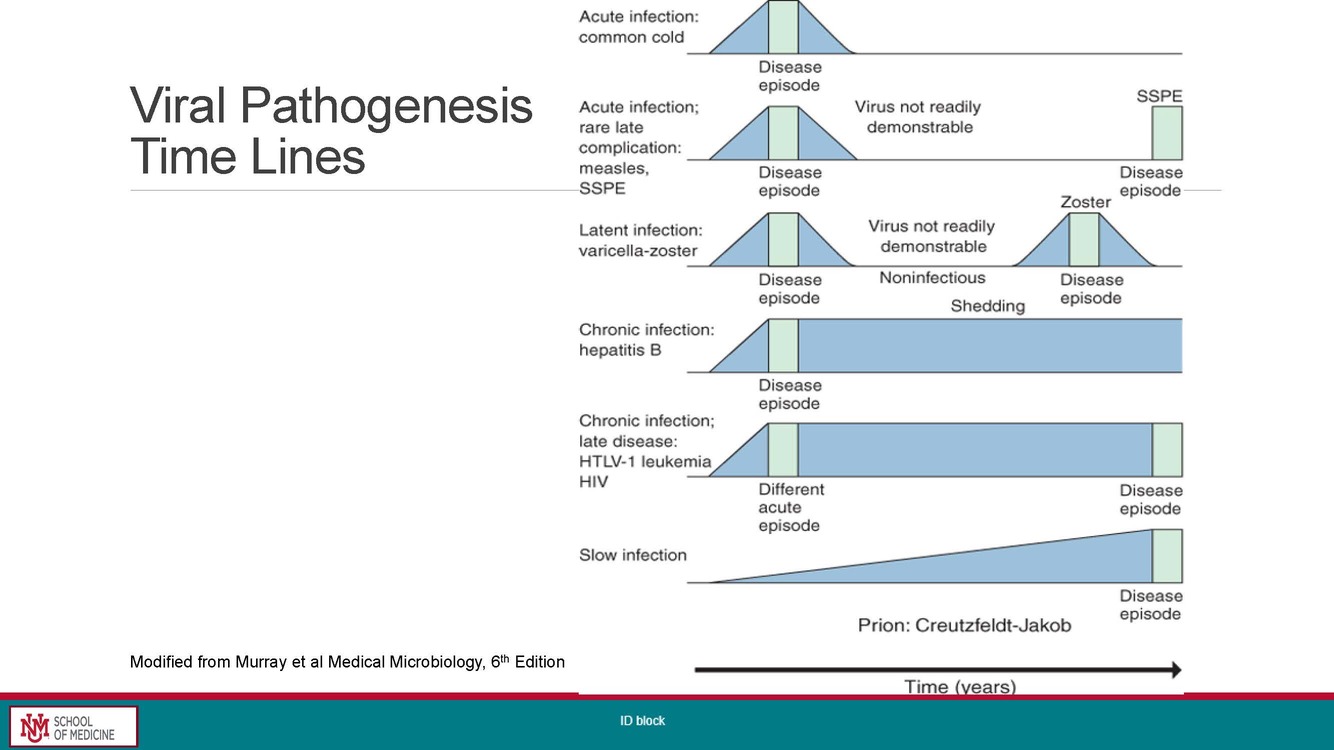
Describe acute viral infection outcomes
- Recovery with no residue effects (respiratory viruses)
- Recovery wit residue effects (eg. acute viral encephalitis leading to neurological sequelae)
- Death (Ebola virus)
- Proceed to chronic infection
Describe chronic viral infection outcomes
- Silent subclinical infection for life e.g. CMV, EBV
- A long-silent period before disease e.g. HIV, SSPE, PML
- Reactivation to cause acute disease e.g. herpes and shingles
- Chronic disease with relapses and excerbations e.g. HBV, HCV
- Cancers e.g. EBV, HTLV-1, HPV, HBV, HCV, HHV-8
Describe the possible viral pathogenesis time lines
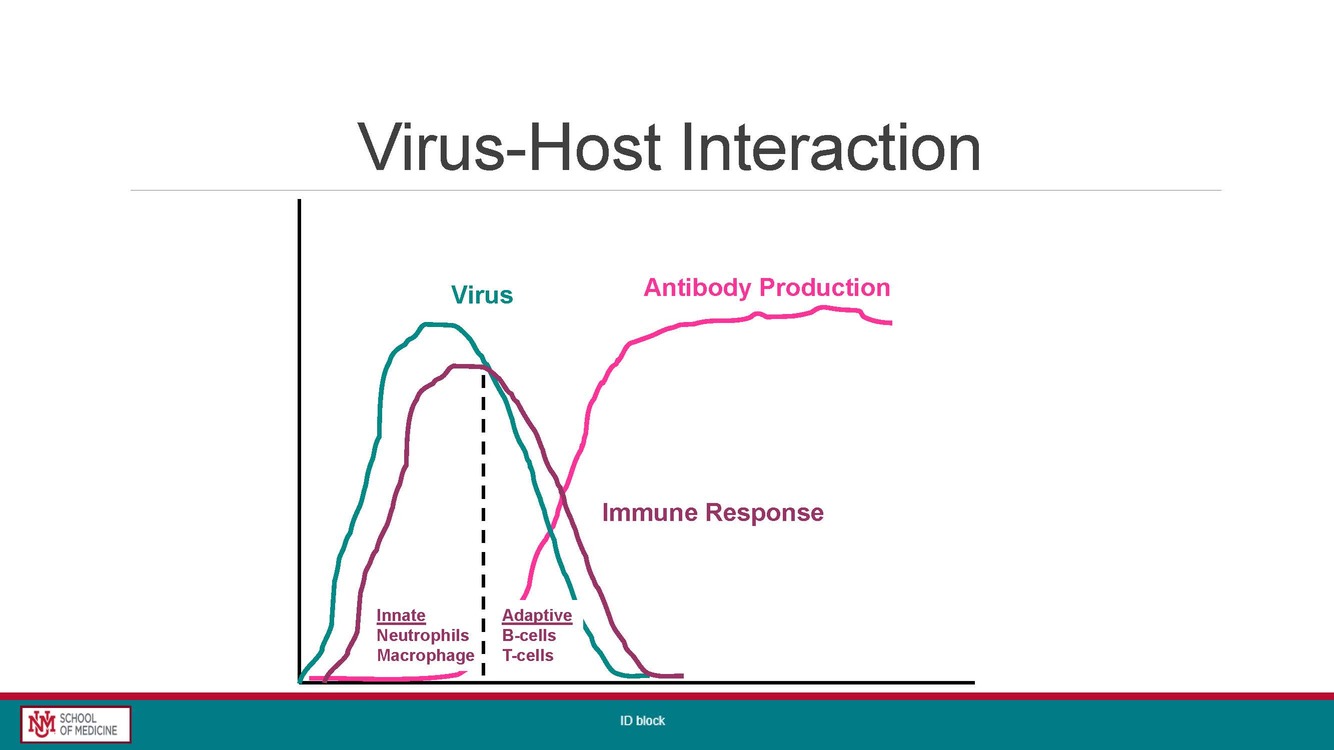
Describe the virus-host interaction
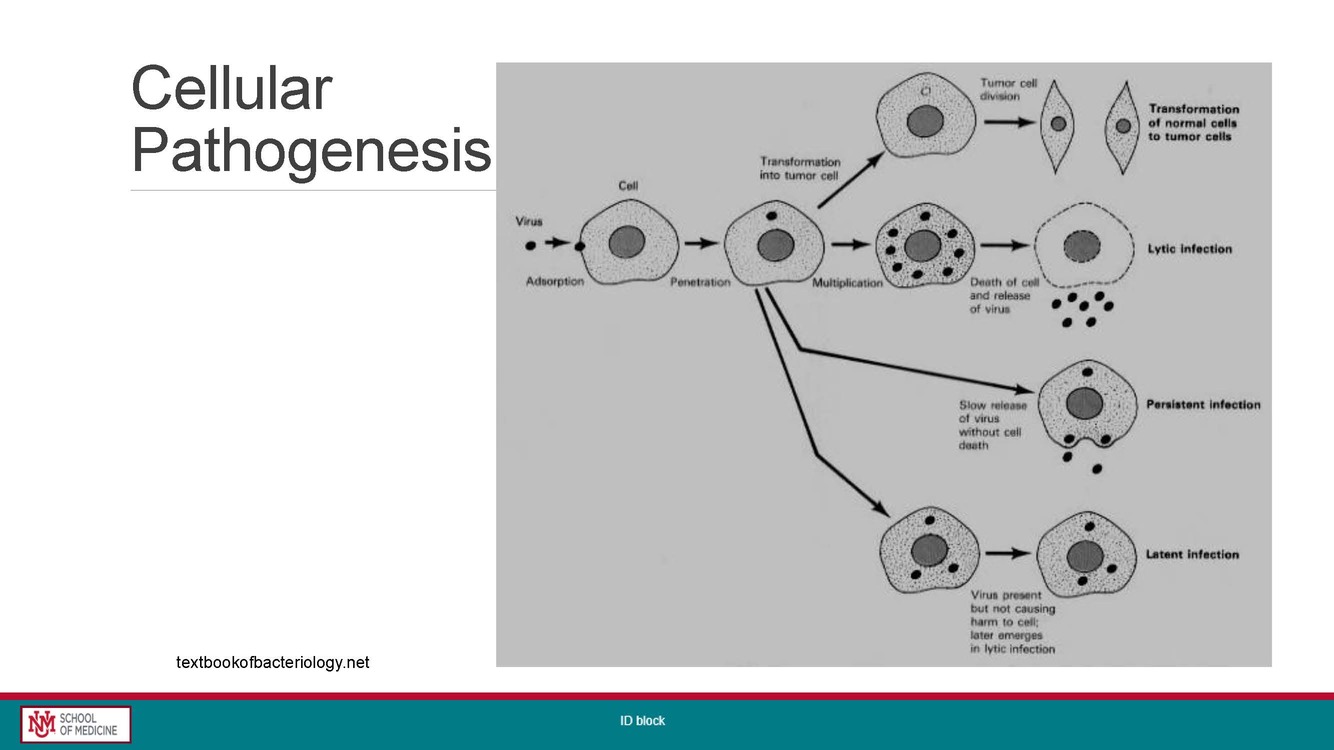
Describe the ways the cells can respond to viral infections
cells can respond to viral infections in 3 ways
- Failed infection (abortive infection)
- non-permissive cell
- Cell death (lytic infection)
- prevent cellular growth
- disrupt the structure and function of cells
- Replication without cell death (persistent infection)
- chronic - nonlytic viral synthesis
- Latent - limited viral synthesis
- Recurrent - periodic productivity
- Transforming - immortalization of cell
What are prions?
Infectious proteins that causes a very slow infection happening a very long-time before the disease episode
Describe cellular pathogenesis of a persistent viral infection
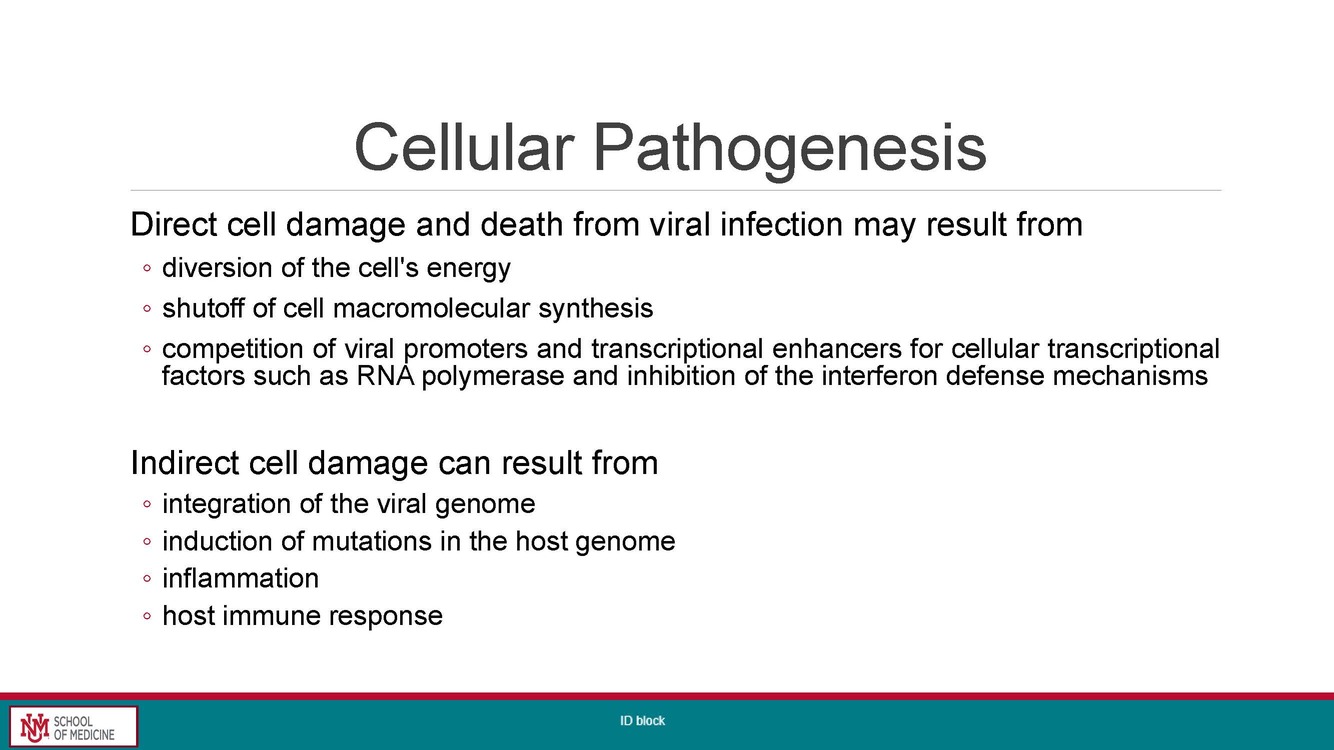
How are cells damaged by a viral infection?
- Direct cell damage and possibly death from a viral infection
- Indirect cell damage as a result of a viral infection



-
Week 1: Basics of Bacteriology96
-
Week 1: Formative quiz68
-
Week 1: Antibiotic Overview50
-
Week 1: Antibiotic Resistance60
-
Week 1: Host-pathogen interactions111
-
Week 1: Cell wall active antibiotics211
-
Week 1: Protein synthesis inhibitor antibiotics90
-
Week 1: Nucleic Acid Synthesis inhibitors64
-
Week 1: Antimicrobials0
-
Week 2: Virology93
-
Week 2: Basics of virology96
-
Week 2: Laboratory detection of viruses126
-
Week 2: Immunization Vignettes22
-
Week 2: Antivirals40
-
Week 2: Skeletal infection vignettes25
-
Week 2: Mycobacteriology27
-
Week 4: Genitourinary anatomy and histology33
-
Week 4: Sexually Transmitted Infections129
-
Week 4: Congenital infections Part I80
-
Week 4: Congenital Infections Part II18
-
Week 4: Infections of the liver & biliary tree55
-
Week 5: Parasitology Part I145
-
Week 5: Parasitology Part II127
-
Week 5: Toxin-mediated infections96
-
Week 2: Virology Basics0
-
Week 2: Introduction to Virology0
-
Week 2: Immunization Vignettes0
-
Week 2: Laboratory Diagnosis of Viral Infections0
-
Week 2: Biofilms0
-
Week 2: Antiviral Agents0
-
Week 2: Skeletal infection Vignettes0
-
Week 2: Ocular Infections0
-
Week 2: Anatomy and Histology of skin0
-
Week 2: Skin and soft tissue infections0
-
Week 2: Bloodstream infections0
-
Week 2: Infections in IVDU0
-
Week 2: Cellulitis0
-
Week 2: Microorganism facts0
-
Week 2: Antiviral agents0
-
Week 3: Mycobacteriology0
-
Week 3: Mycology0
-
Week 3: Laboratory diagnosis of Mycobacteriology0
-
Week 3: Laboratory Diagnosis of Mycology0
-
Week 3: Pulmonary Infections0
-
Week 3: Anti-Mycobacterial Agents0
-
Week 3: Antifungal Pharmacology0
-
Week 3: Imaging of Pulmonary Infections0
-
Week 3: ENT infections0
-
Week 3: CNS Infections0
-
Week 3: Chronic Pneumonia0
-
Week 3: Bacteriology Facts0
-
Week 3: Mycology facts0
-
Week 3: Virology Facts0
-
Week 4: Genitourinary Anatmoy/Histology0
-
Week 4: Sexually Transmitted Infections0
-
Week 4: Viral Hepatitis0
-
Week 4: Infections of Liver and Biliary Tract0
-
Week 4: Infectious Diarrhea0
-
Week 4: Antimicrobials0
-
Week 5: Toxin Mediated Infections0
-
Week 5: Infections in Immunocompromised Hosts0
-
Week 5: Antimicrobials0
-
Week 5: Parasitology31
-
Week 5: Toxin-mediated infections0
-
Week 5: Infections in immunocompromised hosts52
-
Week 6: HIV testing and treatment155
-
Week 6: Antimicrobial resistance49
-
Week 6: Rickettsial Diseases131
-
Week 6: Zoonoses & Emerging Infections34
-
Week 6: Rashes in Infectious Disease96
-
Boards and beyond18
-
Sulfonamides26
-
Protein synthesis inhibitors55
-
Other Antibiotics36
-
Staphylococcus21
-
Streptococci44
-
Other gram positives40
-
Gram negative rods63
-
Other gram negatives49
-
Spirochetes45
-
Zoonotic bacteria19
-
Mycobacteria0



